Industrial artificial intelligence for automotive plastic interior module plants
An automotive plastic interiors plant turns resin into finished modules — instrument panels, door trims, center consoles, decorative parts — and delivers them to vehicle plants, a large share of them in sequence, within windows of a few hours. Between the resin and the container sit injection molding, foaming and skin lamination, painting, vibration welding, module assembly and end-of-line functional testing. And at every one of those steps there is critical information that today lives on paper, inside the closed panel of a twenty-year-old machine, in a shared folder, or in the shift leader's head.
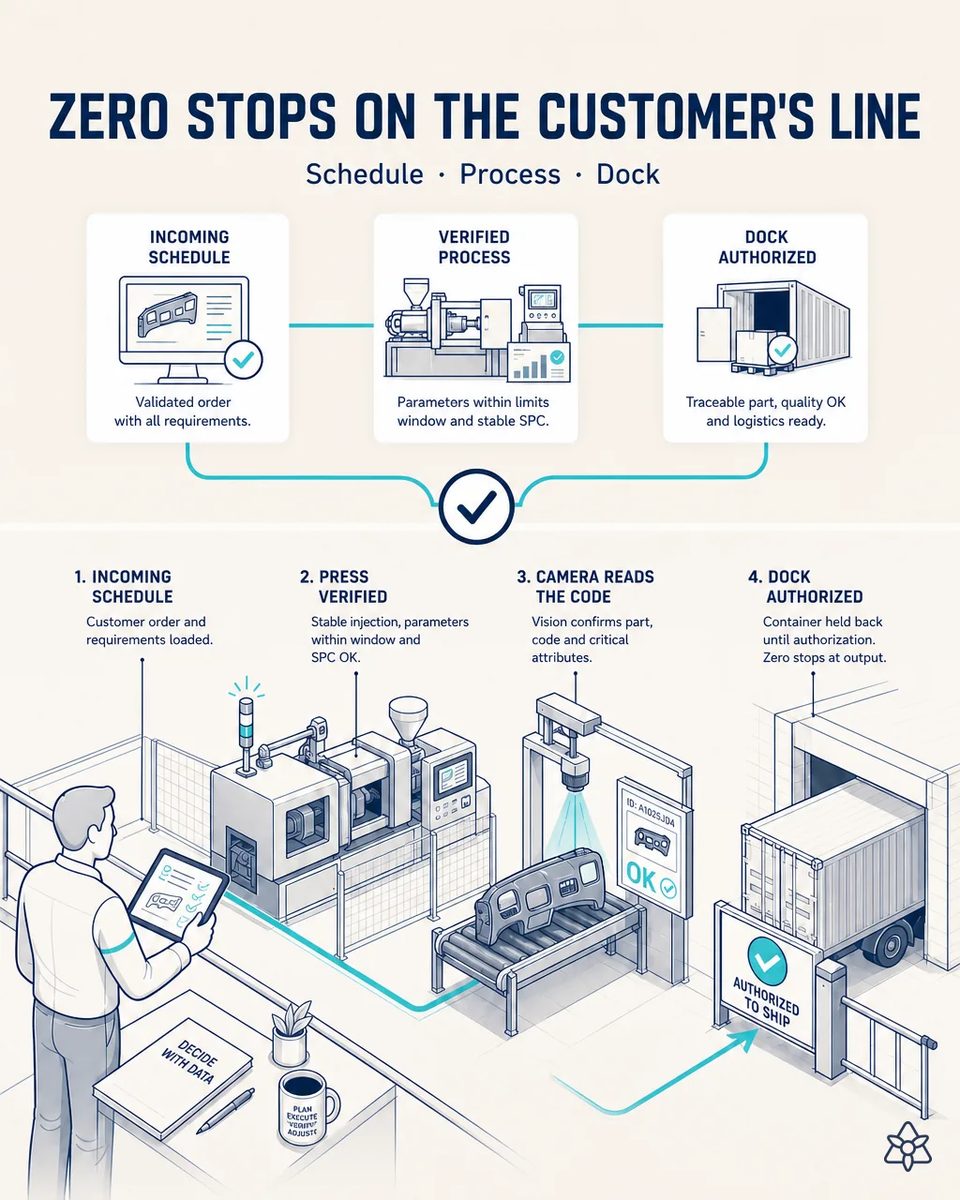
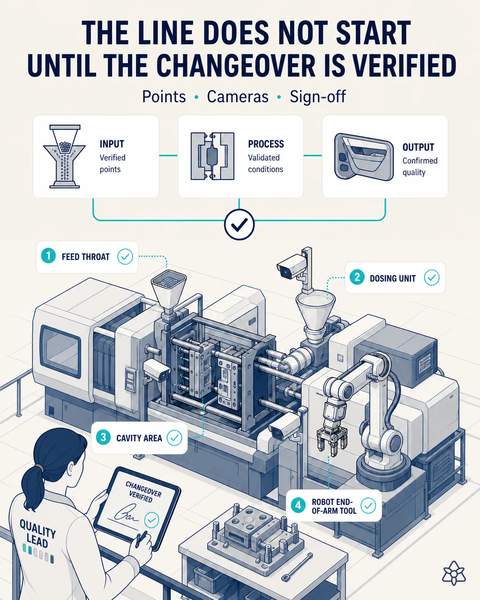
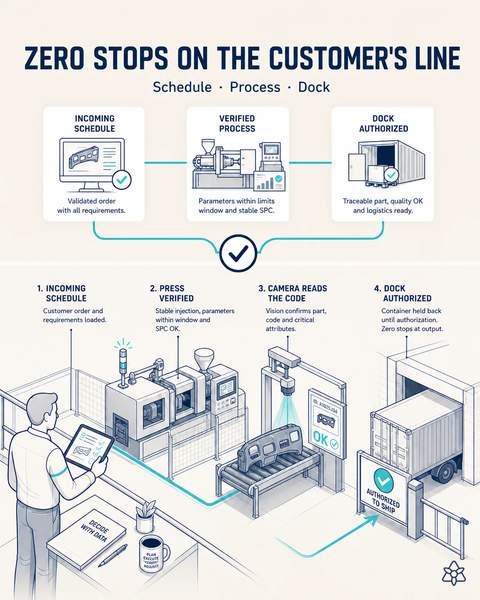
The capital pain of this sub-sector is not scrap: it is the stoppage on the customer's line. A part that is missing, arrives out of sequence or arrives wrong does not cost what the part costs; it costs billable minutes of vehicle line, special freight and a supplier rating downgrade that is paid for over years in programs you do not win. Right behind it come customer ppm with their containment and external inspector, and the changeover, which is at once the best part of an hour of downtime and the exact moment when material contamination and the first bad part slip through.
This page collects the twelve cases where an IRIS system — Edge, Connect and Agents, with the three safety rings — meets that specific reality. They are not twelve ideas: they are twelve archetypes covering the full matrix, from a photo of the start-up sheet to the four verification rings that stop the wrong container leaving the dock. In every one of them the person stays in command: the AI removes paper, keying and transcription, and gives back judgment and signature.
Capture without changing habits: photo, voice, email, integrations
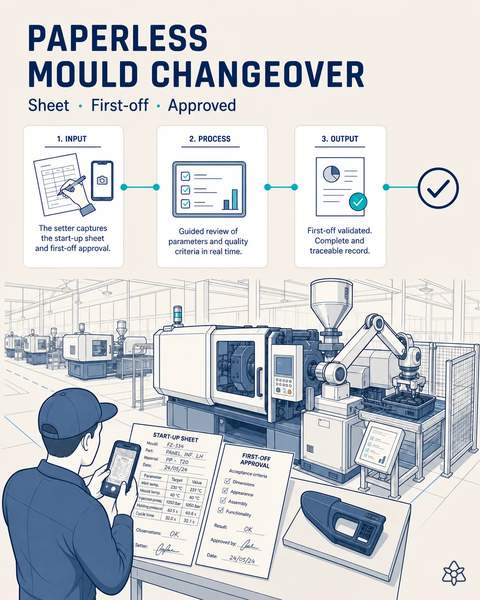
Mold start-up sheet with a photo
Payback 4-9 months · from 4-8 h of latency to second zero
See the case →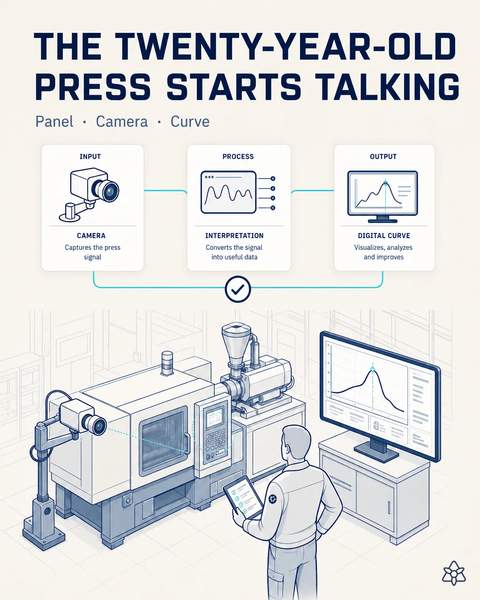
The old press panel starts talking
Payback 5-10 months · replacement CAPEX deferred
See the case →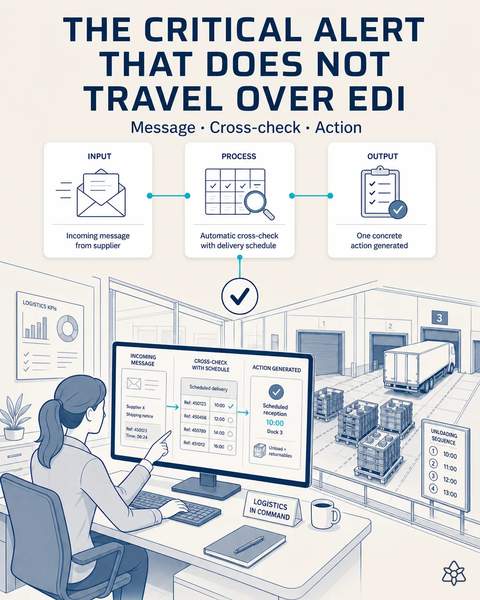
The sequence alert that skips EDI
Payback 3-7 months · from 2-3 h of latency to seconds
See the case →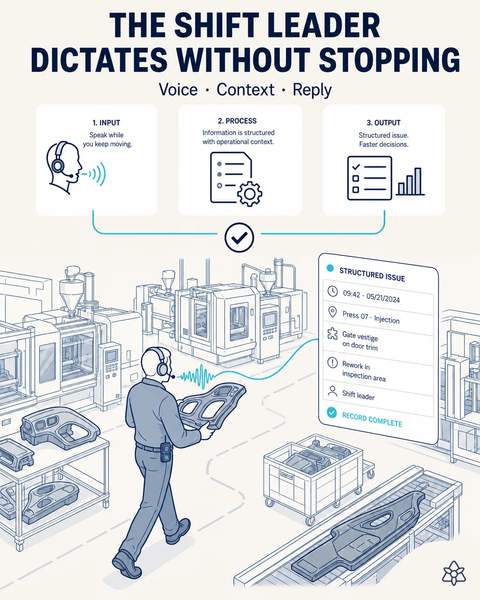
The shift leader dictates while walking
No standalone payback · enabling piece
See the case →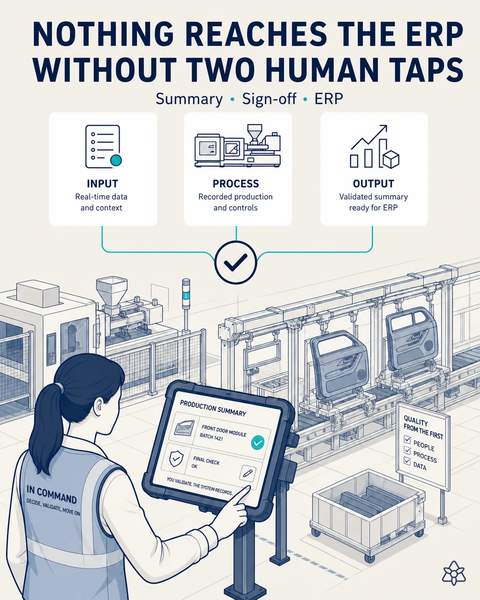
Two taps before the ERP
No standalone payback · enabling piece
See the case →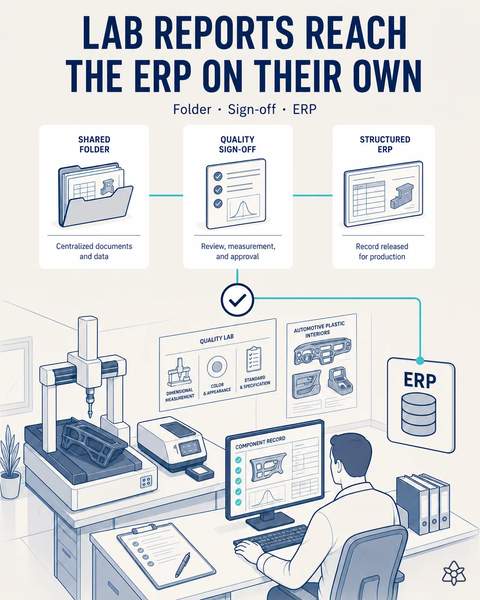
Lab results reach the ERP on their own
Payback 4-9 months · 50-80% fewer quality licenses
See the case →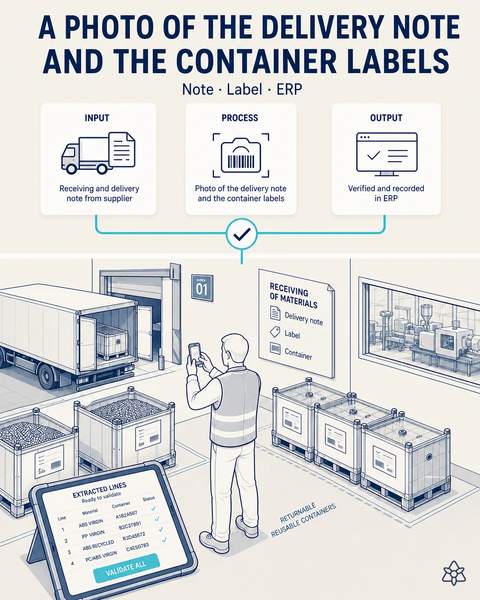
Receiving resin and skins with a photo
Payback 3-8 months · trucks from 45 to under 10 minutes
See the case →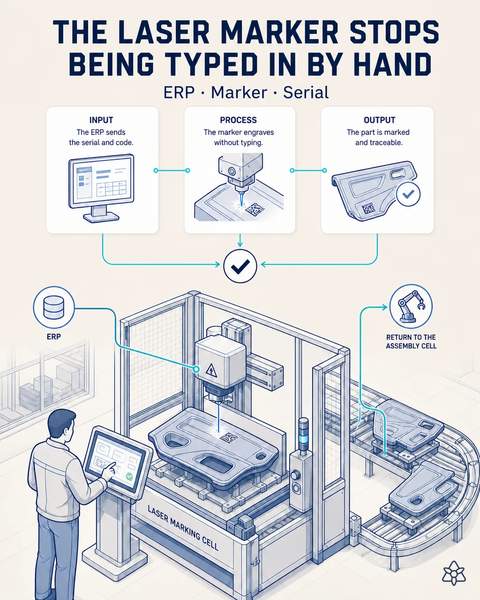
Laser marker and weld cell stitched
Payback 3-6 months · zero keying errors in marking
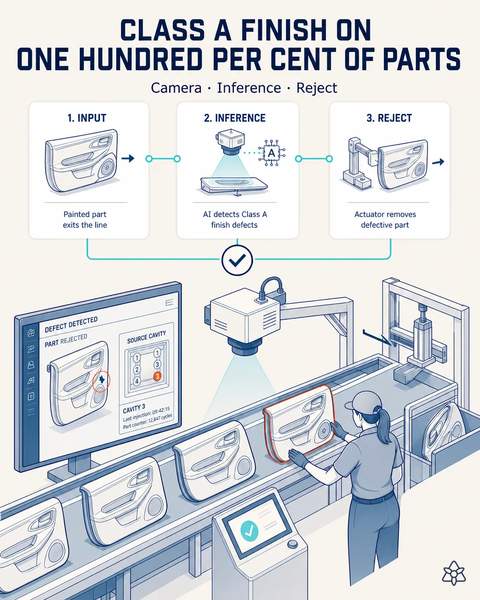
See the case →Machine vision on the line, in real time
More cases from this series
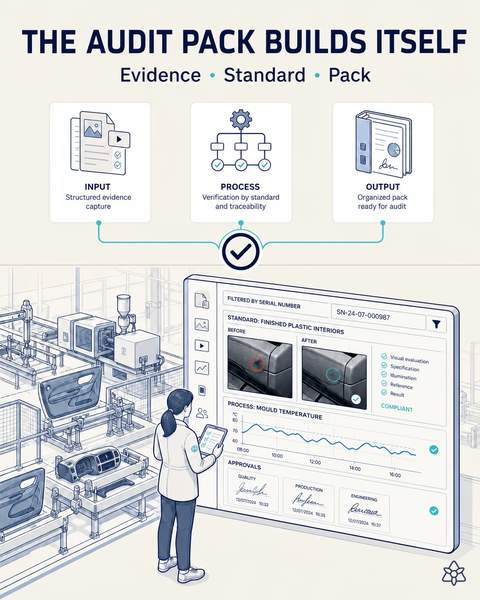
- Audit evidence, generated at the moment it is producedPhotos, curves, test results and signatures tied to the serial number and organized by standard. From…
- Four verification rings against the customer line stopFour verification rings between the delivery schedule and the dock. If they do not match, the shipment…
- Receiving resin, skins and components, solved with a photoDelivery notes and container labels read by vision, cross-checked against the order and pushed to the…
- Shift knowledge stops dying at handoverA headset and voice capture for whoever walks the shift with both hands busy. The issue structures…
- Lab data stops being retyped by handCMM, color, adhesion and test reports entering the ERP quality module after sign-off. Up to 80% fewer…
- Integrating what you already have: laser marker and weld cellPart number, revision and cavity travel from the ERP to the marker with no keying, and the weld curve is…
Tell us which of these twelve looks most like your plant and we will show you how it is deployed in weeks, not years." ---
We work on your plant's real data, not ours. Assessment with no commitment.
See automotive