Industrial artificial intelligence in loading dock equipment manufacturing
Manufacturing dock equipment is manufacturing safety made to measure. A leveler platform bears the rated load its nameplate declares with a loaded forklift passing over it thousands of times a year, and it is installed in a concrete pit, on a specific site, with a specific dimension. That makes this sub-sector an extreme case of configure-to-order manufacturing: dock height, capacity, platform length and width, lip type, cabinet voltage, color and options change from one unit to the next. Each unit is, in practice, a batch of one.
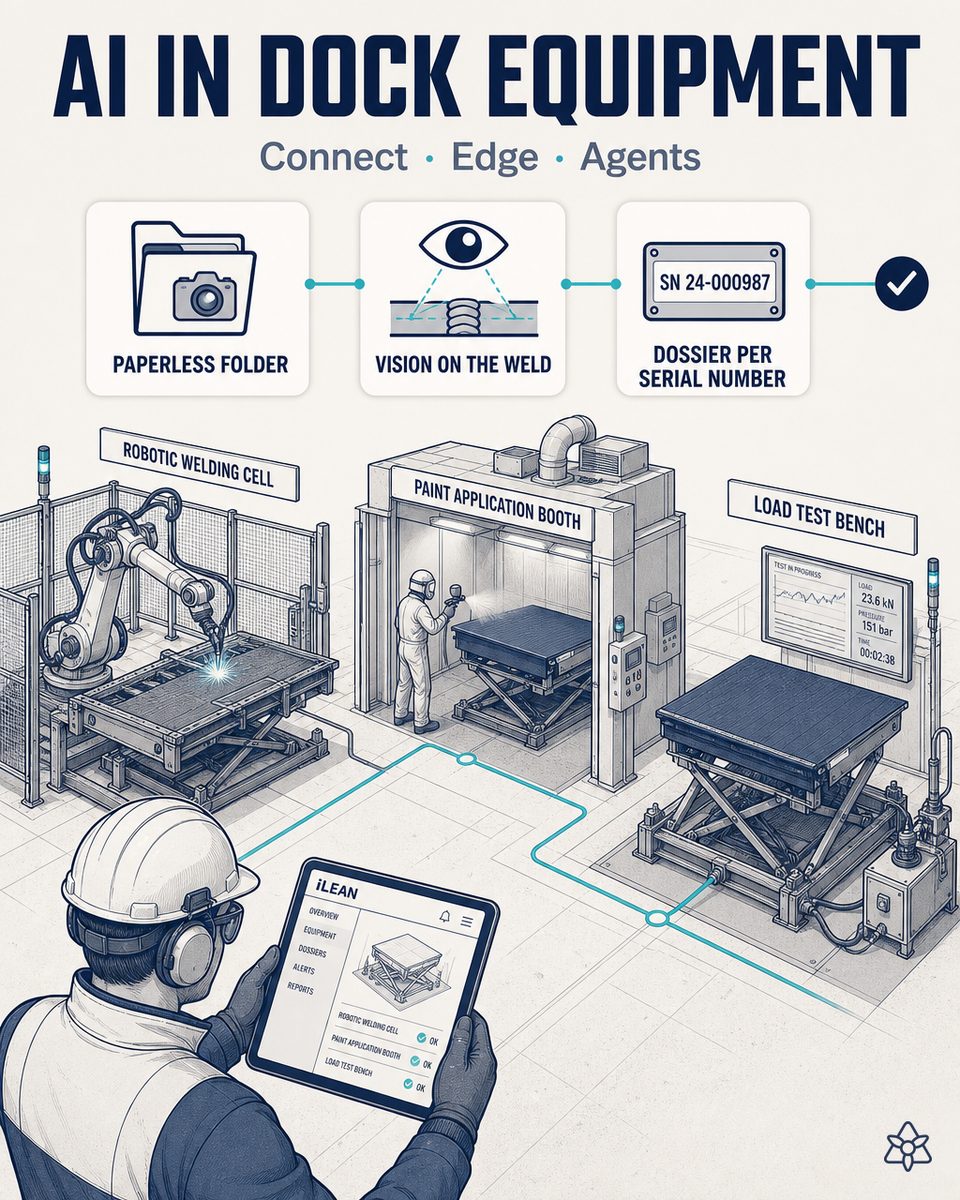
From there come its two structural pains. The first is documentary: each unit's real configuration, with its last-minute changes and its signatures, lives in a paper folder that travels the shop and ends up in a tray. The second is economic and it is the one that really hurts: if the unit arrives on site and is not exactly the one the project needs, there is no possible touch-up. The pit is dug, the crane hired and the installer on site. There is a re-shipment, a second crane, a site penalty and a distributor claim costing many times the equipment's price. And in between, two processes where rework is paid dearly: welding, whose defect becomes invisible the moment the piece enters paint, and powder coating, where an incomplete color purge forces stripping the entire platform.
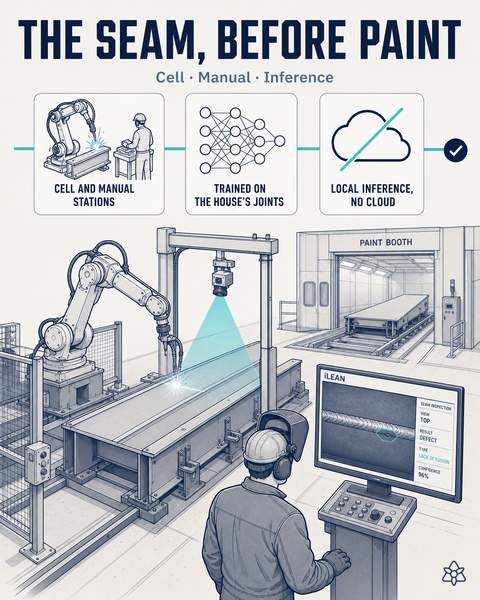
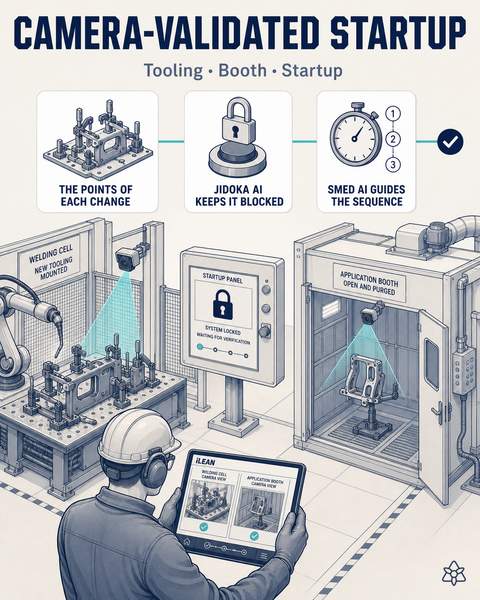
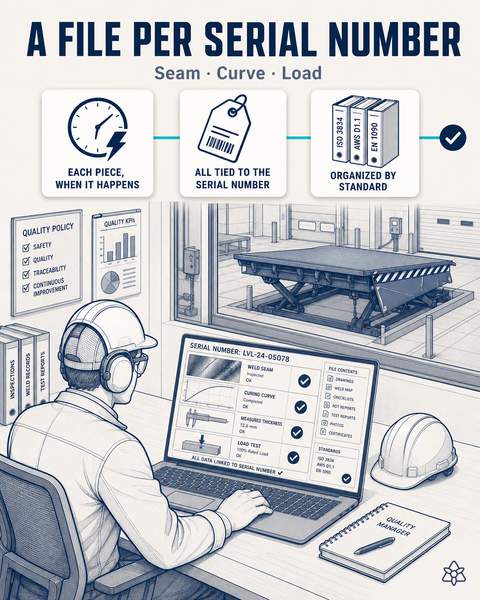
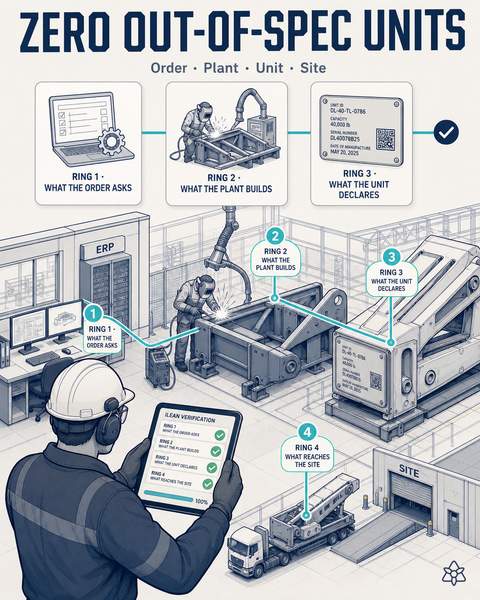
These pages hold twelve use cases of IRIS systems applied to this sub-sector, grouped into the architecture's three blocks: Connect (capturing what is lost today: the manufacturing folder, the curing oven panel, the change arriving from the site, the finish measurements, the steel delivery note), Edge (AI that sees the line: the weld seam and the validated startup) and Agents (the conformity file and the flagship coordinating the four rings). In all of them, the person stays in command and keeps signing.
Capturing what is lost today
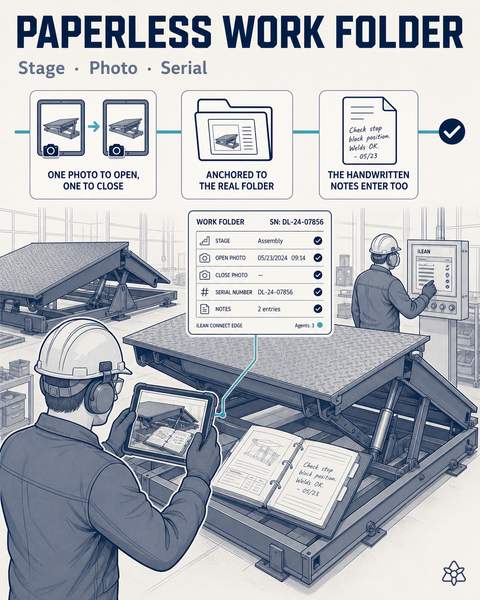
The manufacturing folder enters on its own
Payback 4-9 months · from 4-8 h of latency to second zero
See the case →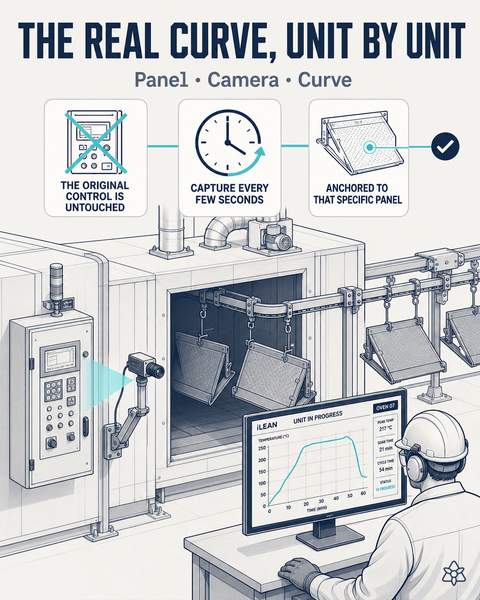
The curing oven starts to talk
Payback 5-10 months · control renewal CAPEX deferred
See the case →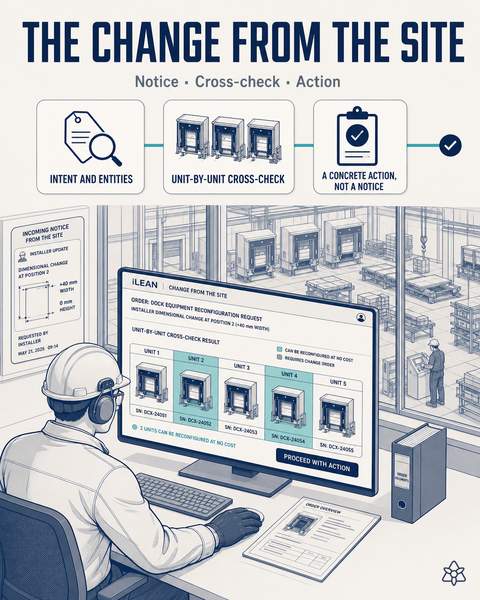
The change arriving from the site
Payback 3-7 months · from 12-48 h of latency to seconds
See the case →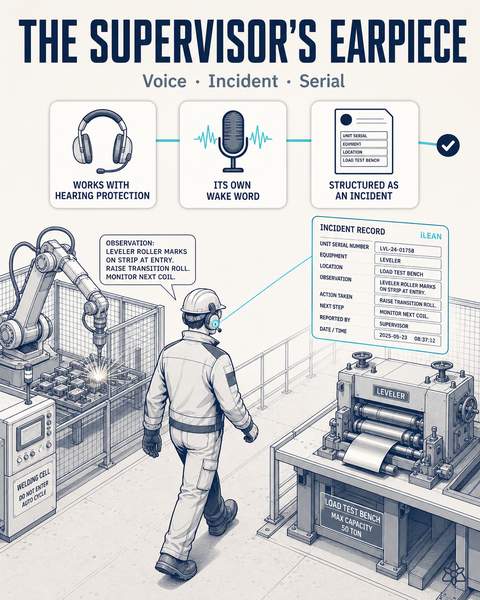
The supervisor dictates while walking
Enabling piece: the base of knowledge transfer
See the case →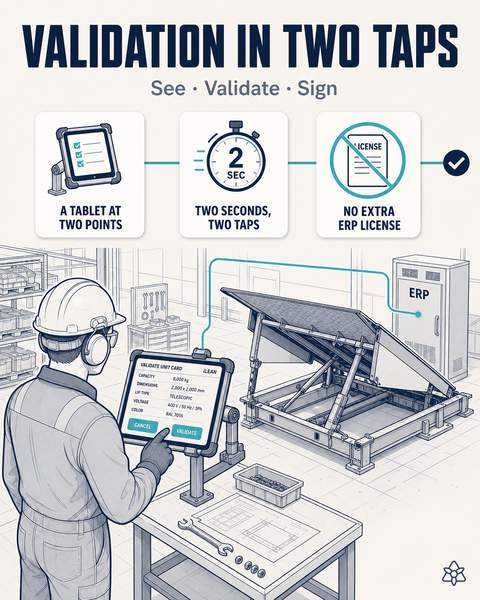
Two taps before the data enters the ERP
Enabling piece: no ERP license for the fitter
See the case →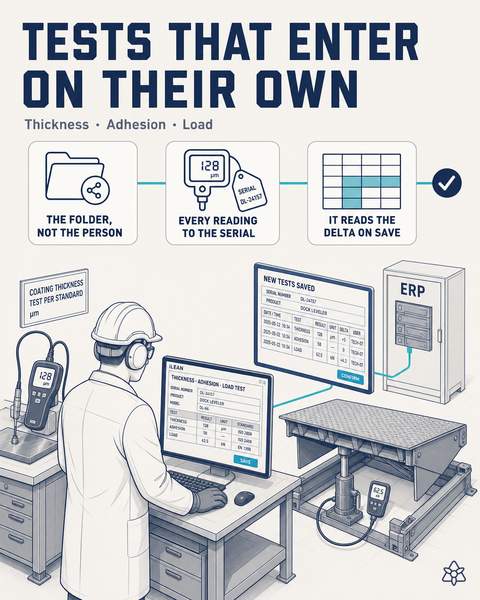
The finish and load tests enter on their own
Payback 4-9 months + −50/−80% quality licenses
See the case →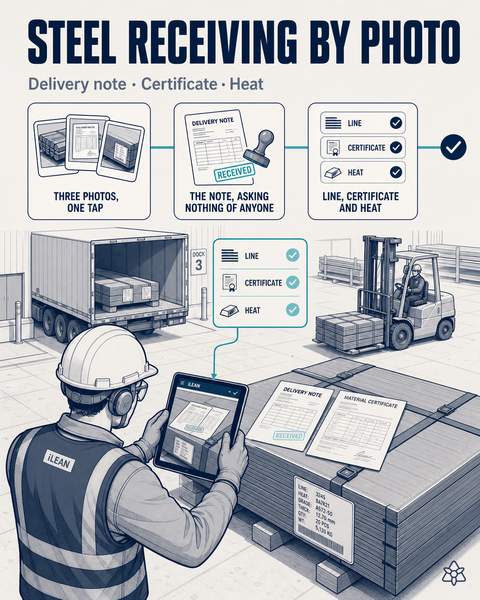
A photo of the steel delivery note and the heat
Payback 3-8 months · truck from 30-45 min to under 5
See the case →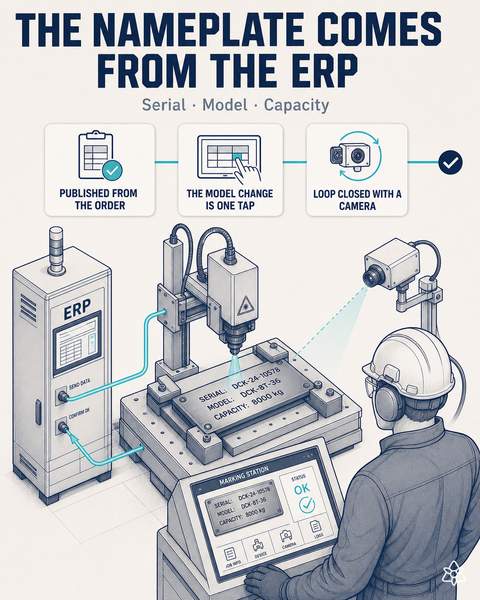
The nameplate, with no typing
Payback 3-6 months · avoided risk in declared information
See the case →AI that sees the line
More cases from this series
- The conformity file assembles itself, unit by unitEach unit generates its dossier as it is built: seam, curing curve, thickness, load test, heat and…
- The curing oven starts to talk: the real curve, unit by unitAn external camera reads the curing oven’s proprietary panel and digitizes the real curve per unit,…
- The nameplate, engraved from the ERP and with no typingConnect stitches the nameplate marker to the ERP via API: serial, model, rated capacity and markings…
- The manufacturing folder enters on its own: one photo and the unit exists in the systemEach leveler’s manufacturing folder enters the system with a photo: configuration, signatures and…
- The finish and load tests enter the ERP on their owniLEAN reads the thickness, adhesion and load test Excel on save, ties it to the serial number and feeds…
- The change arriving from the site, in time for it to cost nothingiLEAN reads email and messaging silently copied, cross-references the installer’s notice with the…
Calculate what a site incident costs in your operation.
We work on your plant's real data, not ours. Assessment with no commitment.