Industrial artificial intelligence in rawhide chew treat factories
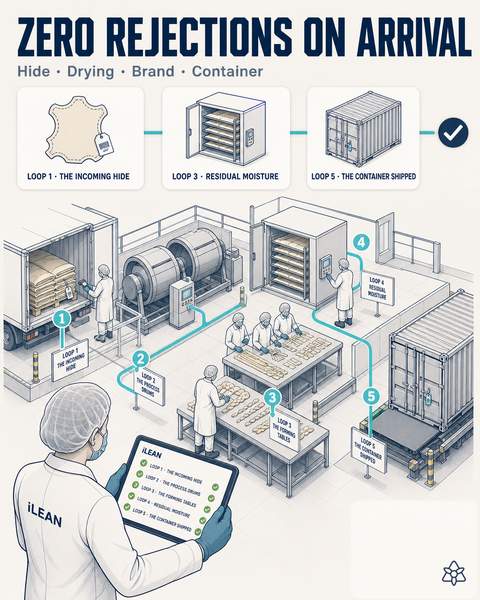
A rawhide chew treat factory resembles no other food plant. At the head there is process chemistry inherited from tanning — soaking, liming, dehairing, fleshing, bleaching. In the middle there are hundreds of people hand-forming knotted bones, sticks, donuts, braids and rolls, an operation where value comes from human dexterity and not the machine. At the center there is a drying of twenty-four to seventy-two hours that rules the whole plant's capacity. And at the tail there is the discipline of an exporting food industry: food safety, chain security and the destination country's labeling rules.
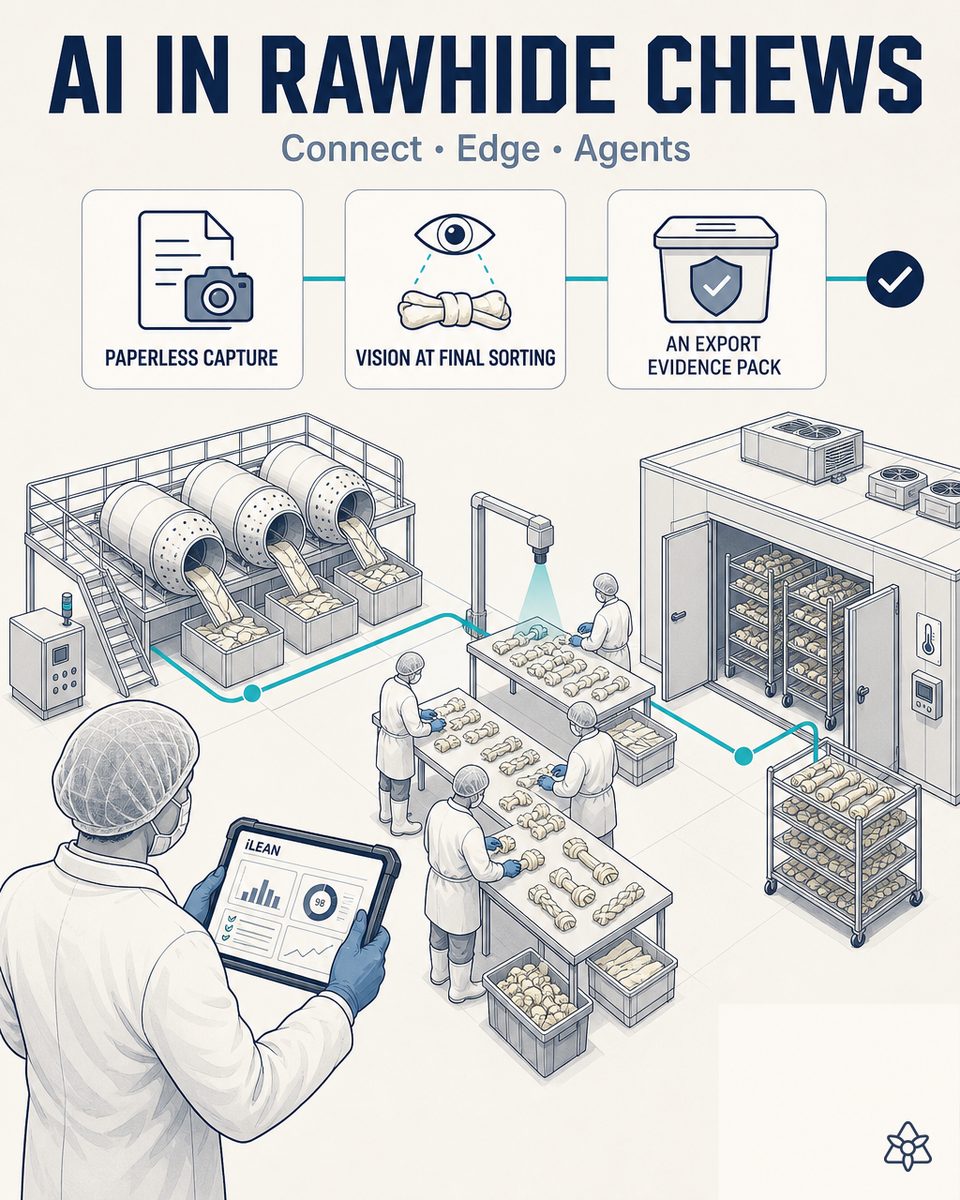
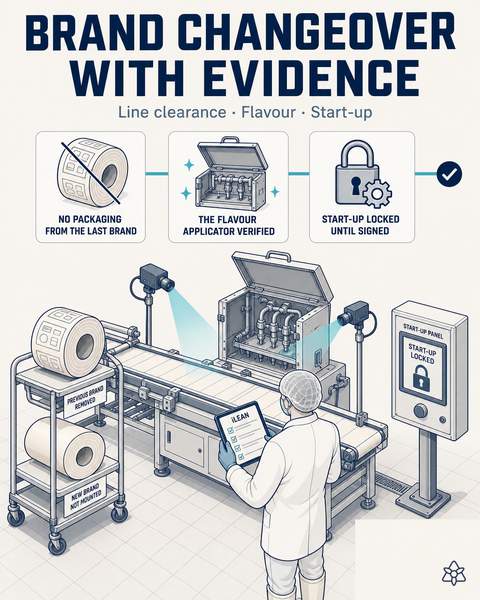
This sub-sector's pains live exactly at the joints between those four realities. The production order and the drying load sheet are still paper, and take a shift to exist for the system. The drying chamber's panel is twenty years old and its readings die on the screen, so nobody correlates the curve with the final moisture or with the complaint arriving weeks later from the distributor's warehouse. The laboratory works in a spreadsheet the ERP does not see. And in a plant manufacturing for several brands, the line clearance between one brand and another is signed without objective evidence. On top of all that weighs the capital pain: a container rejected or recalled at destination, dragging several client brands down at once.
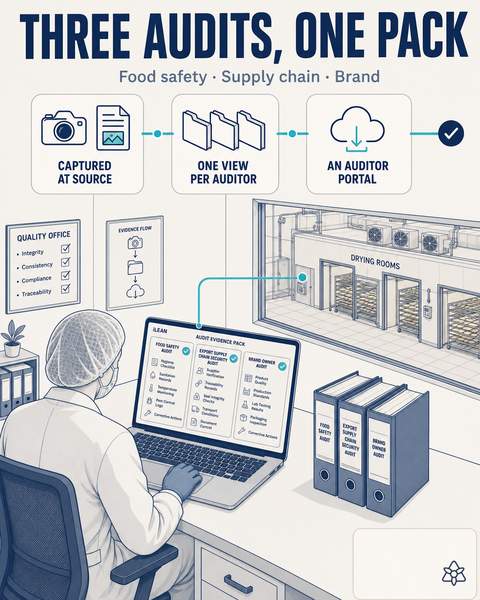
These pages hold twelve cases landed on this sub-sector, organized by the IRIS architecture: Connect's capture modes, the ERP integrations with their license savings angle, the coder's stitching, the in-line Edge vision cases, the auditable evidence pack and the flagship case coordinating everything against the recall at destination. None replaces anyone: in all of them, the person stays in command and keeps signing.
Capturing what is lost today
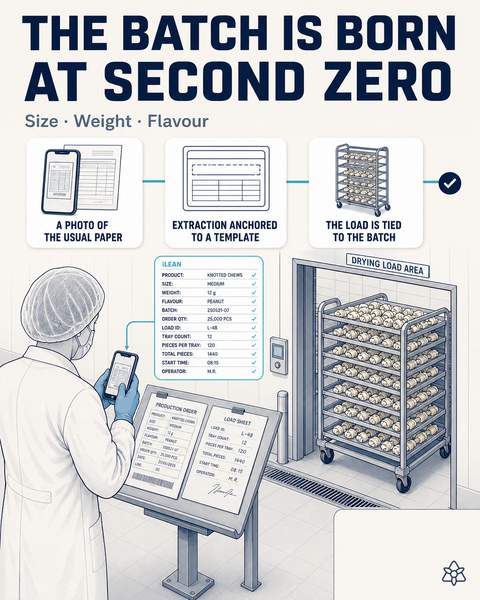
Paperless batch startup and drying load
Payback 4-9 months · from 4-8 h of latency to second zero
See the case →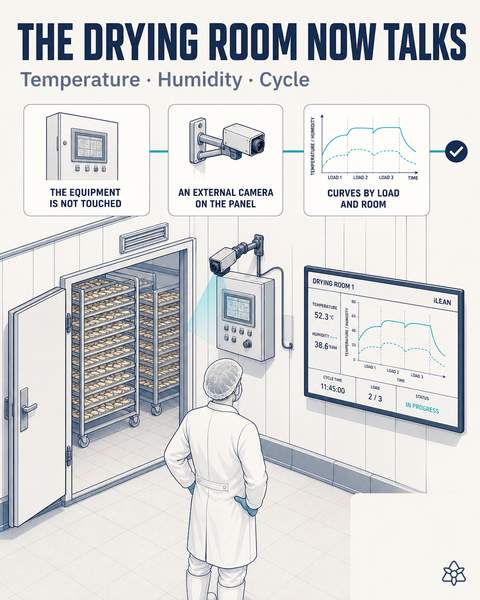
The drying chamber's panel starts to talk
Payback 5-10 months · replacement CAPEX deferred
See the case →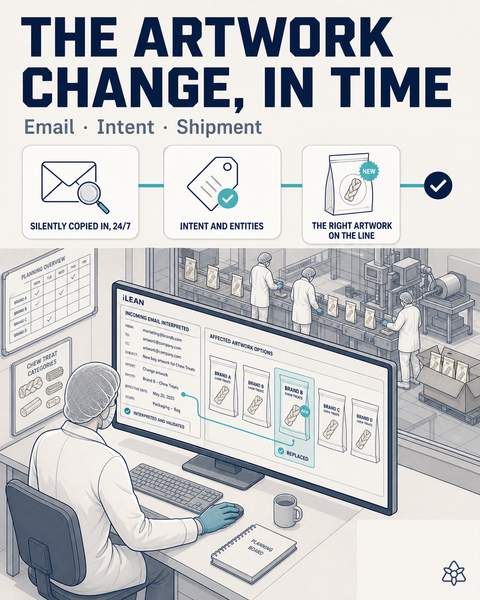
Artwork and shipment changes that do not get lost
Payback 3-7 months · obsolete packaging avoided at the origin
See the case →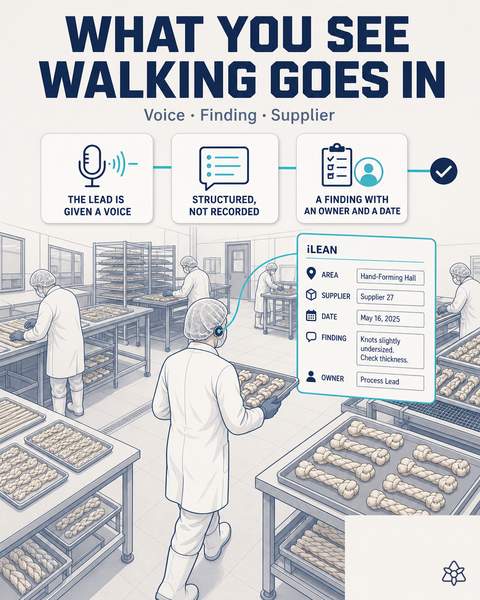
The process lead dictates while walking
Enabling piece: the base of cross-plant standardization
See the case →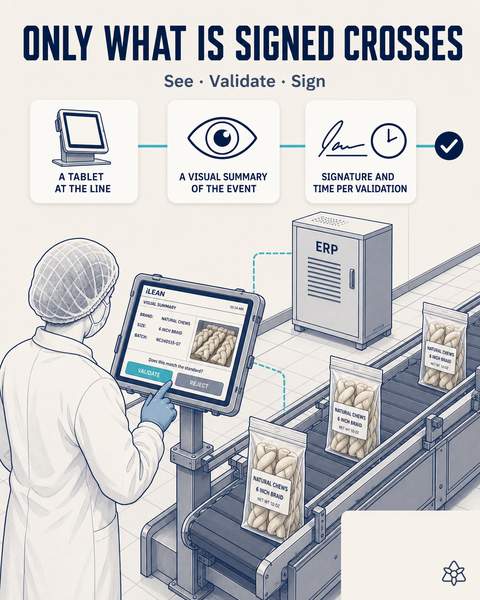
Nothing enters the system without a human signing
Enabling piece: a clean ERP master
See the case →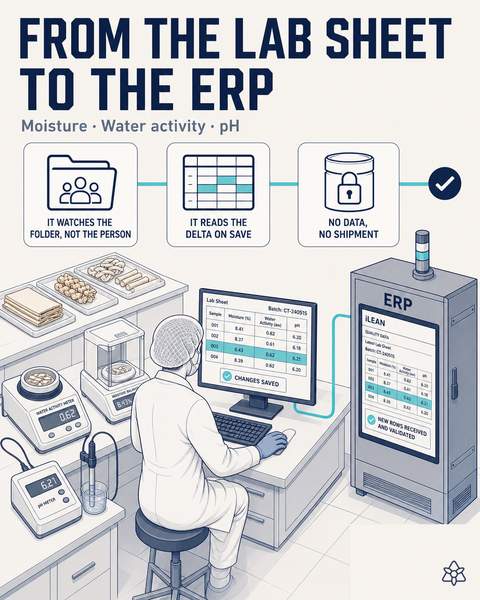
The laboratory's Excel enters the ERP on its own
Payback 4-9 months + −50/−80% licenses, per plant
See the case →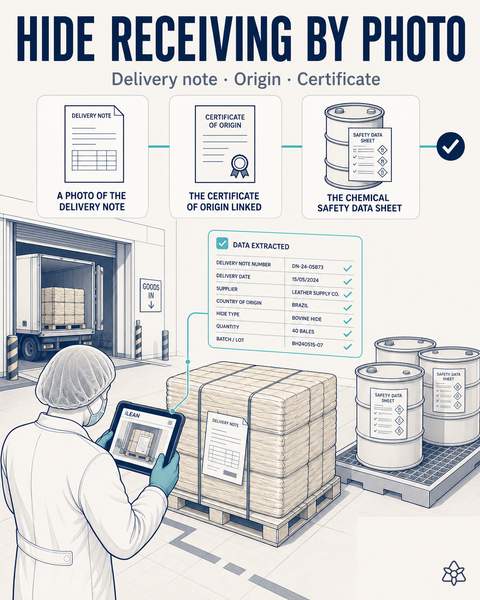
Hide and chemical receiving in one photo
Payback 3-8 months · certificate checked against the destination country
See the case →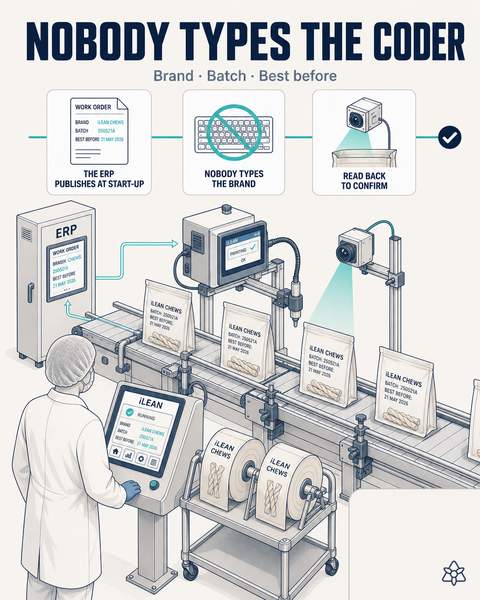
The coder prints what the ERP says
Payback 3-6 months · zero human-origin coding errors
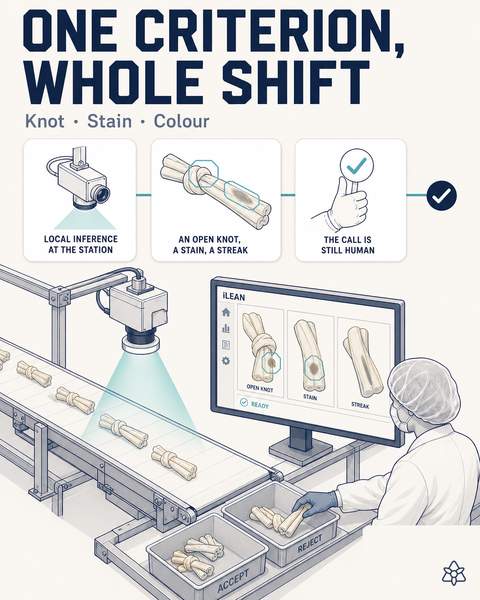
See the case →AI that sees the line
More cases from this series
- The audit stops being a two-week projectPhotos, signatures and measurements organize themselves by certifying standard. The auditor downloads…
- The changes arriving by email stop being read lateiLEAN reads the client brands’ email and messaging, cross-references it with live orders and returns the…
- The last piece before the customer stops depending on typingBatch, expiry and the right brand’s artwork travel from the ERP to the coder with no typing. Zero…
- The drying chamber starts to talk without anyone touching itAn external camera reads the drying chamber’s isolated panel: temperature and humidity curve per load,…
- Backward traceability starts at the dock: receiving by photoA photo of the delivery note and the pallet labels: batches enter the ERP in minutes and the chemical’s…
- The laboratory stops transcribing: from Excel to the ERP at second zeroResidual moisture, water activity and microbiology enter the ERP as soon as the laboratory saves the…
How many rejections at destination have you had and what did each cost?
We work on your plant's real data, not ours. Assessment with no commitment.