Industrial AI in automotive fluid transfer and air coupling plants
Tier-1 plants making fuel and coolant lines, high-performance hoses, quick-connect air couplings for pneumatic brakes and thermal lines for electric vehicles share a feature that sets them apart from almost any other factory: their product seals pressure. A component that does not seal does not produce a cosmetic reject; it produces a field leak.
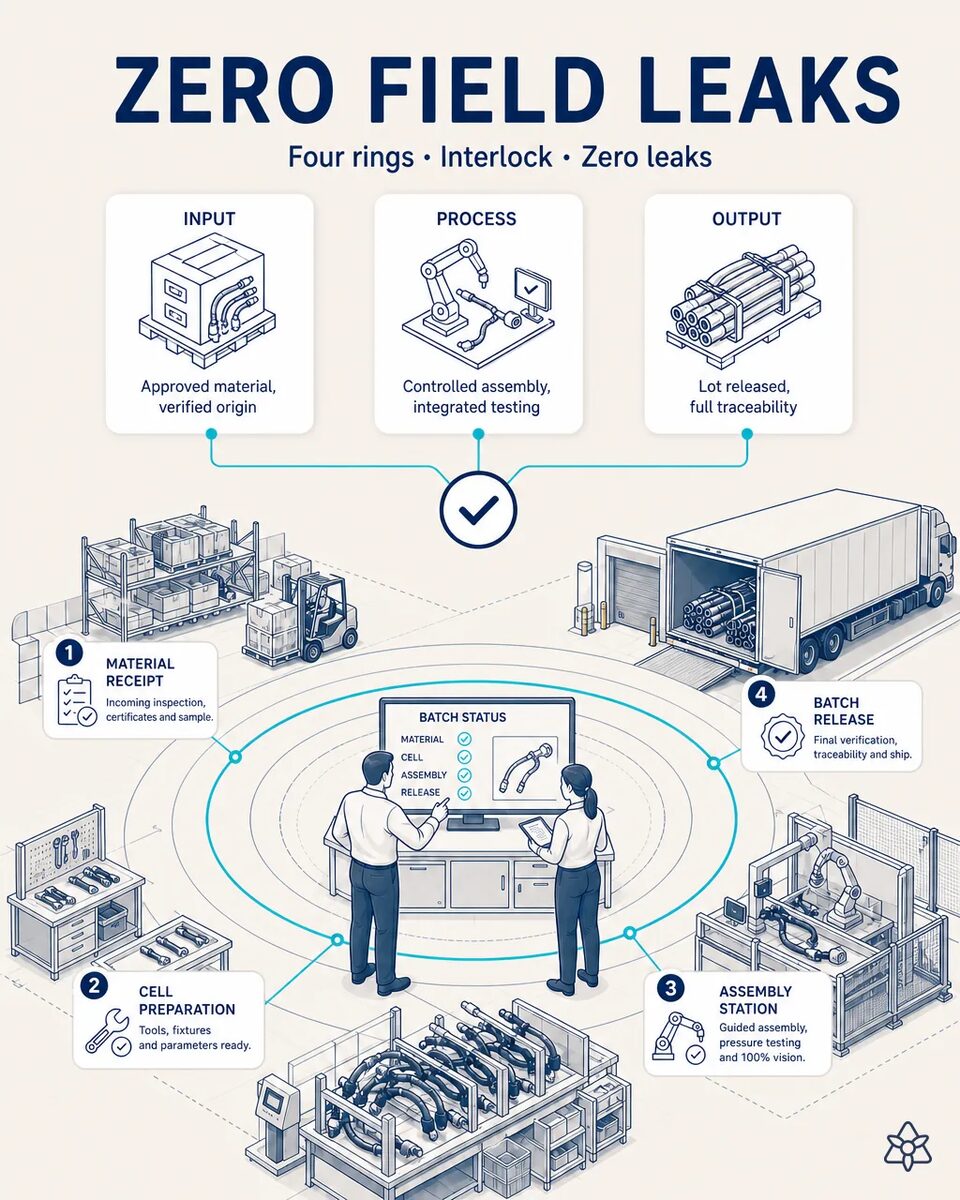
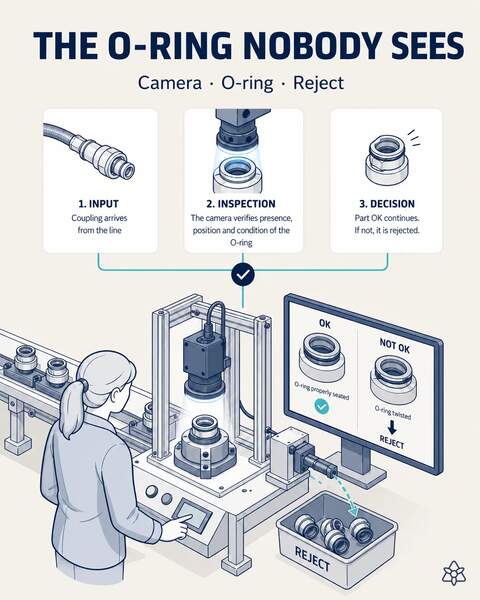
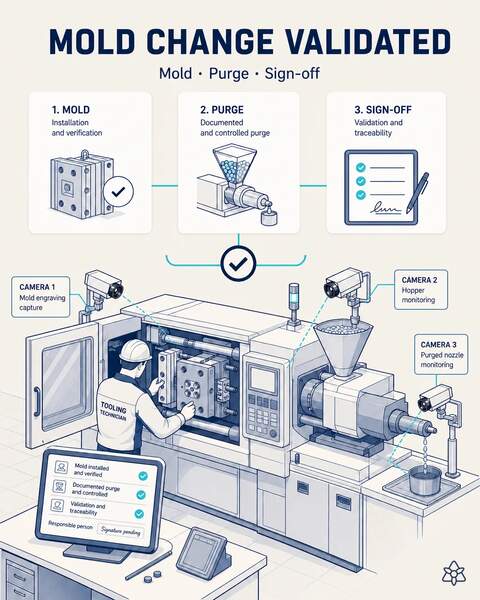
That is where the sub-sector's capital pain comes from, and the thread running through these twelve cases: zero field leaks. Behind that objective sits a list of root causes that repeat across every flow control plant — an unseated o-ring the eye cannot distinguish at line rate, a mold change started without purging, a crimp at the edge of the torque window, a batch released with the leak test signed in a hurry, a hastily typed packing list that breaks material genealogy. And behind the root causes, one constant: the data that would expose them stays on paper, on a panel with no network, or in a spreadsheet the ERP cannot see.
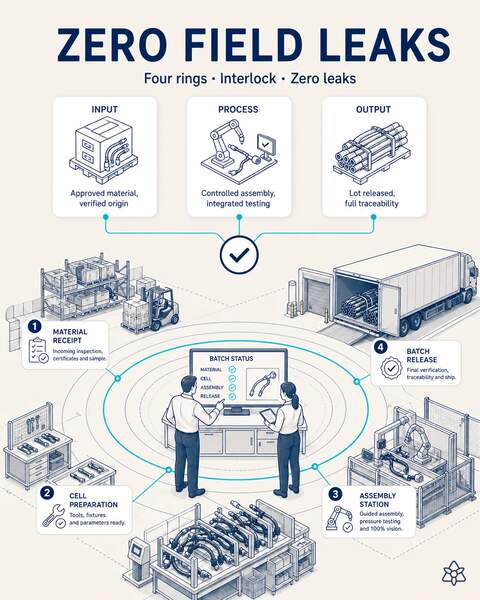
Each of the twelve cases that follow attacks one of those pieces with the IRIS architecture: Connect to capture what is lost today — shop-floor paperwork, machine panels with no interface, external email, the supervisor's voice, lab spreadsheets —, Edge to decide at line rate with local AI vision, and Agents to turn everything captured into auditable dossiers and coordinated decisions. Case twelve brings them together into four verification rings that cross-check each other. All figures are conservative ranges marked as estimates to validate: they get calibrated with each plant's own data.
Capture without changing habits: photo, voice, email, integrations
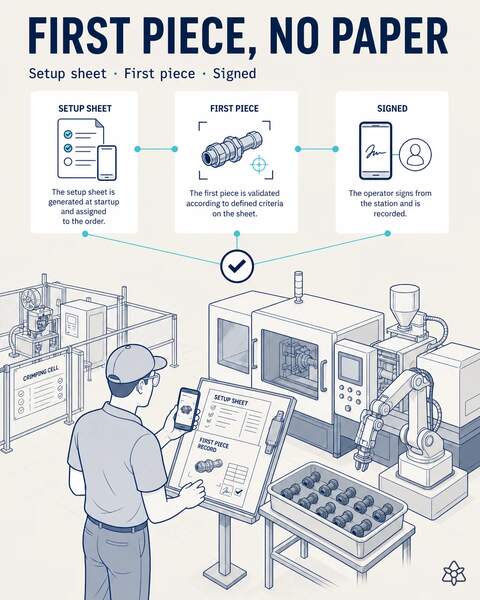
Paperless cell start-up
Payback 4-9 months · from 4-8 h of latency to second zero
See the case →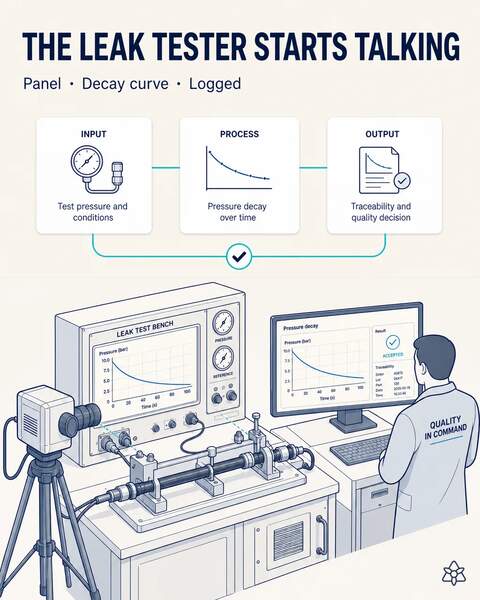
The leak bench starts talking
Payback 5-10 months · closing an 8D from weeks to days
See the case →
The customer alert, read in time
Payback 3-8 months · containment bounded to the real lot
See the case →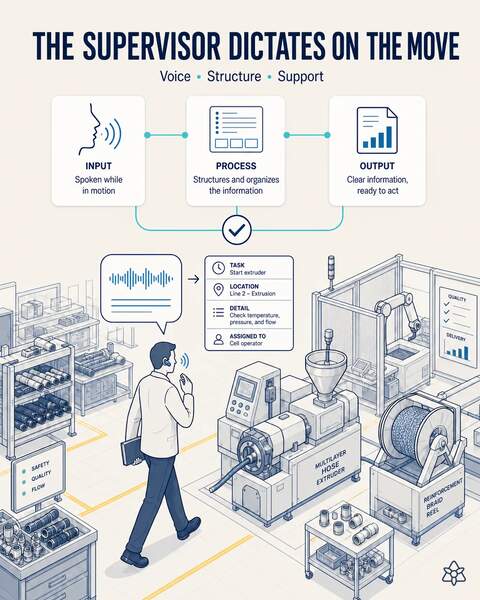
The supervisor dictates while walking
Payback 4-9 months · the recurring problem stops being invisible
See the case →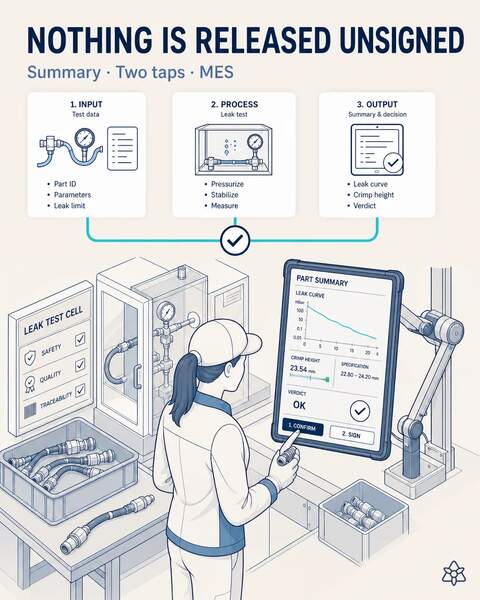
No batch released without a signature
Payback 4-9 months · risk value, not productivity
See the case →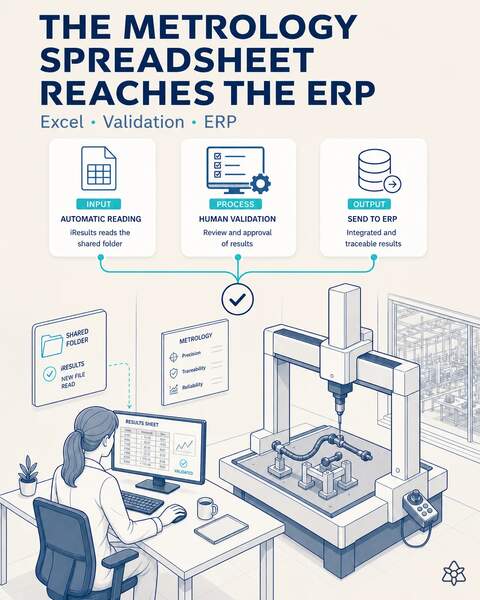
The metrology sheet reaches the ERP
Payback 4-9 months · up to 80 % fewer quality licenses
See the case →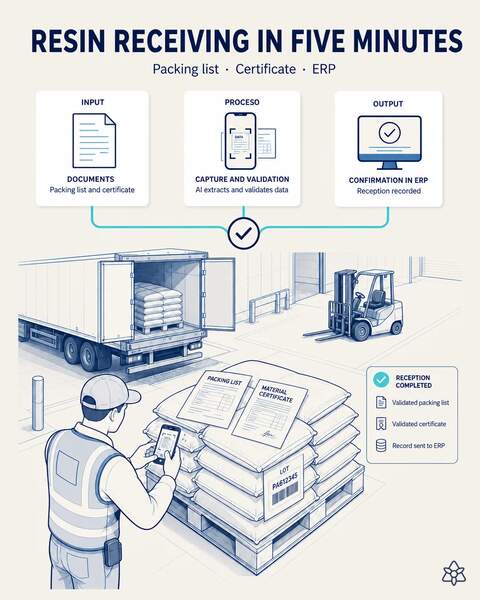
Receiving with the certificate on the lot
Payback 3-8 months · from 45 minutes at the dock to 5
See the case →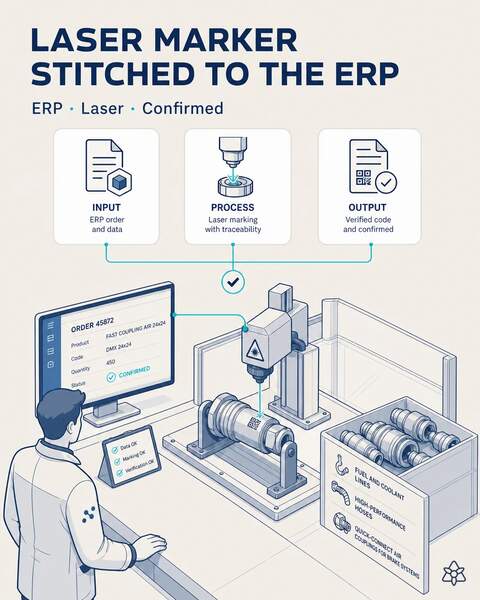
The laser marker, stitched to the ERP
Payback 3-7 months · obsolete-revision lots eliminated
See the case →Machine vision on the line, in real time
More cases from this series
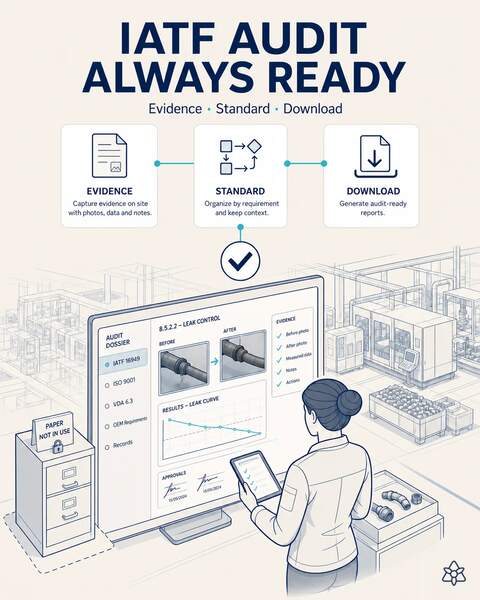
- IATF audit always ready: the dossier closes as it happensEvery batch and changeover closes its own dossier as it happens, organised by standard. The audit is…
- Zero field leaks: four verification rings that cross-check each otherConnect, Edge, Agents, JIDOKA AI and SMED AI coordinated in four cross-checked verification rings: if…
- Paperless cell start-up: the batch exists at second zeroHow a photo of the setup sheet and the first-piece record makes the batch exist in the central system at…
- The shift supervisor dictates on the move, and the knowledge staysBluetooth earpiece and Connect in voice mode: the supervisor records what they know without stopping,…
- The laser marker stitched to the ERP: no typing, no obsolete revisionWhat the ERP publishes, the marker prints, and what was printed comes back confirmed to the MES. Zero…
- The leak test bench starts talking (without replacing it)An external camera digitises the leak bench's pressure decay curve without touching the machine or…
See how IRIS lands in a fluid transfer plant ---
We work on your plant's real data, not ours. Assessment with no commitment.
See automotive