AI for veterinary pharma — multi-species, multi-dose, a single safety net.
Veterinary manufacturing carries everything human pharma does plus its own load: different species, radically different doses of the same molecule, medicated premixes, oral drums — and EU Regulation 2019/6 on top. iLEAN cross-checks the work order, the line history and CVMP rules at second zero, and holds the batch before release if something does not add up. The person signs.
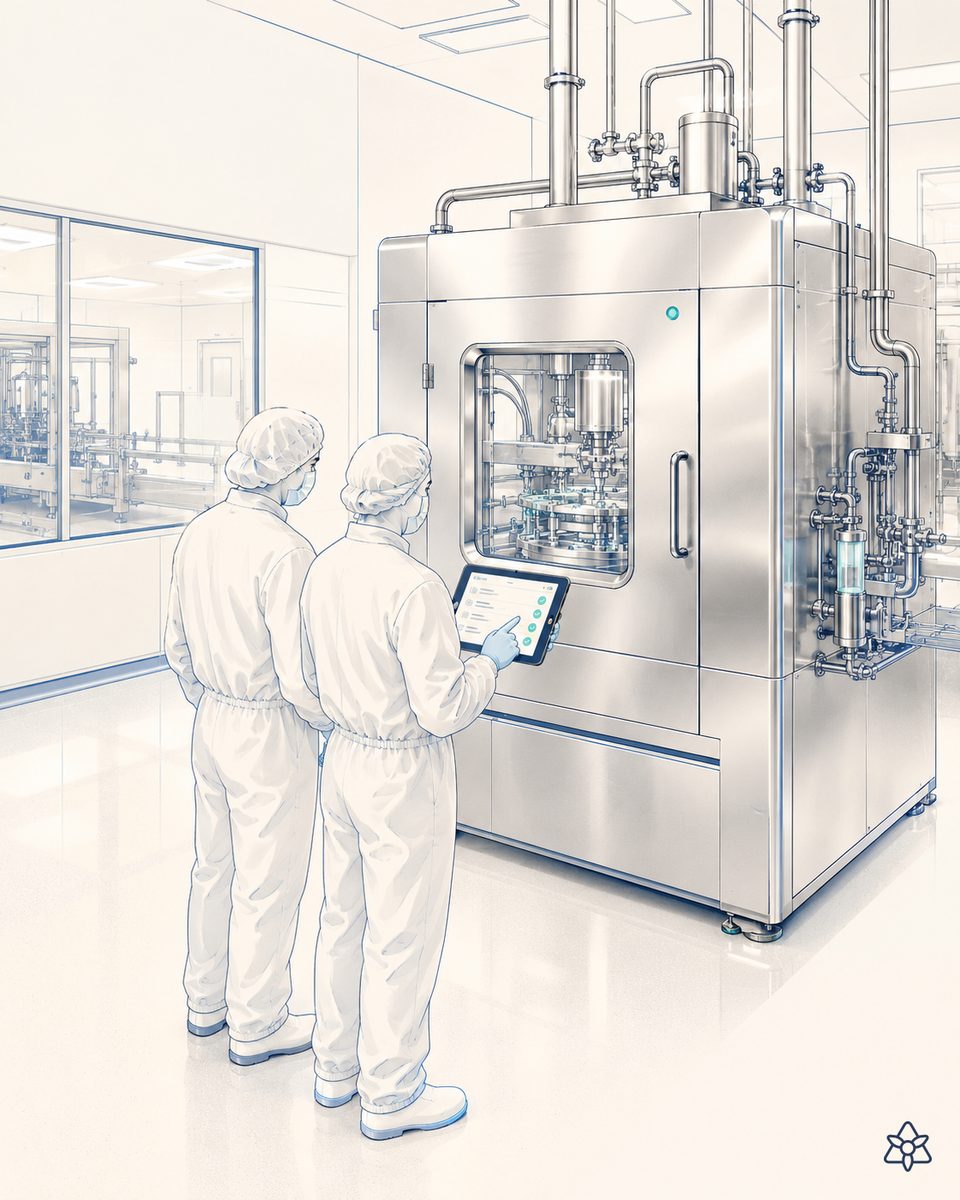
A veterinary plant is a pharma plant with one more layer on top.
A veterinary factory carries everything any human pharma plant carries — GMP, process validation, data integrity, traceability — and adds a layer that has no exact equivalent in human pharma:
- Multi-species with radically different doses of the same molecule — the same antibiotic goes to a small dog, to cattle, to swine. One decimal place in the doser is the difference between efficacy and residue.
- Atypical dosage forms — medicated premixes incorporated into feed, oral solutions in drums, intramammary mastitis products, pour-ons, ruminal boluses. None of them fits a classic blister line.
- EU Regulation 2019/6 and CVMP/EMA — antimicrobials under watch, batch-to-animal traceability via the Union Product Database, withdrawal period visible on the label. The penalty for “residue in meat or milk” reaches the human consumer: it is not a “minor” failure.
The shift lead, the quality manager and the QP are juggling the ERP, the MES, an R&D spreadsheet with the latest formulation, a doser panel nobody ever integrated and an email from the supplier with the new CoA. The classic system works 99% of the time. That 1% is what reaches the CVMP — and each time it is a recall, not a deviation.
iLEAN does not add a fourth system — it seals the cracks between the ones you already have.
The problem in veterinary pharma is not a lack of information: it is information living on islands that, at the critical moment (the multi-species SKU changeover, the premix recipe adjustment, the intermediate cleaning that finished with high conductivity), does not reach the decision-maker in time. iLEAN acts as the putty that fills those gaps, without asking you to change your ERP, your MES or the packaging line.
Edge sees the container, the fill and the label. Connect reads the order, the cleaning record and the old doser's panel. The agent cross-checks against EU Regulation 2019/6 and, if something does not add up, holds the batch. The person signs — never the other way round.
The three iLEAN pieces applied to a veterinary plant:
- Edge — a terminal with machine vision (CNN) over the line. It reads the fill of the oral drum, the tamper-evident closure and the label (species, dose, withdrawal period). If the label declares “swine 10 mg/kg” and the active order was “canine 5 mg/kg”, it fires the rejector. It works without a network. If the plant loses WiFi, Edge keeps reading and holding.
- Connect — captures the work order whether it comes from the ERP, the vertical MES or a spreadsheet from the galenic department; it reads the doser's old panel every few minutes; it digitizes the supplier CoA arriving by email and the WhatsApp from the regulatory veterinarian with a new antimicrobial requirement. Everything enters at second zero.
- Agent — cross-checks the order + the cleaning history + the container image + EU Regulation 2019/6 and CVMP. If there is a deviation, it does not send an email at 10 p.m.: it holds the batch and alerts the QP through whatever channel they use. It generates the batch dossier ready for inspection without rebuilding it by hand.
Manual release vs. cross-checked release with iLEAN
| Aspect | Classic release + checklist | With iLEAN Edge + Connect + Agent |
|---|---|---|
| Multi-species SKU changeover | Paper checklist, signed by the shift lead | Edge verifies the label + the agent verifies certified intermediate cleaning |
| Medicated premix recipe | Galenic spreadsheet → printout → taken to the line | Captured in the ERP/MES/spreadsheet at second zero, no forwarding |
| Withdrawal period on the label | The operator confirms it by eye | Edge reads it, the agent cross-checks it with the target species and the order |
| Batch dossier for CVMP/inspection | Rebuild by hand, weeks | Generated continuously, with an image and signed JSON |
| Operation without a network | n/a — depends on WiFi and servers | Edge keeps running on the panel's own power |
| Decision on a suspect batch | A call to the QP at 10 p.m. | Batch held; the QP signs once they have the full context |
Impact estimate for your plant — to be validated with your numbers.
The block below is an estimate to be validated with the specific data of your plant. We put it forward so the committee has an order of magnitude; we refine it during the diagnostic.
- Mid-sized veterinary plant, 1 oral drum line + 1 medicated premix line, 60+ multi-species SKUs (dog, cat, cattle, swine, poultry).
- Edge pilot on the oral line (camera over the fill + label + actuator + integration with the ERP/MES order). First value expected within a few weeks.
- Indicative payback between 4 and 9 months, depending on the history of CVMP non-conformities, the frequency of rework from labeling or dose, and the cost per inspection finding.
- The hard lever is a single recall or serious deviation avoided: rework, non-conformity, brand damage with veterinary distributors. One recall pays for the pilot and leaves the line ready.
- Reference standard borrowed from automotive to anchor the quality bar: on the order of 25 PPM in defects per million [1]. Veterinary is not automotive, but the logic of the bar is the same.
And the QP's reasonable doubt
“What if the AI gets it wrong and releases a mislabeled batch?” — hallucination is a problem of free generation, not of anchored tasks. In tasks where the AI merely recontextualizes a piece of data from one system to another (reading the label and comparing it with the work order), the best models brought error below 1.5% [2]. And even so, what is critical is never decided alone: iLEAN holds the batch and the person signs. The three safety rings exist precisely for this.
[1] 25 PPM standard in automotive quality — Symestic.
[2] OpenAI paper “Why Language Models Hallucinate”, 2025 — on the reliability of AI in anchored tasks.
What people ask about AI in veterinary medicine manufacturing
How does veterinary medicine manufacturing differ from human pharma?
A veterinary plant shares GMP with human pharma (EudraLex Vol. 4, GMP-V annexes) but adds layers human pharma does not have: multi-species (dog, cat, cattle, equine, swine, poultry), radically different doses of the same molecule, atypical dosage forms (medicated premixes for feed, oral solutions in drums), and a regulatory framework of its own — EU Regulation 2019/6 and CVMP/EMA guidelines. The penalty for wrong labeling or a dose deviation is no smaller because it is “for animals”: the residue in meat or milk reaches the consumer.
How can AI control so many different veterinary SKUs on the same line?
By cross-checking at second zero three pieces of data that today live on islands: the work order (target species, dose, route), the line history (intermediate cleaning documented as complete or not) and the image of the container and the label that iLEAN Edge reads in line. If the SKU declares a canine dose and the dispenser has just run an equine dose without certified cleaning, the agent holds the batch before closing. The person signs — the line does not restart on its own.
What does EU Regulation 2019/6 require that a classic system does not cover well?
EU Regulation 2019/6 tightened traceability (batch-to-animal-patient via the Union Product Database), antimicrobial control and pharmacovigilance. A classic ERP-MES covers the nominal flow, but deviations — last-minute recipe changes, raw material out of spec, a CIP cleaning that finished with high conductivity, data from an old panel nobody ever integrated — usually live in spreadsheets and in the shift lead's head. iLEAN Connect captures those islands (manual, old panel, modern interface) and the Agents cross-check them against the order and the regulation, generating the batch dossier without rebuilding it by hand.
Can iLEAN Edge inspect medicated premixes and oral solutions?
Yes. Edge is a terminal with machine vision (CNN) on the line — it inspects appearance, fill, closure, tamper-evident seal and reads the printed label (species, dose, withdrawal period). If the fill of an oral solution falls out of range, or if the label declares a species different from the one on the order, it fires an actuator (rejector, stack light). It works without a network: if the plant loses WiFi, Edge keeps inspecting and holding, because what is critical cannot depend on connectivity.
How much does an AI pilot cost for a mid-sized veterinary plant?
The order of magnitude of an Edge pilot on a veterinary line is close to that of any Edge pilot in a pharma plant: an initial investment covering terminals + cameras + actuator + integration with ERP/MES, plus an annual license. A reasonable payback to present to the committee is a matter of several months — the hard lever is the cost of a single recall or GMP deviation avoided (reworked product, CVMP non-conformity, brand damage with distributors). We ask for your plant's data and send you the estimated ROI in 48h, with your numbers, not ours.
Related: AI OTC manufacturing · Drug-device combination products · EBR — electronic batch record.
More cases in pharma
- Pharmaceutical topical cream manufacturing with AI — the emulsion does not break during packing, it breaks on the previous shift.How iLEAN cross-checks viscosity, emulsion homogeneity and GMP specs to guarantee consistent…
- Transdermal patch control with AI — one micron of thickness out is one dose released out.How iLEAN cross-checks laminate thickness, API content in the matrix and pouch die-cutting to secure the…
- AI cold chain for vaccines and biologics — one hour short of −70 °C does not show up on the label.iLEAN traces the temperature of every vaccine and biologic vial from manufacturing to administration. No…
- AI control of pharma WFI water — the invisible utility that decides the batch.How iLEAN cross-references TOC, conductivity and endotoxins from the WFI loop with the batch in progress…
- An always-ready FDA/EMA audit — the inspection walks in “prepared” because the evidence is live, not filed away.iLEAN keeps GMP evidence live so an FDA/EMA inspection is prepared in hours, not in weeks of sprint.
- Annex 1 2023 with AI in sterile packaging — CCS, EM and QRM stopped being paperwork.iLEAN covers the pillars of Annex 1 2023: CCS, environmental monitoring and quality by design in sterile…
Tell us your case and in 48h we'll send you the estimated ROI of this AI project for your veterinary plant.
We work on your plant's real data, not ours. Diagnostic with no commitment.
Request estimated ROI in 48h See pharma