Biofuel control with AI — chemistry, the standard and traceability cross-referenced in one place.
A biofuel plant crosses three realities — process chemistry (transesterification, glycerin, conversion ratio), final quality (EN 14214 / EN 15940) and RED III / ISCC EU traceability. iLEAN brings the three together with Edge, Connect and Agents, without touching the DCS or the LIMS. The person signs the batch.
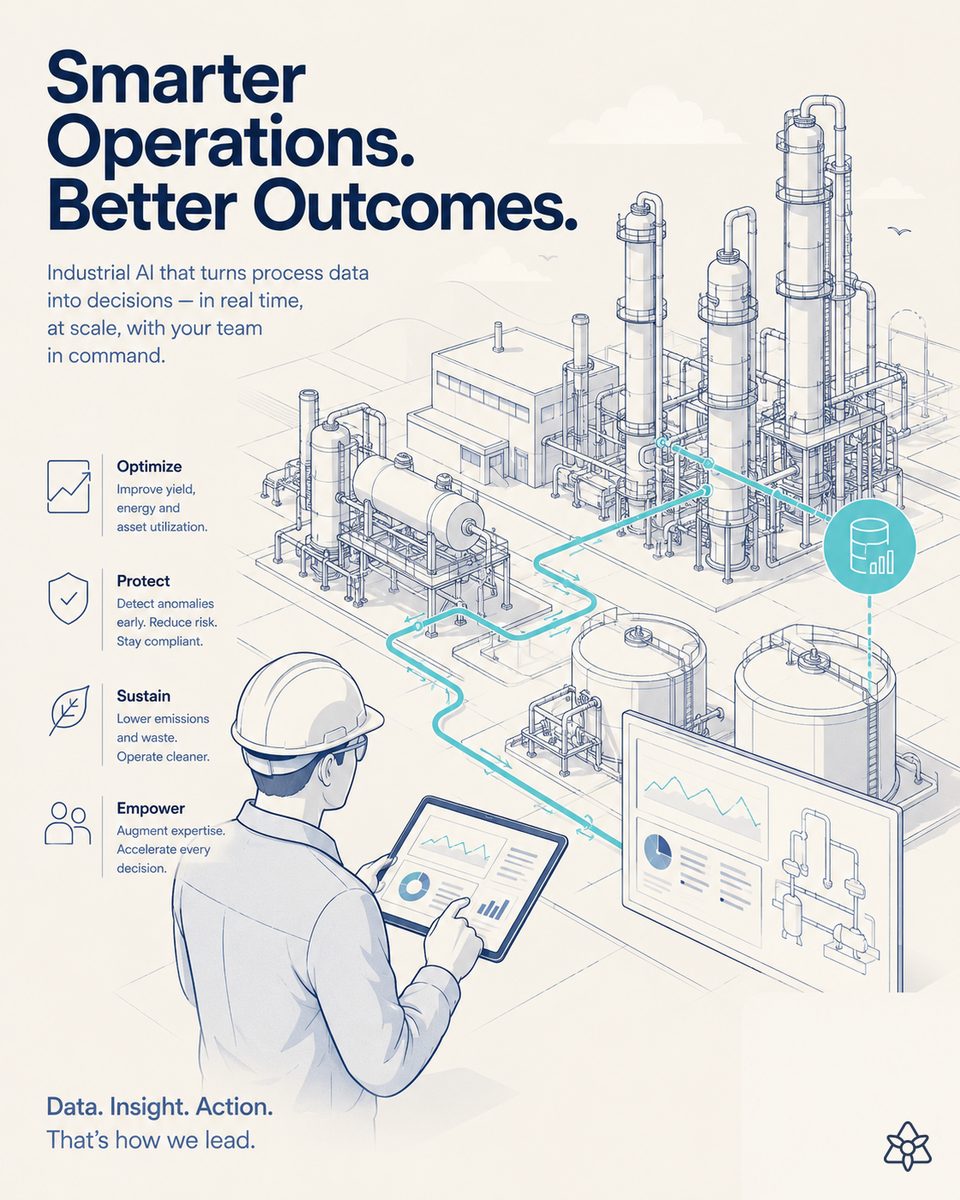
Chemistry, standard and sustainability — three islands and a single batch.
A biofuel plant lives three parallel processes that hardly ever get cross-referenced in time:
- The process chemistry — transesterification (FAME biodiesel) or hydrotreatment (HVO/HEFA). Temperature, methanol/oil ratio, sodium methoxide dosing, feedstock acidity. It lives in the DCS, on an isolated OT network.
- The final quality against the standard — EN 14214 for biodiesel (free glycerin max. 0.02% by mass, total glycerin max. 0.25%, water, sulfur, cetane number). EN 15940 for HVO. It lives in the lab's LIMS, in reports that arrive hours after the batch.
- Sustainability traceability — RED III, ISCC EU, carbon saved, waste or dedicated origin of the feedstock. It lives in supplier certificates, delivery notes, weighbridge tickets and in the sustainability manager's head.
The plant manager knows it — and knows the RED III dossier does not close until all three are cross-referenced. An out-of-spec batch is sold as fossil fuel at fossil fuel prices — the sustainability premium is gone. A free glycerin deviation spotted in the LIMS hours later is rework or a downgrade. The classic system works — and when it fails, it fails by the thousand tonnes.
iLEAN does not add a fourth system — it closes the cracks between the DCS, the LIMS and the supplier certificates.
The problem in biofuel control is not a lack of data: it is three data streams living in different systems, at different speeds, that only get cross-referenced by hand when the dossier is assembled. iLEAN acts as the putty that seals those cracks, without touching the DCS or the LIMS, and respecting OT isolation with the three safety rings.
Edge sees the batch before it closes. Connect reads feedstock, DCS and LIMS wherever they are. The Agents keep the RED III dossier up to date batch by batch. The person signs — never the other way round.
The three iLEAN pieces applied to biofuel control:
- Edge — a vision terminal over the lab or over the sampling belt: it reads the titrator result, the chromatograph or the color of the batch in real time (a trained CNN). If free glycerin or water content drift, it fires an actuator (stack light, holding the batch back to intermediate storage) in milliseconds. It works with no network.
- Connect — captures the temperature curve, the methanol/oil ratio and the dosing from the DCS (passive mailbox, without touching the PLC). Captures the results from the LIMS. And it captures what comes from outside: the supplier's ISCC certificate that arrived by email, the weighbridge ticket, the feedstock declaration of origin. At second zero, with nothing to forward.
- Agents — they live in ring 3. They cross-reference feedstock composition with the transesterification curve, LIMS quality with the catalyst history, the RED III dossier with batches and volumes. They keep the batch file for the ISCC auditor up to date and ready. And they propose rework before the batch goes to washing.
Manual control + a hand-built dossier vs. cross-referenced control with iLEAN
| Aspect | DCS + LIMS + ISCC spreadsheet control | With iLEAN Edge + Connect + Agents |
|---|---|---|
| Detection of out-of-spec free glycerin | In the LIMS report, hours after the batch | In line, or anticipated by cross-referencing the feedstock |
| Supplier ISCC certificate | A PDF in the purchasing manager's inbox | In the system at second zero, linked to the batch |
| Per-batch RED III dossier | Assembled by hand at month end | Maintained automatically, ready for the auditor |
| Anticipating a process deviation | Non-existent — reaction after the fact | Hours of lead time by cross-referencing feedstock + DCS curve |
| OT isolation of the DCS | Intact, with no cross-referenced visibility | Intact, with cross-referenced visibility through the rings |
| Batch rejected by the buyer | Discovered in their storage | Anticipated or redirected to a controlled downgrade |
Impact estimate for your plant — to be validated with your numbers.
The block below is an estimate to be validated with the specific data of your plant. We put it forward so the committee has an order of magnitude; we refine it during the diagnostic.
- FAME biodiesel plant, ~100 kt/year, multi-origin feedstock (UCO, waste vegetable oils), sold with an ISCC EU premium.
- Connect + Agent pilot on the per-batch RED III dossier, plus cross-referencing LIMS quality with feedstock history. First automatic dossier within a few weeks.
- Indicative payback between 4 and 9 months, depending on the number of out-of-spec batches or downgrades in recent years and on the cost per tonne of sustainability premium lost.
- Expected reduction in out-of-spec batches ≥ 30% (a conservative estimate, to be validated).
- The hard lever: a single batch rejected by the buyer or by an ISCC audit pays for the pilot.
And the sustainability manager's reasonable doubt
“What if the AI invents a certificate or assigns the wrong feedstock to a batch?” — hallucination is a problem of free generation, not of anchored tasks. The AI here invents nothing: it recontextualizes the ISCC certificate that already exists into the dossier table. In tasks of that kind, the best models brought error below 1.5%[1]. And even so, signing the RED III dossier is still the sustainability manager's job — iLEAN takes the copy-and-paste work off their desk so they can apply their judgment.
[1] OpenAI paper “Why Language Models Hallucinate”, 2025 — on the reliability of AI in anchored tasks.
Related topics you may find useful: LNG plant control · base lubricant control · green hydrogen control.
What people ask about biofuel control with AI
What is controlled in a biofuel plant, and what breaks the standard AI mold?
A biofuel plant (FAME biodiesel, ethanol, HVO/HEFA) controls three things at once: the process chemistry (transesterification, hydrotreatment, free/total glycerin, water, acidity), the final quality against the standard (EN 14214 for biodiesel, EN 15940 for HVO) and the sustainability traceability (RED III, ISCC EU, carbon content of the feedstock). Each one lives in a different system — DCS for process, LIMS for quality, spreadsheets and supplier certificates for sustainability. iLEAN cross-references the three without touching the reactor PLC.
How do you anticipate a free glycerin or conversion ratio deviation with AI?
Out-of-spec free glycerin (EN 14214 limit: 0.02% by mass) usually originates upstream — a high-acidity feedstock, a drifting transesterification temperature, a spent catalyst (sodium methoxide). iLEAN Connect reads the temperature and dosing curves from the DCS; the Agents cross-reference them with the feedstock composition declared by the supplier (captured from the email or the delivery note) and with the history of batches from the same catalyst lot. They detect the drift within hours, before the batch goes to washing. The person decides whether to rework it.
How do you manage the RED III / ISCC EU dossier with AI without doubling the work?
RED III requires tracing the origin of the feedstock (waste, lignocellulosic, dedicated), the carbon saved versus fossil fuel and the chain of custody through to the final biofuel. Today that dossier is assembled by hand, cross-referencing delivery notes, the supplier's ISCC certificates, production batches and final volumes. iLEAN Connect captures all those documents the moment they arrive (supplier email, a photo of the delivery note, a weighbridge ticket) and the Agents keep the RED III dossier up to date batch by batch, ready for the auditor. It does not replace the sustainability manager — it takes the copy-and-paste work off their desk so they can apply their judgment.
Can iLEAN integrate the plant's DCS and LIMS without touching them?
Yes. The three rings make it possible to read from the DCS through a passive mailbox (ring 1 never accepts incoming connections) and to read from the LIMS from ring 3 (where the powerful AI lives). The DCS is not modified. Neither is the LIMS. The AI does not write to critical OT — it proposes, the person decides and signs. It is what the OT industry has done informally for decades (IEC 62443) and what, with AI now applied to hacking, is worth formalizing. No security bypass, no exceptions.
How much does an AI control pilot cost in a biofuel plant?
The typical pilot in a biofuel plant starts with the combination of Connect + Agent on one of the three planes (EN 14214 quality, RED III traceability or anticipating free glycerin). First value within a few weeks — a daily or per-batch dossier that today is done by hand. Indicative payback is between 4 and 9 months, depending on how often batches fell out of spec in recent years and on the average cost of rework. The hard lever: a single batch rejected by the buyer or by an ISCC audit pays for the pilot. We ask for your data and send you the estimated ROI in 48h with your numbers.
More cases in petrochemical
- Asphalt and bitumen control with AI — the tank temperature rules, and the standard does not wait.How iLEAN combines Edge, Connect and Agents to control penetration, softening point and polymer blending…
- Base oil control with AI — an off-spec batch is several m³ that get downgraded.How iLEAN joins Edge, Connect and Agents to control viscosity, viscosity index and the blending of Group…
- AI control for batch chemical reactors — the reactor depends on the recipe and on the operator's eye, and that eye walks out the day they retire.iLEAN learns the golden batch of every product and suggests real-time corrections to the reactor…
- Cement and clinker control with AI — the kiln drives the whole plant, and every kcal counts.How iLEAN combines Edge, Connect and Agents to control LSF, clinker moduli, fineness and kiln energy use…
- CEMS stack emissions with AI — an analyzer in drift is not an incident, it is the quarter's reporting invalidated.iLEAN validates analyzers, predicts failures and generates BREF/CORINAIR emissions reporting with no…
- Chemical batch traceability (lot genealogy) — a complaint six months later should not be a two-week project.iLEAN rebuilds the chemical batch genealogy from raw material to dispatch. REACH/CLP covered.
Tell us your case and in 48h we'll send you the estimated ROI of this AI project for your biofuel plant.
We work on your plant's real data, not ours. Diagnostic with no commitment.
Request estimated ROI in 48h See petrochemical