CEMS stack emissions with AI — an analyzer in drift is not an incident, it is the quarter's reporting invalidated.
A CEMS requires analyzers that are always operational and validated to EN 14181. iLEAN validates data quality continuously (QAL3), anticipates analyzer failure before it breaks regulatory traceability, and generates BREF/CORINAIR reporting with no manual tasks. The person signs — the regulator demands a human accountable.
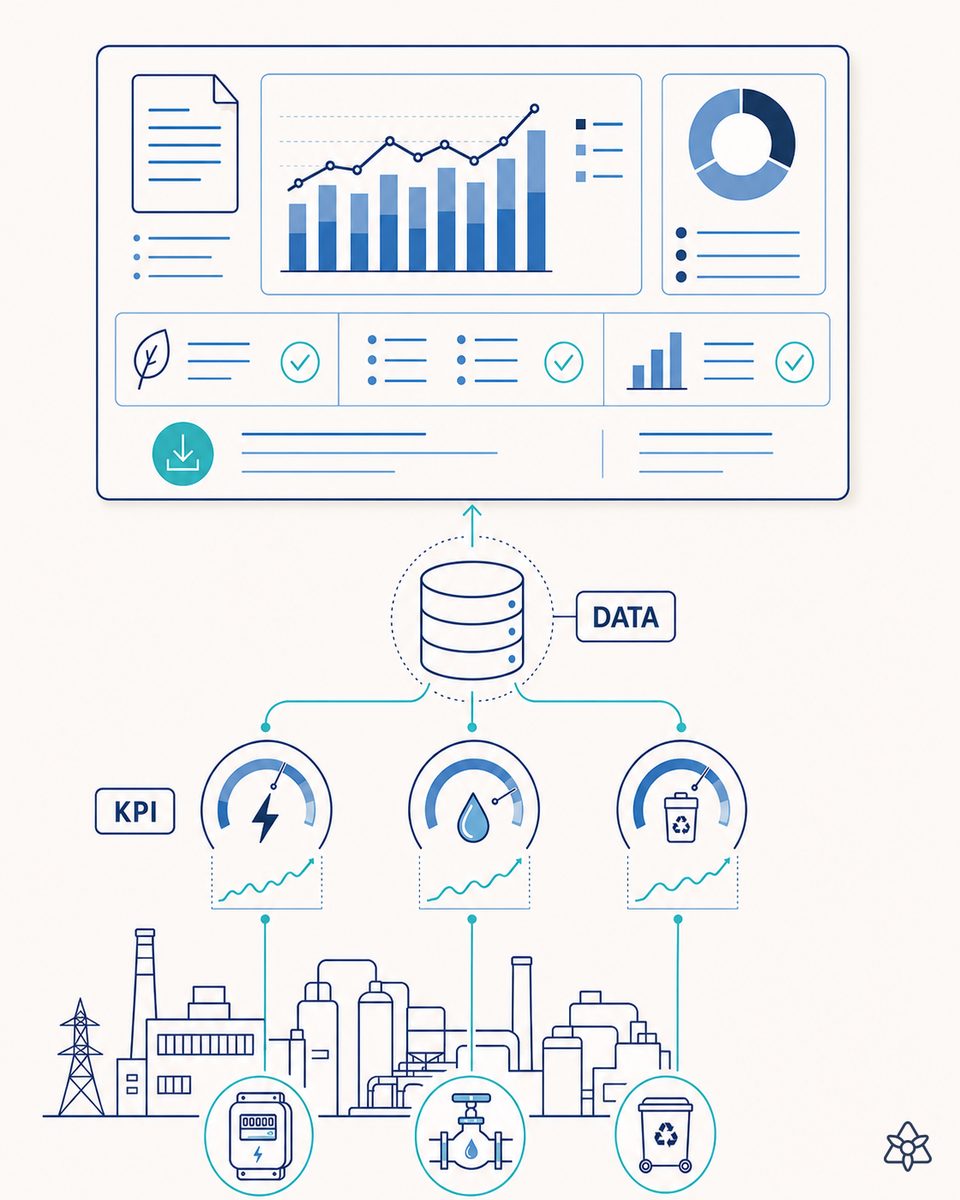
The CEMS works fine — until the lab finds out it had been lying for weeks.
The environmental manager of a refinery or a cogeneration plant does not need anyone to explain what a CEMS is. They live in it. What keeps them awake is something else:
- The analyzer looks operational on the SCADA because it still delivers a value — but that value has been running with a zero drift for three weeks that nobody looked at, and QAL3 is out.
- The QAL2 laboratory comes every few years, not every month. Between campaigns, the only safety net is continuous statistical control — and that usually lives in a spreadsheet from which the traceability of the whole period hangs.
- BREF, CORINAIR and E-PRTR reporting gets rebuilt by hand at year-end: hourly averages, daily averages, validity flags, gap substitution. A week of work, and a risk of error that is not the analyzer's responsibility but that of whoever compiled it.
- When the inspection arrives, what is requested is not just the data — it is the data lineage: which calibration was in force, what incident occurred, what human decision was taken, where the signature is.
The classic system (analyzer + DCS + spreadsheet + the manager's eye) works most months. But the cost is not in the majority: it is in the month it fails, because any invalidated hour drags the whole report with it, and by then it is a problem that leaves the department.
iLEAN does not replace the CEMS — it seals the cracks between the analyzer, the DCS and the reporting.
A CEMS does not fail for lack of hardware: the shelter is there, the analyzer is there, the QAL2 laboratory comes when it should. It fails in what happens in between — the undetected drift, the incident nobody logged, the report assembled at the end with patched data. iLEAN acts as the putty between the pieces you already have: it reads from the analyzer and the DCS without asking them to change, validates continuously, anticipates failure and prepares the regulatory dossier ready to sign.
Edge reads the analyzer data the way the manager would read it walking up to the screen. Brain computes QAL3 continuously and cross-references it with process conditions. Writer generates the BREF/CORINAIR report. The person signs — always.
The three iLEAN pieces applied to CEMS emissions control:
- iLEAN Edge — a terminal that captures analyzer data by whichever route exists (OPC/Modbus bus, 4-20 mA, OCR of the local screen if the shelter is old and isolated). It also reads auxiliary measurements: flow, temperature, pressure, reference oxygen. It works without a network: if the plant loses connectivity, Edge keeps recording locally, because the regulator does not accept “there was no WiFi” as a justification for a gap in the report.
- iLEAN Brain — continuously computes QAL3 statistical control (CUSUM, Shewhart, zero and span drift), cross-references it with real process conditions (furnace load, fuel type, operating mode) and raises the alert while the drift is still recoverable, not once it has already invalidated the period. It learns the normal pattern of your stacks and separates what is a process phenomenon from what is an instrument failure.
- iLEAN Writer — prepares the regulatory deliverables (monthly and annual report per stack, E-PRTR, CORINAIR table with emission factors), with the data lineage attached: the QAL2 calibration in force, QAL3 incidents, human validations, justified gap substitutions. The manager reviews and signs; they do not rebuild anything by hand.
Classic CEMS management vs. a continuously validated CEMS with iLEAN
| Aspect | Classic CEMS + spreadsheet + eyeballing | With iLEAN Edge + Brain + Writer |
|---|---|---|
| Continuous QAL3 | Monthly chart reviewed by hand by the manager | Computed on every reading, alert before going out of tolerance |
| Drift detection | Found at the next calibration or audit | Anticipated from a pattern cross-referenced with the real process |
| Integration with the analyzer | Whatever the integrator wired to the DCS | Modern bus, 4-20 mA or screen OCR — whatever there is |
| Gap substitution | Manual rule applied at closing | Configured rule, applied on the spot, justified in the dossier |
| BREF / CORINAIR / E-PRTR report | Annual reconstruction, several person-days | Permanent draft, validated and signed at closing |
| Regulatory inspection | “We'll have to look for it” — several weeks | Dossier with full lineage in a couple of clicks |
Impact estimate for your plant — to be validated with your numbers.
The block below is an estimate to be validated with the data of your stacks and your real incident frequency. We put it forward so the committee has an order of magnitude; we refine it during the diagnostic.
- Refinery or petrochemical plant with several CEMS stacks (boilers, furnaces, flare) measuring NOx, SOx, CO, CO2, particulates and reference oxygen.
- Pilot on one stack: integration with the existing analyzer, continuous QAL3, predictive drift alert, monthly dossier with lineage. First value expected within a few weeks.
- Indicative payback between 4 and 9 months, depending on the current cost of rebuilding regulatory reporting, the frequency of documented QAL3 incidents and the avoided cost of a single invalidated hour multiplied by your emission factor.
- Expected reduction in compliance effort ≥ 30% (to be validated against your environmental team's baseline). The hard lever is not saving person-hours, it is avoiding the audit that reopens a quarter.
And the environmental manager's reasonable doubt
“What if the AI gets it wrong and validates an hour that was not valid?” — hallucination is a problem of free generation, not of anchored tasks. In tasks where the AI simply recontextualizes a piece of data from one system into another (reading the analyzer, comparing it with the QAL2 calibration in force, applying the QAL3 rule), the best models brought error below 1.5% [1]. And even so, nothing regulatory is closed alone: iLEAN proposes the flag and the dossier, the person signs. The three safety rings exist precisely for this — the CEMS OT network stays isolated, the AI lives in the outer ring, and only what has been validated enters the inner ring.
[1] OpenAI paper “Why Language Models Hallucinate”, 2025 — on the reliability of AI in anchored tasks.
What people ask about CEMS and AI emissions reporting
What does CEMS EN 14181 require?
EN 14181 is the European framework that ensures a continuous emissions monitoring system (CEMS) delivers data that is valid for the regulator. It defines three operating levels: QAL1 (equipment suitability, done by the manufacturer), QAL2 (calibration of the CEMS under real conditions with a reference laboratory, typically every 3-5 years), and QAL3 (continuous control of drift and precision during operation). Regulatory reporting (BREF, CORINAIR, PRTR) is built on valid QAL3 data: if the analyzer is out of tolerance and nobody caught it, the period's data is not admissible and the operator has a problem.
How are QAL2/QAL3 validated?
QAL2 is validated with an external campaign: an accredited laboratory measures in parallel with a reference method and generates the CEMS calibration function. QAL3 is the part that hurts day to day — continuous statistical control of zero and span with span gas, CUSUM or Shewhart charts, and a record of every drift outside limits. iLEAN automates the QAL3 part: it reads the analyzer series from the DCS or from the CEMS screen itself, computes the statistics, raises the alert before the drift eats the whole margin and prepares the incident file for the environmental manager. The person signs — the regulator requires human traceability.
Does it integrate with existing analyzers?
Yes. iLEAN Connect plugs into the CEMS by whichever route is available — OPC UA / Modbus / 4-20 mA if the CEMS integrator left an output, OCR reading of the local screen if the equipment is old and isolated, or FTP export of the history if that is all that remains. The integration does not require replacing the analyzer, renegotiating the contract with the CEMS manufacturer, or scrapping the sampling shelter. It is the putty that connects what is already there; it does not ask you to change the field equipment.
Automated reporting?
Yes. iLEAN Writer generates the recurring reporting — monthly and annual emissions report per stack, E-PRTR declaration, hourly and daily average tables with QAL3 validity flags, and the CORINAIR inventory with the corresponding emission factors. The environmental manager reviews and signs; they do not rebuild spreadsheets by hand at every closing. If the authority asks for a specific period, the dossier is generated in a couple of clicks, with the data lineage visible: which analyzer, which QAL2 calibration was in force, which QAL3 incidents occurred, which human validation was applied.
How much compliance effort is saved?
The compliance effort of a CEMS is not in the normal day — it is in the odd days: the drift that appears in February and nobody sees until April, the audit that asks you to rebuild three months of hourly averages with a justification for every gap, the change of method at the QAL2 laboratory that invalidates the calibration. iLEAN cuts the cost of those odd days because the information is already cross-referenced and traced in real time, not afterwards. We send you the estimated ROI in 48h with the data of your stacks and your real incident frequency — not with a generic case.
More cases in petrochemical
- AI control for batch chemical reactors — the reactor depends on the recipe and on the operator's eye, and that eye walks out the day they retire.iLEAN learns the golden batch of every product and suggests real-time corrections to the reactor…
- Biofuel control with AI — chemistry, the standard and traceability cross-referenced in one place.How iLEAN combines Edge, Connect and Agents to control transesterification, free glycerin and RED III…
- Cement and clinker control with AI — the kiln drives the whole plant, and every kcal counts.How iLEAN combines Edge, Connect and Agents to control LSF, clinker moduli, fineness and kiln energy use…
- Chemical batch traceability (lot genealogy) — a complaint six months later should not be a two-week project.iLEAN rebuilds the chemical batch genealogy from raw material to dispatch. REACH/CLP covered.
- Chemical customer specs and CoA with AI — the spec stays live, the certificate is automatic, the complaint never arrives.iLEAN keeps every customer spec live and auto-generates the CoA for each batch. No outdated specs, no…
- Chemical recipe optimization with AI — the raw material changes, so the recipe should change with it.iLEAN adjusts the recipe batch by batch to the real quality of the incoming raw material. Consistent…
Tell us about your case and in 48h we'll send you the estimated ROI of this AI CEMS project for your plant.
We work on the real data of your stacks and your regulatory reporting, not ours. Diagnostic with no commitment.
Request estimated ROI in 48h See oil and petrochemicals