Chemical recipe optimization with AI — the raw material changes, so the recipe should change with it.
In a chemical plant the raw material is never the same twice — the incoming analysis changes, and the recipe stays fixed because adjusting it by hand is slow and risky. iLEAN learns the golden batch of every product and proposes, batch by batch, the recipe adjustment that keeps yield on target. The person signs — the DCS executes. Without touching the SIS.
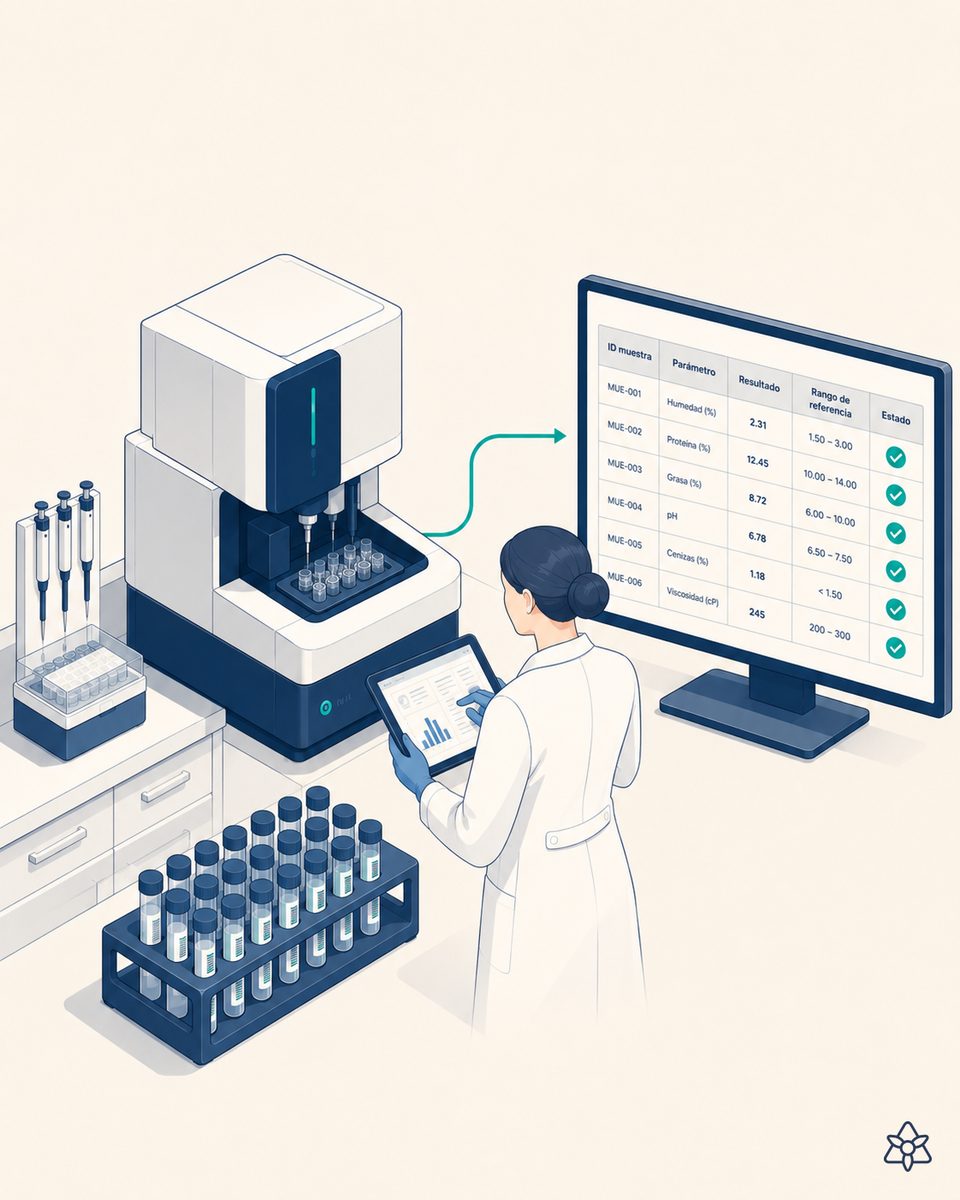
The process manager can see it coming — but never gets there in time.
In a batch chemical plant, raw material never enters the reactor in the same condition as last time. The supplier changes, the lot from the same supplier changes, the storage humidity changes, the marginal purity changes — and the DCS recipe is still the one that was tuned months ago during a commissioning exercise.
- The process manager knows it — for years they have watched how, when a batch from supplier X comes in, it pays to raise 3 degrees or extend by 12 minutes. They carry it in their head, note it in a notebook, sometimes in a spreadsheet running alongside the MES.
- The DCS operator does not have that intuition — and even if they did, changing the recipe mid-campaign without a justification is risky. So the plant runs on the average recipe, and yield drops whenever the raw material moves away from the center.
- The lab confirms the problem too late — the product analysis comes out of the LIMS several hours after the batch has finished. What you see is the consequence, not the cause.
The result is yield variability that the plant pays for in margin, and a critical piece of knowledge (how to tune the recipe to each raw material) that lives in the heads of two or three veterans. The day one of them retires, a slice of the bottom line leaves with them.
iLEAN does not touch the DCS — it captures the veteran's eye and hands it back to the operator on shift.
The problem is not a lack of algorithm: it is information living on islands — the LIMS on one side, the DCS on another, the veteran's notebook on a third. iLEAN acts as the putty that seals those cracks and gives the operator on shift the same intuition the veteran has, on their screen, with the rationale right next to it.
Brain learns the golden batch per product. Connect reads the LIMS, the DCS and the veteran's spreadsheet. The agent proposes the adjustment batch by batch. The person signs — the DCS executes it.
The iLEAN pieces applied to chemical recipe optimization:
- Connect — capture in its three modes: OPC UA integration with a modern DCS, driver-based reading of the LIMS, an intermediate mode for the old lab system that only has an isolated PC, and manual capture by photographing the panel when needed. It also captures what arrives from outside (the supplier's email with the certificate of analysis of the new lot) at second zero.
- Brain — on top of all that history it builds the golden batch per product: the signature of a good batch (temperature curve, dosing, agitation, pH window) and its correlation with the quality of the incoming raw material. When a new raw material arrives, Brain looks for the most similar batch in the past and extracts the adjustment that worked.
- Agent — it proposes the adjustment on the process manager's screen along with the rationale: “raw material from supplier X, lot 2025-1138, purity 97.2% (vs. average 98.5%) → I propose raising 4 °C in stage 2 and extending by 8 min, based on 7 similar batches with yield ≥ 95%”. The manager approves or rejects; the approved change is cryptographically signed, passes through the validation chamber of the intermediate ring and only then reaches the DCS mailbox.
Fixed recipe + the veteran's intuition vs. a golden batch with a batch-by-batch proposal
| Aspect | Fixed DCS recipe + the veteran's notebook | With iLEAN Brain + Agent |
|---|---|---|
| Where the adjustment comes from | Intuition in the heads of 2-3 people | Golden batch per product and campaign, proposed on screen |
| Reaction to variable raw material | The plant runs on the average recipe | Adjustment proposed before the reactor is charged |
| Starting data | DCS, LIMS and spreadsheet living on islands | All three sources cross-referenced at second zero |
| Approval of the change | Verbal, at the shift handover | Manager's signature; cryptographic traceability to the DCS |
| The veteran's knowledge | Leaves with them on the day they retire | Captured as a permanent capability of the plant |
| Time to first value | Months of a classic APC project | First value in a few weeks — low-hanging fruit first |
Impact estimate for your plant — to be validated with your numbers.
The block below is an estimate to be validated with the specific data of your plant. We put it forward so the committee has an order of magnitude; we refine it during the diagnostic.
- Specialty chemicals plant with 2-4 multi-product batch reactors, an existing Honeywell/Yokogawa/ABB DCS, and a LIMS with at least 12 months of raw material and product quality history.
- Brain pilot on one reactor and one product family (Pareto: the one that drives 80% of the cost). First value expected within a few weeks.
- Reduction of yield variability of around ≥30% on the worst quartile of batches — you already have the good batch; what the agent fixes is the odd one out.
- Indicative payback between 4 and 9 months, depending on the unit margin of the product and the cost of an out-of-spec batch (rework, downgrade to a lower grade, destruction).
And the process manager's reasonable doubt
“What if the AI proposes an adjustment and gets it wrong?” — hallucination is a problem of free generation, not of anchored tasks. When the AI limits itself to recontextualizing a piece of data from one system into another (reading the supplier's certificate of analysis, finding the most similar batch in the history, proposing the same adjustment), the best models brought error below 1.5% [1]. And even so, what is critical is never decided alone: the proposal reaches your screen with the rationale, you sign, and only then does it pass to the DCS. The three safety rings are designed precisely for this — the SIS remains untouchable.
[1] OpenAI paper “Why Language Models Hallucinate”, 2025 — on the reliability of AI in anchored tasks.
What people ask about chemical recipe optimization with AI
How does iLEAN learn from the recipe history?
Connect ingests data from the DCS, the LIMS and the ERP — reactor variables (temperature, pressure, agitation, dosing), incoming raw material analyses and outgoing product quality, batch by batch. Brain builds the golden batch per product and per raw material family: the signature of a good batch. When a raw material comes in outside the average, the agent cross-references that input with the corresponding golden batch and proposes the recipe adjustment that keeps yield on target. The person approves the change before it ever reaches the DCS.
What about a multi-product reactor?
iLEAN maintains a golden batch per SKU and per campaign, not a single one. The agent knows which product is up next, which campaign follows and what cleaning/changeover sits between them. In multi-product reactors the big lever is usually not squeezing the recipe of one product, but shortening the learning curve when an old campaign is resumed or a new raw material comes in — the system retrieves the adjustment that worked last time with that same raw material.
Who approves the recipe change?
Always a person. This is not optional: the recipe is the manufacturer's intellectual property and part of its compliance. iLEAN proposes the adjustment with the rationale on screen (which raw material is coming in, which golden batch we are using as reference, what deviation is expected, what track record this adjustment has). The process manager signs; the agent packages the change cryptographically signed and drops it into the OT ring's mailbox, where only validated items are accepted. Without a human signature it does not enter the DCS.
Does it work with a Honeywell, Yokogawa, ABB or Emerson DCS?
Yes. iLEAN does not replace the DCS — it sits on top of it and fills in what the DCS does not do. Connect reads from the DCS over OPC UA / OPC DA / Modbus / a proprietary driver; when native integration is expensive or outdated, the intermediate mode connects to the machine's local computer even if it is an isolated Windows box, and failing that it captures a photo of the panel. The recipe proposal reaches the DCS operator as a suggestion — the actual change is executed by them on the console they have always used. The SIS is not touched.
What yield uplift is reasonable to expect?
An estimate to be validated with your data: in chemical processes that are sensitive to the raw material (esterification, polymerization, neutralization), a reasonably scoped Brain pilot usually delivers first value within a few weeks and a reduction of yield variability of around 30% on the worst quartile of batches — you already have the good batch; what the agent fixes is the odd one out. Indicative payback runs between 4 and 9 months, depending on the cost of the product and the margin lost to deviation. We refine it with your real history during the diagnostic.
More cases in petrochemical
- CEMS stack emissions with AI — an analyzer in drift is not an incident, it is the quarter's reporting invalidated.iLEAN validates analyzers, predicts failures and generates BREF/CORINAIR emissions reporting with no…
- Chemical batch traceability (lot genealogy) — a complaint six months later should not be a two-week project.iLEAN rebuilds the chemical batch genealogy from raw material to dispatch. REACH/CLP covered.
- Chemical customer specs and CoA with AI — the spec stays live, the certificate is automatic, the complaint never arrives.iLEAN keeps every customer spec live and auto-generates the CoA for each batch. No outdated specs, no…
- Tank management at a chemical terminal with AI — the stock you have and the stock the system reports should be the same.iLEAN manages per-tank stock, transfers with ATEX compliance and batch-to-customer traceability from the…
- Cosmetics manufacturing with AI — the emulsion that split, the batch that passed GMP by hand and the audit that started over.How iLEAN cross-checks emulsion, color, filling and the GMP batch record to hold cosmetics manufacturing…
- Cracking control (FCC / steam cracker) with AI — severity, feedstock and margin on the same screen.How iLEAN cross-checks severity, feedstock, catalyst and margins in an FCC / steam cracker to anticipate…
Tell us your case and in 48h we'll send you the estimated ROI of recipe optimization for your chemical plant.
We work on the real data of your DCS and your LIMS, not on ours. Diagnostic with no commitment.
Request estimated ROI in 48h See petrochemical