Cosmetics manufacturing with AI — the emulsion that split, the batch that passed GMP by hand and the audit that started over.
A stable cosmetic emulsion is the intersection of the real homogenizer profile, the variability of the active or pigment and a consistent GMP batch record. iLEAN joins all three with in-line vision and prepares the dossier when the batch closes. The person signs — the batch is never released on its own.
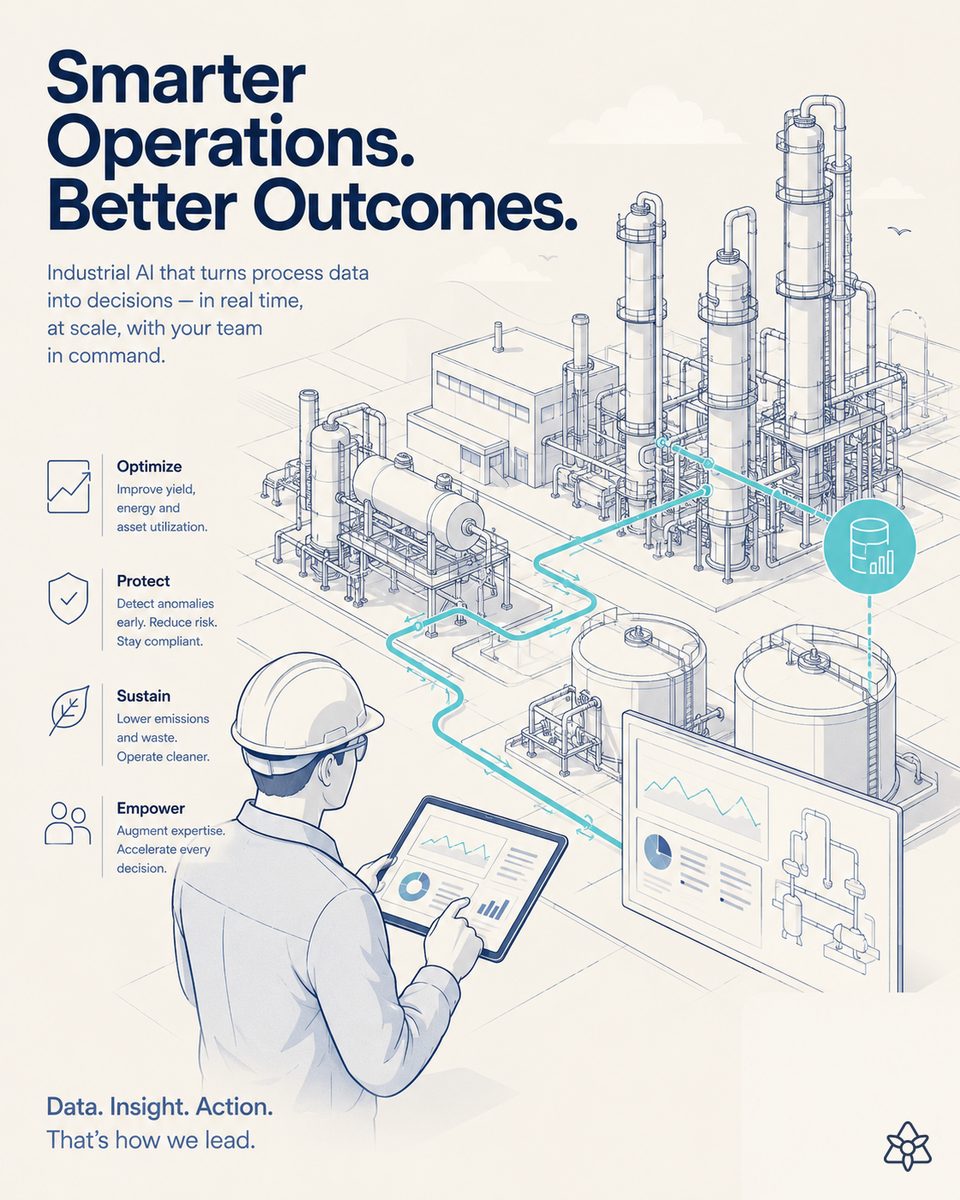
The batch record closed by hand is always the batch record the audit sends back.
A cosmetics plant lives at the intersection of three realities that regulation requires you to document and that are almost never in the same place at the same moment:
- The emulsion — order of addition, jacket temperature, homogenization energy and time, cooling rate. It lives in the homogenizer SCADA or on the operating sheet.
- Traceability of the active — the batch and the variability of the active or pigment declared in the supplier's certificate, which arrives by email or PDF and almost never makes it into the GMP room. The R&D manager's formula lives in a spreadsheet or in a PLM.
- The GMP batch record — the file that proves every step was carried out according to the approved procedure. It is closed at the end of the batch, almost always by hand, with signatures and dates to be reconstructed.
The technical director knows it. The veteran formulator corrects by eye when the emulsion starts to split, but that know-how does not stay behind. The filling operator has the screen and the paper. And when the audit arrives — ISO 22716, COSMOS, Ecocert, FDA if you export to the US, the national health authority if there is a complaint — the dossier is the first thing the auditor looks at. The classic system works 95% of the time. That other 5% is the batch that gets reformulated, the dossier that gets rebuilt or the finding that takes months to close.
iLEAN does not replace your GMP system — it seals the cracks between formula, homogenizer, filling and batch record.
The problem in cosmetics is not a lack of procedure: it is information living on islands (formula in the PLM, active certificate in an inbox, the real homogenizer profile in SCADA, the Edge reading on the line, the signature on paper) that only the final batch record tries to bring together, almost always by hand. iLEAN acts as the putty that fills the gaps without touching your ERP, PLM, MES or your approved GMP procedures.
Edge sees the emulsion and the filling. Connect captures the active certificate and the formula. The agent cross-checks the three realities and prepares the batch record at close. The person signs — the batch is never released on its own.
The three iLEAN pieces applied to cosmetics manufacturing:
- Edge — a terminal with vision (CNN) and analog inputs in the GMP room and on the filling line. It detects emulsion instability, early separation, color drift against a reference plate, continuous viscosity, abnormal foaming. It reads real jacket and coil temperature, the scales and the pressure gauges. It verifies the pack and the crimping at close. It works with no network: in a cleanroom, the last thing you want is to depend on WiFi.
- Connect — captures the certificate for every active and pigment, whether it arrives by EDI or as a PDF in the technical director's inbox, the batch formula in the MES, PLM or a spreadsheet, the SDS for every ingredient, and historical variability. Whatever comes from outside (a retailer's change in natural cosmetics, new INCI regulation, a new batch of active with a different declared activity) enters at second zero.
- Agent — cross-checks the batch certificate, the formula, the real homogenizer profile and the Edge reading. It recognizes the pattern (“with this batch of active and this cooling rate, this cream tends to show early separation within 48h unless the temperature drops 2°C”) and proposes the in-line adjustment. And it prepares the batch record at batch close: ingredient-by-ingredient traceability, temperature curve, a photo of the appearance, the scale reading, mass reconciliation. The person reviews and signs.
Cosmetics manufacturing run on paper vs. cross-checked with iLEAN
| Aspect | SCADA + procedure + batch record by hand | With iLEAN Edge + Connect + Agent |
|---|---|---|
| Variability of the active | Certificate by email, stays with purchasing | Cross-checked against the formula and the homogenizer profile |
| Detecting a split emulsion | Inspection at the end of the batch or after storage | Anticipated during homogenization, before cooling |
| Color and viscosity | QC at the end, rework if out of spec | In-line reading, adjustment proposed before packing |
| GMP batch record | Manual reconstruction, signatures after the fact | Complete dossier at batch close, with photo and traceability |
| Operation with no network | n/a | Edge keeps reading and holding the data |
| Audit (ISO 22716, COSMOS, FDA) | Days of preparation for every batch audited | Signable file in minutes, automatically |
Impact estimate for your plant — to be validated with your numbers.
The block below is an estimate to be validated with the real data of your plant. We put it forward so the committee has an order of magnitude; we refine it during the diagnostic.
- Cosmetics plant working private label, contract manufacturing or natural cosmetics, multi-SKU, multi-customer, with the batch record on paper + spreadsheets and recurring ISO 22716 / COSMOS / FDA audits.
- Edge pilot in one GMP room + one filling line, Connect for the active certificate and the formula, an agent that cross-checks and closes the batch record. First value expected in a few weeks.
- Indicative payback between 4 and 9 months, depending on the percentage of batches reformulated/rejected, the average cost of rework and how long it currently takes to close the batch record + audit dossier.
- The hard lever is threefold: rework cut by ≥30%, an audit dossier prepared by default, and a lower cost in formulator hours spent rebuilding paperwork.
And the GMP quality manager's reasonable doubt
“What if the AI gets it wrong and lets an out-of-spec batch through?” — hallucination is a problem of free generation, not of anchored tasks. In tasks where the AI compares what it sees and measures against the recipe, the certificate and the procedure, the best models brought error below 1.5% [1]. And even so, what is critical is never decided alone: iLEAN holds the batch and the person signs. The three safety rings exist precisely for this — and they fit the GMP logic of human validation you already know.
[1] OpenAI paper “Why Language Models Hallucinate”, 2025 — on the reliability of AI in anchored tasks.
What people ask about AI in cosmetics manufacturing
Why does cosmetics manufacturing still produce split batches or off-color product?
Because a stable cosmetic emulsion depends on variables that arrive at different moments and in different systems: the order and temperature of addition of the water and oil phases, homogenization energy and time, the batch and variability of the pigment or active, cooling rate and, at the end, filling conditions. When the lab comes back with “split emulsion” or “color out of spec” once the batch is already packed, rework is expensive or impossible. iLEAN cross-checks those sources at second zero.
What can iLEAN Edge read in a GMP cosmetics manufacturing room?
Edge is a terminal with vision (CNN) and analog inputs that sees the room the way the veteran formulator does: the look of the emulsion during homogenization, provisional color against a reference plate, continuous viscosity, real jacket and coil temperature, pressure gauge readings, the dosing scale reading, a photo of the filling operation and of the pack crimping. And it logs every event with a timestamp for the batch record.
How does iLEAN integrate with the GMP batch record and the cosmetic product dossier?
The agent builds the per-batch dossier automatically: certificate and traceability for every ingredient, the real addition profile, temperature and shear curves, in-line viscosity and provisional color, a photo of the final appearance, the scale reading at filling, the tube or pack number linked to the batch, mass reconciliation. What used to take one person hours at the end of the batch comes out as a signable dossier. The person reviews and signs — the batch is never released on its own.
What about traceability for EU Regulation 1223/2009 or COSMOS/Ecocert certification?
That is exactly the case Connect + agents fit best. Every ingredient certificate, every SDS, every pigment batch and every supplier document enters the system at second zero (PDF, email, EDI). The agent cross-checks it against the batch formula and prepares the file for the health authority or the certification auditor. The person validates and signs — the dossier is complete and consistent, with no manual reconstruction after the fact.
What ROI can a cosmetics plant expect?
Estimate to be validated: an Edge pilot over one manufacturing room + one filling line, first value in a few weeks with early detection of unstable emulsion, color drift or viscosity drift. Indicative payback between 4 and 9 months on reduced rework (≥30%), fewer batches rejected by QC and a drastic cut in the time it takes to close the batch record and the audit dossier. We ask for your real data and send you the estimated ROI in 48h.
More cases in petrochemical
- Chemical customer specs and CoA with AI — the spec stays live, the certificate is automatic, the complaint never arrives.iLEAN keeps every customer spec live and auto-generates the CoA for each batch. No outdated specs, no…
- Chemical recipe optimization with AI — the raw material changes, so the recipe should change with it.iLEAN adjusts the recipe batch by batch to the real quality of the incoming raw material. Consistent…
- Tank management at a chemical terminal with AI — the stock you have and the stock the system reports should be the same.iLEAN manages per-tank stock, transfers with ATEX compliance and batch-to-customer traceability from the…
- Cracking control (FCC / steam cracker) with AI — severity, feedstock and margin on the same screen.How iLEAN cross-checks severity, feedstock, catalyst and margins in an FCC / steam cracker to anticipate…
- Crop protection control with AI — a mislabeled drum is not an incident, it is a recall and a penalty.How iLEAN cross-checks active ingredient dosing, GHS labeling and EFSA/MAPA registration in a crop…
- Barrel and derivative traceability with AI — from incoming crude to the customer's diesel, with no gaps in the genealogy.iLEAN links incoming crude, refining unit and finished product by batch and by tank. Complete genealogy.
Tell us your case and in 48h we'll send you the estimated ROI of this AI project for your cosmetics plant.
We work on your plant's real data, not ours. Diagnostic with no commitment.
Request estimated ROI in 48h See chemical/petrochemical