AI export track & trace — five regulatory languages, one single case.
Exporting to the USA, the EU, Russia, Brazil or China forces you to speak five different regulatory languages about the same unit: DSCSA, FMD, Chestny Znak, ANVISA, NMPA. iLEAN orchestrates serials, parent-child aggregation and submissions to each country's repository from Central, with Connect as the channel and Agents that sign each report when it is due. A person validates — nothing is exported in the dark.
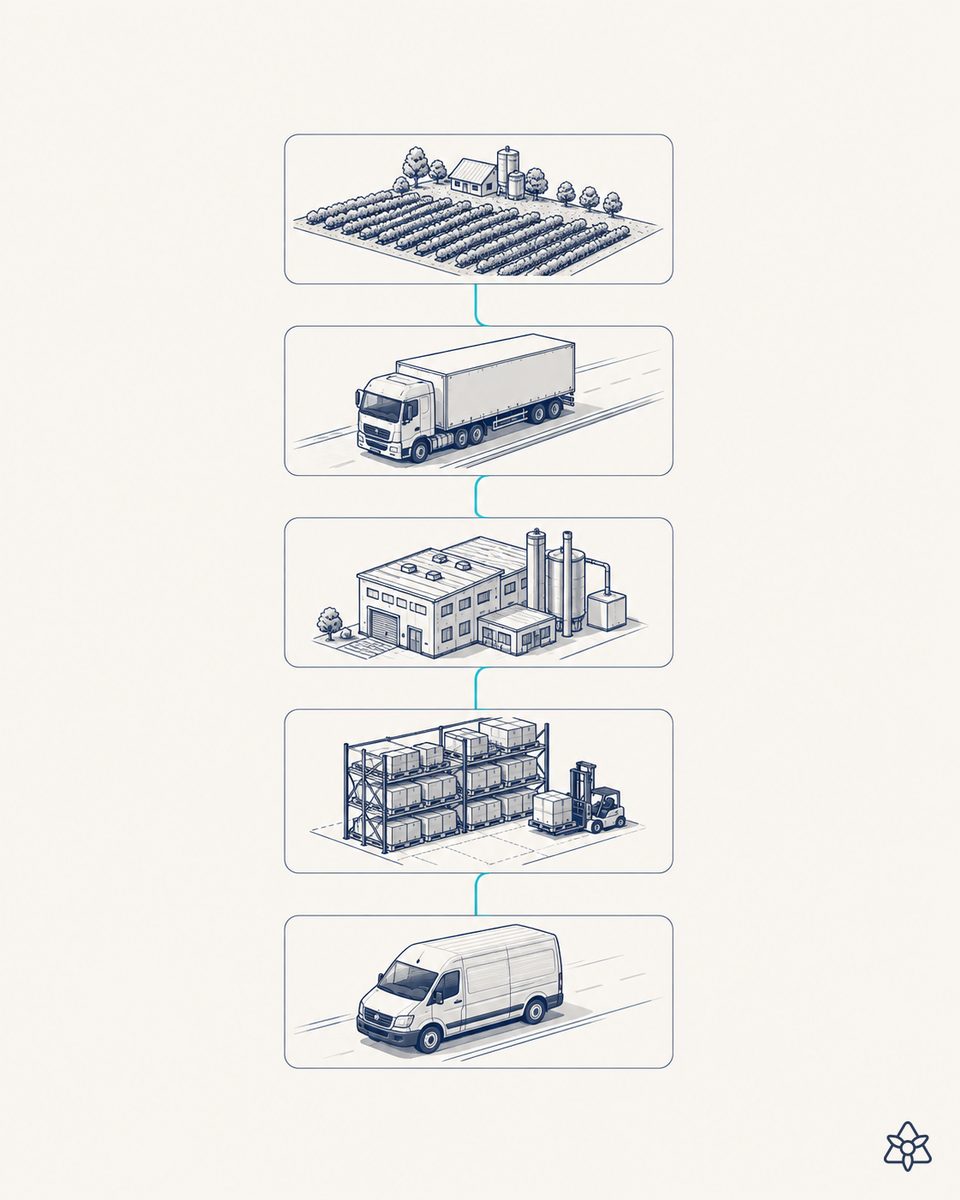
One line, five regulators, one single person keeping the calendar.
Serialization is no longer optional if you export. The plant already has a printer, an aggregation station and a T&T software vendor. But this is the operational reality you see on the shop floor:
- Five different hubs — DSCSA wholesaler in the USA, EU Hub for FMD, Chestny Znak for Russia, SNCM ANVISA for Brazil, NMPA for China — each with its own format and its own cadence.
- An EPCIS event schedule that lives in the head of the regulatory affairs manager. The day they go on holiday, their stand-in prays that nothing fails.
- Broken parent-child aggregation — a master case with a duplicate that the palletizer tunnel did not notice. It surfaces when the wholesaler complains.
- A national rule change — one country adds a field, the T&T vendor takes 6 weeks to update, and meanwhile you load it from a spreadsheet and pray.
The problem is not serialization; it is the coordination between five regimes and an MES that only understands its own line. The orchestrator is a person, and the day they fall ill everyone notices.
iLEAN does not replace your T&T — it adds the conductor it is missing.
Multi-country T&T is the textbook example of the problem iLEAN solves: data islands + nobody acting on the result in time. iLEAN works as the glue that stitches together your serializer, your aggregation station, your MES, your ERP and the five hubs — without throwing anything away.
Connect talks to each country's hub. The agents orchestrate event by event, with no mental schedule. Edge verifies parent-child on the line. The person signs submissions and exceptions.
The three iLEAN pieces applied to export track & trace:
- Edge — a terminal with computer vision (CNN) over the case packer and the palletizer tunnel. It verifies that the units entering the master case are the ones the packing event declares, reads the pallet SSCC and blocks if the parent-child does not add up. It works with no network.
- Connect — a two-way channel with the national repositories: DSCSA wholesaler over AS2, EU Hub for FMD, Chestny Znak over its cryptographic API, SNCM ANVISA, NMPA. It also captures wholesaler and importer alerts at second zero (messaging app, email, EDI).
- Agent — orchestrates the event schedule (commissioning → packing → shipping → receiving) per country and signs each submission when it is due. When a serial is disputed downstream, it cross-checks the evidence and returns an answer in minutes. The person validates any external communication.
Manual multi-country T&T vs. T&T orchestrated with iLEAN
| Aspect | Classic T&T + human regulatory affairs | With iLEAN Connect + Agents + Edge |
|---|---|---|
| EPCIS event calendar | In the regulatory manager's head | Orchestrated by an agent, signed by a person |
| Rule change in one country | 6 weeks + a temporary spreadsheet | Country profile updated, person validates |
| Parent-child aggregation | Case with a duplicate found at the customer | On-line verification by Edge vision |
| Wholesaler claim | 3 days on the phone + spreadsheet | Composed evidence in minutes |
| Regulatory cover | Holidays = risk | 24/7 backing from the agent; the person still signs |
| Repetitive tasks | Manual, human error | Done inside the rings, without touching OT |
Impact estimate for your plant — to be validated with your numbers.
The block below is an estimate to be validated with the actual data of your factory. We put it forward so the committee has an order of magnitude; we refine it during the diagnostic.
- A plant exporting to 2-3 regimes (typically USA + EU + a third one) with serialization already in place and T&T from a third-party vendor.
- Pilot: one EPCIS event signed on time on the most troublesome regime + Edge verifying aggregation at the case packer. First value expected within a few weeks.
- Indicative payback between 4 and 9 months, driven by: a ≥ 30% reduction in returns caused by faulty T&T + fewer regulatory affairs hours + lower regulatory risk if a recall lands.
- The hard lever: a single avoided market recall pays for the system. The European AI Act also requires human oversight in high-risk systems — iLEAN complies by architecture (the rings).
And the CAIO's reasonable doubt
«What if an agent publishes something wrong to a national repository?» — the three rings solve this by architecture. The agent lives in ring 3 (power); any external publication goes through ring 2 (validation) and only ring 1 launches the signed action. On reliability: hallucination is a problem of free generation, not of anchored tasks such as recontextualising a packing event into EPCIS 2.0 format; the best models have brought the error rate below 1.5% [1].
[1] OpenAI paper «Why Language Models Hallucinate», 2025 — on the reliability of AI in anchored tasks.
What people ask about AI export track & trace
Which track & trace regimes are the most demanding today?
By usual operational demand: DSCSA (USA) with unit-level serialization + verification between supply chain actors; EU FMD with a unique identifier per pack + EU Hub + Member State Hub; Chestny Znak (Russia) with a national catalogue and crypto-signed reporting; ANVISA (Brazil) with SNCM; NMPA (China) with national codes. Each one with its own formats, its own events and its own cadence. The pain is none of them on its own — it is all five at once, on the same line. iLEAN brings one profile per country and the agents orchestrate the submission to whichever hub applies, without a human keeping the schedule in their head.
How do I build a parent-child (pack → case → pallet) without stopping the line?
With three eyes working in parallel: the case packer with Edge vision over the units that actually enter the case; the palletizer tunnel reading the pallet SSCC; the agent reconciling readings and proposing corrections in milliseconds. If a master case declares 12 packs but Edge vision counted 11, it is held before closing — not downstream. And the packing/shipping EPCIS event goes out signed, not rebuilt after the fact. The line does not stop; what stays behind is the problem case.
What if a country adds a new field to the report or changes the format?
Regulatory profiles live as configuration, not as code. When a regulator adds a field, the iLEAN team or your own CAIO updates that country profile; the agent applies it and the next submission includes the field. Your customer never notices the update because the line does not stop. And the change stays as a proposal for the regulatory affairs person to sign — the agent never files it alone to a national repository. This is exactly what the European AI Act calls human oversight in high-risk systems.
What happens when a serial number is lost downstream?
When a US wholesaler reports that a DSCSA serial does not respond, the agent cross-checks the SGTIN against the shipping dossier, the shipping EPCIS event and the Edge reading of the outbound pallet. If the serial left the plant, it proposes the supporting evidence; if it never left, it flags the alert as suspected cloning. Downstream traceability (from plant to customer) is not rebuilt over three days on the phone — it comes back in minutes with the evidence. And the reply to the wholesaler still goes out signed by a person.
What payback should I expect from a multi-country T&T system with AI?
As an estimate to be validated against your case: a plant exporting to 2-3 regimes with serialization already in place but uncoordinated typically sees first value within a few weeks (closing the first EPCIS event signed on time); indicative payback between 4 and 9 months. The levers: a ≥ 30% reduction in returns caused by T&T + a sharp drop in regulatory affairs hours + a single avoided market recall pays for the system. Send us your data and we return an estimated ROI in 48h with your figures.
See also: GS1 DataMatrix with AI → · See all traceability solutions →
More cases in industrial traceability
- RFID in the warehouse with AI — when the reader misses, the inventory lies.How iLEAN reconciles RFID reads, WMS and ERP with vision and agents so real stock adds up and…
- Traceability softwarethat answers in secondswhen something goes wrong.Industrial traceability software with AI: forward and backward, inventory control, GS1 labeling, ERP…
- Tobacco serialization under the TPD with AI — aggregation decides whether the truck leaves.How iLEAN verifies pack-carton-case-pallet aggregation by vision, reconciles exceptions and reports…
- UDI on medical devices with AI — a miscoded PI is a recall notice, not an incident.How iLEAN composes the UDI (DI+PI) read on the line, cross-checks it against GUDID/EUDAMED and keeps the…
- What is industrial traceability: definition and examplesIndustrial traceability is the ability to know, at any moment, where every component came from and where…
- Product QR code with AI — the door to the batch digital record, not to a static page.iLEAN Edge reads and verifies the product QR on the line; Connect links it to recipe, batch and MES; the…
Tell us your case and within 48h we send you the estimated ROI of this AI project for your exporting plant.
We work on the real data of your factory, not on ours. Diagnostic with no commitment.
Request estimated ROI in 48h See traceability