UDI on medical devices with AI — a miscoded PI is a recall notice, not an incident.
UDI requires every medical device leaving the plant to be uniquely identifiable (DI registered + production PI) and traceable all the way to the implant. iLEAN reads the laser marking or blister label with Edge vision, cross-checks GUDID/EUDAMED from Connect, and the agents assemble the per-serial dossier. The person signs off the batch — the FDA/MDR auditor sees a file that adds up.
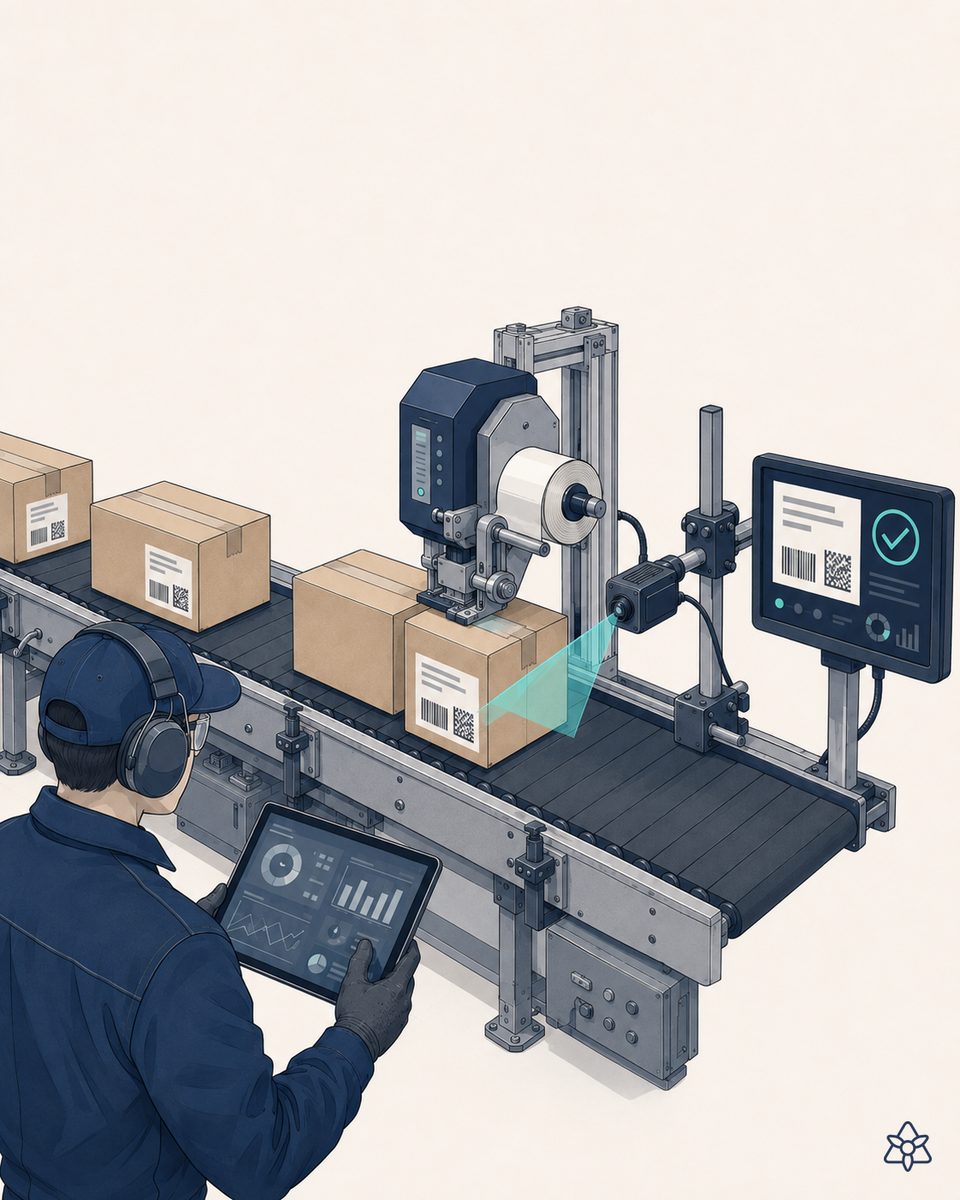
UDI says every unit is unique — and the line works as if it were a batch.
The regulation is clear: every medical device carries its UDI (DI + PI) in the marking and in the national registry (GUDID for the FDA, EUDAMED under MDR). On paper, that is four GS1 Application Identifiers and one dossier per serial. On the shop floor, the three pain points we always find:
- DPM laser marking on steel or titanium that a traditional reader gets right 85% of the time, so someone reworks the rest by hand at the end of the shift.
- PI out of sync with the MES — the expiry date in the PI comes from the MES, the batch from the ERP, the serial from the laser itself. If one of them changes and nobody flags it, the UDI dossier breaks silently.
- GUDID/EUDAMED updates handled manually by the regulatory affairs person, with spreadsheets and one AS2 upload a month. The day sales changes the packaging without telling anyone, the registered DI stops matching the engraving.
The result: the per-serial UDI dossier is after-the-fact reconstruction, not in-line capture. And that is exactly what an MDR/FDA audit asks about. The classic system (operator + printer + spreadsheet) works 99% of the time. The 1% is the recall notice.
iLEAN does not add another PLM — it seals the gap between the engraving and the registry.
UDI lives in four places: the laser/printer, the production MES, the regulatory ERP and the repository (GUDID/EUDAMED). In practice the four are disconnected and traceability gets rebuilt by hand. iLEAN acts as the filler that stitches the four together without asking you to change PLM, MES or ERP.
Edge reads the engraving in line, Connect feeds MES/ERP/GUDID/EUDAMED, an agent assembles the per-serial dossier and holds the unit if something does not add up. The person signs off — always.
The three iLEAN pieces applied to UDI:
- Edge — a terminal with machine vision (CNN) and ISO/IEC 15415 + AIM DPM 29158 verification on laser marking, blister, label or RFID tag. It measures the quality grade, decodes GS1 Application Identifiers (01, 10, 17, 21…) and blocks the pack if the grade drops below threshold. Works with no network.
- Connect — capture from the laser, from the MES (batch, expiry date), from the ERP (DI references), from GUDID over AS2/SFTP and from EUDAMED through whichever channel is available. It also captures the regulatory manager's email (a packaging change from sales, a notice from the notified body) at second zero.
- Agent — it sustains the per-serial dossier. When the DI changes, it proposes the GUDID/EUDAMED update for a person to sign; when a PI does not fit, it holds and alerts. It also sustains the evidence pack for the auditor — the "boring, concrete agent" that ends the conversation.
Manual UDI vs. UDI cross-checked with iLEAN
| Aspect | Manual UDI + checklist | With iLEAN Edge + Connect + Agent |
|---|---|---|
| Reading the DPM marking | 85-90% with a standard reader, manual rework | DPM-specific CNN, ISO grade measured in line |
| DI + PI composition | Left to the laser PLC | Validated in line against ERP and MES |
| GUDID/EUDAMED update | Manual monthly upload | Automatic proposal, human signature in one click |
| Per-serial dossier | Rebuilt for the auditor | Composed at second zero, always ready |
| Packaging change from sales | Reaches regulatory by luck | Connect captures it and the agent raises the alert |
| Operation with no network | n/a | Edge keeps verifying on cabinet power |
Impact estimate for your plant — to be validated with your own numbers.
The block below is an estimate to be validated with the specific data of your plant. We put it forward so the committee has an order of magnitude; we refine it during the diagnostic.
- Class II-III medical device plant (implants, instruments), one line with DPM laser marking and another with blister labelling.
- Edge pilot on the laser marking line, initial GUDID or EUDAMED integration from Connect, one agent for the per-serial dossier. First value expected in a few weeks.
- Indicative payback between 4 and 9 months, depending on the documented cost of rework from unreadable marking and of regulatory hours spent preparing an MDR/FDA audit.
- Hard lever: ≥ 30% reduction in marking rejects at QA and a noticeable drop in the time needed to prepare the per-serial dossier ahead of an audit.
And the reasonable doubt from the CAIO / regulatory affairs
"What if an agent publishes something to EUDAMED that was never approved?" — the three rings solve this by architecture. The agent lives in ring 3 with authority to propose; any external publication passes through ring 2 (validation) and only ring 1 launches the signed action. On reliability: hallucinations are a problem of free generation, not of anchored tasks such as cross-checking the PI read on the line against the GUDID record; the best models have brought the error rate below 1.5% [1]. It also complies with the human oversight logic the European AI Act requires of high-risk systems.
[1] OpenAI paper "Why Language Models Hallucinate", 2025 — on the reliability of AI in anchored tasks.
What people ask about UDI for medical devices with AI
What is the UDI and how does iLEAN break it down into DI and PI?
The UDI (Unique Device Identification) is the mandatory identifier for medical devices under the FDA (USA) and under MDR/IVDR in the EU. It is made up of the DI (Device Identifier — the static part of the model, registered in GUDID/EUDAMED) and the PI (Production Identifier — batch, serial, manufacturing date, expiry date). iLEAN reads the physical marking (DataMatrix or linear code) and separates the GS1 Application Identifiers (01, 10, 17, 21…) automatically, validating that the composition matches the product record. A miscoded PI stops being an audit scare and stays on the line.
How does iLEAN Edge read a DPM laser marking on stainless steel or titanium?
Edge is a terminal with machine vision (CNN) trained specifically for permanent laser marking (DPM) on reflective surfaces. Laser marks on surgical steel or titanium are the nightmare of traditional readers because contrast is low and lighting is hard. Edge solves it with coaxial lighting, models trained on real DPM and ISO/IEC TR 29158 (AIM DPM) verification. If the engraving is not legible on the first pass, the system flags it for rework before sterilisation — not afterwards, when the tray is already sealed.
How does iLEAN integrate with the FDA GUDID and the EU EUDAMED?
Connect integrates with the FDA GUDID via standard AS2/SFTP and with EUDAMED through the API/M2M channel where available, or via structured upload where it is not. The agents maintain the per-serial dossier: they link the registered DI with the PI read on the line, the MES batch, the raw material from the ERP and the sterilisation records. When the DI changes (a new product version), the agent proposes the GUDID/EUDAMED update and a person validates it; nothing is published without a human signature.
What happens if a serial prints badly or a DataMatrix falls outside ISO 15415 grade?
Edge measures quality in line (ISO/IEC 15415 for 2D and 15416 for 1D) and blocks the pack if it drops below the minimum grade defined by your QMS. Critical calls are never made alone: the system holds the unit and alerts the quality manager through whichever channel they use. If the problem is systemic (the laser is degrading), the agent identifies it as a pattern before a whole batch is lost. An unreadable serial caught on the line is a rework; caught in the clean room it is a trip to CAPA.
How long until I have UDI running for my product family?
As an estimate to be validated with your plant: an Edge pilot on one line with one product family plus the initial GUDID or EUDAMED integration delivers first value in a few weeks. Indicative payback between 4 and 9 months, driven by two levers: a ≥ 30% reduction in post-printing QA rejects and a sharp drop in the time spent rebuilding the per-serial UDI dossier for audit. MDR compliance is no longer optional: doing it properly costs less than a single recall notice.
More cases in industrial traceability
- Traceability softwarethat answers in secondswhen something goes wrong.Industrial traceability software with AI: forward and backward, inventory control, GS1 labeling, ERP…
- Tobacco serialization under the TPD with AI — aggregation decides whether the truck leaves.How iLEAN verifies pack-carton-case-pallet aggregation by vision, reconciles exceptions and reports…
- AI export track & trace — five regulatory languages, one single case.How iLEAN orchestrates serialization, aggregation and reporting to DSCSA, FMD, Chestny Znak and other…
- What is industrial traceability: definition and examplesIndustrial traceability is the ability to know, at any moment, where every component came from and where…
- Product QR code with AI — the door to the batch digital record, not to a static page.iLEAN Edge reads and verifies the product QR on the line; Connect links it to recipe, batch and MES; the…
- Anti-counterfeit with AI vision — the veteran's eye, on every box.How iLEAN Edge reads the visual signature of your product in line and catches counterfeits or grey…
Tell us about your case and within 48h we'll send you the estimated ROI of this AI project for your medical device plant.
We work on your plant's real data, not ours. Diagnostic with no commitment.
Request estimated ROI in 48h See traceability