Conflict minerals 3TG — the CMRT is not a spreadsheet, it is a living dossier.
Traceability of tantalum, tin, tungsten and gold back to the smelter is required by SEC Dodd-Frank §1502 and EU Regulation 2017/821, and your B2B customer asks for it even where the law does not bite. iLEAN Connect captures every supplier CMRT, an agent cross-checks it against the RMI list of conformant smelters and prepares the signable SOR. The person signs.
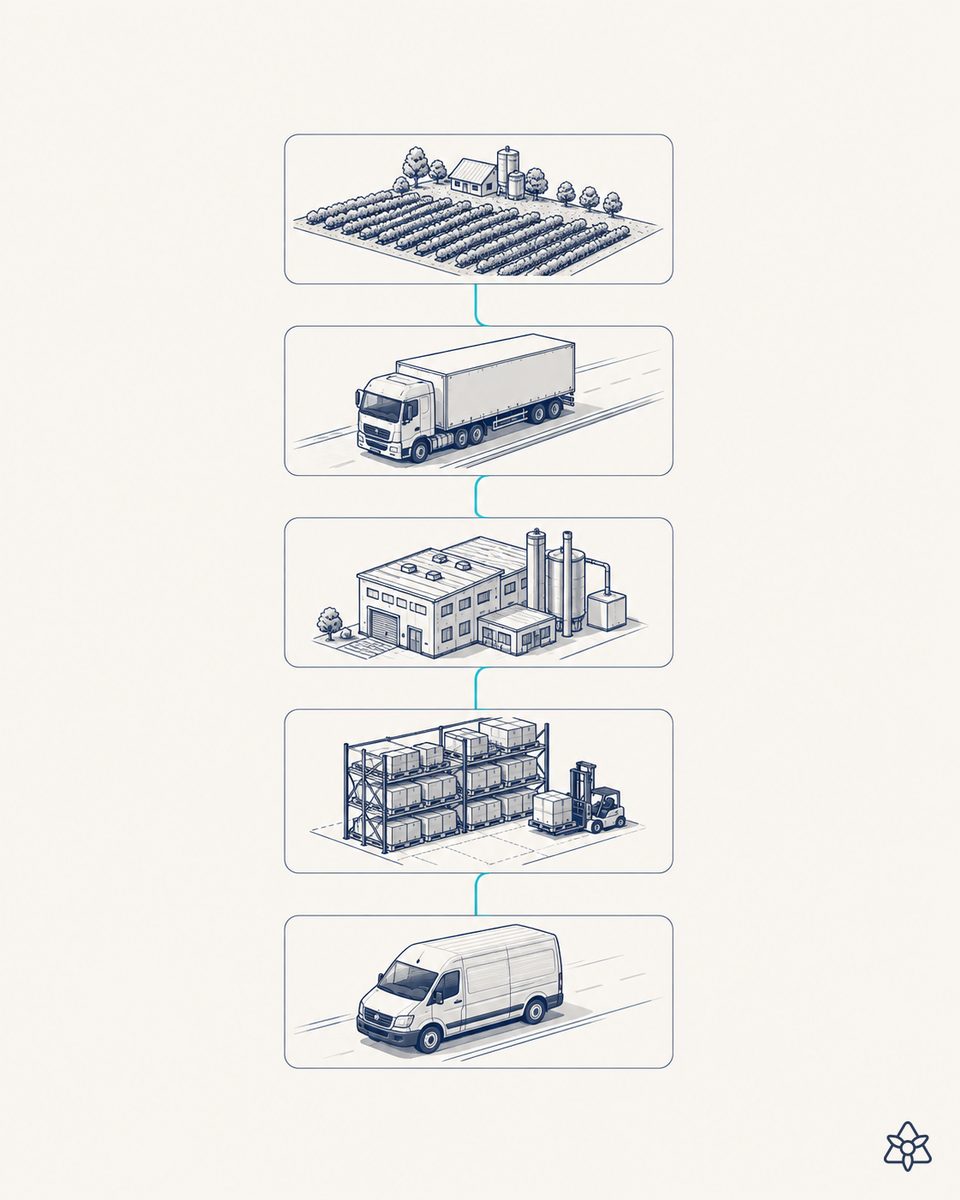
«Every campaign I lose a month chasing incomplete CMRTs.»
Tracing the 3TG (tantalum, tin, tungsten, gold) back to the smelter of origin sounds reasonable when you describe it in a meeting room. Implementing it across a real chain is another game, because every tier-1 supplier has to request a CMRT from their tier 2, who have to request it from their tier 3, all the way down to the smelter. And along the way you run into:
- Outdated template versions — RMI updates the CMRT periodically and many suppliers still send the version from three years ago.
- Empty SOR IDs, or smelters declared under a trade name that does not appear on the RMI list.
- «N/A» or blank answers that have to be chased by email, one by one, until the account manager remembers to ask their purchasing colleague.
- Supplier changes mid-campaign that drag the whole cascade back to the start.
- Consistency between what your BOM says (which SKU carries which 3TG) and what the CMRT records — wherever the BOM does not match, the SOR fails in audit.
The compliance manager knows this. They end up with two hundred spreadsheets in a folder, a summary sheet painted by hand, and the feeling that the next campaign will be exactly the same.
iLEAN does not add another spreadsheet — it replaces manual chasing with a nervous system.
The CMRT does not fail for lack of a template — the RMI one works. It fails because you are chasing 200 suppliers with 200 different versions of the same problem, and the information arrives late, incomplete and out of order. iLEAN acts as the putty that connects your BOM to the supplier chain and to the RMI list.
Connect chases the CMRT through the supplier's own channel — email, portal, form. The agent cross-checks it against the BOM and the RMI list, holds the doubtful batches, prepares the signable SOR. The person signs.
The two iLEAN pieces applied to 3TG:
- Connect — the app/portal where your supplier uploads the CMRT, yes; but also the email where they send a partial version, the messaging thread where the account manager asks for clarification, the transcribed call with the tier-2 buyer. Bidirectional: Connect also replies to the supplier in their language, with the exact question, when a field is missing — the person approves the reply before it goes out.
- Agent — it keeps the RMI Smelter Reference List alive, cross-checks every CMRT SOR ID against the list, flags conformant/non-conformant/doubtful, drafts the missing questions for the supplier, validates consistency between your product BOM and the CMRT the supplier declared, and consolidates the signable SOR (Specialized Disclosure) or the EU 2017/821 reporting, whichever applies.
And all of it under the three safety rings: capture enters ring 3 (power), cross-validation against the RMI list happens in ring 2, and the signed reporting lives in ring 1. The SOR that goes to the SEC is the one the person approved. Never the other way round.
CMRT by hand vs. CMRT coordinated with iLEAN
| Aspect | CMRT with spreadsheet + email | With iLEAN Connect + Agent |
|---|---|---|
| CMRT intake | 200 spreadsheets in a network folder | Capture through the supplier's channel, anchored to the batch |
| SOR ID validation | Manual lookup in the RMI list | Automatic cross-check against a live RMI list |
| Chasing the gaps | Follow-ups from the compliance manager | Connect replies to the supplier in their channel and language |
| BOM ↔ CMRT consistency | Assumed — rarely cross-checked | Verified by the agent, alert if it diverges |
| Non-conformant smelter | Detected in audit, after the SOR | Detected at capture, batch put on hold |
| SOR / EU reporting | Manual consolidation at the end of the campaign | Dossier ready for signature, with traceable evidence |
Impact estimate for your plant — to be validated with your numbers.
The block below is an estimate to be validated against the concrete data of your operation. We put it forward so the committee has an order of magnitude; we refine it during the diagnostic.
- A mid-sized manufacturer (electronics, metalworking, aerospace) with 50-300 tier-1 suppliers carrying 3TG in their BOM, and one to three CMRT campaigns a year.
- Connect + Agent pilot on a single campaign and the tier-1 suppliers with the highest exposure. First value expected within a few weeks — the compliance manager receives the first batch of validated CMRTs without chasing anything by hand.
- Indicative payback between 4 and 9 months, depending on the current cost of the campaign (compliance FTE + purchasing team hours + delays in closing the SOR).
- Reduction in manual hours spent chasing and consolidating: ≥ 30 %, with room for more as further suppliers enter the loop.
- The hard lever is not losing the contract with the OEM that requires the CMRT on time, and shielding yourself against a failed SEC filing if you are listed or work with a listed company.
And the compliance manager's reasonable doubt
«What if the agent validates a non-conformant smelter and that ends up in my SOR?» — hallucination is a problem of free generation, not of anchored tasks. In tasks where the AI merely recontextualises a piece of data (extract the SOR ID from the CMRT, look it up in the RMI list, compare trade name and address), the best models brought the error below 1.5 % [1]. And even so, nothing goes out on its own: the agent prepares, the responsible person reviews and signs. The three rings exist precisely for this.
[1] OpenAI paper «Why Language Models Hallucinate», 2025 — on the reliability of AI in anchored tasks.
What people ask about conflict minerals 3TG with AI
What do Dodd-Frank §1502 and EU Regulation 2017/821 require on 3TG minerals?
Dodd-Frank §1502 (SEC, USA) and EU Regulation 2017/821 require the importer or listed issuer to declare the traceability of tantalum (Ta), tin (Sn), tungsten (W) and gold (Au) — the 3TG — back to the smelter or refiner of origin, and to demonstrate that this smelter does not finance armed conflict in affected areas (the DRC and adjoining countries, plus other CAHRA). The standard reporting instrument is the RMI CMRT (Conflict Minerals Reporting Template).
Why is the CMRT so painful when it is done by hand?
Because every tier-1 supplier hands you a CMRT spreadsheet that they in turn requested from their tier-2 suppliers, who requested it from tier 3… all the way down to the smelter. Along the way you get outdated template versions, conformance declarations with no SOR ID, smelters that do not appear on the RMI list, and blank answers that have to be chased one by one. The compliance manager ends up with 200 spreadsheets in a folder and a month lost per campaign.
How does iLEAN cross-check CMRTs against the RMI list of conformant smelters?
The agent keeps the RMI Smelter Reference List alive — the official register of audited smelters considered conformant for each of the 3TG — and cross-checks it against every SOR ID declared by your chain. If the smelter is conformant, it marks the batch green. If it is missing from RMI or listed as non-conformant, it alerts the compliance manager, drafts the email to the supplier asking for clarification (in their language, with the exact question) and keeps the batch on hold until it is resolved.
Does this apply to my company if I am not listed in the USA?
Dodd-Frank §1502 applies only to SEC-listed issuers, but EU Regulation 2017/821 applies to every European importer of 3TG above the volume thresholds — and, above all, B2B customer pressure drags in almost any manufacturer selling to a US-listed OEM (the large consumer electronics, IT and automotive groups): the tier-1 supplier CMRT is cascaded downwards until it reaches the fastener manufacturer with tantalum in its alloy.
What concrete risk does iLEAN avoid in 3TG?
Three hard risks: (1) loss of the contract with the OEM that requires a signed CMRT within the campaign — miss the deadline and you are off the panel; (2) a failed SEC filing for listed issuers, with regulatory consequences; (3) reputational damage when a non-conformant smelter leaks into the public SEC SD (Specialized Disclosure). The classic system (spreadsheet + email + chasing) works when you have five suppliers. With fifty, it stops working by the third campaign.
Keep reading: EPR extended producer responsibility · REACH SCIP · CSDDD due diligence
More cases in industrial traceability
- Cepicafé — coffee tracedfrom the Peruvian farmto the European container.iLEAN Tracer real case: Cepicafé coffee traceability from Peruvian farms to the European container, with…
- McDonald's — the chainnobody wants to break.iLEAN real case: McDonald's food supply chain integration. Documented conference, GS1 traceability…
- CBAM with AI — the European importer wants the real number, not the flattering average.How iLEAN cross-checks real plant and supplier emissions against the CBAM declaration to report…
- CSDDD with AI — living due diligence, not a PDF only the auditor reads.How iLEAN cross-checks your multi-tier supply chain, external alerts and internal records to sustain a…
- Digital Product Passport — a living dossier per SKU, not a label.How iLEAN builds the Digital Product Passport per SKU from real plant data — ESPR-ready and exportable…
- Static safety stock is either over-stock or a stockout. Almost never the right one.iLEAN calculates safety stock per SKU from real demand and supply variability. Same coverage or better,…
Tell us about your case and within 48h we will send you the estimated ROI of your 3TG traceability with AI.
We work on the real data of your operation, not on ours. Diagnostic with no strings attached.
Request estimated ROI in 48h See traceability