CSDDD with AI — living due diligence, not a PDF only the auditor reads.
The Corporate Sustainability Due Diligence Directive requires you to sustain active checking of human rights and environmental impacts across your whole chain of activities — not a code signed at the start of the contract. iLEAN listens to external alerts at second zero, draws the multi-tier supplier graph and cross-checks every incident against your purchasing list. The agent proposes the corrective measure. The person signs.
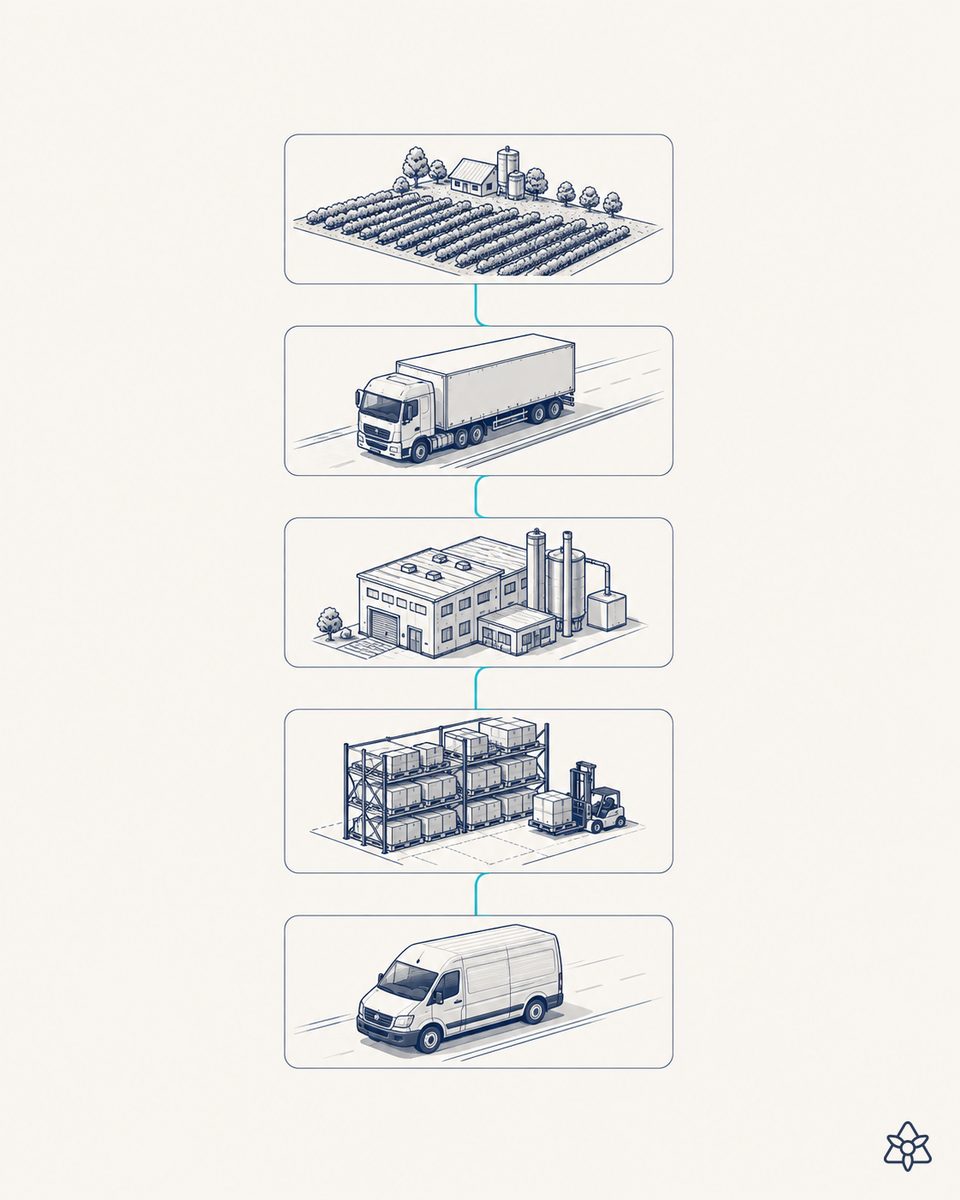
A living directive, a chain that lives in islands.
CSDDD due diligence is the crossing point of things that, in most companies, sit in different places and never meet in time:
- Your real list of suppliers and sub-suppliers — the ERP holds tier-1; tier-2 and tier-3 live inside invoices, certificates and BoMs nobody has ever extracted.
- The external signals — NGO bulletins, official sanction registers, news in the local language of the supplier's country, RASFF, multi-stakeholder platforms. They arrive all day long, through different channels and almost always late.
- Your own records — questionnaires, audits, remediation plans, supplier communications. Spread across purchasing, quality, compliance and the personal inbox of three people.
When everything runs fine, nobody notices. When a case appears — and it will —, the question from the auditor or the judge is not "did you have a policy?", it is "when did you know and what did you do?". An annual questionnaire does not answer that. And putting three people to read alerts all day long does not either.
iLEAN does not add another compliance platform — it seals the cracks between what you already have.
The CSDDD problem is not a lack of information: it is information living in islands that, at the critical moment (the Monday 10pm alert about a tier-2 supplying a component you depend on), never reaches the person who decides. iLEAN acts as the filler that seals those gaps, without asking you to change ERP, purchasing platform or audit process.
Connect listens to external alerts and internal records. The agent draws the multi-tier graph and cross-checks every risk against your chain. If it touches a critical supplier, it assembles the file and the corrective proposal. The person signs — never the other way round.
The two iLEAN pieces applied to CSDDD:
- Connect — listens outward (NGO bulletins, public registers, local press from the supplier's country, official alerts) and inward (purchasing emails, quality audits uploaded as PDF, questionnaires answered in a spreadsheet). It captures the data at second zero, with nobody forwarding anything or calling a meeting.
- Due diligence agents — they live in Central, inside the three security rings. They build the multi-tier graph by extracting sub-suppliers from your tier-1 BoMs and certificates. When an external alert appears, they cross it against the graph, your history and the criticality of the component. They prepare the file, the draft communication to the supplier and the follow-up of the corrective plan. They do not decide to suspend, substitute or terminate — that decision is always human, recorded and signed.
Annual questionnaire vs. living due diligence with iLEAN
| Aspect | Annual questionnaire + one-off audit | With iLEAN Connect + Agents |
|---|---|---|
| Multi-tier visibility | Tier-1 in the ERP; tier-2/3 invisible | Graph extracted from BoMs, invoices and certificates |
| Detection of an external incident | When it hits the national press | At second zero, in the local language of the supplier's country |
| Time from alert to the responsible lead | Days or weeks, if it arrives at all | Minutes, with the file already assembled |
| Preparation of the corrective measure | Manual, from scratch, with no historical context | Automatic draft with history and plan |
| Defence before an authority or a judge | "We had a code of conduct" | "We knew on day X, we did Y, Z signed it" |
| Workload of the responsible lead | Reading alerts + manual drafting | Review and sign — the person brings the judgement |
Impact estimate for your plant — to be validated with your numbers.
The block below is an estimate to be validated with the concrete data of your chain. We lay it out so the committee has an order of magnitude; we refine it during the diagnostic.
- Industrial company with several hundred to several thousand tier-1 suppliers, with multi-tier chains in metal, textiles, electronics, chemicals, food or critical minerals. Today running on an annual questionnaire and bulletins read by hand.
- Connect + due diligence agents pilot: integration with the purchasing ERP, multilingual external listening, multi-tier graph over BoMs/certificates, compliance dashboard. First expected value within a few weeks: the first live file with a full evidence chain.
- Indicative payback between 4 and 9 months, depending on the volume of critical suppliers and the frequency of relevant alerts. The hard lever is one CSDDD crisis avoided or resolved in time (voluntary suspension, corrective plan accepted by the authority, preventive substitution of the material).
- Reduction of the compliance officer's manual work in reading alerts and drafting communications of ≥ 30% is a reasonable expectation, freeing time for the decision, not for the summary.
And the compliance director's fair doubt
"What if the AI flags something as a risk when it isn't, and we block a supplier for no reason?" — hallucination is a problem of free generation, not of anchored tasks. In tasks where the AI only recontextualises a data point from one system into another (crossing an alert against a supplier graph, translating a bulletin into the language of the file), the best models brought the error below 1.5% [1]. And even so, the critical part is never decided alone: suspending a supplier or substituting a material are always human decisions — the three security rings are there precisely for this.
[1] OpenAI paper "Why Language Models Hallucinate", 2025 — on the reliability of AI in anchored tasks.
What people ask about CSDDD and due diligence with AI
What does the CSDDD require from a European industrial company?
The Corporate Sustainability Due Diligence Directive requires companies to identify, prevent, mitigate and account for adverse human rights and environmental impacts across their entire chain of activities — their own operations, subsidiaries and tier-1 business partners and, in some cases, further down. A code of conduct signed at the start of the contract is not enough: you have to sustain active checking, record the measures taken and be able to prove it. Non-compliance opens the door to administrative penalties and to civil liability for damages.
How do you keep due diligence alive across a chain of 600 suppliers?
Not with an annual questionnaire that arrives late and nobody reads. Connect listens at second zero to external alerts — NGO bulletins, official sanction registers, news in the local language of the supplier's country, multi-stakeholder platforms — and an agent cross-checks them against your supplier list, their criticality and their history. If a risk appears in a tier-2 you depend on for a component, the agent assembles the file with the context, passes it to the purchasing and compliance leads and proposes the corrective measure. The person decides and signs — the system carries the evidence chain.
How do you map tier-2 and tier-3 suppliers that are not direct contractors?
Connect captures the invoices, BoMs, certificates and manifests from your tier-1 — in PDF, spreadsheet, EDI or portal — and an agent extracts the supplier graph sitting behind each critical component. What the annual questionnaire never catches because it depends on one purchasing officer juggling 80 part numbers, the system draws as a living map. When an external alert touches a name in the graph, the lead sees it, even if that name never appears in the ERP.
What about the corrective measure — does the agent decide it?
No. The agent proposes, documents the context and drafts the communication. The decision to suspend a supplier, demand a remediation plan or substitute a material is always human — iLEAN's three security rings are designed for exactly this. What the agent takes off the lead's desk is the dumb work: the evidence summary, the draft letter to the supplier, the deadline follow-up, the file update. The person brings the judgement.
What does sustainable CSDDD compliance with iLEAN cost?
The order of magnitude of a Connect + due diligence Agents pilot in a mid-sized company (hundreds to thousands of suppliers across a multi-tier chain) is close to that of a multichannel capture + coordination agents project: an initial investment covering ERP/purchasing integration, external source listening, the multi-tier graph and the compliance dashboard, plus an annual licence. Reasonable payback is a few months — the hard lever is the cost of a CSDDD crisis avoided (contract suspension, penalty, reputational damage). Send us your chain data and we send back the estimated ROI in 48h, based on your case, not ours.
More cases in industrial traceability
- McDonald's — the chainnobody wants to break.iLEAN real case: McDonald's food supply chain integration. Documented conference, GS1 traceability…
- CBAM with AI — the European importer wants the real number, not the flattering average.How iLEAN cross-checks real plant and supplier emissions against the CBAM declaration to report…
- Conflict minerals 3TG — the CMRT is not a spreadsheet, it is a living dossier.iLEAN automates CMRT and 3TG due diligence (tantalum, tin, tungsten, gold): it checks smelters against…
- Digital Product Passport — a living dossier per SKU, not a label.How iLEAN builds the Digital Product Passport per SKU from real plant data — ESPR-ready and exportable…
- Static safety stock is either over-stock or a stockout. Almost never the right one.iLEAN calculates safety stock per SKU from real demand and supply variability. Same coverage or better,…
- EPR — the right fee per SKU and country, not the generic-factor one.iLEAN calculates EPR fees per SKU and country from real packaging composition and eco-modulation —…
Tell us your case and in 48h we send back the estimated ROI of your CSDDD project with AI.
We work on the real data of your chain, not on ours. Diagnostic with no commitment.
Request estimated ROI in 48h See all traceability solutions