CBAM with AI — the European importer wants the real number, not the flattering average.
The Carbon Border Adjustment Mechanism requires the embedded footprint of your steel, aluminium, cement, fertiliser or hydrogen to be declared per batch. If you do not deliver the real data, the importer applies the default factor and the cost goes up. iLEAN cross-checks the energy consumption of the line, the grid factor in that hourly window and the supplier certificate — and leaves the file ready for the verifier. The person signs.
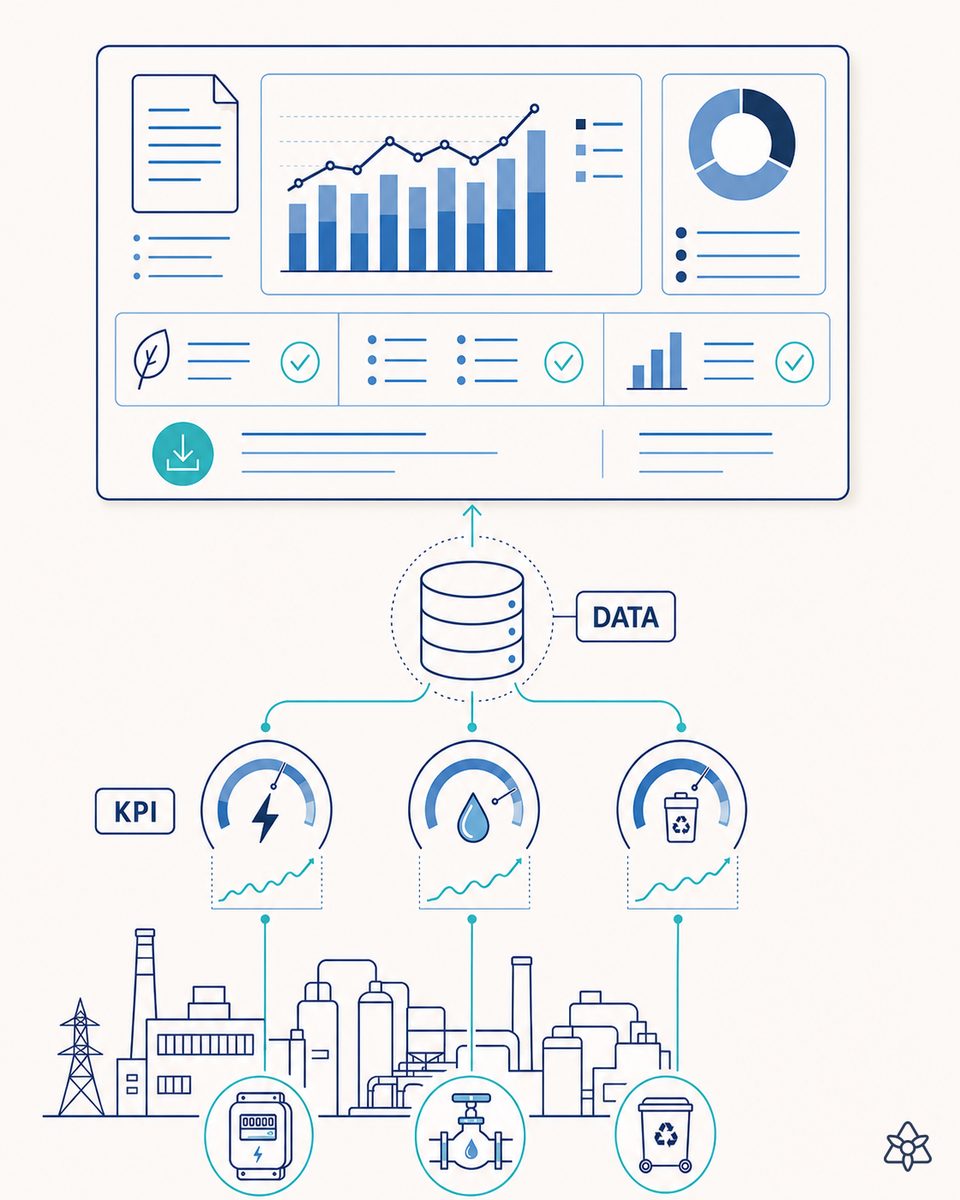
A footprint per batch is three pieces of data that are almost never visible at the same time.
An honest CBAM report is the cross-check of three realities that live on different islands:
- Real energy consumption of the batch — kWh, m³ of gas, steam, on the specific line and in the specific window in which it was made. It usually sits in the SCADA, in the utility meter, in a PLC nobody ever integrated.
- Emission factor of the electricity grid — it varies by hour of the day. That same tonne of steel, made at night with wind power or at midday with coal, does not carry the same footprint.
- Supplier emission factor — for the scrap, the lime, the clinker, the ammonia. It arrives as a PDF by email, in a spreadsheet, sometimes through a supplier portal — and almost never with a clear version number or in time for clearance.
If one is missing, the European importer applies the default factor set by the Regulation, which penalises. And if you hand everything over aggregated into a flattering annual average, the independent verifier gets suspicious — rightly so. A defensible CBAM file is not a figure: it is a chain of signed data, per batch, ready to audit.
iLEAN does not add another sheet to the report — it seals the cracks between the systems you already have.
The CBAM problem is not a lack of information: it is information living on islands that, at the critical moment (a shipment with a tight verifier deadline, a supplier who does not deliver the factor in time), never reaches the person who signs. iLEAN acts as the filler that seals those gaps, without asking you to change ERP, SCADA, or your relationship with your supplier.
Connect captures the meter, the supplier email and the hourly grid curve. The agent cross-checks against the batch and the customs destination. If a critical piece of data is missing, it holds the shipment before clearance. The person signs — never the other way round.
The three iLEAN pieces applied to CBAM:
- Edge — captures on the line the consumption of the specific line producing the batch: electricity meters, gas consumption, steam. It works without a network: the consumption data is recorded against the batch even if the utility meter has an incident.
- Connect — listens to the supplier email, the portal where the certificate is uploaded and the hourly API of the electricity grid (grid mix per window). A certificate arrives as a PDF and at second zero it is converted into JSON with its version number. And it captures outward too: the importer's note with the verifier's new rule, the buyer's message with the changed Incoterm.
- CBAM agent — lives in Central, inside the three security rings. It cross-checks the batch, the consumption, the hourly grid factor, the supplier factor and the customs declaration. If everything adds up, it prepares the file with a timestamp. If a piece is missing, it holds the shipment and alerts the owner. The person validates and signs; the critical operation never runs on its own.
CBAM reporting in a spreadsheet vs. a per-batch file with iLEAN
| Aspect | Spreadsheet + emails + default factor | With iLEAN Connect + CBAM agent |
|---|---|---|
| Data granularity | Annual or quarterly average | Per batch number, with a timestamp |
| Electricity grid factor | Annual, declared by the utility | Real hourly curve for the manufacturing window |
| Supplier certificate | PDF in the purchasing inbox, with nobody reading it in time | Captured at second zero, signed JSON, versioned |
| Defence before the verifier | «Trust our average» | Chain of signed data per batch, auditable |
| Risk of the default charge | High — it penalises whenever a piece is missing | Low — the agent alerts before clearance |
| Quarterly CBAM report | Weeks of manual work | Generated by the agent; the person reviews and signs |
Impact estimate for your plant — to be validated with your numbers.
The block below is an estimate to be validated with the specific data of your plant. We put it forward so the committee has an order of magnitude; we refine it during the diagnostic.
- Steel mill, aluminium plant, cement works, fertilisers or hydrogen with relevant EU exports. Today it reports with the default factor or with an annual average.
- Connect + CBAM agent pilot: meter capture + grid mix API integration + inbox for critical supplier emission factors + verifier dashboard. First value expected within a few weeks: the first batch with a signed file.
- Indicative payback between 4 and 9 months, depending on the share of revenue exposed to CBAM and the gap between your real factor and the default factor set by the Regulation.
- The hard lever is removing the default charge on the clearances where your real data beats the penalising one, and cutting the internal cost of assembling the quarterly report.
And the sustainability lead's reasonable doubt
«What if the AI hallucinates an emission factor?» — hallucination is a problem of free generation, not of anchored tasks. In tasks where AI only recontextualises a piece of data from one system into another (reading the supplier certificate and converting it into JSON, cross-checking the batch consumption against the hourly grid curve), the best models brought the error below 1.5% [1]. And even so, the critical part is never decided alone: the file is not sent to the importer without a person signing it. The three security rings exist precisely for this.
[1] OpenAI paper «Why Language Models Hallucinate», 2025 — on the reliability of AI in anchored tasks.
What people ask about CBAM and AI-assisted reporting
What does CBAM require from a plant exporting to the EU?
The Carbon Border Adjustment Mechanism requires the European importer to declare the embedded emissions (direct and indirect) of carbon-intensive goods — steel, aluminium, cement, fertilisers, hydrogen, electricity — and to buy CBAM certificates for the difference against the European ETS. The exporting plant is the one holding the real emissions data; if it does not hand it over, the importer applies the default factor (penalising) and the cost goes up. Per-batch emission traceability moves from a spreadsheet to a verifiable file.
How are embedded emissions calculated per real batch, not per annual average?
By cross-checking three sources that live on separate islands: the real energy consumption of the line that produced that batch (electricity, gas and steam meters, captured by Connect at second zero), the emission factor of the grid mix in that hourly window, and the emission factor of each raw material declared by the supplier — captured from the email, portal or certificate by Connect and recontextualised into JSON by an agent. The result is a footprint per batch number, defensible before the independent verifier, not a diluted annual average.
What happens if the supplier does not deliver the emission factor on time?
Today that data usually arrives late, as a PDF, by email, with nobody reading it in time. iLEAN Connect listens to the supplier channel at second zero — email, portal, EDI — and an agent extracts the factor, cross-checks it against the batch BoM and alerts the owner when a critical supplier still has not delivered the data for a shipment with clearance already scheduled. The line does not resume on its own; the person decides whether to apply the default factor or wait for the real data.
How do you avoid the default charge and any suspicion of greenwashing?
The default charge is avoided by delivering auditable data. Greenwashing is avoided by giving up the flattering average: instead of a PDF with one aggregate figure, the per-batch CBAM file carries the timestamp of the electricity consumption, the grid emission factor at that moment, the supplier certificate with its version number, and the signature of the plant owner. AI recontextualises — the person signs. That chain is what the independent verifier and the European importer need in order not to apply the penalising factor.
What does it cost to have CBAM properly solved with iLEAN?
The order of magnitude of a Connect + CBAM agent pilot in a mid-sized plant (steel, aluminium, cement, fertilisers) is close to that of any energy data capture + regulatory cross-check pilot: an initial investment covering integration with meters and ERP, the emission factor extraction agent and the verifier dashboard, plus an annual licence. A reasonable payback is a few months — the hard lever is the difference between paying the default factor and paying for the real data. Send us your numbers and we will send back the estimated ROI within 48h, based on your case, not ours.
More cases in industrial traceability
- Carmen — the managementsoftware that is stillstanding, and has been modernized.Carmen is the long-standing factory management program of the iLEAN ecosystem. Still active, modernized…
- Cepicafé — coffee tracedfrom the Peruvian farmto the European container.iLEAN Tracer real case: Cepicafé coffee traceability from Peruvian farms to the European container, with…
- McDonald's — the chainnobody wants to break.iLEAN real case: McDonald's food supply chain integration. Documented conference, GS1 traceability…
- Conflict minerals 3TG — the CMRT is not a spreadsheet, it is a living dossier.iLEAN automates CMRT and 3TG due diligence (tantalum, tin, tungsten, gold): it checks smelters against…
- CSDDD with AI — living due diligence, not a PDF only the auditor reads.How iLEAN cross-checks your multi-tier supply chain, external alerts and internal records to sustain a…
- Digital Product Passport — a living dossier per SKU, not a label.How iLEAN builds the Digital Product Passport per SKU from real plant data — ESPR-ready and exportable…
Tell us about your case and within 48h we will send the estimated ROI of your CBAM project with AI.
We work on the real data of your plant and your suppliers, not on ours. Diagnostic with no commitment.
Request estimated ROI within 48h See traceability