Real case · GS1 food traceability
Cepicafé — coffee traced
from the Peruvian farm
to the European container.
Cepicafé (Central Piurana de Cafetaleros) is a Peruvian cooperative gathering thousands of small coffee growers from the Piura highlands. iLEAN implemented full GS1 traceability of coffee from the moment it leaves the farm to its arrival at the European export container. Every sack carries its story. Every step is recorded. It's one of the earliest documented cases of international GS1 traceability in the coffee sector.
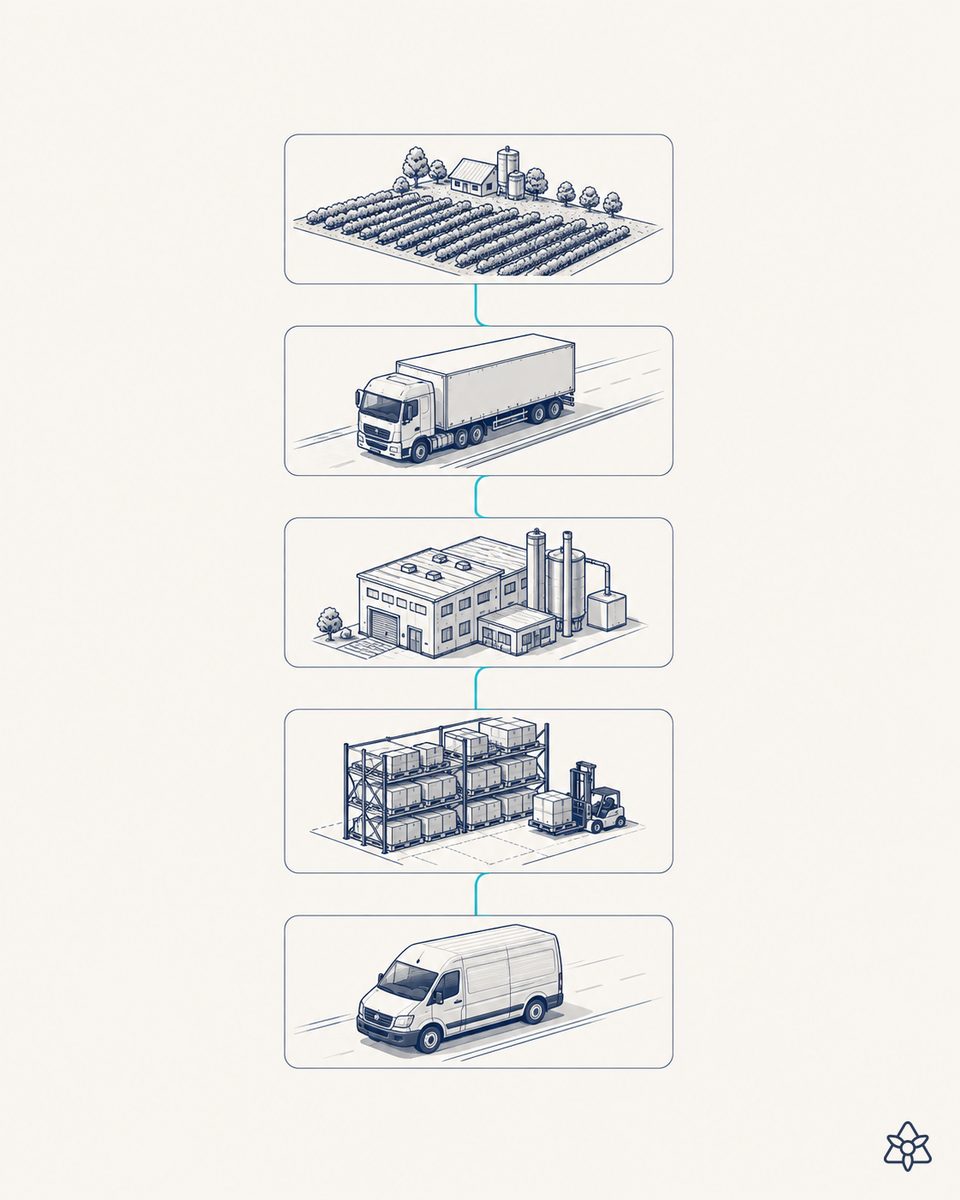
How to connect thousands of small farms with a demanding European market.
Fair-trade coffee has a promise: the European consumer pays more because they know where it comes from. That promise breaks when the traceability system loses evidence at some intermediate step — farm, collection, milling (pulping and drying), cooperative storage, export, sea transport, reception. Any broken link breaks the promise.
Cepicafé's challenge: every coffee sack must be able to rebuild its history back to the farm of origin, with the documentation demanded by international fair-trade frameworks and EU regulation 178/2002.
What iLEAN did
- GS1 codes (GTIN + SSCC) on every batch, from farm to container.
- On-site labeling with iLEAN Writer and industrial printers adapted to the cooperative environment.
- Integration with Cepicafé's administrative systems so traceability ran bidirectional with billing and producer payments.
- Documentary compliance with fair-trade and European export frameworks.
- Reconstructible traceability from the destination container back to the origin farm in seconds.
When a European buyer opens a Cepicafé sack, they know which Peruvian farm grew it, which producer harvested it, and what day it went through the cooperative.
Why this case matters
Cepicafé was one of the first cases to prove an industrial traceability system can connect thousands of small producers with a demanding market without losing evidence. The know-how was later replicated in other international food supply chains — and it's part of the 25 years of experience behind today's iLEAN Tracer.
About the Cepicafé case
What is Cepicafé?
Cepicafé (Central Piurana de Cafetaleros) is a Peruvian coffee growers' cooperative that gathers thousands of small farmers from the Piura highlands. It's one of Peru's most recognized fair-trade projects.
What did iLEAN do in the Cepicafé case?
iLEAN implemented coffee traceability from the Peruvian farm to the European container with GS1 codes, ensuring every batch could be reconstructed along its journey: farm → cooperative collection → mill → export → container → destination.
Why does this case matter?
It's one of the pioneer cases of international GS1 food traceability in the coffee sector. It proved an industrial traceability system can connect thousands of small producers with a demanding European market without losing evidence along the way.
More cases in industrial traceability
- Product QR code with AI — the door to the batch digital record, not to a static page.iLEAN Edge reads and verifies the product QR on the line; Connect links it to recipe, batch and MES; the…
- Anti-counterfeit with AI vision — the veteran's eye, on every box.How iLEAN Edge reads the visual signature of your product in line and catches counterfeits or grey…
- Carmen — the managementsoftware that is stillstanding, and has been modernized.Carmen is the long-standing factory management program of the iLEAN ecosystem. Still active, modernized…
- McDonald's — the chainnobody wants to break.iLEAN real case: McDonald's food supply chain integration. Documented conference, GS1 traceability…
- CBAM with AI — the European importer wants the real number, not the flattering average.How iLEAN cross-checks real plant and supplier emissions against the CBAM declaration to report…
- Conflict minerals 3TG — the CMRT is not a spreadsheet, it is a living dossier.iLEAN automates CMRT and 3TG due diligence (tantalum, tin, tungsten, gold): it checks smelters against…
Does your supply chain need the same?
If your product crosses borders or your customer demands traceability, we've done it before.
Request demo See traceability