Product carbon footprint — PCF built on your plant's data, not on a sector factor.
Carbon footprint per SKU is a growing demand from the B2B customer — automotive, retail and construction now ask for it as a condition of sale. iLEAN calculates the cradle-to-gate PCF from primary plant data (real kWh per product, gas per furnace, raw material traced to the supplier) in line with ISO 14067, ready for external audit.
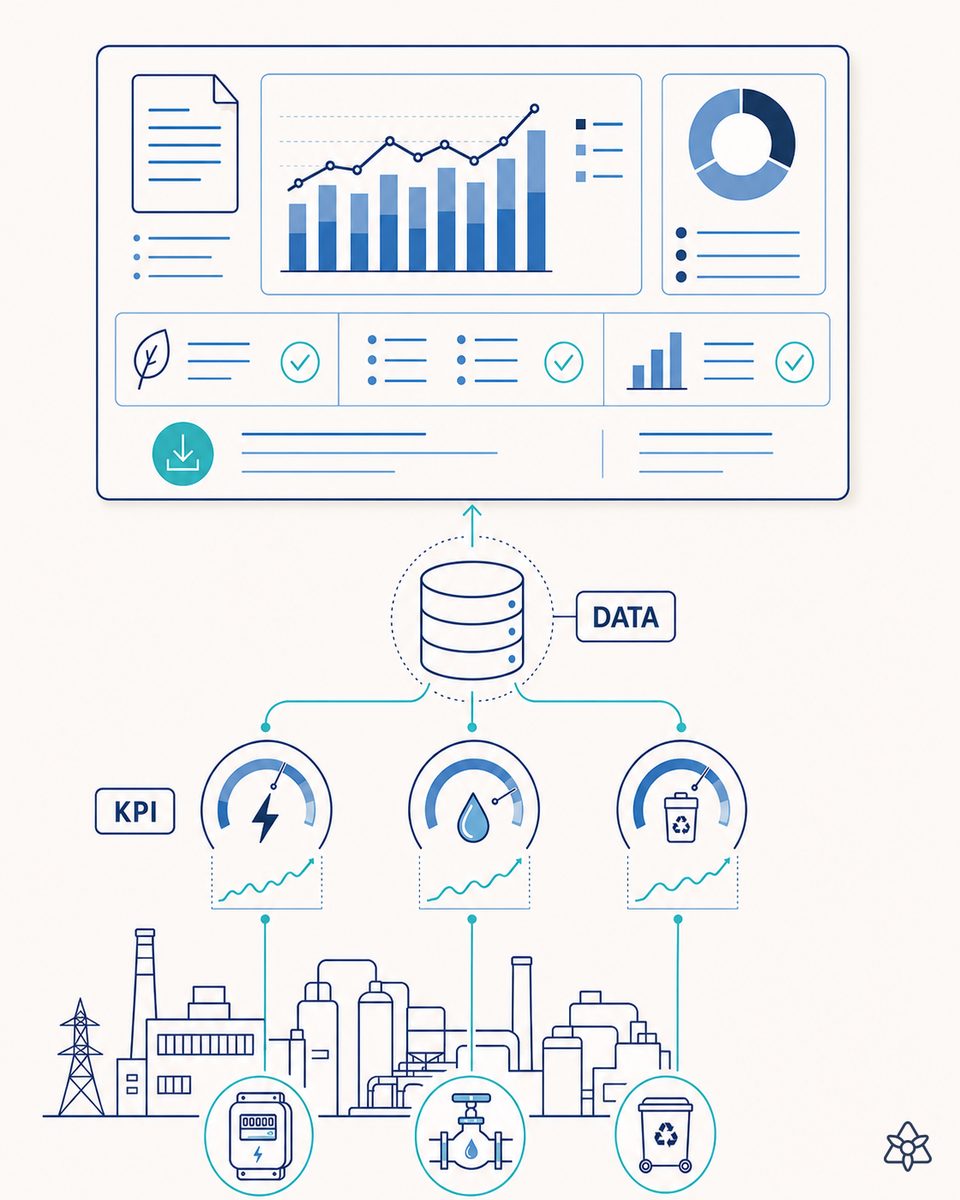
The B2B customer asks for PCF per SKU — and the sector factor we have been delivering for years no longer works.
When the commercial manager of an industrial plant receives the latest specification from their best customer (automotive OEM, retail brand, large construction group), the shift is clear:
- Before — PCF was a nice-to-have delivered with generic sector factors. The customer accepted it because it was what the market offered.
- Now — the customer asks for PCF per SKU, with traceable primary data, and uses it to segment suppliers (price + emissions + verifiable data). Some OEMs have gone as far as offering green premium contracts to the supplier that can prove consistent primary data.
- And the gap — the plant is still calculating PCF from factors. Raw material is reported with a sector factor. Electricity consumption is prorated across every SKU. Furnace gas is split by minutes of use. The figure is defensible — until the customer asks for third-party verification, and then the sector figure does not hold.
The sentence the commercial director has had to say more than once to the plant manager: "if we don't give the customer a PCF built on primary data before the next RFQ, we lose position against the competitor who already has it". And the honest answer is that instrumenting for PCF per SKU was never designed into the plant — it has to be added.
iLEAN does not replace your LCA engine — it seals the gap between the plant and primary data per SKU.
PCF calculation does not fail for lack of an LCA engine — it fails because there is a gap between what the plant actually consumes to make each SKU and what the LCA engine receives. iLEAN acts as the filler that closes that gap. It does not ask you to change your LCA engine or your ERP. It sits on top and guarantees that every input figure to the calculation starts from traceable primary data, per batch and per SKU.
Tracer captures consumption per SKU. Writer builds the cradle-to-gate PCF dossier. The external audit finds every figure traced back to its source.
The iLEAN pieces applied to Product Carbon Footprint:
- iLEAN Tracer — captures consumption where it happens, linked to the manufacturing order and the SKU. Electrical submetering per line/process, furnace gas consumption logged by the minute, real raw material weight per batch, supplier certificates with their PCF per component captured by email/EDI, real kilometres and transport mode upstream. Allocation is made to the SKU produced, not prorated.
- iLEAN Writer — builds the PCF dossier with the structure ISO 14067 / GHG Protocol Product Standard require: scope, functional unit, system boundaries, primary sources (readings, certificates) and secondary sources (inventory factors) clearly differentiated, emission factors used with their version, and estimated uncertainty. Every SKU has a defensible PCF.
- PCF agent — tracks the consistency of the data over time. If the same SKU starts coming out with a PCF significantly different from its history, the agent alerts the team (change of raw material supplier, change of energy mix, change of line efficiency). Before the B2B customer spots the deviation or the verifier flags it as an inconsistency.
PCF with a sector factor vs. cradle-to-gate PCF with iLEAN
| Aspect | Classic system (sector factor) | With iLEAN Tracer + Writer |
|---|---|---|
| Electricity consumption per SKU | Prorated across all products | Real submetering per line/process |
| Furnace gas per SKU | Split by minutes of use | Direct log per manufacturing order |
| Raw material PCF | Average sector factor | Supplier certificate captured by EDI/email |
| Upstream transport | Estimate with average km and mode | Real km and mode from the freight forwarder |
| PCF per specific batch/SKU | Same figure for the whole SKU | Traceable to the batch — reflects real variation |
| Third-party verification | Hard — the figure cannot be defended | ISO 14067 dossier with full traceability |
Impact estimate for your plant — to be validated with your numbers.
The following block is an estimate to be validated with your plant's data and your SKU portfolio. We set it out so the committee has an order of magnitude; we refine it during the diagnostic.
- Industrial B2B supplier (automotive tier 1/2, retail private label, construction) with a customer already asking for PCF per SKU, 1-3 plants, an existing LCA engine or an outsourced one.
- First value expected within a few weeks: a cradle-to-gate PCF pilot built on primary data for 3-5 strategic SKUs (the Pareto 80% of revenue with the demanding customer).
- Indicative payback between 4 and 9 months, depending on the weight of the demanding B2B customer in revenue and the margin difference that customer pays (or demands) for verified vs estimated data.
- The hard lever is not only the margin difference — it is the risk of exclusion from the OEM's supplier panel once it starts requiring verified primary data. The pilot pays for itself if it avoids a single lost position in a strategic RFQ.
And the sustainability manager's reasonable doubt
"What if the AI gets it wrong when allocating consumption to an SKU or reading a supplier certificate?" — hallucination is a problem of free generation, not of anchored tasks. In tasks where the AI is limited to recontextualising an existing figure (reading a supplier certificate in PDF and extracting the PCF per component, assigning a meter log to the correct manufacturing order), the best models brought the error below 1.5% [1]. And even then, the PCF is not signed off on its own: iLEAN proposes, the sustainability manager validates, and the traceability of every figure is left ready for the third-party verifier. The three safety rings are there precisely for this.
[1] OpenAI paper "Why Language Models Hallucinate", 2025 — on the reliability of AI in anchored tasks.
What people ask about product carbon footprint with AI
What methodology does iLEAN use for PCF?
iLEAN applies the recognised PCF framework: ISO 14067 (product carbon footprint), the GHG Protocol Product Standard and, depending on the sector, the applicable European PEFCR (Product Environmental Footprint Category Rule). The novelty is not the methodology — the methodology has existed for years — it is that iLEAN replaces generic sector factors with primary data captured on the shop floor: real kWh per SKU, natural gas per furnace per product, raw material traced to the supplier with its own PCF when the supplier provides it.
Cradle-to-gate, cradle-to-grave, or cradle-to-cradle?
iLEAN covers cradle-to-gate in full (from raw material extraction to the plant gate), which is what the industrial B2B customer asks for in 80% of cases. Cradle-to-grave (product use and end of life) requires downstream use knowledge that iLEAN can model with the end customer's data when available, or complement with clearly labelled secondary factors. The reporting always separates what is measured from what is estimated.
Does it integrate with an existing LCA system?
Yes. iLEAN does not replace the LCA engine — it exports the primary plant data it captures to the commercial or open-source LCA engine you already use, and links it to your inventory database. The LCA team keeps its own tool and its own criteria; iLEAN guarantees that the calculation starts from real primary data, not from an average sector factor, at every step of the plant.
Does it reduce B2B customer challenges on PCF?
Large brands (automotive, retail, construction) are demanding PCF per SKU from their suppliers as a condition of sale — not as a request. When the figure you deliver is traceable to your plant, defensible with evidence and consistent across batches, the B2B customer raises fewer review challenges and fewer rejections for non-credible data. And it opens the door to green premium contracts, which more and more OEMs offer to the supplier that can prove the figure.
Is it ISO 14067 compliant?
Yes. ISO 14067 (carbon footprint of products: requirements and guidelines) is the international standard for quantifying and communicating PCF, and it builds on ISO 14040/14044 (LCA). iLEAN generates the reporting with the structure ISO 14067 requires — scope, functional unit, system boundaries, primary and secondary data sources clearly differentiated, emission factors used, uncertainty — and leaves the dossier ready for third-party verification.
More cases in industrial traceability
- Industrial inventory control with AI and traceabilityiLEAN unifies inventory control with AI: real-time inbound/outbound, stock by location, automated…
- A label is just the beginning.iLEAN Writer turns it intoreal traceability.iLEAN Writer: industrial labeling and printing software. GS1, DataMatrix, QR, RFID. Connects to…
- Multi-tier traceability — the disruption that stops your line is almost never where you are looking.iLEAN traces tier-1, tier-2 and tier-3 suppliers and warns of supply risk days or weeks before it…
- Product hologram with AI — the seal properly applied on every unit, at eight in the evening too.How iLEAN Edge verifies the security hologram on every unit in line — presence, position, integrity —…
- REACH SCIP — the Candidate List changes twice a year, your SCIP cannot lag behind it.iLEAN identifies SVHC in every article and automates the SCIP notification to ECHA — real composition…
- A B2B return gets lost in emails. And by the time it resurfaces, the batch has already been sold three times over.iLEAN closes the B2B returns loop: categorized cause, affected batch, documented decision (rework /…
Tell us about your case and within 48h we'll send you the estimated ROI of this AI project for your product carbon footprint.
We work on your plant's real data and your SKU portfolio, not on ours. Diagnostic with no commitment.
Request estimated ROI in 48h See Traceability