A B2B return gets lost in emails. And by the time it resurfaces, the batch has already been sold three times over.
B2B reverse logistics is the black hole of most plants — the customer returns, the sales rep forwards, quality investigates, the warehouse stacks it up and nobody closes the loop. iLEAN closes it: categorized cause, affected batch, documented decision (rework / scrap / recall) and a dossier per event. The quality manager signs — and the plant stops operating with a blind spot.
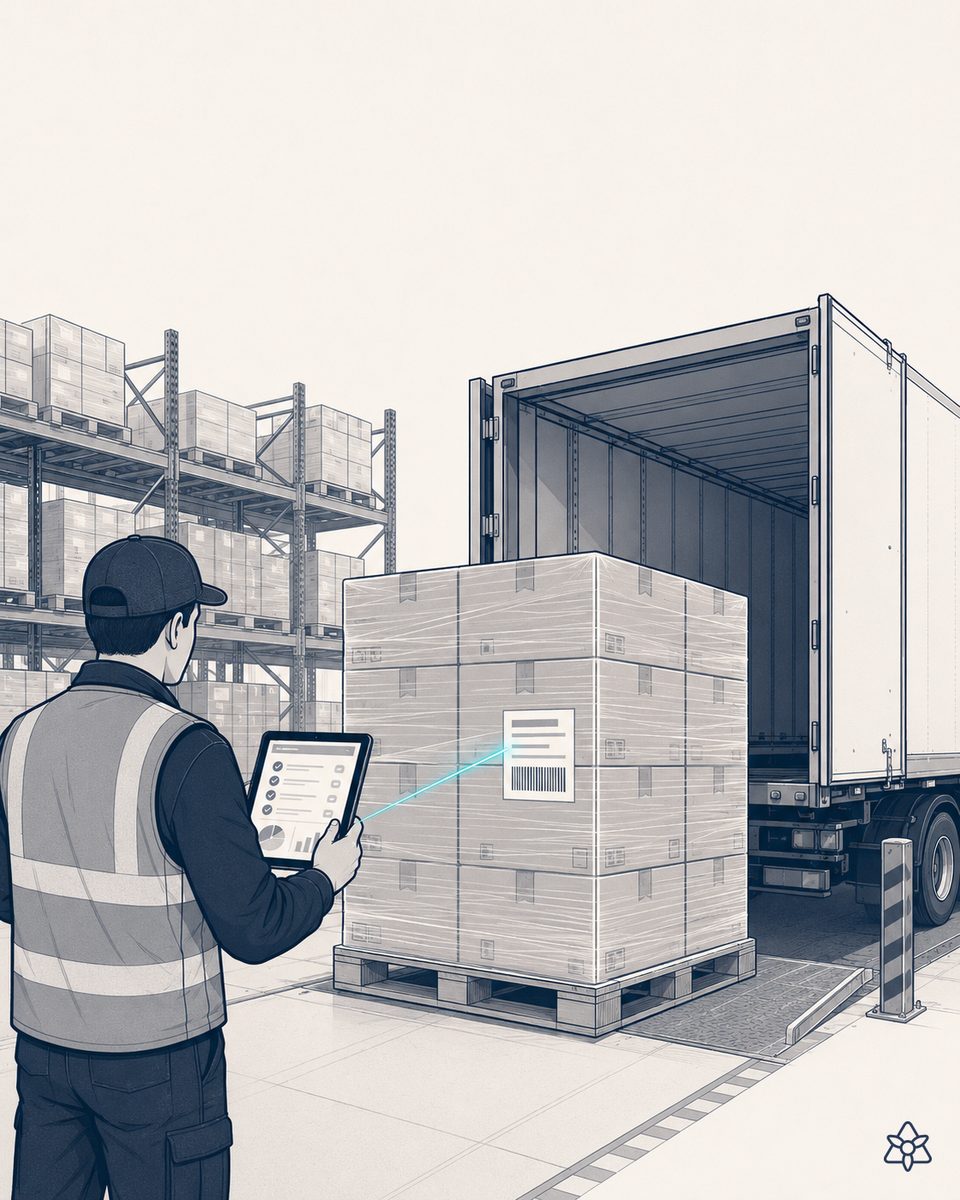
The return comes in through one channel and goes out through three — all manual.
In industrial B2B, a return rarely comes in through a well-defined system. The typical sequence:
- Scattered origin — one customer complains by email to the sales rep, another opens an incident in the retailer portal, another phones the account manager. Every channel, its own format.
- Internal ping-pong — the sales rep forwards it to quality, quality asks the warehouse to recover the product, the warehouse stacks it in a "pending" area, quality investigates whenever it can.
- Losing the batch — by the time somebody identifies the specific batch behind the return, that same batch has already been sold to other customers. If the root cause warranted it, the scope of the problem has already multiplied.
- A decision out of time — the rework/scrap/recall decision is taken too late, without a consolidated dossier, and with the constant feeling of firefighting.
The problem is not quality — quality does what it can with what reaches it. The problem is that there is no system closing the loop: one that normalizes the intake, categorizes the cause, connects it to the batch, calculates the scope and prepares the dossier for the decision. Meanwhile, SLA clauses with B2B customers get breached, recalls become more expensive and the brand erodes.
iLEAN does not replace quality — it takes the dumb work away and gives the judgement back.
IRIS (Industrial Reality Intelligence Systems) is the category; iLEAN is the system. Reverse logistics is the textbook case of "multichannel capture + agent + glue between systems" — exactly what iLEAN is designed to do. The information about the return exists (emails, photos, portals, calls), the traceability system exists, the cause catalogue exists — but nobody has the time to cross the three of them, return by return, in real time.
Connect normalizes the multichannel intake. Tracer connects each return to its batch. Agent categorizes, calculates scope and prepares the dossier. Writer drafts the reply to the customer. The person signs — always.
The iLEAN pieces applied to B2B reverse logistics:
- iLEAN Tracer — the traceability subsystem the whole operation is built on. Every product sold has its footprint (batch, route, customer, conditions). When a return comes in, Tracer is the source that lets you reconnect the physical product with its full history, even when the label is only partly readable.
- iLEAN Agent (quality / returns management) — an assistant that categorizes the cause by cross-referencing email, photos, complaint and internal catalogue; connects it to the batch via Tracer; calculates the scope (other customers holding the same batch, other products from the same process); prepares the dossier with an estimated cost per option (rework, scrap, partial recall, full recall). It proposes; the manager signs.
- iLEAN Writer — drafts the reply to the B2B customer through the same channel the return came in by (formal email, portal message, call script), respecting tone and SLA. The reply does not go out without a human signature — Connect transports, Agent decides, the person signs. The iLEAN golden rule.
- iLEAN Connect — the multichannel capture that normalizes a wildly inconsistent intake (email, portal, WhatsApp, transcribed call). Three levels of integration with the B2B customer's system depending on what each account allows, without asking you to change anything in your portal.
Manual reverse logistics vs. the loop closed with iLEAN
| Aspect | Manual handling of the return | With iLEAN Tracer + Agent + Writer |
|---|---|---|
| Return intake | Multi-channel, multi-format, multi-bounce | Normalized by Connect at second zero |
| Cause categorization | Manual, whenever quality has the time | Proposed by the agent with its confidence level |
| Connection to the batch | "We'd have to look into it" — days | Via Tracer, in minutes, with OCR if there is a photo |
| Scope of the problem | Discovered when the next return arrives | Calculated as soon as the cause is categorized |
| Dossier for the decision | Assembled by hand once the committee is convened | Generated automatically, ready for management to sign |
| Reply to the B2B customer | Drafted manually, SLA at risk | Drafted by Writer, person signs, SLA met |
Impact estimate for your plant — to be validated with your numbers.
This block is an estimate to be validated with the actual data of your plant. It works as an order of magnitude for the committee; we refine it during the diagnostic.
- B2B plant with a multi-customer portfolio, returns arriving through 3-6 different channels, currently handled between sales, quality and the warehouse with no single system to close the loop.
- A 3-5 day immersion with the mixed team. Pareto: the 5-10 cause types that concentrate 80% of returns, the 3-5 customers that concentrate 70% of the volume.
- First agent (categorization + connection to batch) running within a few weeks. Writer integrated in the following cycle.
- Average return closing time down ≥ 40% in the first measurable cycle.
- Measurable improvement in SLA compliance with B2B customers — it depends on each account's exact SLA, but the hard lever is replying in hours, not in days.
- Indicative payback between 4 and 9 months. The hard levers: lower cost per return handled, prevention of bigger recalls through early detection of the affected batch, recovery of product that admits rework and used to be written off as scrap.
The underlying figure — B2B quality demands another level
In automotive, the demanding standard sits in the order of 25 PPM (parts per million) [1]. In other B2B sectors the requirement varies, but the direction is the same: the industrial customer does not accept the defect ratio the end consumer tolerates, and contractual clauses are starting to include ever stricter SLAs for responding to returns. Closing the loop is no longer an improvement — it is commercial survival in large B2B accounts.
And the CAIO's doubt — does the AI invent the cause?
"What if the agent categorizes a cause wrongly and drives us into an unnecessary recall or, worse, into skipping one we should have run?" — hallucination is a problem of free generation, not of anchored tasks. Cause categorization is an anchored task: read the email, compare against the catalogue, propose with a confidence level. On anchored tasks, the best models brought the error rate below 1.5% [2]. And even so, the final decision (rework/scrap/recall) is never automatic: the agent proposes it and the quality manager or senior management signs it, depending on severity. The three safety rings are there for exactly this.
[1] Symestic — quality standard in automotive.
[2] OpenAI paper "Why Language Models Hallucinate", 2025 — on the reliability of AI in anchored tasks.
What people ask about B2B reverse logistics with AI
How is the cause of a return categorized?
The agent reads the email, the body of the complaint, attached photos and associated messages, compares them against your internal cause catalogue (process defect / contamination / labelling / transport / packaging / functional non-conformity / commercial preference) and proposes a categorization with its confidence level. For clear-cut causes the categorization is automatic (with the quality manager's sign-off before the case is closed); for doubtful causes the agent opens a ticket for human analysis. The catalogue is yours — the agent learns it and sharpens with every closed return. Within a few weeks, the useful categorization ratio goes from improvised to systematic.
How is a return connected to the specific batch?
By cross-referencing the part number + serial / batch / SSCC number on the delivery note or on the returned product's label with the iLEAN Tracer trace. If the B2B customer sent a photo of the part with a legible label, OCR extracts it; if they only gave the part number and the date, the agent narrows the set of possible batches by cross-referencing delivery + customer + route + date. And, most useful of all for quality: once the batch is connected, the agent opens up the possibility of identifying whether that same batch is sitting at other customers — and whether the root cause justifies an extended scope or a preventive recall.
Is the rework/scrap/recall decision automatic?
No — and by design. The agent proposes the decision together with its analysis (categorized cause, affected batch, estimated cost of each option, impact on customer and on brand) but the person always signs: the quality manager for rework/scrap, senior management for a recall. This is exactly the logic of iLEAN's three safety rings: the more critical the decision, the more mandatory the human validation. What the agent does do on its own: prepare the complete dossier so the person decides in minutes, not in days.
Does it work with multi-customer and multi-channel setups?
Yes — that is precisely what iLEAN Connect is designed for. Every B2B customer has its preferred channel (some email, others the retailer portal, others the buyer's WhatsApp, others a call to the sales rep), its own complaint format and its own SLAs. Connect normalizes all of that at second zero: the agent handles every return with its categorization, its batch and its documented decision, regardless of the channel it came in through. And the writer prepares the reply back to the customer through that same channel — with a human signature before it goes out.
Is there measurable ROI in reverse logistics?
Yes — and it usually comes faster than executives expect. The hard levers: (1) lower cost per return handled by automating categorization and the batch cross-reference; (2) better SLA compliance with B2B customers (the clauses penalize response time); (3) prevention of a bigger recall by detecting early that one batch is affecting several customers; (4) less scrap by recovering product that used to be written off and does in fact admit rework. As an estimate to be validated, indicative payback between 4 and 9 months. We send you the calculation with your own numbers in 48h.
More cases in industrial traceability
- Product carbon footprint — PCF built on your plant's data, not on a sector factor.iLEAN calculates the product carbon footprint (PCF) per SKU from real plant data — cradle-to-gate, ISO…
- Product hologram with AI — the seal properly applied on every unit, at eight in the evening too.How iLEAN Edge verifies the security hologram on every unit in line — presence, position, integrity —…
- REACH SCIP — the Candidate List changes twice a year, your SCIP cannot lag behind it.iLEAN identifies SVHC in every article and automates the SCIP notification to ECHA — real composition…
- RFID in the warehouse with AI — when the reader misses, the inventory lies.How iLEAN reconciles RFID reads, WMS and ERP with vision and agents so real stock adds up and…
- Traceability softwarethat answers in secondswhen something goes wrong.Industrial traceability software with AI: forward and backward, inventory control, GS1 labeling, ERP…
- Tobacco serialization under the TPD with AI — aggregation decides whether the truck leaves.How iLEAN verifies pack-carton-case-pallet aggregation by vision, reconciles exceptions and reports…
Tell us about your case and in 48h we'll send you the estimated ROI of closing the B2B returns loop with AI.
We work on your plant's real data, not on ours. Diagnostic with no commitment.
Request estimated ROI in 48h See traceability