ISO tank ADR class 3: the custody chain does not break between the loading bay and the consignee.
A chemical ADR class 3 ISO tank changes hands five times between loading bay and discharge — and every handover is a crack. iLEAN Tracer links ADR data, the seal photo, the ISO tank OCR and route events into a custody chain signed leg by leg, capturing what happens on any channel (EDI, a driver's message from the road, the forwarder's email). Discharge is never authorised on its own — a person signs.
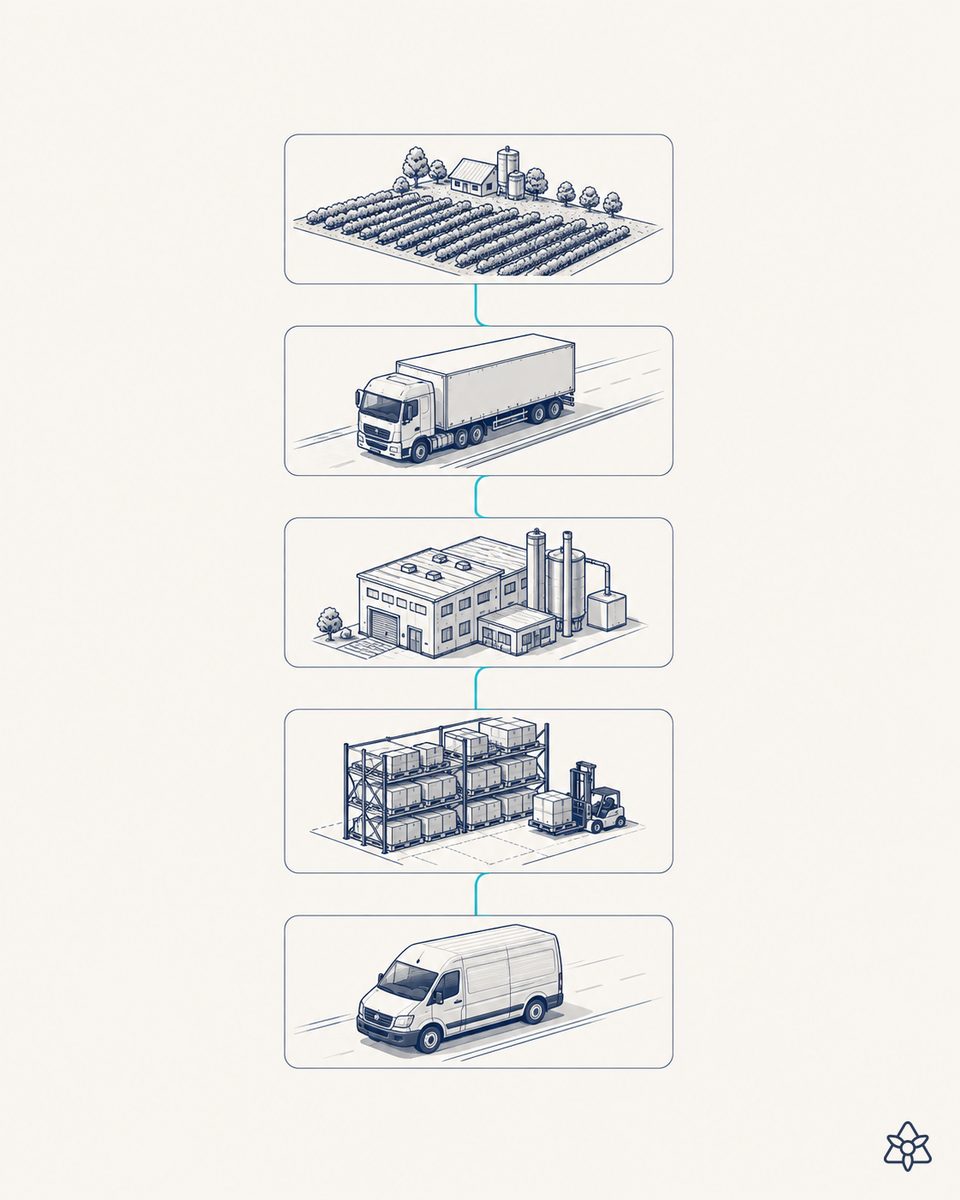
Five custodians, one seal, zero shared memory.
An ISO tank carrying a class 3 flammable liquid (UN 1268, UN 1993, petrol, aromatic solvents, industrial ethanol) travels, between loading bay and destination, through a sequence involving at least five sets of hands: shipper's loading bay → origin forwarder → port terminal → shipping line → destination terminal → destination forwarder → discharge. Every handover generates a different document in a different system:
- Loading bay: loading note, ADR declaration, photo of the seal on the valve, the operator's report (sometimes in a spreadsheet, sometimes only in their head).
- Forwarder: CMR, written ADR instructions, truck status sent by the driver from the road.
- Terminal and shipping line: EDI / Bill of Lading / port status, EDIFACT messages that live in another world.
- Consignee: receipt sheet, seal reading on arrival, chemical validation of the sample.
The chemical logistics manager knows all this, but cannot be in five places at once. When something goes wrong — a seal that does not match the one at origin, a six-hour stop with no explanation, an EDI message that never arrives — reconstructing the file takes weeks, and the claim or the ADR penalty is already running. The classic system works 99% of the time. That 1% is the one that reaches the inspector and the insurance company — and a badly closed ADR class 3 ISO tank is not an incident: it is a risk.
iLEAN Tracer does not add another system — it seals the cracks between the five already involved.
The custody chain problem is not a lack of information: it is information living on five islands that, at the critical moment (acceptance at destination, the inspector walking in, a claim at two in the morning), does not reach the decision-maker in time. iLEAN Tracer acts as the filler for those gaps, without asking the forwarder, the shipping line or the consignee to change their software.
Connect captures on any channel. Edge reads the ISO tank OCR and the seal photo. The agent cross-checks against the ADR data and the route events. A person signs at every leg — discharge is never authorised on its own.
The iLEAN pieces applied to the custody chain of an ADR class 3 ISO tank:
- Edge — a terminal with machine vision (CNN) at the loading bay and at discharge. It reads the BIC code of the ISO tank, the ADR plate and the photo of the seal on the valve before departure and on receipt. It works without a network: if the port terminal loses connectivity, the read-and-sign cycle carries on, because what is critical cannot depend on WiFi.
- Connect — captures everything arriving outside the shipper's ERP: port EDI, the shipping line's Bill of Lading, the forwarder's CMR, the driver's mid-route message with the seal photo, the customs agent's email. Every message enters the batch custody chain at second zero, with nobody forwarding anything.
- Agent — cross-checks ADR data, physical seal, ISO tank OCR, route events and the shipper's ADR plan. If the seal on arrival is not the one that left, if the temperature of an instrumented ISO tank moves outside the range for a class 3 product with a low flash point, or if there is an unplanned stop, it holds acceptance at destination and alerts the responsible person. The person validates and signs; discharge is never authorised on its own. The three safety rings exist precisely for this.
Custody chain in a spreadsheet vs. custody chain signed with iLEAN Tracer
| Aspect | Spreadsheet + email + messaging | With iLEAN Tracer |
|---|---|---|
| Seal photo at the loading bay | On the operator's phone, sometimes lost | Captured by Connect, linked to the batch and the BIC code |
| Reading the ISO tank BIC code | Manual, sometimes mistranscribed | Edge OCR — milliseconds, no typing errors |
| Shipping line EDI / Bill of Lading | In the forwarder's inbox, arrives late | Captured and merged into the batch custody chain |
| Route events (stops, deviations) | Only if the driver calls | Detected and signed leg by leg |
| Acceptance at destination | Operator opens the valve and signs afterwards | Automatic hold if the seal does not match — a person signs |
| File for the ADR inspector / insurer | Rebuilt by hand, weeks | Per-batch dossier, automatic, with photo, OCR, EDI and human signature |
Impact estimate for your plant — to be validated against your numbers.
The block below is an estimate to be validated against the specific data of your operation. We set it out so the committee has an order of magnitude; we refine it during the diagnostic.
- A chemical shipper with 6-10 ADR class 3 ISO tanks per week, two loading bays, terminals in one or two European ports, mixed consignees (industry + resale).
- A Tracer pilot at one loading bay and one consignee (Edge for BIC code + seal, Connect for EDI/CMR/driver messages, the agent signing each leg). First expected value within a few weeks: the custody chain of the first batches is already reconstructible in minutes.
- Indicative payback between 4 and 9 months, depending on the frequency of incidents (mismatched seals, late EDI, unexplained stops) and the average cost of each manual file reconstruction for an inspector or an insurer.
- A reduction of ≥30% in the time it takes to rebuild the ADR file, with a defensible floor far below the cost of a single well-defended dispute with an insurer.
- The hard lever is one single well-defended claim: seal photo, ISO tank OCR, EDI, route events and a human signature at every leg. One claim pays for the pilot.
And the chemical logistics manager's reasonable doubt
"What if the AI gets a BIC code or an EDI message wrong and puts a false data point into the custody chain?" — hallucination is a problem of free generation, not of anchored tasks. In tasks where the AI merely recontextualises a data point from one system to another (reading a BIC code, extracting the UN number from an ADR declaration, parsing an EDI message), the best models brought the error rate below 1.5% [1]. And even so, what is critical is never decided alone: iLEAN holds acceptance and a person signs. The three safety rings exist precisely for this.
[1] OpenAI paper "Why Language Models Hallucinate", 2025 — on the reliability of AI in anchored tasks.
What people ask about the custody chain of an ADR class 3 ISO tank
What is a custody chain on an ADR class 3 ISO tank?
It is the signed chain of custody of an ISO tank container carrying a class 3 flammable liquid (petrol, solvents, light biofuels) from the shipper's loading bay to the consignee's tank. It includes: product identity (UN number, packaging, ADR), a photo of the seal at loading, a reading of the seal at every change of custody (freight forwarder, terminal, shipping line, destination forwarder, discharge), route events (stops, temperature where applicable) and the signature of the responsible person at every leg. Exactly what the insurance adjuster and the ADR inspector ask for when something does not add up.
How does Tracer link the ADR data to the physical seal on the ISO tank?
Tracer cross-checks three data points that today live in separate places: the ADR/UN number travelling in the paperwork (consignment note, safety data sheet, shipper's declaration), the serial number of the physical seal the operator photographs when closing the valve at the loading bay, and the OCR of the ISO tank (BIC code) captured by iLEAN Edge on entry and exit at every terminal. If the seal arriving at the consignee is not the one that left the loading bay, it is not a suspicion — it is a signed event, with a photo and a timestamp.
What if the shipping line or the forwarder do not use our system?
They do not need to. Tracer is built for mixed chains: the loading bay, the consignee and the aligned forwarders photograph and sign in their own app, email or messaging app (iLEAN Connect captures it through whichever channel it arrives on); the shipping line and the terminal contribute the EDI, Bill of Lading and status messages they already issue — Tracer extracts the information by inference and files it into the batch custody chain. What matters is that every leg ends up signed, not that everyone shares the same software.
What if something happens en route — an unplanned stop, a deviation, a spill?
Tracer records it as an event in the custody chain. A long motorway stop, a route deviation, a pressure loss in the ISO tank if it is instrumented, a driver's message from the road — everything enters the system at second zero, with nobody forwarding anything. The agent cross-checks it against the shipper's ADR plan and, if the event could compromise the chain (broken seal, temperature outside range for a class 3 product with a low flash point), it holds acceptance at destination and alerts the responsible person. The person validates — discharge is never authorised on its own.
What is a signed custody chain worth when an inspector arrives or a customer complains?
It means the batch file is reconstructed in minutes, not weeks. An ADR auditor, an insurer facing a claim, a customer alleging cross-contamination in their tank, a port authority requesting the history of an ISO tank suspected of under-declaration — they all ask for the same thing: who signed what, when, and with what evidence. Tracer delivers the per-batch dossier with photo, OCR, EDI, seal and human signature at every leg. That is the difference between defending an operation with data and defending it from memory.
More cases in ilean tracer
- You export to twelve countries and each one bans different pests — one wrong certificate and the consignment comes back from the port.iLEAN Tracer keeps the phytosanitary certificate per destination country for every exported SKU, with…
- Fresh meat pallet cold chain segregation — one break on one truck should not cost thirty pallets on hold.How iLEAN Tracer segregates the cold chain of a fresh meat pallet as it crosses trucks and cross-dock…
- Iberian pig — the PDO demands a record per animal, and that record lives in five different notebooks.iLEAN Tracer links the Iberian pig's RFID ear tag to the PDO, montanera days and the slaughterhouse —…
- ADR LPG butane tanker: every stop, a signed discharge — product, tank temperature and customer serial.iLEAN Tracer links ADR, tank temperature and customer serial on an LPG butane home-delivery tanker, with…
- EUDR dossier for a mango reefer container — a container held at customs is not paperwork, it is shelf life thrown away at the port.How iLEAN Tracer closes the EUDR dossier of a mango reefer container with plot coordinates and country…
- GS1 SSCC label on a multi-SKU mixed pallet — one error is not an incident, it is a pallet rejected at the dock.How iLEAN Tracer builds the GS1 SSCC label of a multi-SKU mixed pallet for retail in real time, with no…
Tell us about your case and within 48h we'll send you the estimated ROI of this AI project for your ADR class 3 ISO tanks.
We work on the real data of your operation, not on ours. Diagnostic with no strings attached.
Request estimated ROI in 48h See Tracer