Iberian pig — the PDO demands a record per animal, and that record lives in five different notebooks.
An acorn-fed Iberian pig is not a batch — it is an animal with a name and an ear-tag number, with its breed certification, its days on the dehesa and its montanera weight gain. iLEAN Tracer links the RFID ear tag to the official livestock registry, the weighings, the montanera days, the slaughterhouse and the drying house, and generates one individual animal record that the PDO inspector, the importer or the end customer can audit at a glance. The person signs — no spreadsheet "summarizes" reality.
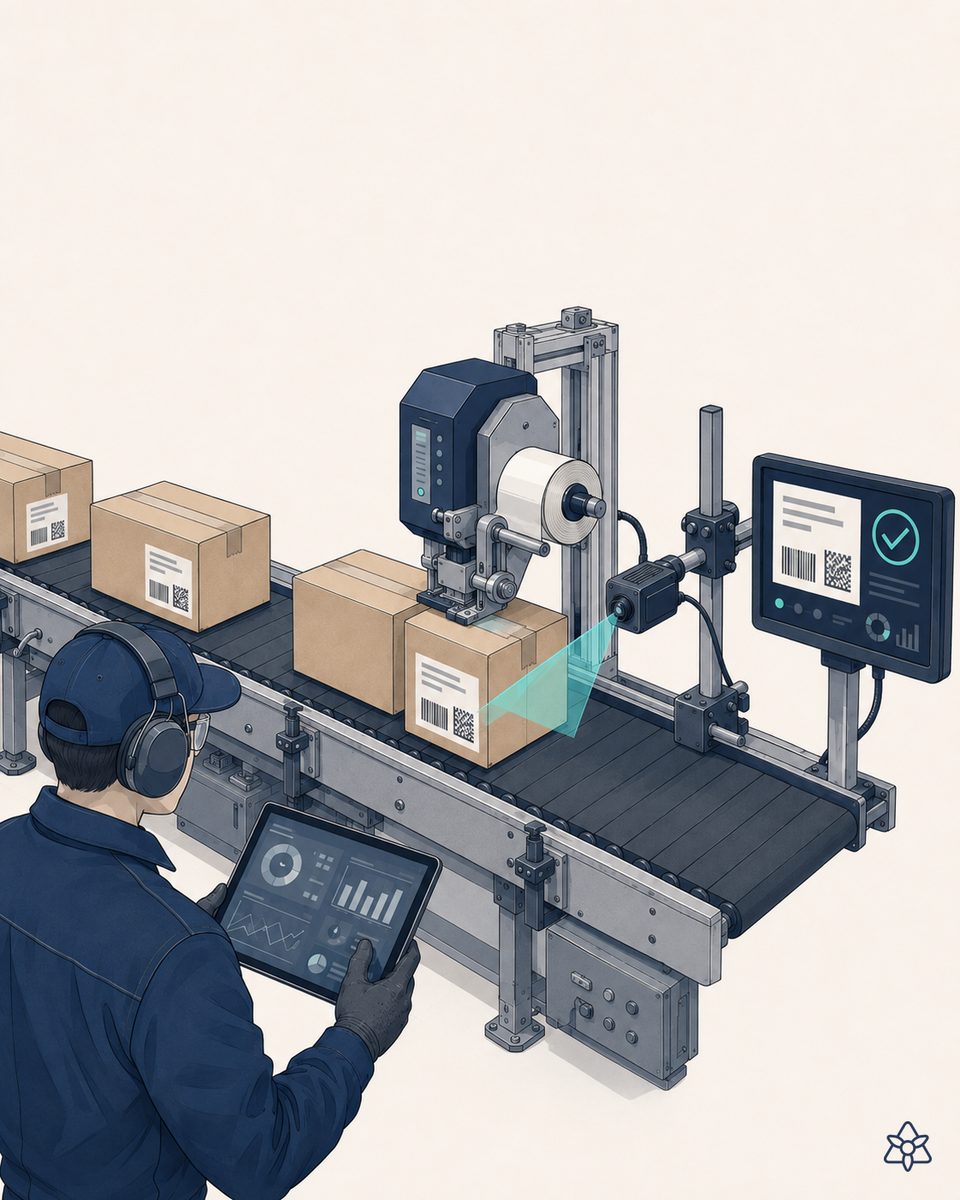
Five events per animal, five islands, and an individual record that exists only in the swineherd's memory.
A quality Iberian lot crosses five events per animal — and on most operations, each one lives in a different place:
- Tagging and breed certification — the ear tag is applied at the farm of origin and the breed certification (100% Iberian, 75%, 50%) goes into the official livestock registry.
- Entry into the dehesa — the initial weighing at the start of the montanera; usually jotted down in a notebook or on a scale that talks to nothing.
- Montanera days — kilos gained on acorns and grass; the difference between bellota, cebo de campo and cebo is decided here.
- Departure to the slaughterhouse — final weighing, slaughter, cutting. The animal record almost always breaks at this jump.
- Drying house and sale — the ham is identified by a PDO band or seal; getting from the seal back to the individual animal is, in many houses, impossible in any reasonable time.
The veterinarian, the swineherd and the cooperative's quality manager know this — but nobody can be on the dehesa, at the scale and on the slaughterhouse dock at the same time. When the PDO inspector asks for the record of animal X, someone rebuilds it by hand cross-referencing notebooks and spreadsheets. The classic system (paper + eye) works 99% of the time — that 1% is what fails in the audit, and a lot disqualified by the PDO outweighs the entire traceability investment.
iLEAN Tracer is not yet another farm system — it seals the cracks between the ones you already have.
The Iberian problem is not a lack of data: the livestock registry, the scale, the swineherd's notebook, the slaughterhouse ERP and the PDO seal have the information. The problem is that it lives in five heterogeneous islands and the individual animal record exists in no system — only in the swineherd's memory. Tracer is the filler that seals those gaps, without asking you to change the registry, the scale or the slaughterhouse ERP.
Edge reads the RFID ear tag at every checkpoint. Connect captures notebooks, old scales and the slaughterhouse ERP. The agent stitches the five events into one record per animal, ready for inspector and buyer. The person signs.
The three iLEAN pieces applied to the PDO Iberian pig:
- Edge — a vision-equipped terminal with an RFID reader at the fixed points (scale, chute, slaughterhouse dock). It verifies that the physical ear tag crossing matches the expected animal, records the weight and triggers an alert on any deviation. It works without a network — on the dehesa, coverage comes and goes, and Edge keeps operating with its own light.
- Connect — captures the swineherd's notebook (photo + transcribed voice), the old scale's ticket, the official livestock registry and the slaughterhouse ERP, whether they arrive as an exported spreadsheet, a paper ticket or a modern API. And it captures from outside whatever arrives by WhatsApp from the veterinarian or by email from the buyer, at second zero.
- Agent — stitches the events per ear tag into an individual animal record with its weighings, its montanera days and its breed grading. It generates the PDO dossier and the export dossier without rebuilding anything by hand. If a weighing deviates or an event is missing, it raises a flag and alerts the quality manager. The person signs.
Iberian traceability with notebooks vs. an animal record with iLEAN Tracer
| Aspect | Notebooks + scale + slaughterhouse ERP | With iLEAN Tracer |
|---|---|---|
| Individual animal record | Exists in the swineherd's memory | Exists as auditable data per ear tag |
| Ear tag ↔ carcass ↔ PDO piece link | Broken at the jump to the slaughterhouse | Held by RFID + Edge on the dock |
| Dossier for the PDO inspector | Rebuilt by hand, days | Generated per animal and per lot, ready |
| Montanera days per animal | Estimated from the litter average | Actual, per ear tag |
| Operation without coverage on the dehesa | n/a | Edge and readers keep operating offline |
| Passport for buyer / export | Batch summary sheet | Animal record with photo and signed events |
Impact estimate for your plant — to be validated with your numbers.
The block below is an estimate to be validated with the specific data of your lots and your estates. We put it forward so the board has an order of magnitude; we refine it during the diagnostic.
- Iberian pig operation with 800-2,500 head on montanera, 2-3 estates and a contracted external slaughterhouse, 100% bellota and cebo de campo grading.
- Tracer pilot on one estate + the scale + the slaughterhouse dock (RFID readers + Edge on the dock + Connect against the livestock registry, the swineherd's notebook and the slaughterhouse ERP). First value expected within a few weeks.
- Indicative payback between 5 and 9 months, depending on the number of annual lots and the average cost of a documented PDO incident in recent years.
- The hard lever is a single lot defended in inspection with an animal record per ear tag instead of a summary sheet. Expected reduction in indexable incidents ≥ 30%.
And the cooperative quality manager's reasonable doubt
“What if the AI gets confused and crosses one animal's ear tag with another animal's carcass?” — hallucination is a problem of free generation, not of anchored tasks. In tasks where the AI merely reads an RFID ear tag and cross-references it with the livestock registry, the best models brought error below 1.5%[1]. And even so, what is critical is never decided alone: Tracer raises the flag and the person signs. The three rings exist precisely for this.
[1] OpenAI paper “Why Language Models Hallucinate”, 2025 — on the reliability of AI in anchored tasks.
What people ask about RFID ear tags on Iberian pigs
What does the Iberian quality standard require for individual animal control?
Royal Decree 4/2014 (the quality standard for Iberian meat, ham, shoulder and loin) and the specifications of the four PDOs (Guijuelo, Dehesa de Extremadura, Los Pedroches and Jabugo) require recording the animal's breed certification, its feeding, the estate, the montanera days and the weight on entering the dehesa. The ear tag (with or without RFID) is the anchor. All Tracer does is never lose that thread between the estate, the scale, the slaughterhouse and the drying house — and keep it auditable at a glance.
Why does Iberian traceability fail in practice if the standard already exists?
Because the information lives in islands: the farm applies the ear tag, the swineherd writes the montanera day in a notebook, the weighings are recorded by a scale that connects to nothing, and the slaughterhouse generates another record downstream. When the PDO inspector or the buyer asks for the individual record of animal X, someone rebuilds it by hand cross-referencing notebooks, spreadsheets and tickets. The classic system (paper + eye) works 99% of the time — and that 1% is what fails in the audit.
How does Tracer cross-reference the RFID ear tag with the weighing and the slaughterhouse?
Connect reads the RFID reader at every checkpoint — entry into montanera, control scale, slaughterhouse chute — and cross-references it with the farm's record (tagging date, breed certification, estate, official livestock registry). An agent generates an individual animal record per ear tag, with its events in order and signed off. Edge at the slaughterhouse dock verifies that the physical ear tag coming in matches the scheduled lot; if it does not add up, it raises a flag and the person signs. The carcass leaves with its complete passport, not with a batch summary sheet.
Does Tracer work on a dehesa without constant mobile coverage?
Yes. The dehesa in Extremadura, Andalusia or Salamanca does not have continuous 4G coverage — and that is a design requirement, not a problem. Edge at the fixed points (scale, chute, dock) records locally and syncs with Central when the network comes back. The portable RFID readers used by the swineherd or the veterinarian store data offline. What is critical cannot depend on coverage, just as in a factory what is critical cannot depend on WiFi.
How much does it cost to start with Tracer on an Iberian pig farm?
The order of magnitude of a Tracer pilot on an Iberian pig farm is close to that of any Tracer pilot in a plant: RFID readers at the key checkpoints + integration with the official livestock registry and the slaughterhouse ERP + the annual license. The reasonable payback to present to the PDO board or the cooperative's committee is several months — the hard lever is a single incident avoided in the inspection, where losing the grading of one lot outweighs the whole investment. We ask for the data from your weighings and your lots and send you the estimated ROI in 48h, with your numbers, not ours.
More cases in ilean tracer
- A PDO bottle that cannot prove its parcel is no longer PDO — it is table wine with a shiny label.iLEAN Tracer assigns the PDO/PGI parcel and municipality to every bottle of wine or tin of olive oil,…
- You export to twelve countries and each one bans different pests — one wrong certificate and the consignment comes back from the port.iLEAN Tracer keeps the phytosanitary certificate per destination country for every exported SKU, with…
- Fresh meat pallet cold chain segregation — one break on one truck should not cost thirty pallets on hold.How iLEAN Tracer segregates the cold chain of a fresh meat pallet as it crosses trucks and cross-dock…
- ISO tank ADR class 3: the custody chain does not break between the loading bay and the consignee.iLEAN Tracer signs the custody chain of an ADR class 3 chemical ISO tank from loading bay to destination…
- ADR LPG butane tanker: every stop, a signed discharge — product, tank temperature and customer serial.iLEAN Tracer links ADR, tank temperature and customer serial on an LPG butane home-delivery tanker, with…
- EUDR dossier for a mango reefer container — a container held at customs is not paperwork, it is shelf life thrown away at the port.How iLEAN Tracer closes the EUDR dossier of a mango reefer container with plot coordinates and country…
Tell us your case and in 48h we'll send you the estimated ROI of Tracer for your PDO Iberian pig operation.
We work on the real data of your lots and your estates, not ours. Diagnostic with no commitment.
Request estimated ROI in 48h See Tracer