You export to twelve countries and each one bans different pests — one wrong certificate and the consignment comes back from the port.
A food and agri exporter ships the same SKU to the EU, China, the United States, Mexico, Brazil and Japan — and every country demands its own phytosanitary certificate, its own quarantine pest list, its own treatments and its own farm registrations. iLEAN Tracer keeps the certificate per destination country for each SKU, captures any change in the importer's regulation and assembles the dossier ready for the authorities and for customs. A person signs.
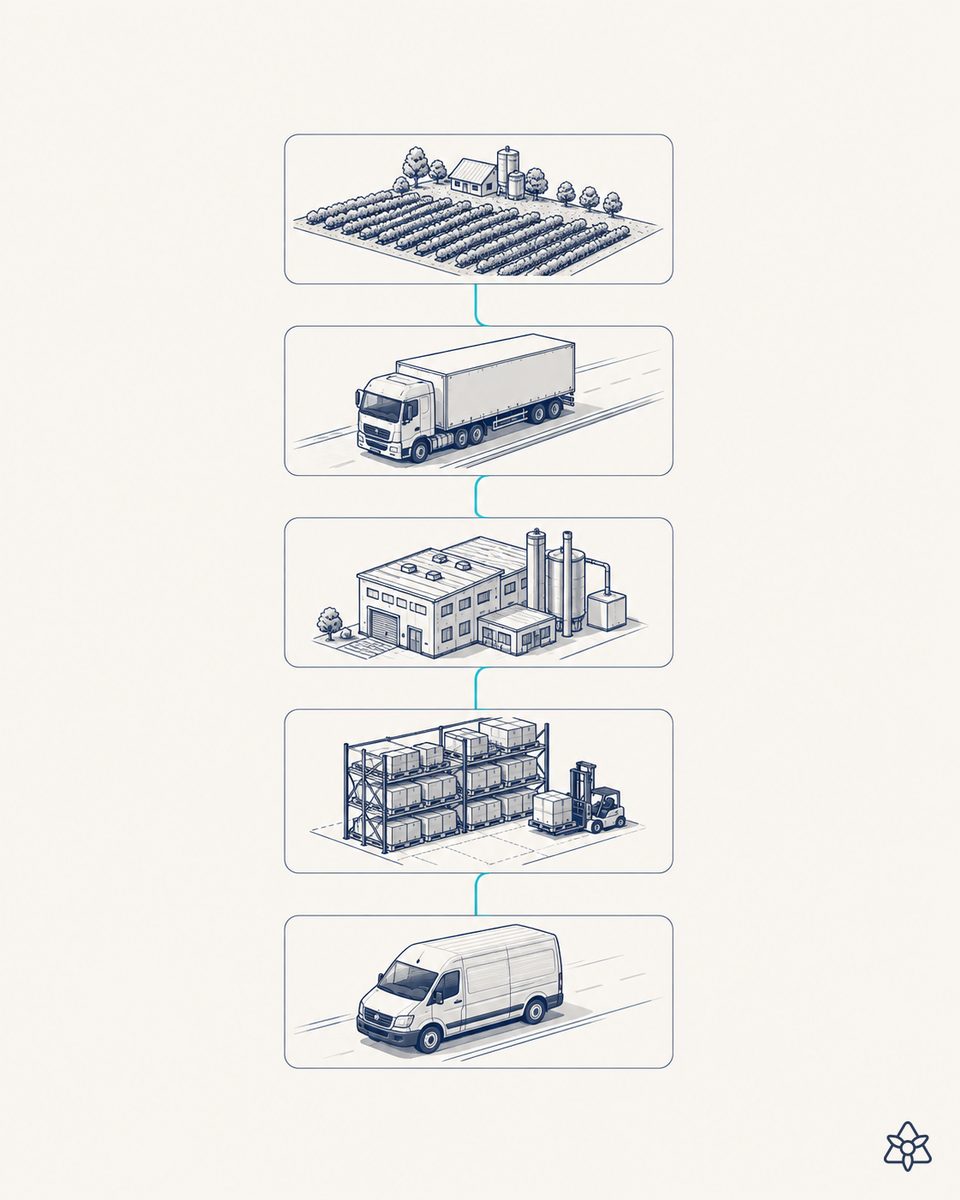
The same SKU, twelve markets, twelve different regulations — and customs does not negotiate.
An exporting food and agri plant lives with a permanent board of rules that change by destination country:
- Quarantine pest list per country — the EU has its own, the United States has APHIS, China has GACC, Brazil has its own agriculture ministry. A pest that is not a quarantine pest for the EU can be one for Japan. The same batch that is valid for France can be rejected in Tokyo.
- Treatments required per market — the United States requires cold quarantine with a recorded temperature curve for stone fruit (Cold Treatment Schedule). China requires methyl bromide fumigation. The EU bans methyl bromide. Every SKU carries the treatment its consignee demands.
- Farm-of-origin registration — the United States requires a registered farm for APHIS PEXD traceability, Japan a field logbook, the EU the deforestation regulation where it applies. The grower's field logbook is worthless if it is not linked to each batch produced.
- Labelling and the consignee's language — a box in Mandarin for China, bilingual labelling for Canada, the PAO symbol for intra-EU re-export. A box with the wrong label is a container stuck at the port.
- Changes with no warning — the destination country publishes a technical note, modifies the quarantine list, requires a new treatment. The plant finds out when a customs broker calls from the port at eleven at night.
The export manager knows this — but cannot read twelve official agricultural bulletins at once. And when control is lost over which batch answers to which regulation, what breaks is not the SKU: it is the container at the port. A consignment returned from China costs more than the consignment itself — you pay the outbound freight, the return, the destruction if there is a pest, and sometimes the market closes its door for months.
iLEAN Tracer does not add a thirteenth regulation — it seals the cracks between the twelve you already manage.
The exporter's problem is not a lack of information: it is information living on islands (one bulletin per country, one delivery note per grower, one certificate per consignment) that, at the critical moment (a regulation change, an IPPC alert, a container about to sail), does not reach the decision-maker in time. iLEAN Tracer acts as the filler that closes those gaps, without asking you to change your ERP or your export software.
Tracer tags every batch with its destination country. Connect captures the importer's regulation in force. The agent verifies the treatment, the farm registration and the labelling, and assembles the dossier for customs. A person signs the certificate.
iLEAN Tracer is the piece that combines Connect (capture by channel) and Agents (regulatory cross-check plus dossier per destination) applied to the food and agri exporter:
- Connect — captures the destination country's phytosanitary regulation in force from the IPPC portal, the alert from the agricultural authority, the treatment change the importer's regulator posted this morning, the customs broker's technical note. And it captures the inbound delivery notes from the field (supplier PDF, the grower's field logbook, weighbridge record). All at second zero, with nobody forwarding anything.
- Agents — cross-check the batch, the destination country, the version of that country's regulation in force, the farm of origin and the treatment applied. If the next consignment is heading to a country with a new quarantine pest, they apply it before packing. If an IPPC alert leaves a consignment in progress out of compliance, they hold the shipment and alert the export manager.
- Export dossier assembly — the agents put together, per consignment and per destination country: official phytosanitary certificate, certificate of origin, commercial invoice, packing list, laboratory analysis, treatment record, Cold Treatment temperature curve where it applies. In the format the importer's customs demands. The export manager reviews and signs.
The three security rings guarantee that origin information (farms, growers, treatments) stays inside the plant — it never leaves except in the signed dossier for customs. The agents propose; the person signs the certificate.
Manual exporter management vs. segmentation by destination country with iLEAN Tracer
| Aspect | Manual management (spreadsheet + bulletins) | With iLEAN Tracer |
|---|---|---|
| Phytosanitary regulation per country | The manager searches the bulletins and saves it in a folder | Automatic capture from the destination country's portal, linked to the batch |
| Market change for an SKU | Sales asks the quality engineer to "check whether it's OK" | Tracer verifies the new destination's regulation and blocks if it does not apply |
| Quarantine pest list | A PDF from months ago, with no guarantee it is current | IPPC alerts captured at second zero |
| Farm of origin per batch | A paper delivery note in a warehouse folder | Delivery note digitised by Connect and linked to the batch produced |
| Treatment required per destination | A manual decision by the quality manager | Automatic verification against the destination country's regulation |
| Dossier for the authorities and customs | Three folders, two spreadsheets and a call to the broker | Complete dossier per consignment and country, automatic, ready to sign |
Impact estimate for your plant — to be validated with your numbers.
The block below is an estimate to be validated with your plant's actual data. We set it out so the committee has an order of magnitude; we refine it during the diagnostic.
- An exporter with 3-8 active destination countries, several SKUs, a high frequency of importer regulation changes and at least one consignment returned or rejected at customs in recent years.
- A Tracer pilot on one SKU plus three destination countries (regulation capture + segmentation per batch + export dossier assembly). First value expected within a few weeks.
- Indicative payback between 4 and 9 months, depending on the frequency of returns and rejections, the time the export manager spends assembling dossiers by hand, and the average cost of the last returned consignment (outbound freight, return, destruction, blocked market).
- The hard lever is a single returned consignment avoided: the reverse freight cost of one reefer container from China or the Middle East pays for the system, without even counting the market closure.
- Expected reduction in manual export dossier assembly time of ≥ 30%.
And the export manager's reasonable doubt
"What if the AI applies the wrong regulation to a batch?" — hallucination is a problem of free generation, not of anchored tasks. In tasks where the AI merely recontextualises a data point from one system into another (reading the destination country's quarantine list and applying it to the right batch), the best models brought the error rate below 1.5%[1]. And even so, nothing critical is decided alone: Tracer proposes the dossier and a person signs the certificate. The three security rings exist precisely for this.
[1] OpenAI paper "Why Language Models Hallucinate", 2025 — on the reliability of AI in anchored tasks.
What people ask about phytosanitary certificates by destination country
What is a phytosanitary certificate and why does it change by destination country?
The phytosanitary certificate is the official document issued by the exporting country's authority (in Spain, the Ministry of Agriculture / SOIVRE) declaring that the consignment is free of the pests and diseases the importing country treats as quarantine pests. The list of banned pests, the required treatment, the mandatory analyses and the traceability all vary by country — China bans pests the EU does not, the United States requires cold quarantine treatment for citrus under amendment 7-CFR-319, Brazil asks for farm-of-origin records, Mexico requires SENASICA inspection seals at customs. Every exported SKU carries its own certificate, and a certificate issued wrongly for the wrong country means the consignment comes back from the port.
How does iLEAN Tracer separate the information by destination country?
Tracer tags every batch with its destination country and the version of that country's phytosanitary regulation currently in force. Connect captures the importer's rules (official bulletin, IPPC alert, technical note from the agricultural attaché) and the agents cross-check them against the batch: does the treatment applied cover the destination country's quarantine pests? Does the farm of origin hold the registration that country demands? Does the packaging carry origin labelling in the right language? If something does not add up, Tracer holds the consignment before shipment. A person signs the certificate — the dossier never leaves on its own.
What happens when a country changes its quarantine pest list?
It usually happens with no publicised warning: a technical note from the destination country's Ministry of Agriculture, an IPPC alert, a change in EU TRACES NT for intra-EU re-export. Today that note reaches the plant when consignments are already in transit. Connect captures the change at second zero, the agents check it against the batches in progress for that country and, if the treatment no longer covers the new pest, they hold the shipment or trigger a re-treatment. A person validates before the container sails.
How is the exporter's dossier assembled automatically?
The export dossier is a sandwich: official phytosanitary certificate + certificate of origin from the chamber of commerce + commercial invoice + packing list + laboratory analysis + treatment record + in some cases a cold quarantine certificate with its temperature curve. Tracer's agents pull the records together by batch and by destination country, package them in the format the importer's customs demands, and leave them ready for the authorities. The export manager reviews and signs.
How is the farm of origin traced for each exported batch?
Connect captures the raw-material delivery notes (supplier PDF, weighbridge record, the grower's field logbook) and the agents link every batch produced to the farms that raw material came from. If the destination country requires a registered farm (the United States for stone fruit, Japan for citrus), Tracer verifies that the batch only contains raw material from farms whose registration is valid for that country. If not, it holds the batch to be redirected to a compatible market. Nothing is invented: it only cross-checks data the plant already has in its delivery notes.
More cases in ilean tracer
- Dairy cow — the collar knows, the meter knows, the ERP knows — and nobody knows it together.iLEAN Tracer records individual yield per milking for every dairy cow with GPS collar, heat and…
- FSMA in the United States, MERCOSUR in Brazil, EUDR in the EU — three regulations, one single packaging line.iLEAN Tracer switches the regulatory dossier by destination (FSMA US, MERCOSUR, EUDR EU) per exported…
- A PDO bottle that cannot prove its parcel is no longer PDO — it is table wine with a shiny label.iLEAN Tracer assigns the PDO/PGI parcel and municipality to every bottle of wine or tin of olive oil,…
- Fresh meat pallet cold chain segregation — one break on one truck should not cost thirty pallets on hold.How iLEAN Tracer segregates the cold chain of a fresh meat pallet as it crosses trucks and cross-dock…
- Iberian pig — the PDO demands a record per animal, and that record lives in five different notebooks.iLEAN Tracer links the Iberian pig's RFID ear tag to the PDO, montanera days and the slaughterhouse —…
- ISO tank ADR class 3: the custody chain does not break between the loading bay and the consignee.iLEAN Tracer signs the custody chain of an ADR class 3 chemical ISO tank from loading bay to destination…
Tell us about your case and within 48h we'll send you the estimated ROI of this AI project for your export operation.
We work on your plant's real data, not ours. Diagnostic with no commitment.
Request estimated ROI within 48h See iLEAN Tracer