Shipbuilding with AI — one badly finished seam on the slipway is a month of delay.
A shipyard lives on three realities that almost never fit on the same screen: the weld seam, block alignment and the dossier for the classification society. iLEAN Edge sees the seam as it is laid, Connect cross-references WPS + block plan + material certificates, and an agent assembles the dossier for DNV/Lloyd's/ABS/BV. The signature stays with the welding inspector.
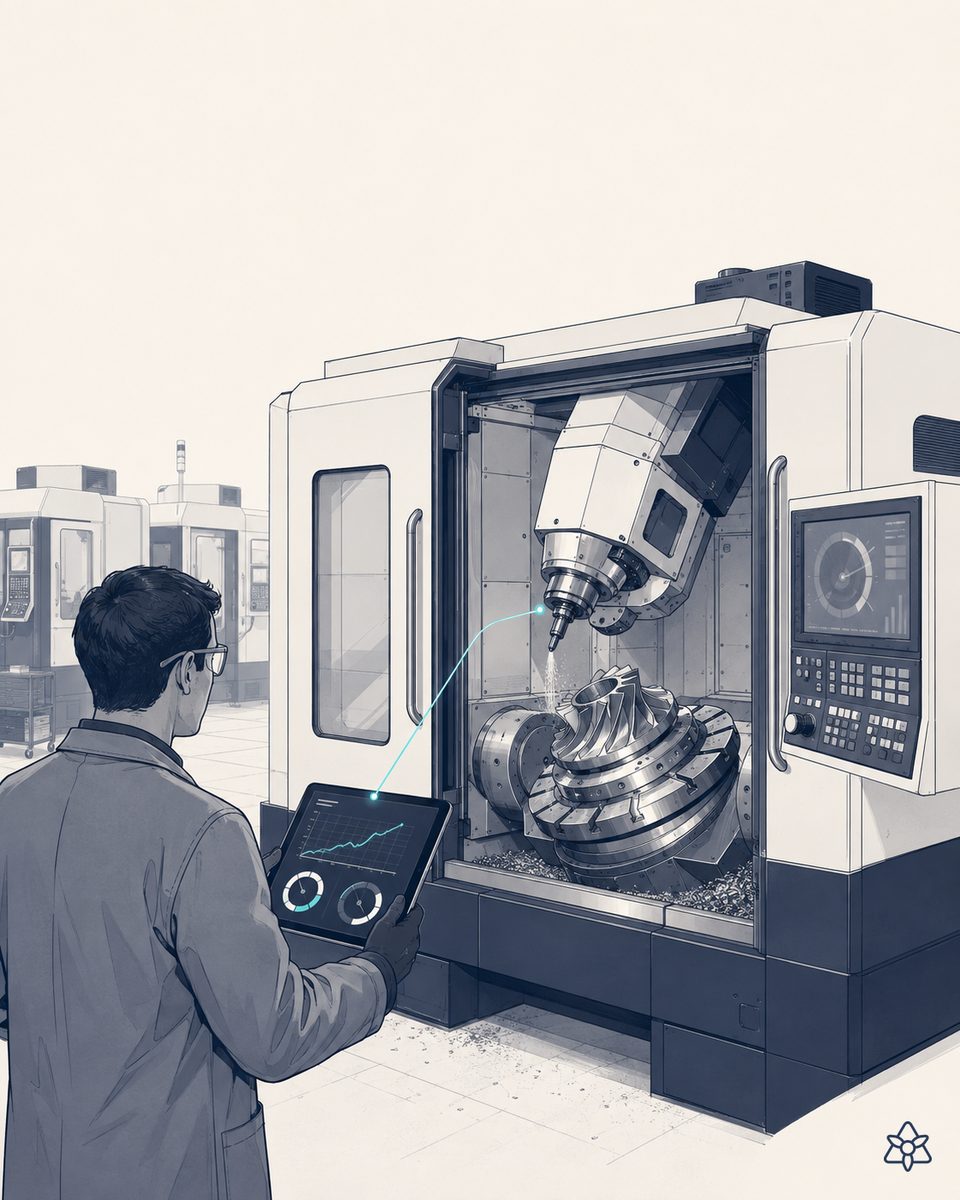
Hundred-ton blocks, seams tens of meters long, and a dossier that has to add up.
A modern shipyard does not fail on the welder's skill — it fails on the structural variability of a process that is 90% manual over enormous pieces. Three typical pains coexist:
- The long seam — the automated head does its part, but the manual finish, the crew change, the shift change and the awkward posture inject variability. A pore or a lack of fusion caught late means hours of regrinding and re-welding, gas, electrode and a block standing still.
- Block alignment — prefabricated blocks weighing tens or hundreds of tons, positioned on the slipway with cranes. The millimeters add up on pieces 20-50 meters long. What is caught late is scrap or brutally heavy rework.
- The class dossier — the classification society (DNV, Lloyd's, ABS, Bureau Veritas) and the shipowner ask for piece-by-piece traceability: WPS applied, certified welder, material certificates, NDT performed. Today it is rebuilt by hand from Excels, emails and paper signatures when the surveyor arrives.
The technical director lives in all three worlds, and the bottleneck is not the plant — it is that the information travels by email, over the slipway foreman's radio and in the project controller's folder. Every block delivered late is months of project that will never be recovered.
iLEAN does not change the welding head or the PLM — it seals the crack between the slipway, the WPS and the surveyor.
The shipyard's problem is not buying more automation: it is that the welding head, the PLM, the paint system, the plate supplier's certificate and the slipway foreman's plan do not talk to each other in real time. iLEAN acts as putty between the systems and the human islands, without asking you to change the ESAB robot or the Aveva PLM.
Edge sees the seam as it is laid and triggers the alert before the block moves to the next station. Connect captures WPS, materials and block plan from wherever they live. The agent assembles the class dossier. The welding inspector signs — the system never closes on its own.
The three iLEAN pieces applied to a shipyard:
- iLEAN Edge — CNN-equipped cameras on the semi-automatic welding head and on mobile stations for manual welding. They detect visible porosity, lack of fusion by geometry, undercut and out-of-spec spatter. For block alignment, an Edge with stereo vision + laser measures flatness and the match between mated pieces. It works without a network, because the slipway is an environment where WiFi is erratic.
- iLEAN Connect — reads the block plan from the PLM (Aveva, Cadmatic, Foran), the WPS from the welding coordinator, the supplier's plate certificates that arrive as PDFs, the delivery note for gas and paint. It also captures the slipway foreman's WhatsApp warning that block 3.4 is running an hour late — and the agents replan at second zero, without calling a meeting.
- iLEAN Agents — the agent cross-references seam ↔ welder ↔ WPS ↔ material certificate and assembles the dossier for the DNV/Lloyd's/ABS/BV surveyor. It does not sign: it prepares the dossier and hands it to the certified welding inspector, who is the one who signs. It closes the case of the "boring, very specific file" a surveyor asks for and that empties an office for weeks.
Manual shipyard + Excel vs. shipyard cross-referenced with iLEAN
| Aspect | Manual + Excel + email | With iLEAN Edge + Connect + Agents |
|---|---|---|
| Weld seam defect | Caught by the inspector on a pass + radiography | CNN flags it as it happens, before the next block |
| WPS ↔ seam ↔ welder traceability | Welder sheet in a folder, signed at end of shift | Automatic association at second zero |
| Block alignment | Tape, plumb line, the slipway foreman's eye | Edge with vision + laser, deviation map |
| Anticorrosion coating | Spot readings with a digital gauge | Full block pattern + low-thickness zones |
| Dossier for DNV/Lloyd's/ABS/BV | Rebuilt from Excel and paper signatures | Per-block dossier prepared by the agent |
| Operation without a network | n/a | Edge keeps capturing on the slipway, syncs when back |
Impact estimate for your plant — to be validated with your numbers.
The block below is an estimate to be validated with the specific data of your shipyard. We put it forward so the committee has an order of magnitude; we refine it during the diagnostic.
- Shipyard with 1-3 active slipways + prefabrication shop, continuous-seam robot + manual welding + paint booth, recurring class dossier.
- Edge pilot on one semi-automatic welding head + one mobile station over a manual seam. First value expected within a few weeks.
- Expected weld rework reduction ≥30%, class dossier preparation time reduced ≥50%. Indicative payback between 4 and 9 months, depending on how often blocks need seam rework and on the technical director's hours devoted to class.
- The hard lever is blocks delivered on schedule: every week of delay on a block piles onto the timeline of the entire vessel.
And the technical director's reasonable doubt
“What if the CNN invents a defect on a seam or, worse, misses a real lack of fusion?” — hallucination is a problem of free generation, not of anchored tasks. Flagging candidate defects on a seam and comparing them against the WPS reference is an anchored task: the best models brought error below 1.5% [1]. And even so, the system does not decide — it proposes, flags, records. The welding inspector's signature stays exactly where it belongs. The three safety rings exist precisely for this: the decision on a critical seam is not closed by an AI, it is closed by a certified person.
[1] OpenAI paper “Why Language Models Hallucinate”, 2025 — on the reliability of AI in anchored tasks.
What people ask about shipbuilding with AI
What problems does a shipyard typically face today?
The classic problem is not the welder's skill — it is the variability across crews and shifts on seams tens of meters long across hull blocks. On top of that come block displacement on the slipway (the piece weighs tons and the millimeters add up), surface preparation and the anticorrosion coating (uneven coat thickness) and the dossier for the classification society (DNV, Lloyd's, ABS, Bureau Veritas) that gets rebuilt by hand block by block. When the surveyor arrives, everyone scrambles for paperwork.
Can iLEAN Edge inspect a marine weld seam in line?
Yes. Edge is a computer-vision (CNN) terminal that mounts on the semi-automatic welding head, on the continuous-seam robot or on a mobile table for manual welding. It detects visible porosity, lack of fusion by seam geometry, undercut and out-of-spec spatter, and leaves a record tied to the seam, the welder and the WPS applied. The acceptance decision stays with the certified welding inspector — the system flags, proposes, records. It works without a network: on the slipway and in the prefabrication shop, where connectivity is erratic.
How does the data get cross-referenced with the block plan and the WPS?
iLEAN Connect reads the block plan (the yard's PLM/CAD), the WPS applied (welding procedure) and the material certificates (plate, electrode, gas) — whether they come from the yard's ERP, from a welding coordinator's Excel or from a scanned supplier PDF. The agent ties that package to the specific seam Edge inspected. When the DNV/Lloyd's/ABS/BV surveyor asks for piece-by-piece traceability, the agent delivers the dossier already assembled — the person signs.
What about marine paint / anticorrosion coating?
The anticorrosion coating is the shipyard's other hard lever: an uneven coat is the number one source of warranty claims years down the line. Edge with IR/visible vision measures the application pattern, detects low-thickness zones or bare spots from poorly done blasting, and leaves a record per block. It is cross-referenced with the paint plan and with the readings from the operator's digital gauge. The inspection still belongs to the person — the system takes away the job of hunting for sampling points with no pattern.
How much does it cost and what payback should a shipyard expect?
The order of magnitude of an Edge pilot in a shipyard is close to that of any Edge pilot in a large plant: an initial investment covering terminals + cameras + integration with the welding robot/head and with the PLM/ERP, plus an annual license. Indicative payback between 4 and 9 months — an estimate to be validated with your numbers. The hard lever is weld rework avoided (a seam to regrind means man-hours + gas + electrode) and technical director coordination hours saved on the class dossier. We send you the estimated ROI in 48h.
Related: Submarine manufacturing with AI · Vehicle armor with AI · Aluminum fuselage with AI
More cases in other sectors
- Rail signaling with AI — the unit does not leave the shop until the SIL file adds up.How iLEAN cross-checks PCB inspection, SIL testing and EN 50128/50129 records so every rail signaling…
- Rocket manufacturing control with AI — a launcher admits no recall, so control has to sit in manufacturing.Extreme tolerances and genealogy by serial number: iLEAN captures tests with no paper, inspects joints…
- Satellite component control with AI — the part flies only once. So does the file.iLEAN combines Edge inspection, ECSS/AS9100 traceability and dossier agents to build satellite…
- Specialty chemicals — the batch you cannot repeat is the one nobody measured while it was being made.20 industrial AI cases in specialty chemicals: measured ink color, pigment dispersion, coating…
- Accelerated stability of the pigment batch — evidence tied to the batch, not a loose sheet.How iLEAN ties every accelerated stability test — oven, UV, sedimentation — to its batch, with readings…
- Verification evidence in ATEX classified zones — AI documents and warns; protection and the work permit still rule.How iLEAN keeps evidence of every verification and every piece of equipment used in a chemical plant's…
Tell us about your shipyard and in 48h we'll send you the estimated ROI of this AI project for your slipway.
We work on your shipyard's real data, not ours. Diagnostic with no commitment.
Request estimated ROI in 48h See other sectors