Rail manufacturing with AI — a bad bead on a frame is not a touch-up, it is a file that does not add up.
A rail manufacturer lives off three realities at once: EN 15085 welding traceable per frame, car painting with no defect the operator can see, and an ISO/TS 22163 dossier (the evolution of IRIS rail) ready for the customer. iLEAN Edge sees the bead and the paint booth, Connect cross-references WPS + materials + the frame plan, and an agent assembles the file by frame number. The signature stays with the EWE/IWE coordinator.
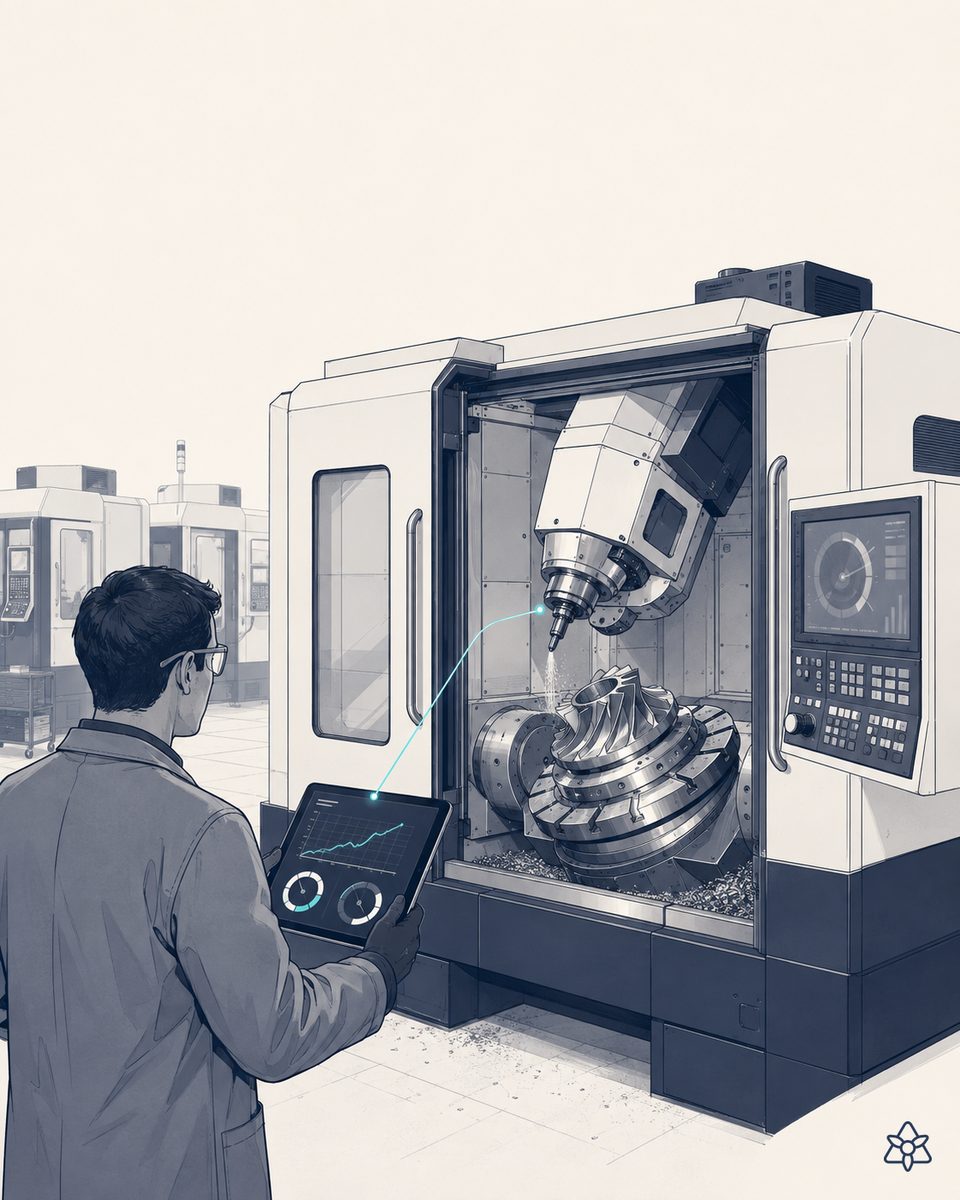
Rolling stock: three worlds on the same frame.
A rolling stock manufacturer lives off long lead times, demanding contracts and an operator that asks for part-by-part traceability. Three typical pain points coexist on the same car frame:
- EN 15085 welding — classes CL1 to CL4, certified welders, an EWE/IWE coordinator, an approved WPS. Bead quality depends on the combination of human + machine + parameter. Today the coordinator supervises by sampling and signs at the end of the shift. A defect that passes the visual and shows up in NDT is hours of grinding rework.
- Rail car painting — anticorrosive + intermediate + topcoat, over large surfaces. Orange peel, runs, poor powder particle size, uneven film thickness — these are the visible defects the end operator will not accept, and they are caught late, when the car is already at the next station.
- The ISO/TS 22163 dossier — the rail industry's quality management standard (the evolution of the old IRIS rail) requires a file per frame, per bogie, per car: which welder, which WPS, which material, which NDT, which paint, which tests. Today it is rebuilt by hand for the auditor from spreadsheets, emails and paper signatures.
The quality director and the EWE coordinator live between the three worlds. Every frame delivered with an incomplete file is an operator customer raising an observation that takes weeks to close, and a program that gets complicated.
iLEAN does not touch your WPS or your paint booth — it seals the crack between bead, paint and dossier.
The rail problem is not buying more equipment: it is that the welding robot, the paint booth, the PLM, the ERP and the material certificates do not talk to each other in real time. iLEAN acts as putty between the systems you already have, without asking you to change your Cloos/Fronius/Kuka robot, the paint booth or the PLM. (Note: here IRIS refers to iLEAN's Industrial Reality Intelligence Systems category, not to the old IRIS rail that is now called ISO/TS 22163.)
Edge sees the bead while it is being laid. Connect cross-references the WPS, the material, the frame plan and the booth data. The agent assembles the ISO/TS 22163 dossier. The EWE coordinator signs — the system never closes on its own.
The three iLEAN pieces applied to a rail manufacturer:
- iLEAN Edge — CNN cameras over the frame welding stations and over the car paint booth. It detects geometric defects on EN 15085 beads, visible paint defects (orange peel, runs) and areas of uneven film thickness. It flags them for validation by the EWE coordinator or the booth supervisor. It works with no network.
- iLEAN Connect — reads the frame plan from the PLM, the WPS from the welding lead, the material certificates (plate, electrode, paint) — whether they come from the ERP, from a spreadsheet or from the supplier's PDF. It also captures the WhatsApp from the EWE coordinator flagging a WPS revision change, at second zero, with no meetings.
- iLEAN Agents — the agent cross-references bead ↔ welder ↔ WPS ↔ EN 15085 class ↔ material ↔ NDT ↔ frame ↔ car and assembles the ISO/TS 22163 dossier. It does not sign: it prepares it and hands it to the EWE coordinator or the quality director, who signs. The +40% productivity that digitalization brings to the sectors that embrace it [2] comes precisely from here: the EWE coordinator's hours won back from dull work.
Manual rail manufacturing vs. cross-referenced manufacturing with iLEAN
| Aspect | Manual + spreadsheets + radio | With iLEAN Edge + Connect + Agents |
|---|---|---|
| EN 15085 bead | Visual check by the EWE coordinator, by sampling | CNN while the bead is laid, candidate + validation |
| Traceability bead ↔ welder ↔ WPS ↔ class | Sheet signed at the end of the shift | Automatic linking + dossier per frame |
| Car paint defect | Caught by final inspection or by the customer | Edge detects it in the booth, before the next step |
| Uneven film thickness | Spot measurements with a gauge | Full pattern of the car + problem areas |
| ISO/TS 22163 dossier for the auditor | Rebuilt by hand, weeks | Generated by the agent, signed by the coordinator |
| Operation with no network | n/a | Edge keeps capturing, syncs when it recovers |
Impact estimate for your plant — to be validated with your numbers.
The block below is an estimate to be validated with the specific data of your shop. We put it forward so the committee has an order of magnitude; we refine it during the diagnostic.
- A rolling stock manufacturer with 2-3 frame welding stations + a car paint booth, an EWE/IWE coordinator and a recurring ISO/TS 22163 dossier for the operator.
- Edge pilot on one welding station + capture over the paint booth. First value expected within a few weeks.
- Expected reduction of welding and painting rework ≥30%, and of the time spent preparing the ISO/TS 22163 dossier ≥50%. Indicative payback between 4 and 9 months.
- The hard lever is frames delivered on time with a complete file: every operator observation closed in hours instead of weeks is a contract risk dissolved.
The digitalization argument for the committee
Between 2000 and 2021, the least digitalized sectors barely improved productivity; the most digitalized ones raised it by up to 40% [2]. In rail, where contracts run for years and deliveries have hard dates, digitalizing the shop is not optional — it separates the manufacturer that renews the contract from the one that loses the next tender. iLEAN is that digitalization applied to the bead, the booth and the dossier.
And the quality director's reasonable doubt
“What if the CNN invents a defect on an EN 15085 bead, or ignores a real lack of fusion?” — hallucination is a problem of free generation, not of anchored tasks. Flagging candidate defects on a bead and comparing them against the WPS reference is an anchored task: the best models brought error below 1.5% [1]. And even so, the system does not decide — it proposes, flags, records. The EWE/IWE coordinator's signature stays exactly where it belongs.
[1] OpenAI paper “Why Language Models Hallucinate”, 2025 — on the reliability of AI in anchored tasks.
[2] Fundación BBVA / Ivie — productivity and digitalization 2000-2021.
What people ask about rail manufacturing with AI
What does EN 15085 require from a rail manufacturer today?
EN 15085 is the European standard for the welding of railway vehicles and components, with classes CL1-CL4 according to criticality. It requires an approved WPS, certified welders, a welding coordinator (EWE/IWE), quality control by class and part-by-part traceability. Added to the ISO/TS 22163 scheme (the evolution of the old IRIS rail, the rail industry's quality management standard), the manufacturer has to hand the operator a file that reconstructs which welder, which WPS, which material, which NDT — by frame number, by bogie and by car. Today this is done by hand from spreadsheets.
How does iLEAN assist rail welding without replacing the welder?
iLEAN Edge watches the bead while it is being laid (CNN vision + IR) and links it to the certified welder, the WPS, the EN 15085 class and the frame number. It detects visible porosity, undercut and out-of-spec geometry — before the bead leaves the welding station. The decision is signed by the EWE/IWE coordinator; the system flags, proposes, records. It works with no network, because rail carbody shops are large environments where WiFi is erratic.
What about rail painting and surface preparation?
Painting a rail car combines an anticorrosive coat, an intermediate coat and a topcoat, over large surfaces with edges and corners. The hard levers are: visible defects (orange peel, runs, poor powder particle size), uneven film thickness and booth contamination. Edge with IR/visible vision measures the full pattern of the car, detects problem areas and leaves a record per frame. The booth supervisor still decides; the system takes away the dull work of hunting for sampling points with no pattern to go on.
What does the agent cover for the operator customer?
The agent prepares the file that the operator customer (a national rail operator, a metro authority, a regional franchise) and the certifier ask for, and that today is rebuilt by hand: traceability by frame number, certified welder, WPS applied, NDT, material certificates, painting dossier, test records. The agent does not sign: it prepares the dossier and hands it to the EWE/IWE coordinator or the quality director, who is the one who signs. It closes the case of the “boring, concrete file” that an ISO/TS 22163 auditor asks for and that empties an office for weeks.
What does it cost and what payback should a rail manufacturer expect?
The order of magnitude of an Edge pilot in a rail shop is close to that of any Edge pilot in a large plant: an initial investment covering terminals + cameras + IR + integration with the welding equipment and with the PLM/ERP, plus the annual license. Indicative payback between 4 and 9 months — an estimate to be validated with your numbers. The hard levers are welding and painting rework avoided + quality coordination hours saved on the ISO/TS 22163 dossier. We send you the estimated ROI in 48h.
Related: Rail wagons and cars with AI · Shipbuilding with AI · Vehicle armor with AI
More cases in other sectors
- Missile system manufacturing control with AI — batches of twenty units, zero tolerance and a dossier that today lives on paper.How iLEAN controls quality and traceability in missile system manufacturing: paperless on-premise…
- Aerospace NDT with AI — the inspector's eye, amplified and traced by part and operator.iLEAN assists NDT inspectors with AI vision. Inconsistency detected and tracked by part and operator.
- Rail cars and coaches with AI — a badly sealed panel on the line is not a touch-up, it is an operator finding.How iLEAN inspects rail car underframe welds, interior fit-out and the per-coach dossier in railway…
- Rail signaling with AI — the unit does not leave the shop until the SIL file adds up.How iLEAN cross-checks PCB inspection, SIL testing and EN 50128/50129 records so every rail signaling…
- Rocket manufacturing control with AI — a launcher admits no recall, so control has to sit in manufacturing.Extreme tolerances and genealogy by serial number: iLEAN captures tests with no paper, inspects joints…
- Satellite component control with AI — the part flies only once. So does the file.iLEAN combines Edge inspection, ECSS/AS9100 traceability and dossier agents to build satellite…
Tell us about your rail shop and in 48h we'll send you the estimated ROI of this AI project for your factory.
We work on your shop's real data, not ours. Diagnostic with no commitment.
Request estimated ROI in 48h See other sectors