Shop-site coordination for custom wood-aluminum windows — a measurement that arrives late is a part already cut that starts over.
A made-to-measure wood-aluminum window lives or dies on the coordination between the shop and the job site: the measurement taken in place, the studio's drawing, the architect's change, the subframe adjustment. iLEAN Agents capture each of those data points through its natural channel (the operator's voice on site, a photo, WhatsApp, an email from the studio), cross-reference them with the shop's work order and alert the shop manager before the part comes out wrong. The person validates and signs.
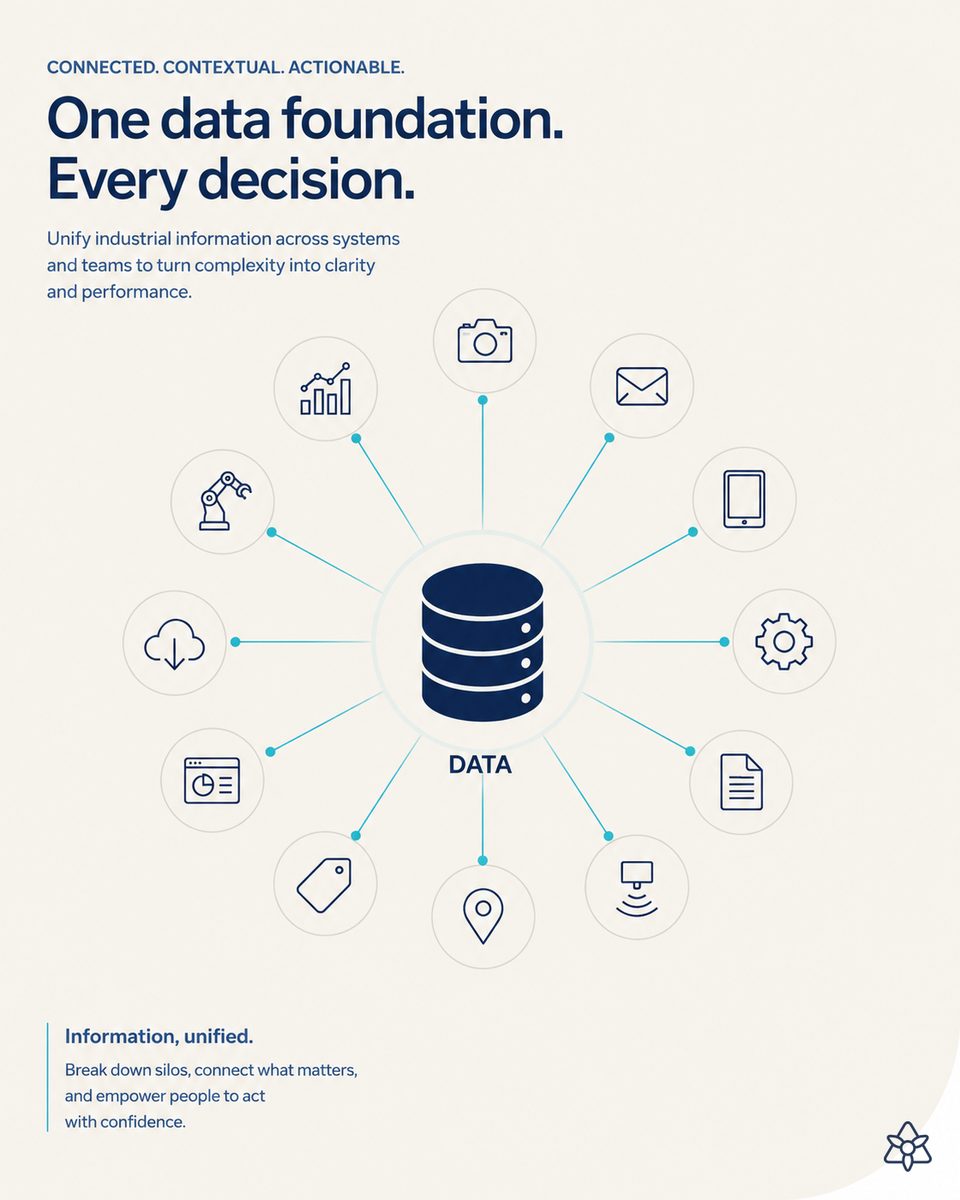
The critical data point does not enter through the ERP — it enters through a WhatsApp from the architect at 10 p.m.
The made-to-measure wood-aluminum window is a product where the data that costs money is not born in the ERP. It is born on the job site: the actual opening measurement that differs from the drawing, the subframe installed 12 cm below the dropped ceiling instead of the 10 planned, the architect's last-minute change deciding the aluminum goes bronze anodized instead of silver. And most of that data travels through channels the shop does not control: a WhatsApp from the site manager, an email from the studio on Friday at 7:30 p.m., a photo from the operator that stays in the phone's gallery.
The shop manager tries: forwards messages, opens the ERP, writes things down by hand. But between the data arriving, being processed and the cut list being warned, the part is already cut and the fix is to make it again. The classic system (email + Excel + weekly meeting) works 99% of the time — and that 1% is the rebuilt window that eats the project's margin:
- Lost raw material — a laminated pine or oak profile already machined, an aluminum cladding already cut.
- Operator time already spent assembling and disassembling the hardware.
- Delay to the job site — the opening does not close on time, the painters arrive, installation slips.
- The blame game between studio, contractor and joinery over whose fault it is, in a meeting nobody wanted to have.
The problem is not that the team does its job badly: the problem is that the data lives in islands that no system cross-references on its own.
iLEAN Agents do not add yet another app — they are the putty that closes the loop between site and shop.
The problem in a custom joinery shop is not lack of information: the information exists in WhatsApp, in email, in the ERP, in the operator's photo. The problem is that nobody cross-references those channels at second zero. iLEAN acts as the putty between the job site and the shop, without asking you to change your ERP, your cut-list software or your communication channel with the studio.
Connect listens on every channel. The agent cross-references against the work order. If something does not add up, it does not send an email at midnight: it alerts the shop manager through whatever channel they use, with the specific question. The person validates and signs — never the other way around.
The iLEAN pieces applied to shop-site coordination for mixed windows:
- Connect — listens on every channel the data already comes through: the site manager's WhatsApp Business, the studio's email, the voice of the operator taking measurements with their phone (full duplex with an earpiece), the photo of the opening. And it also captures what lives inside: the ERP, the cut-list Excel sheet, the vertical joinery software. Bidirectional: it also replies through the same channel — with the person's signature, never on its own.
- iLEAN Agents — the brain. They cross-reference the actual measurement with the drawing, the architect's latest change with the work order in progress, the installed subframe with the planned wood section. If they detect a conflict, they alert the shop manager through their channel with the specific question ("the site width differs from the drawing by 18 mm — do we stop the cut list?"), and propose the solution for the person to validate.
- Central — stores the dossier for every opening: final measurement, signed drawing, photo of the subframe, accepted changes, raw material assigned. When a warranty replacement comes three years later, the dossier is complete and per-opening traceability builds itself.
Coordination by WhatsApp and meetings vs. coordination with iLEAN Agents
| Aspect | Classic coordination | With iLEAN Agents + Connect |
|---|---|---|
| Capturing the site measurement | WhatsApp, dictated by hand to the shop | Operator's voice + photo, captured and normalized at second zero |
| Architect's change | Email lost in the thread | Detected, cross-referenced with the work order, alert to the shop manager |
| Drawing vs. actual measurement conflict | Seen when the part is already cut | Detected before the cut list, with a specific question |
| Per-opening dossier | Manual reconstruction when a replacement comes | Automatic: measurement, drawing, changes, photo |
| Coordination meetings | Weekly, with last Monday's incidents | Exceptions by channel, when needed |
| Final decision | Shop manager with incomplete data | Shop manager with cross-referenced data — the person signs |
Impact estimate for your plant — to be validated with your numbers.
The block below is an estimate to be validated with the specific data of your shop. We put it forward so the committee has an order of magnitude; we refine it during the diagnostic.
- Wood-aluminum window shop with 6-12 simultaneous job sites, a site team taking measurements in place, vertical joinery software + general ERP, one or two windows rebuilt per year due to shop-site mismatch.
- Agents pilot coordinating one pilot project end to end (voice/photo capture on site + the site manager's WhatsApp + the studio's email + integration with your cut-list software). First value expected within a few weeks with the first opening coordinated in full.
- Indicative payback between 4 and 9 months, depending on the number of simultaneous job sites and the average cost of a rebuilt window + delay to the site.
- Expected reduction in windows rebuilt due to shop-site mismatch ≥ 30% over the baseline. The hard lever is a single large window avoided — it pays for the pilot.
And the shop manager's reasonable doubt
"What if the AI misreads a measurement dictated by the operator and sends a made-up number into production?" — hallucination is a problem of free generation, not of anchored tasks. In tasks where the AI merely transcribes a voice and compares it against the drawing, the best models brought error below 1.5% [1]. And even so, what is critical is never decided alone: iLEAN proposes, the person signs. The three safety rings exist precisely for this.
[1] OpenAI paper “Why Language Models Hallucinate”, 2025 — on the reliability of AI in anchored tasks.
What people ask about shop-site coordination for wood-aluminum windows
Why is the custom wood-aluminum window so sensitive to shop-site coordination?
A wood-aluminum window combines an interior profile of laminated wood (pine, oak, iroko) with an exterior cladding of anodized or lacquered aluminum. Every opening on site is unique: the actual measurement differs from the drawing, the subframe is installed before the window, and every change from the architect (aluminum color, glass thicknesses, hardware type) can break the bill of materials. The shop manufactures against machining, drying and assembly lead times — a change that arrives late is a part already cut that starts over.
How do iLEAN Agents capture the information coming from the job site?
Through the channel the team already uses. The operator taking measurements on site dictates by voice from their phone ("opening 4 north, width 1,245, height 2,090, subframe 12 cm below the dropped ceiling"), takes a photo of the opening, sends a WhatsApp with the architect's correction. Connect ingests those channels (voice, photo, WhatsApp, email from the design studio) at second zero, normalizes them and puts them in front of the agents — without anyone forwarding anything or calling a meeting.
What does the agent do when it detects a conflict between the drawing and the actual measurement?
The agent cross-references the site measurement with the studio's drawing, the shop's work order and the latest change received from the architect. If the actual width differs from the drawing beyond the joint allowance, if the aluminum color changed after the profile was cut, or if the hardware ordered does not fit the wood section, the agent alerts the shop manager through whatever channel they use (WhatsApp, email) before the part goes into machining. The person validates and signs — manufacturing never starts on its own over contradictory data.
Does iLEAN replace the site manager or the shop manager?
No. iLEAN assists and simplifies, it does not replace. The decision still belongs to the site manager (which measurement is the right one when there is doubt) and to the shop manager (when the part enters production). What the agent removes is the 11 p.m. email nobody read, the WhatsApp lost in another group, the Excel sheet the operator updated but the shop never saw. Judgment stays with the people; the dumb work of cross-checking channels goes to the system.
How much does it cost and when do you see first value?
An iLEAN Agents pilot for shop-site coordination covers multichannel capture (phone + WhatsApp Business + email), integration with your ERP or vertical joinery software, the coordinating agent and the license. It does not require changing your ERP or your cut-list software. First value can be expected within a few weeks with the first openings coordinated end to end. Indicative payback between 4 and 9 months, depending on the number of simultaneous job sites and the historical frequency of windows rebuilt due to shop-site mismatch. We send you the estimated ROI in 48h with your data.
More cases in other sectors
- Phenolic plywood formwork inspection — a defect that transfers to exposed concrete is an urgent replacement on site.iLEAN Vision inspects surface defects in phenolic plywood formwork for civil works. It holds the panel…
- Recalling a PVC edge band batch: either you know which projects carry it, or you stop everything.How iLEAN Tracer links PVC edge band batch, melamine board and office project for precise recalls…
- Every split board is direct scrap — and almost always you could see it coming in the humidity curve.How iLEAN Edge measures relative humidity inside the sawn timber drying kiln in real time to prevent…
- UV varnish defect detection on lacquered doors — a crater spotted after the UV tunnel is another full booth cycle.iLEAN Edge detects UV varnish defects (craters, dust, sags, low film build) on lacquered doors in line,…
- Helicopter MRO with AI — the aircraft does not fly again until the Form 1 adds up.How iLEAN cross-references visual inspection, NDT, OEM manuals and airworthiness directives to return…
- ITAR/EAR aerospace with AI — a part shipped without a license is a federal crime in the US.iLEAN classifies ECCN/USML, screens restricted-party lists and traces ITAR/EAR licenses for every…
Tell us your case and in 48h we'll send you the estimated ROI of this AI project for your custom joinery shop.
We work on the real data of your shop and your job sites, not ours. Diagnostic with no commitment.
Request estimated ROI in 48h See furniture and wood