Helicopter MRO with AI — the aircraft does not fly again until the Form 1 adds up.
Returning a helicopter to service under EASA Part-145 means closing out, at the same time, the inspection, the NDT, the applicable ADs and SBs, and the dossier for every rotable component. iLEAN cross-references dataplate OCR readings, work cards and the OEM manuals, and holds the Form 1 signature if something does not add up. The person — the Certifying Staff — signs.
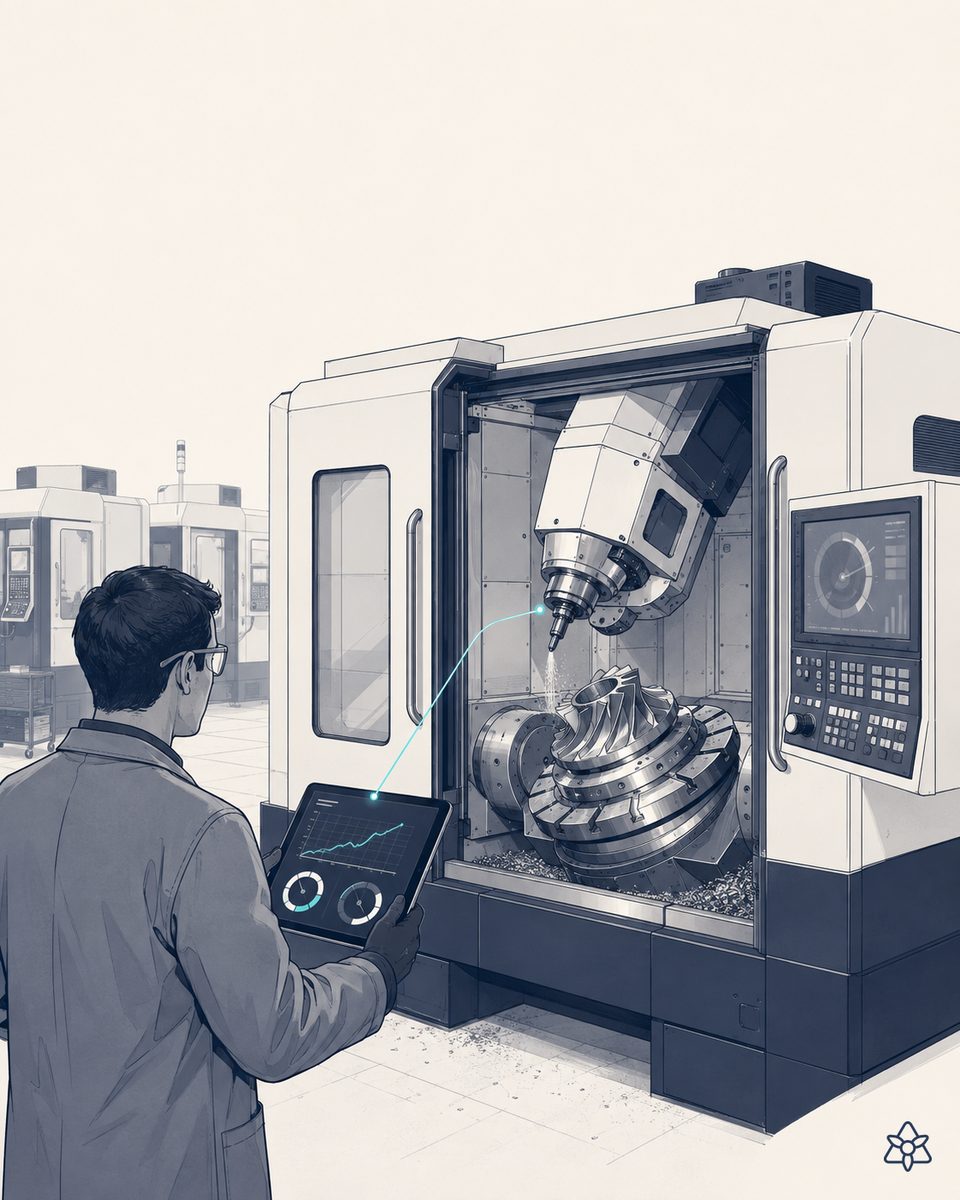
The helicopter comes into the hangar in hours — the dossier comes out in weeks.
Returning a tail number to service under Part-145 is not just removing the transmission, inspecting the blades and reassembling. It means closing out, all at once, several traceability threads that live in different places:
- Applicable ADs and SBs — Airworthiness Directives from EASA or the FAA, Service Bulletins from the OEM. A tail number comes into the hangar and nobody knows for sure whether the latest AD affecting its rotor model is already verified in its file, or whether SB-2024-XX from the transmission manufacturer is still open.
- Rotable component traceability — every rotor, transmission, engine and accessory carries a P/N, an S/N, cycles and hours. The dataplate is marked on the part, but the cycles live in the hangar manager's Excel sheet and in a manufacturer file, and the two do not always match.
- Work cards and NDT — every task performed by the technician is signed on paper or in a vertical system. NDT results (dye penetrant, ultrasonics, eddy current) leave the lab as a PDF, travel by email and end up in a folder.
- Form 1 and release-to-service — the Certifying Staff signs the EASA Form 1 on the way out. Before signing, they have to be sure that everything above adds up. When something does not, the helicopter is AOG (Aircraft on Ground) — and that is thousands of euros a day.
The technical director knows this. But the bottleneck is not doing the work well — it is proving it was done well, fast. Every hour a Certifying Staff member spends hunting for a signed work card is an hour the helicopter is not flying.
iLEAN does not add another MRO management system — it seals the joints between the ones you already have.
The problem in MRO is not a lack of information: it is information living in islands — the hangar management system, the OEM manuals in PDF, the AD/SB notices arriving by email, the paper work cards, the NDT reports in yet another system. iLEAN acts as the putty that fills those gaps, without replacing your CAMP/MRO software or the manufacturer's manuals.
Edge reads dataplates in the hangar. Connect captures new ADs/SBs at second zero. The agent cross-references them with the tail number and closes the dossier for release. The person — the Certifying Staff — signs the Form 1.
The three iLEAN pieces applied to helicopter MRO:
- Edge — a portable terminal with vision + OCR at the inspection station. It reads the dataplates of rotable components (P/N, S/N) and captures an image of the visual inspection (blades, transmission, airframe) linked to the work card and the technician. It works with no network — large hangars have areas with patchy WiFi and the welding equipment nearby causes interference.
- Connect — captures new EASA and FAA ADs at second zero, indexes OEM SBs when they arrive by email, digitizes handwritten work cards if you still have any, and captures the NDT report in PDF the moment it is generated in the lab. Two-way conversation: the technician asks by voice "what torque does this rotor bolt take?" and the agent gives back the figure from the CMM on the spot.
- Agent — for every tail number that enters the hangar, it cross-references the scheduled maintenance plan with the open ADs/SBs, identifies the additional tasks that need to be folded in, tracks work progress through the signatures on the cards, and returns the release-to-service dossier to the Certifying Staff. If a signature, an NDT result or a verified AD is missing, it says so before the release appointment.
MRO by hand vs. cross-referenced MRO with iLEAN
| Aspect | Today (Excel + email + work cards) | With iLEAN Edge + Connect + Agent |
|---|---|---|
| Reading dataplates at removal | Manual, exposed to transcription errors | Edge OCR, linked to the tail number's file |
| Detecting new applicable ADs/SBs | Quarterly review, risk of delay | Captured at second zero, cross-referenced automatically |
| Work cards | Paper, scanned later, some lost | Photo + signature indexed to the tail number and the order |
| NDT reports | PDF in a shared folder | Indexed to the rotable component by S/N |
| Closing the Form 1 | Certifying Staff rebuilds it and signs | Coherent dossier, minutes to validate and sign |
| AOG caused by an incomplete dossier | It happens; enormous cost per day | The system warns before the release appointment |
Impact estimate for your plant — to be validated with your numbers.
The block below is an estimate to be validated with the specific data of your hangar. We put it forward so the committee has an order of magnitude; we refine it during the diagnostic.
- A Part-145 helicopter organization (civil types such as AS350/H125, EC135, AW109/AW139, Bell 407…), a volume of several dozen to several hundred tail numbers a year, a mix of scheduled work and AOG.
- Focused pilot: Edge OCR of dataplates at removal + automatic closing of the release-to-service dossier with an Agent. First value expected within a few weeks.
- Indicative payback between 4 and 9 months. Hard levers: a reduction in AOG hours caused by an incomplete dossier (≥30%), Certifying Staff time saved rebuilding traceability, and reduced regulatory risk in Part-145 audits.
- On reliability: hallucinations are a problem of free generation, not of anchored tasks. In anchored tasks (reading a dataplate, linking an S/N to a file, cross-referencing an AD with a model), the best models brought error below 1.5%[1]. And even so, release-to-service is never decided alone — the Certifying Staff signs.
[1] OpenAI paper “Why Language Models Hallucinate”, 2025 — on the reliability of AI in anchored tasks.
What people ask about helicopter MRO with AI
Which regulations apply to helicopter MRO in Europe?
Helicopter MRO (Maintenance, Repair, Overhaul) in Europe is governed by EASA Part-145 (approved maintenance organization), Part-M (continuing airworthiness management) and the manufacturer's manuals — AMM (Aircraft Maintenance Manual), CMM (Component Maintenance Manual), IPC (Illustrated Parts Catalog) — plus the Airworthiness Directives (AD) issued by EASA or the FAA and the OEM's Service Bulletins (SB) (Airbus Helicopters, Leonardo, Sikorsky, Bell). The part does not return to service until the EASA Form 1 is signed with evidence that everything applicable has been closed out.
How are the ADs and SBs open on the tail number entering the hangar managed?
When a helicopter comes in for inspection, the airworthiness engineer has to check every AD/SB applicable to its tail number, model, engine and rotable components. Today that means Excel + the EASA search engine + an email from the OEM. With iLEAN Connect, every new AD or SB is captured at second zero (from the regulator's website, an OEM email, a WhatsApp from the maintenance manager), an Agent cross-references it with the hangar's inventory of tail numbers and components and flags the ones affected. You do not wait for the quarterly review to find out.
Can iLEAN help close the EASA Form 1 without rebuilding the dossier by hand?
Yes. For every rotable component overhauled, the Agents cross-reference: part traceability (P/N, S/N, cycles, hours), the work cards completed (with a photo of the visual inspection and the technician's signature), NDT (dye penetrant, ultrasonics) with its report, consumable materials with their Material Certificate, and the ADs/SBs applied and verified — and return a coherent dossier ready for the Certifying Staff to sign the Form 1. What used to be hours of hunting for work cards and rebuilding traceability becomes minutes of human review over something already threaded together.
How does Edge read plate and dataplate OCR in the hangar?
The dataplates on rotable components (rotor, transmission, engine, accessories) are laser marked, vibro-engraved or labeled. Edge, with vision and OCR, reads them at the moment of removal, links P/N + S/N + cycles to the tail number's file and to the work order, and triggers the search for applicable ADs/SBs. If the dataplate is damaged or illegible, the system flags the part for cross-verification before it gets documented with a wrong value. It works with no network: in large hangars where connectivity is patchy, Edge keeps capturing.
How much does it cost to implement iLEAN in a helicopter MRO?
The typical pilot focuses on one critical sub-operation (OCR reading of dataplates at removal + automatic closing of the release-to-service dossier) and delivers first value within a few weeks. Indicative payback between 4 and 9 months — the hard lever is the reduction in AOG (Aircraft on Ground) caused by a dossier not closed in time, plus the Certifying Staff time that today goes into rebuilding traceability. One tail number less on the ground pays for the pilot. Estimate to be validated with your data.
More cases in other sectors
- Every split board is direct scrap — and almost always you could see it coming in the humidity curve.How iLEAN Edge measures relative humidity inside the sawn timber drying kiln in real time to prevent…
- Shop-site coordination for custom wood-aluminum windows — a measurement that arrives late is a part already cut that starts over.iLEAN Agents coordinate the joinery shop and the job site for custom wood-aluminum windows. They capture…
- UV varnish defect detection on lacquered doors — a crater spotted after the UV tunnel is another full booth cycle.iLEAN Edge detects UV varnish defects (craters, dust, sags, low film build) on lacquered doors in line,…
- ITAR/EAR aerospace with AI — a part shipped without a license is a federal crime in the US.iLEAN classifies ECCN/USML, screens restricted-party lists and traces ITAR/EAR licenses for every…
- Landing gear control with AI — the pattern is already proven at an aeronautical Tier 1.How iLEAN combines vision, traceability OCR, operator voice assistance and dossier agents to certify…
- Lean in an aerospace plant with AI — kanban, flow and andon translated to low-volume high-mix.iLEAN applies kanban, flow and andon in low-volume high-mix aerospace, without Excel.
Tell us your case and in 48h we'll send you the estimated ROI of this AI project for your helicopter MRO.
We work on your hangar's real data, not ours. Diagnostic with no commitment.
Request estimated ROI in 48h See aerospace / defense / rail