Your flat-pack kitchen is not judged in the factory — it is judged by the fitter in the customer's home.
In kitchen furniture sold flat-pack, the sequence in which the boxes leave decides the installation: the fitter needs the wall units before the base units, the fronts after the cabinets, the handles last. An iLEAN agent coordinates assembly and shipping just-in-sequence, matching the customer's real site plan with the production queue. The planning manager signs — the agent coordinates, it does not decide alone.
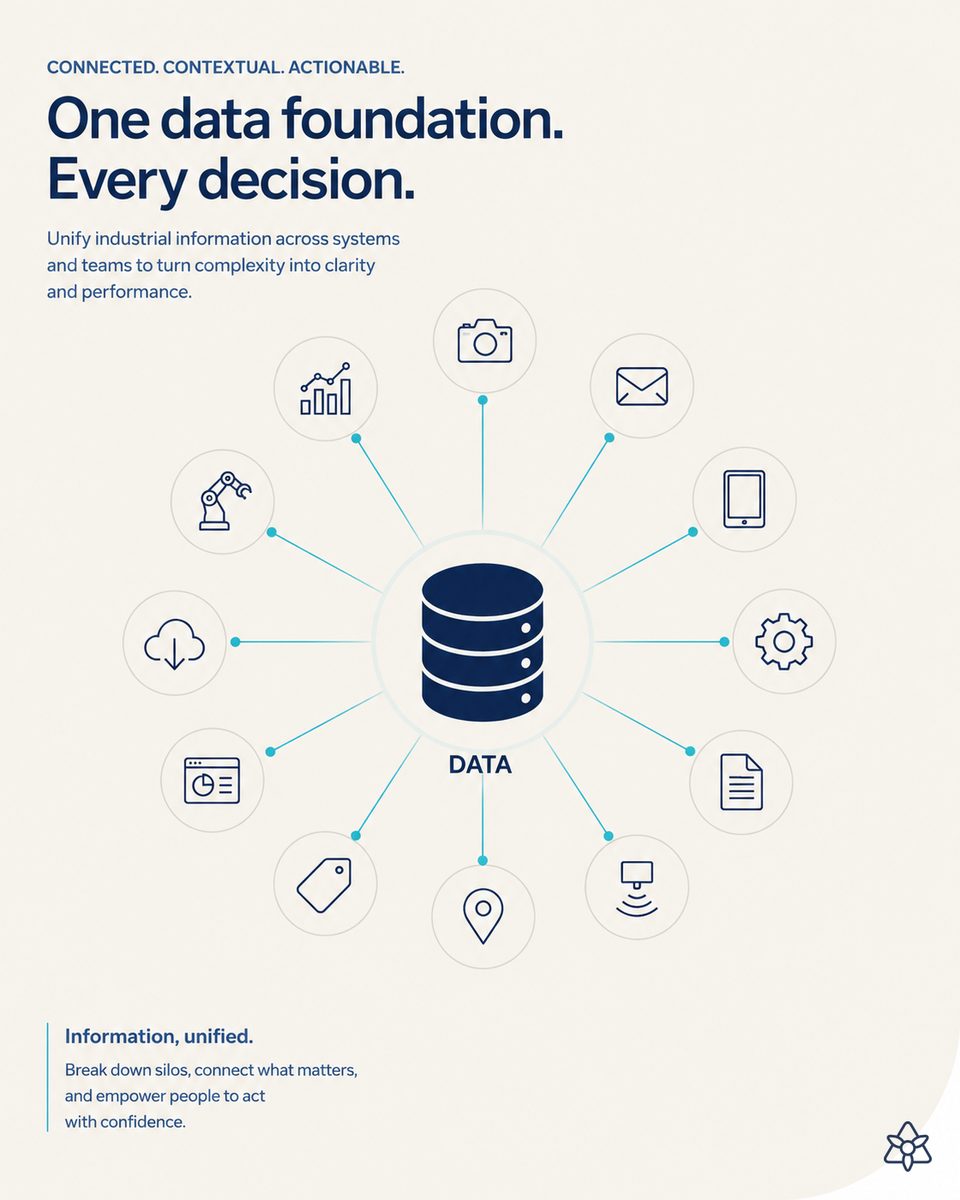
The customer's site plan never reaches the production queue in time.
In a flat-pack kitchen furniture plant there are two truths that have to line up and almost never do:
- What the site needs — the order in which the fitter needs the boxes to install the kitchen without stacking 22 cartons in the hallway and coming back three times. That lives in an email from the sales rep, a PDF from the installer, a WhatsApp from the site manager, a call from the end customer.
- What the factory needs — the order that suits the ERP/MES: batch by edge-band color, group by hinge type, avoid running the edgebander twice for the same color. That lives on another island.
The planning manager tries to reconcile the two by hand every week, in a spreadsheet that ages badly. At the first change (which always comes, usually on a Friday afternoon), the plan stops being valid. Shipping improvises: the kits go out in the order that suits the factory, the fitter on site pays the difference, and so does the brand image. The problem is not a lack of information — it is information that reaches the decision-maker too late.
iLEAN does not replace the planner — it puts an agent alongside that never sleeps.
The problem with JIS for flat-pack kitchens is not that a new system is missing: it is that the current system is split between what the factory knows and what the site knows, and reconciling them by hand is a full-time job for one person who can never keep up with the day-to-day. iLEAN acts as the putty between those two truths, and adds a coordinating agent that takes on the boring part.
Connect listens for the site plan whichever way it arrives. The agent cross-references it with the production queue. The person signs — the agent never decides alone.
The iLEAN pieces applied to JIS coordination for flat-pack kitchens:
- Connect — capturing the customer's site plan. It does not matter which channel it comes in on: an email from the sales rep, a PDF from the installer, a WhatsApp from the site manager, the retailer's customer portal. Connect captures it at second zero and turns it into a structured event. "The supplier writes at 8:00 that the truck is not leaving today, and by 8:01 the agents are already replanning."
- Coordinating agent — the brain that cross-references. It lives in Central and works 24/7. It matches the site plan against the ERP/MES queue, the real stock of components and line availability. It proposes the assembly and shipping sequence that minimizes stoppages in the factory while respecting the order the site needs. When the data conflicts, it does not act: it alerts the planning manager with the proposal on the table.
- The three rings — the agent proposes, the person decides and signs. The agent has no hands in SAP or in the MES; it sends a cryptographically signed proposal to the middle ring. The planning manager validates it in one click. That is what makes iLEAN acceptable in a serious operation: the decision that costs money is signed by a person.
Manual planning vs. JIS coordinated by an iLEAN agent
| Aspect | Weekly manual planning | With an iLEAN agent coordinating JIS |
|---|---|---|
| Capturing the site plan | By hand, via email/WhatsApp/PDF | Connect at second zero, nothing to forward |
| Reaction to a change on site | Meeting, phone call, manual replanning | Agent proposal in minutes, human validation |
| Shipping sequence | Convenient for the factory | Convenient for the customer's site |
| Order at the customer's site | Boxes stacked up, two-day installation | Boxes in sequence, installation in one morning |
| Who decides the final sequence | The person, alone, with partial data | The person, with the agent's proposal and complete data |
| Cost of last-minute changes | Paid by the factory and the fitter | Absorbed by the agent, with no manual recalculation |
Impact estimate for your plant — to be validated with your numbers.
The block below is an estimate to be validated with the specific data of your plant. We put it forward so the committee has an order of magnitude; we refine it during the diagnostic.
- Mid-sized plant making flat-pack kitchen furniture, several hundred kitchens a month, multi-SKU with many variants of edge-band color, hardware and handle.
- Connect + coordinating agent pilot: capture of the customer's site plan, an agent that matches it with the production queue and proposes the sequence. First value within a few weeks.
- Indicative payback between 4 and 9 months, depending on kitchens per month, the frequency of last-minute site changes and the current cost of manual rescheduling.
- Hard levers: ≥ 30% reduction in manual planning time, fewer sequence changes on the packing line, lower after-sales cost for installation at the customer's site.
And the planning manager's reasonable doubt
"What if the agent reorders the queue mid-production and makes a mess?" — it cannot, by design. The agent proposes, it does not act. It sends the sequence proposal to the middle ring packaged as signed JSON, and it is only applied once a person validates it. Whatever is critical to the operation is always signed by someone. And because the task is anchored (matching a plan against a queue), not free generation, the best models brought error below 1.5% [1]. The feeling in the committee is not "the machine decided on its own", it is "this week planning took one click instead of three meetings".
[1] OpenAI paper “Why Language Models Hallucinate”, 2025 — on the reliability of AI in anchored tasks.
What people ask about JIS for flat-pack kitchen furniture
What is JIS applied to flat-pack kitchen furniture?
Just-in-sequence (JIS) means delivering every kit in the exact order the customer will install it on site: first the wall units on the left-hand side, then the base units, then the countertop, then the fronts, then the handles. It is not just just-in-time (the right quantity at the right moment) — it is the right order. In flat-pack kitchens, that is what separates a 4-hour installation from a two-day one with boxes stacked in the customer's hallway.
Why does JIS coordination fail in a kitchen furniture plant?
For the same reason it fails everywhere else: the customer's site plan lives on one island (an email from the sales rep, a PDF from the installer, a WhatsApp from the fitter), and the production queue lives on another (ERP/MES with its own batching logic). Reconciling the two by hand every week is a full office job, and at the first change on site (which always comes) the plan is worthless. The shipping operator improvises, the kits go out in whatever order suits the factory, and the installation in the customer's home picks up the tab.
How does the iLEAN agent align the sequence with what is really happening on site?
The agent lives on the Central platform and works 24/7. It cross-references three sources nobody used to match in real time: the customer's site plan (captured by Connect from email, WhatsApp or the installer portal), the production queue in the ERP/MES, and the real stock of components (cabinets, fronts, countertops, hardware). It proposes the optimal assembly and shipping sequence — the planning manager reviews and signs. The agent does not decide alone; it coordinates and proposes.
What happens if the customer changes the site plan at the last minute?
It always happens, and it is exactly the case the agent exists for. The installer writes "we're not going in on Monday, we start Wednesday" at 7:30 pm on a Friday — Connect captures the message at second zero, the agent recalculates the sequence, and first thing on Monday the planning manager finds the proposed adjustment already on the desk, not a problem. Connect carries, the Agents decide, the person signs.
How much does agent-based JIS coordination cost in a kitchen furniture plant?
The typical pilot covers capturing the site plan (Connect), integration with the production ERP/MES, and the coordinating agent in Central. First value expected within a few weeks; indicative payback between 4 and 9 months, depending on kitchens per month and how much manual rescheduling weighs today. The hard lever is twofold: fewer stoppages on the packing line from last-minute reordering, and lower after-sales installation cost at the customer's home. We ask for your plant's data and send you the estimated ROI in 48h, with your numbers.
More cases in other sectors
- E1 formaldehyde control in CARB 2 export MDF — customs holds the shipment, the plant pays for it.How iLEAN Edge inspects E1 formaldehyde emissions in MDF exported to the US under CARB 2 and holds the…
- EUDR forest certificate OCR for tropical veneer — the premium door will not be lacquered if the paperwork does not close.iLEAN Connect reads forest certificates and EUDR due diligence for tropical veneer in premium doors. It…
- FSC traceability in office furniture chipboard — the batch dossier for the auditor, automatically.iLEAN Tracer builds the FSC chain of custody of chipboard in an office furniture plant with auditable…
- The hinge cup works loose two months after installation — and nobody knows why.How iLEAN Brain infers the root cause of loose hinge cups in kitchen cabinets by cross-referencing board…
- Loose knots in solid pine: what breaks a bunk bed is not what you see on the inspection table.How iLEAN Vision detects loose knots and resin pockets in solid pine before cutting, preventing rejected…
- Capturing the master carpenter's knowledge before retirement — the day he leaves, half the plant leaves with him.iLEAN Connect digitizes the master carpenter's knowledge before retirement: selection criteria,…
Tell us your case and in 48h we'll send you the estimated ROI of the JIS coordinating agent for your kitchen plant.
We work on your plant's real data, not ours. Diagnostic with no commitment.
Request estimated ROI in 48h See furniture and wood