Void detection in XLPE insulation with AI — a dielectric failure is not a warning, it is a breakdown.
The XLPE insulation on a medium-voltage cable either comes out sound or comes out with a void that will fail on site three years from now. iLEAN Vision watches the insulation freshly extruded, before curing, detects voids and bubbles with AI vision and holds the run so the quality manager can decide. The person signs — the line does not restart on its own.
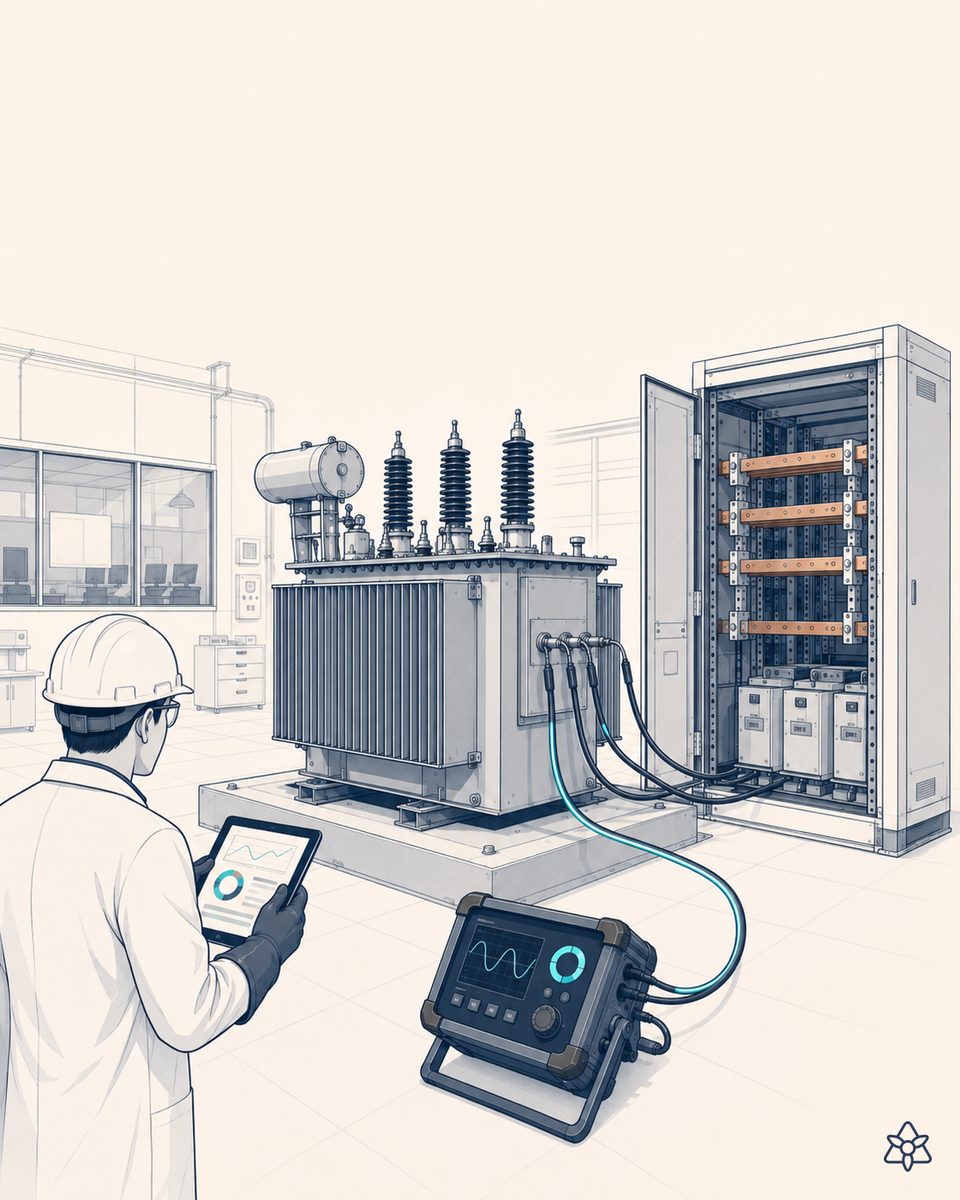
A void in XLPE is invisible to the eye and catastrophic in service.
The XLPE insulation on an MV cable is like good cheese: either it comes out homogeneous, or it is worth nothing. A void, a bubble or an inclusion is a point where the electric field concentrates — that is where the partial discharge starts that eats the insulation from the inside until it fails on site, months or years later. And the defect slips through for three reasons that almost always come together:
- Different raw material with every batch — XLPE pellets vary in residual moisture, melt flow index and cross-linking agent content. What came out perfect yesterday can gas up today with exactly the same recipe.
- Line speed against quality — sales pushes for more meters per hour; the quality manager pays for it when a run goes to the final test and bounces.
- Inspection too late — the dielectric test and the partial discharge test happen at the end, when you have already made kilometers of cable. If the run does not pass, all of that is scrap with copper inside.
The plant manager knows this, but between the extruder and the final test the insulation is already cured and opaque — the defect becomes visible once it can no longer be touched. The classic system works 99% of the time. That 1% is what reaches the end customer as a switchboard failure — and costs orders of magnitude more than the whole run.
iLEAN Vision does not replace your dielectric test — it seals the gap between the extruder and the lab.
The problem with a void in XLPE is not a lack of measurement technology — the partial discharge test does its job perfectly. The problem is that the information arrives too late and, by the time it does, the copper is already inside the defective insulation. iLEAN acts as the putty that fills that gap between the extruder and the lab, without asking you to change your CV line, your MES or your test protocol.
Vision watches the XLPE as it comes out. Connect reads the extruder parameters wherever they live. The agent cross-references pellet moisture, pressure and speed with the pattern learned in your own plant, and holds the run when something does not add up. The person signs — never the other way round.
The iLEAN pieces applied to void detection in XLPE insulation:
- iLEAN Vision (Edge with CNN) — a box with high-speed cameras and calibrated lighting, installed right at the exit of the insulation crosshead, before the curing tube. It watches the insulation while it is still hot and semi-translucent, detects voids, bubbles and discontinuities, and sends a signal to the PLC to mark or hold the run. It works with no network. If the plant loses WiFi, Edge keeps watching.
- Connect — captures the line parameters whether they come from a modern PLC, an old HMI or a control sheet the shift lead updates every hour. And it also captures what arrives from outside: the technical data sheet from the XLPE pellet supplier, the residual moisture of the latest batch, alarms from the curing tube, all at second zero.
- Agent — cross-references the image of the insulation, the extrusion parameters and the defect pattern learned in your plant. If there is a deviation, it does not send an email at 10 p.m.: it alerts the quality manager through whichever channel they use and, if the configured level of autonomy allows it, holds the run before it enters curing. The person validates and signs.
Manual XLPE insulation inspection vs. inline AI vision with iLEAN.
| Aspect | Classic inspection | With inline iLEAN Vision |
|---|---|---|
| Moment of detection | Final electrical test, off line | At the crosshead exit, before curing |
| Material at stake when it is detected | Kilometers of cable with copper inside | Meters, while the line can still be adjusted |
| Pellets with out-of-range moisture | Discovered when the run gases up | Cross-referenced with the batch data sheet at second zero |
| Change of recipe or XLPE supplier | A silent risk until the final test | Pattern learned per plant, immediate alert |
| Operation with no network | n/a | Edge keeps watching with its own lighting |
| Dossier for auditor / end customer | Rebuilt by hand, weeks | Photo and metrics per reel, automatic |
Impact estimate for your plant — to be validated with your numbers.
The block below is an estimate to be validated with the specific data of your plant. We put it forward so the committee has an order of magnitude; we refine it during the diagnostic.
- Medium-voltage cable plant, one CV (continuous vulcanization) line with an XLPE insulation extruder and a dry or nitrogen curing tube.
- iLEAN Vision pilot on one line: a box with cameras + lighting + hold actuator + integration with the extruder's PLC. First value expected within a few weeks, in assist mode (it alerts the shift lead), then moving up to automatic stopping once the quality manager gives the go-ahead.
- Indicative payback between 4 and 9 months, depending on the partial discharge rejections documented over recent years and the average cost of an MV cable drum rewound or destroyed (copper included).
- Expected reduction in defective insulation scrap of ≥ 30%, with a conservative floor: the hard lever is avoiding a single long run rejected at the final test.
And the plant manager's reasonable doubt
“What if the AI gets it wrong and lets a bad cable through or, worse, stops a good one?” — hallucination is a problem of free generation, not of anchored tasks. In tasks where the AI merely compares an image of the insulation against the pattern learned in your own plant, the best models brought error below 1.5%[1]. And even so, what is critical is not decided alone: iLEAN marks and holds, the person signs. The three safety rings exist precisely for this.
[1] OpenAI paper “Why Language Models Hallucinate”, 2025 — on the reliability of AI in anchored tasks.
What people ask about XLPE void detection with AI
Why does a void in XLPE insulation ruin a medium-voltage cable?
XLPE (cross-linked polyethylene) is the insulation of choice for MV cable because it offers very high dielectric strength — provided it is homogeneous. A void, a bubble or an inclusion is a point where the electric field concentrates: that is where partial discharge starts, and over months or years in service it eats the insulation from the inside until catastrophic failure. The defect is usually invisible to the eye and shows up at the final test or, worse, out on site. HD 620, IEC 60840 and the partial discharge test protocols exist to catch it — the problem is that by the time that test says “no” you have already manufactured a kilometer of cable.
When is the right moment to look at XLPE insulation so you are not too late?
Immediately after the insulation extruder and before the curing tube (CV line). At that point the XLPE is still hot and semi-translucent: a camera with good optics and lighting can see voids, bubbles and thickness discontinuities while you can still adjust extrusion speed, dry-curing pressure or temperature without losing any more meters of the batch. Once cured, the insulation is opaque and the defect can only be found at the final electrical test — when the scrap cost has already been incurred.
What exactly is iLEAN Vision and where does it go on the line?
iLEAN Vision is the iLEAN Edge family applied to continuous visual inspection: a terminal running convolutional neural networks (CNNs) trained on the customer's own insulation. It is installed as a box with high-speed cameras and calibrated lighting right at the exit of the insulation crosshead, before the entry to the curing tube. It reads the insulation in motion at line speed, detects the defect and sends a signal to the PLC to hold or mark the run. It works with no network: if the plant loses WiFi, Edge keeps watching and keeps firing the actuator.
What if the AI gets it wrong and lets a defective cable through — or worse, stops a good one?
That is the reasonable doubt. Hallucination is a problem of free generation, not of anchored tasks like this one — reading an image of the insulation and comparing it against the pattern learned in the plant. In anchored tasks, the best models bring error below 1.5% (OpenAI paper, 2025). And even so, what is critical is not decided alone: iLEAN marks and holds, the person signs. The system starts in assist mode (it alerts, it does not stop), and only once the quality manager can see that the detections match reality is the level raised to automatic stopping.
What does an AI vision pilot on a CV line cost, and how fast does it pay back?
The order of magnitude of an Edge pilot on an MV cable CV line is comparable to any vision pilot in a continuous-process plant: an initial investment covering the terminal, the cameras and lighting, the actuator and integration with the line's PLC/MES, plus an annual license. The payback presented to the committee is several months — the hard lever is the XLPE insulation scrap avoided (kilometers of cable, copper included, that no longer get thrown away) and the cost of not having to rewind a whole drum because the final test said no. Ask us for an estimated ROI using your plant's real data and we will send it to you within 48 hours.
More cases in other sectors
- DGA analysis of dielectric oil — a report that arrives late is a transformer that is already failing.iLEAN Brain cross-references DGA, load and temperature of the transformer to anticipate incipient…
- The UPS VRLA battery — the annual test says OK and the bad block is still there, waiting for the real outage.iLEAN Brain cross-references impedance, ohms and temperature of every VRLA block in the data center UPS…
- VFD traceability — without serial number and firmware tied to the order, a claim is argued in the dark.iLEAN Tracer reads the serial number and firmware of a VFD drive by OCR at end of line and ties them to…
- A FAI eats up days per partiLEAN runs FAI with 3D vision + a virtual CMM and generates the AS9102 report automatically.
- Furniture and wood — the defect that gets past the saw ships as a finished part.Documented iLEAN cases in furniture and wood: board defects, FSC/PEFC and EUDR traceability, pressing…
- The AI Act and automated inspection in furniture — relax: your camera looks at boards, not people.Visual product inspection is minimal risk under the AI Act when there is human oversight: the camera…
Tell us your case and in 48h we'll send you the estimated ROI of this AI project for your CV line.
We work on the real data from your plant, not ours. Diagnostic with no commitment.
Request estimated ROI in 48h See electrical equipment