The UPS VRLA battery — the annual test says OK and the bad block is still there, waiting for the real outage.
The VRLA battery of a data center UPS is the last safety net — and a single degraded block drags the whole bank down the day the outage arrives. iLEAN Brain cross-references impedance, ohms and temperature of every block with the UPS's real load and the room's history, and proposes replacement block by block before the bank fails to hold. The person signs — and the maintenance contractor comes in with a better prepared ticket.
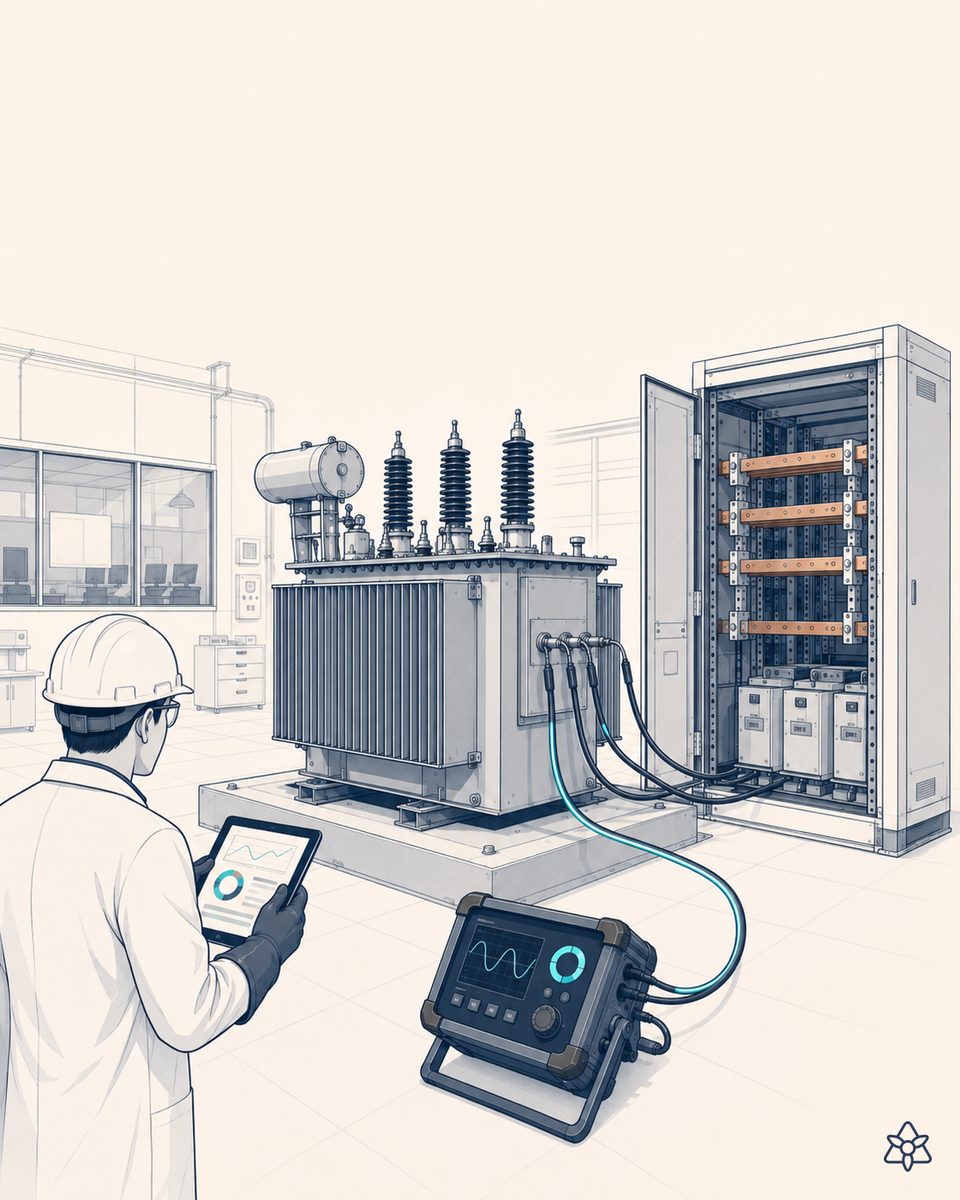
The whole bank “passes” the annual test, and one bad block sinks it on the day it matters.
The VRLA bank of a data center UPS is the safety net for the power grid. The classic problem is not in the UPS — it is in how the battery is operated:
- The annual discharge test is aggregated. It gives you a result for the complete bank: if it delivers the agreed minutes, it passes. A degraded block can be masked by the good ones.
- The block-by-block readings live apart. Impedance, internal resistance in ohms, voltage and temperature per block — they are in the battery monitor, but the trend over time is only looked at when someone asks for it.
- The UPS's real load is never cross-referenced with the battery. A room that has run at high load for months has stressed the battery far more than a room at low load. The curve is in the UPS; nobody cross-references it with the battery monitor until the incident.
- The history gets lost. Every inspection lives in its own PDF; the drift of block 23 since commissioning is in there, but it has to be rebuilt by hand.
On the day of the real outage, the UPS starts drawing from the battery — and the weak block gives way first. The bank does not reach the expected minutes. What was contracted as tier III behaves like tier I, and what comes next is a broken SLA.
iLEAN does not touch the UPS — it reads what the UPS already produces and adds the context it was missing.
The block data is in the battery monitor. The load is in the UPS. The temperature is on the room probe. The history is in the reports folder. iLEAN acts as the putty between those islands — without asking you to change the UPS, the bank or the monitor.
Brain cross-references impedance and ohms block by block with the UPS load, the room temperature and the history. When a specific block drifts, it says so. The maintenance contractor decides how and when to intervene.
The iLEAN pieces applied to the UPS VRLA battery:
- Brain (Agents on top of Central) — a multi-agent brain that cross-references the battery monitor readings (impedance, internal resistance, voltage, temperature per block) with the UPS load curve, the room's ambient temperature and the history. It applies IEEE 1188 criteria and degradation models. When a specific block moves out of range, it opens the replacement proposal.
- Connect — reads the battery monitor data whether it comes over SNMP, Modbus, the UPS's native integration or a CSV export. If a room has an old monitor with no network, it picks up the technician's reading on his round. It also captures what arrives from outside (a manufacturer's notice about a batch of blocks with a known defect).
- Three safety rings — the UPS OT network and the BMS stay isolated. Brain works on the data it reads, proposes, and the decision to replace enters ring 1 signed by the person. For a data center with an SLA commitment, that isolation is a selling point, not a toll.
Annual maintenance vs. predictive maintenance with iLEAN Brain
| Aspect | Current routine | With iLEAN Brain |
|---|---|---|
| Frequency of the useful reading | Annual + monitor alarms | Continuous, with a trend per block |
| Granularity | Complete bank | Block by block, with an identifier |
| Load context | Never cross-referenced with the battery | Cross-referenced with load curve and temperature |
| Replacement | Complete bank when it is due | Degraded blocks first, the bank later |
| Block history | Rebuilt by hand | Trend already plotted by serial number |
| File for audit / SLA | By hand | Dossier per bank, automatic |
Impact estimate for your plant — to be validated with your numbers.
The block below is an estimate to be validated with the specific data of your rooms. We put it forward so the committee has an order of magnitude; we refine it during the diagnostic.
- A tier II or tier III data center with several medium-to-high power UPS units and VRLA banks of several hundred blocks, heterogeneous monitoring, maintenance contracted to a third party, and at least one documented incident of a bank that did not deliver the expected minutes during a transfer.
- Brain pilot on the critical UPS units (integration with the existing battery monitors + load and temperature readings). First value expected within a few weeks: the block-by-block trend over the existing history surfaces the suspect blocks from day one.
- Indicative payback between 4 and 9 months, depending on the number of banks covered and the average cost of a replacement or an incident.
- Expected reduction in premature bank replacements (selective replacement instead of a full swap) ≥ 30% — conservative, and dependent on your current renewal schedule.
- A large hard lever not counted here: a single backup failure avoided (broken SLA, lost revenue for the data center's customers, reputational damage). One incident pays for the pilot with room to spare.
And the infrastructure manager's reasonable doubt
“What if the AI flags a block as bad when it isn't?” — hallucination is a problem of free generation, not of anchored tasks. Cross-referencing impedance and resistance with load and temperature is exactly an anchored task: the best models brought error below 1.5% [1]. And even so, Brain proposes — it does not discharge the UPS or replace blocks. The maintenance contractor verifies with his own discharge instrument and the infrastructure manager signs. A false positive costs one extra check; a false negative costs an SLA.
[1] OpenAI paper “Why Language Models Hallucinate”, 2025 — on the reliability of AI in anchored tasks.
What people ask about VRLA predictive maintenance in a data center
Why does a VRLA battery bank fail if the annual inspection comes back OK?
The VRLA (Valve Regulated Lead Acid) battery in a data center UPS is the last safety net when the grid goes down. The classic problem is that the complete bank can return acceptable results in the annual discharge test and still have one or two degraded blocks that drag the rest down when the real demand arrives. Sulfation, electrolyte loss through the valve, internal grid corrosion… these are slow processes that the full bank masks, but that show up when you measure impedance, internal resistance in ohms and temperature block by block. The annual inspection is necessary — but not sufficient to rule out the bad block.
What does iLEAN Brain cross-reference to identify the specific block to replace?
iLEAN Brain integrates the readings from the bank's battery monitors (impedance and internal resistance of every block, voltage, temperature) with the UPS load curve, the real discharge cycles the room has been through, the ambient temperature of the battery room and the bank's history since commissioning. It applies the IEEE 1188 criteria (recommended practice for VRLA maintenance) and the usual degradation models, and when the trend of a specific block moves out of range — even if the complete bank still passes — it opens a block-by-block replacement proposal. The infrastructure manager decides when and how.
Does iLEAN replace the UPS maintenance contractor or the manufacturer?
No. The maintenance contractor is still the maintenance contractor; the UPS manufacturer is still the manufacturer. iLEAN does not touch the UPS electronics — it lives one layer above, reading the data the UPS and the battery monitors already produce, and cross-referencing it with the rest of the context those systems cannot see (real load, temperature, history). The contractor receives a better prepared work ticket: “this block, this serial number, this trend, this hypothesis”. The intervention still belongs to the contractor, the decision still belongs to the customer.
What if the data center has UPS units and banks from different brands?
That is the most common situation — a data center with a UPS from one manufacturer in room A and another in room B, banks from different suppliers, heterogeneous monitoring. iLEAN Connect acts as putty: it reads the data from each battery monitor whether it comes over SNMP, over Modbus, through the UPS's own integration, as a CSV export or, if that is what it takes, as a photo of the local panel that the technician takes on his round. Connect standardizes; Brain reasons. It does not force you to standardize the room before you start.
What is the real saving of anticipating one block instead of replacing the whole bank?
The hard lever is twofold. Selective replacement: changing one block or a group of degraded blocks instead of the complete bank when a general renewal is not yet due. And, above all, a backup failure avoided: a bank that cannot hold up a real outage costs lost revenue, contractual exposure with the data center's customers, reputational damage and, depending on the tier, SLA penalties. Anticipating a selective replacement also lets you schedule it in a maintenance window, with parts in stock. We ask for your room's data and send you the estimated ROI in 48h — with your numbers, not ours.
More cases in other sectors
- Busbar torque control in power switchboards — every tightening tied to its switchboard, no paper.How iLEAN Edge traces every busbar tightening in a power switchboard: torque, angle and operator, tied…
- Stationary battery capacity testing — only the veteran spots the marginal cell.Edge AI in the formation room: iLEAN monitors stationary battery formation cycles and capacity tests in…
- DGA analysis of dielectric oil — a report that arrives late is a transformer that is already failing.iLEAN Brain cross-references DGA, load and temperature of the transformer to anticipate incipient…
- VFD traceability — without serial number and firmware tied to the order, a claim is argued in the dark.iLEAN Tracer reads the serial number and firmware of a VFD drive by OCR at end of line and ties them to…
- Void detection in XLPE insulation with AI — a dielectric failure is not a warning, it is a breakdown.How iLEAN Vision detects voids and bubbles in XLPE insulation as it leaves the extruder, before curing,…
- A FAI eats up days per partiLEAN runs FAI with 3D vision + a virtual CMM and generates the AS9102 report automatically.
Tell us your case and in 48h we'll send you the estimated ROI of this AI project for the VRLA banks in your data center.
We work on your rooms' real data, not ours. Diagnostic with no commitment.
Request estimated ROI in 48h See electrical equipment