Inter-turn short in a motor — once it goes into the impregnation oven, it is scrap.
The inter-turn short is the classic fault that slips past the eye and past a surge test read by hand. Before the impregnation varnish the stator can be recovered; after, it is scrap. iLEAN Vision assists the surge test and inspects the winding by external vision, flagging the doubtful stator in time. The person signs — the line does not decide alone.
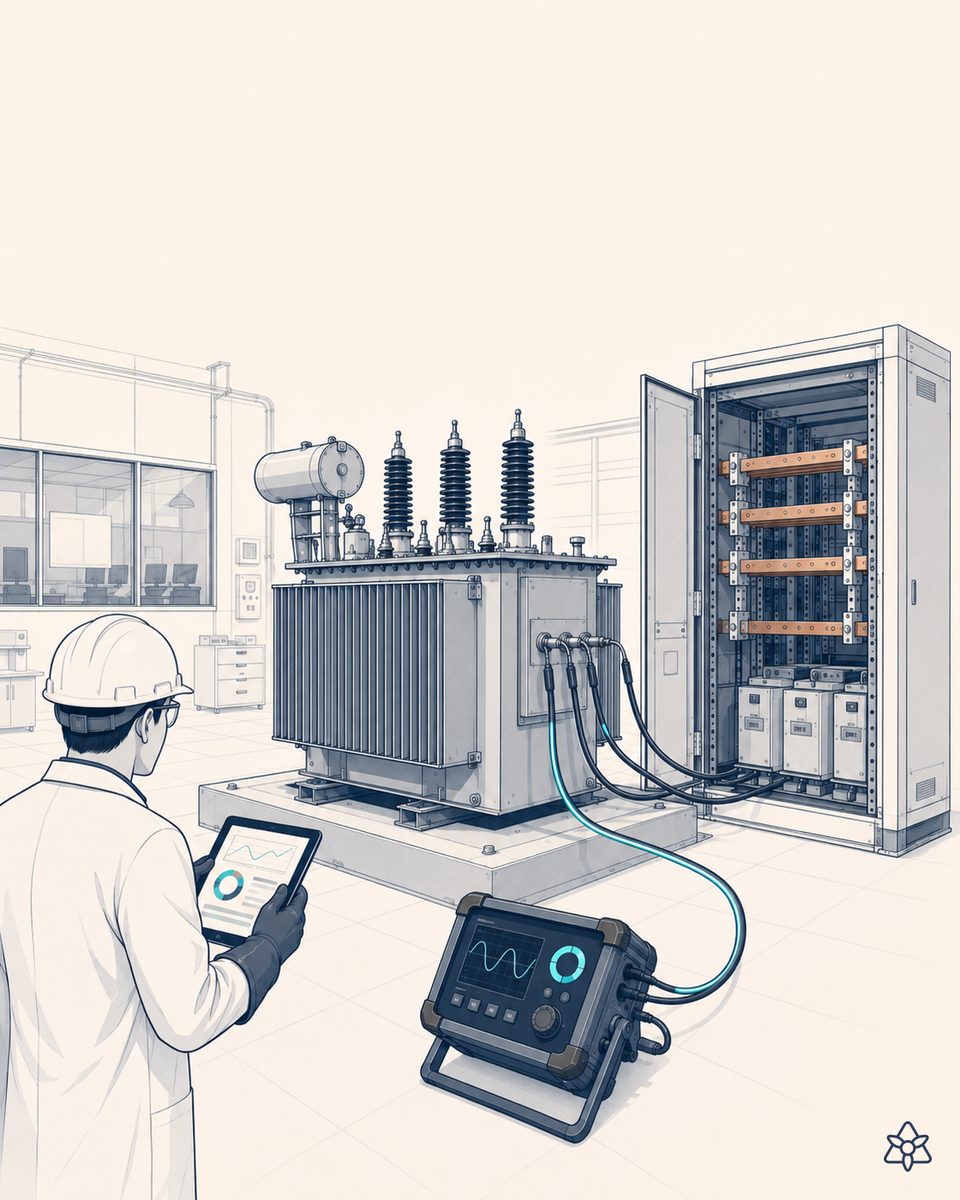
The defect is visible before the oven — afterwards, it is not.
An inter-turn short is born in small pieces of damage to the enamel on the magnet wire during winding or slot insertion. The classic system has three leak points:
- The operator's eye — a pinched wire, a badly formed end turn, a speck of metal between turns: these are things the veteran spots. The day they retire, that sensitivity walks out with them.
- The surge test read by hand — the operator compares three waveforms on a screen. If the asymmetry is obvious, they catch it; if it is mild (microseconds of deviation), it depends on their eye and on how many hours they have been at it.
- The timing of the defect — before impregnation the stator can be rewound; after the varnish, it is scrap. The window is a matter of minutes.
The marginal stator gets through, is impregnated, ships to the customer and fails in the field months later. The classic system works 99% of the time. That 1% is an insulation claim, and on critical motors (industrial ventilation, process pumps, electrical machines for rail) the field cost is several times that of the stator.
iLEAN does not add a fourth system — it seals the cracks between the winding machine and the impregnation oven.
The problem is not a lack of information: the surge test and the operator's eye generate plenty of data. The problem is that nobody can hold that level of attention on every single stator through a whole shift, nor capture the veteran's sensitivity before they retire. iLEAN acts as the putty that fills the gap between what the bench measures and what quality needs.
The camera watches the winding. iLEAN Vision assists the surge test against the batch pattern. The doubtful stator is pulled aside before the oven. The person signs — never the other way round.
The iLEAN pieces applied to inter-turn short detection:
- iLEAN Vision (Edge with a CNN trained on windings) — external visual inspection of the finished winding: pinched wire, badly formed end turn, visible metallic debris, enamel damage. If the image does not match the batch pattern, it flags the stator before the surge test. It works with no network.
- Vision + assisted surge — a CNN over the surge tester's screen in real time. It compares the waveforms of the three phases against the pattern learned for the batch, not against the generic standard. Mild asymmetries the eye would miss are flagged for a retest or for human inspection. The person decides — the system only prepares the decision.
- iLEAN Tracer — links the doubtful stator to the magnet wire batch, the winding operator, the end-turn forming tool, the impregnation oven and the serial number of the finished motor. When a field failure appears, the trace back to origin comes out in seconds — and it is learned for the next batch.
Surge test read by hand vs. assisted surge with iLEAN Vision
| Aspect | Classic inspection before impregnation | With iLEAN Vision |
|---|---|---|
| Visual inspection of the winding | The operator's eye, the veteran's sensitivity | CNN trained on the batch pattern |
| Reading the surge test | Operator compares three waveforms on screen | CNN over the screen, sub-threshold asymmetries flagged |
| Mild inter-turn defect | Frequently gets through, fails in the field | Stator flagged for a retest before the oven |
| Capturing the veteran's knowledge | Walks out the day they retire | The learned pattern preserves the sensitivity |
| Tracing the defect back to the batch | A handwritten note from the winding lead | Linked to the wire batch, the tool and the operator |
| Recovering the stator | Only if the operator catches it in time | A higher share of stators recovered before the oven |
Impact estimate for your plant — to be validated with your numbers.
The block below is an estimate to be validated with the specific data of your plant. We put it forward so the committee has an order of magnitude; we refine it during the diagnostic.
- Mid-sized manufacturer of asynchronous or synchronous motors, with a winding line + stator insertion + surge test before the impregnation oven.
- iLEAN Vision pilot with a fixed camera over the finished winding + a CNN over the surge tester's screen + integration with the MES. First value expected within a few weeks: the first recovered stator that a hand-read surge test would have let through.
- Indicative payback between 4 and 9 months, depending on the average cost of a defective impregnated stator and the frequency of insulation claims in the field.
- Expected reduction in customer insulation failures of ≥ 30%, a defensible floor. The hard lever is the stator recovered before the oven (wire + varnish + hours) and the field claim avoided.
And the winding lead's reasonable doubt
“What if the AI flags a good stator as doubtful?” — hallucination is a problem of free generation, not of anchored tasks. In tasks where the AI compares a real image or a real waveform against a pattern learned for the batch, the best models brought error below 1.5% [1]. And even so, what is critical is not decided alone: iLEAN flags the doubtful stator and the person decides whether it is retested or rewound. The three safety rings exist precisely for this.
[1] OpenAI paper “Why Language Models Hallucinate”, 2025 — on the reliability of AI in anchored tasks.
What people ask about inter-turn short detection with AI
What is an inter-turn short and why does it matter before impregnation?
An inter-turn short is an unwanted electrical contact between two adjacent turns of a motor winding, usually because the enamel on the magnet wire was damaged while winding, while inserting the coils into the stator slots, or while forming the end turns. Before the stator is impregnated with insulating varnish it is still recoverable: you locate the fault and rewind. After impregnation, the stator is scrap. The critical detection window is that narrow margin between the end of winding and the entry into the impregnation oven.
How is an inter-turn fault detected today, and where does that fall short?
Today it is done with a surge test (impulse test) to IEEE 522 / IEC 60034-15, which compares the waveforms of the three phases after applying a high-voltage impulse. If the waveforms are not symmetrical, there is a fault. The problem: the operator's reading depends on their eye and their experience, and the difference between a normal waveform and one with a mild short is microseconds of deviation. A mild fault gets through, the stator is impregnated, it reaches the customer and fails months later. iLEAN Vision assists the operator in reading the surge test and, on top of that, inspects the body of the winding by external vision before the test.
How does iLEAN Vision help with the surge test?
iLEAN Vision runs a CNN over the surge tester's screen in real time and compares the three phase waveforms against the pattern learned for that batch. When the asymmetry exceeds the threshold of the pattern — not of the generic standard, but of the specific pattern for that motor type — it flags the stator as suspect and proposes a retest or escalation to the winding lead. The person decides. iLEAN does not sign off conformity — it assists it.
Does a visual inspection before the surge test add value?
Yes, a great deal. Before the surge test, a CNN camera over the finished winding detects visible defects that predict a loss of insulation: wire pinched between the lamination and the tool, a badly formed end turn, visible damage to the enamel, metallic debris between turns. It is jidoka in two stages: first vision catches the visible defects; then the assisted surge test catches the electrical ones. What can be recovered gets recovered before impregnation.
How much does a Vision pilot cost on a motor winding line?
The order of magnitude of a Vision + assisted surge pilot on a motor winding line is close to that of any Edge pilot in a plant: an initial investment covering terminals + camera + integration with the surge tester and the MES, plus an annual license. A reasonable payback is several months — the hard lever is a stator recovered before impregnation: the cost of the wire, the varnish, the person-hours of winding and the scrap avoided. We ask for your plant's data and send you the estimated ROI in 48h.
More cases in other sectors
- GOES steel inspection for transformers — the burr you see afterwards is a loss the end customer pays for.How iLEAN Vision detects burr and cutting defects in grain-oriented electrical steel before the…
- AI control of the VPI cycle on an HV motor stator — four parameters, a single screen.How iLEAN Edge controls the HV motor stator VPI cycle (vacuum + pressure): vacuum level, resin…
- Cell-by-cell traceability in LiFePO4 battery racks — the field dossier is not built by hand.How iLEAN Tracer ties batch, OCV, IR and destination module to every LiFePO4 cell in BESS and UPS…
- MV switchgear heat rise test — the hot spot sits between two thermocouples.AI thermography on the heat rise test of metal-enclosed MV switchgear: iLEAN Edge spots hot spots in…
- NH fuse breaking capacity test — reading the oscillogram by eye means expensive scrap and an expensive technician.iLEAN Edge captures the oscillogram of the NH fuse breaking capacity test and validates it automatically…
- Busbar torque control in power switchboards — every tightening tied to its switchboard, no paper.How iLEAN Edge traces every busbar tightening in a power switchboard: torque, angle and operator, tied…
Tell us your case and in 48h we'll send you the estimated ROI of this AI project for your winding line.
We work on the real data from your plant, not ours. Diagnostic with no commitment.
Request estimated ROI in 48h See industrial electrical equipment