AI control of the VPI cycle on an HV motor stator — four parameters, a single screen.
The VPI cycle on a high-voltage motor stator depends on four parameters that have to move together — vacuum, resin viscosity, time and cure curve — and today they live on four different screens. When something goes wrong, the cost is tens of thousands of euros and an end customer that does not forgive partial discharge. iLEAN Edge cross-references all four at second zero and warns before the cycle becomes unrecoverable. The person signs — the agent never opens the autoclave on its own.
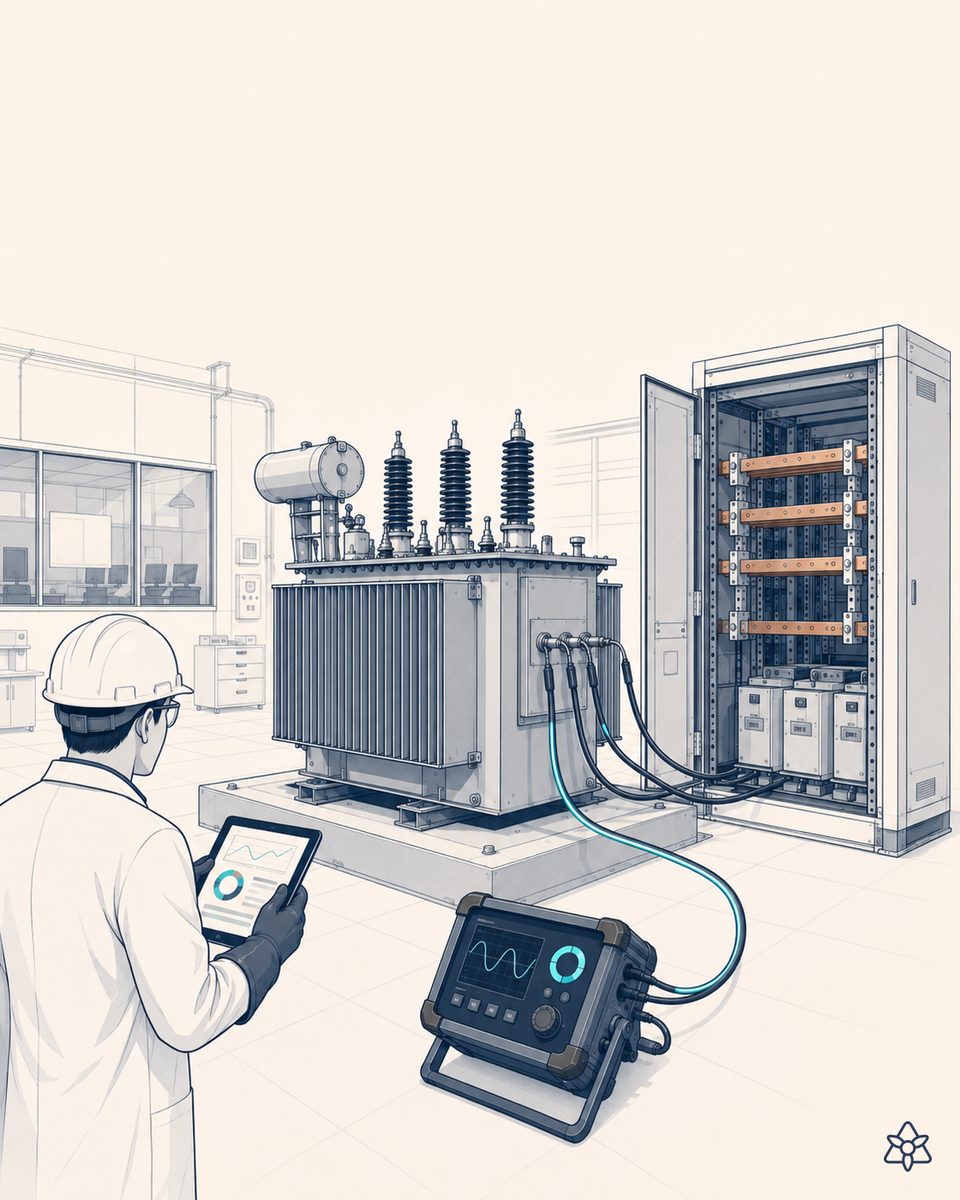
Four parameters that have to move together — and they are never on the same screen.
A well-executed VPI cycle on a high-voltage motor stator is the difference between an asset that lasts decades and one that shows up with partial discharge after months in the field. And it depends on four parameters that have to move together:
- Vacuum level in the dry phase — mbar reached, pumping time, possible leaks in gaskets or seals.
- Resin viscosity at the moment of impregnation — cP, temperature, age of the mix, contamination.
- Total time under pressure with the part submerged — real bar, effective minutes, not the theoretical ones.
- Cure curve in the oven — ramp, plateau and cool-down. A short curve leaves internal voids that the motor does not reveal until months later.
The shop's quality manager knows it, but he is in another room. The operator has four screens — autoclave, viscometer, stopwatch/PLC and oven recorder — and none of them talk to each other. The problem is not the person: the key information exists, but it is not joined up at the moment it is needed.
iLEAN Edge does not replace the autoclave or the oven — it seals the crack between them.
The control of a VPI cycle does not fail for lack of technology; it fails because the information lives in islands. iLEAN acts as the putty that fills those gaps on top of the autoclave, the viscometer and the oven you already have, without forcing you to change anything.
Edge sees all four parameters at once and shows them to the operator on a single screen. The agent compares against the expected curve and warns before the cycle becomes unrecoverable. The person signs — never the other way round.
The iLEAN pieces applied to VPI impregnation control:
- Edge — a terminal next to the autoclave with vision and sensors. It reads the autoclave panel (mbar, time, pressure), the oven panel (temperature point by point) and, if needed, photographs the analog viscometer. It works without a network. If the plant loses its connection, the Edge keeps capturing and reconciles later.
- Connect — captures the resin batch recipe from the in-house lab (Excel, the supplier's email with the cP change, the R&D lead's WhatsApp) at second zero. And it captures the oven schedule even if it lives in a shift spreadsheet.
- VPI agent — cross-references vacuum + viscosity + time + curve, compares against the recipe for the specific stator (a 6.6 kV traction motor vs. an 11 kV industrial one is not the same curve), and warns when there is a deviation. It generates the cycle dossier automatically, ready to hand over to the end customer. The person signs — the system never opens the autoclave on its own.
Manual VPI with four screens vs. VPI assisted by iLEAN Edge
| Aspect | Manual + 4 separate screens | With iLEAN Edge (operator assistance) |
|---|---|---|
| Vacuum | Isolated autoclave panel | On the operator's screen, with the expected curve |
| Resin viscosity | Lab Excel sheet, sometimes from yesterday | Captured live from the viscometer or the lab |
| Time under pressure | Stopwatch or old PLC, no cross-checked alarm | Cross-referenced with viscosity and vacuum in real time |
| Cure curve | Oven recorder, reviewed afterwards | Compared against the expected curve for the specific stator |
| Deviation warning | When the motor fails in the field (months later) | Before the cycle becomes unrecoverable |
| Dossier for the end customer | Generic certificate, assembled by hand | Real cycle curves, automatic, per stator |
Impact estimate for your plant — to be validated with your numbers.
The block below is an estimate to be validated with the specific data of your shop. We put it forward so the committee has an order of magnitude; we refine it during the diagnostic.
- HV motor winding and rewinding shop (6.6 / 11 kV) for industry, rail or utility customers, with an existing VPI autoclave and cure oven.
- Edge pilot on one autoclave (minimal sensorization if needed + Connect integration with the viscometer and the oven). First value expected within a few weeks.
- Indicative payback between 4 and 9 months, depending on stators/month volume and the average cost of a rework or warranty claim for partial discharge in the field.
- Hard levers: ≥ 30% reduction in partial-discharge incidents attributable to impregnation; a per-stator dossier ready to hand over; capture of the veteran's judgment before retirement.
And the quality manager's reasonable doubt
“What if the AI decides wrong and closes a cycle that was fine?” — hallucination is a problem of free generation, not of anchored tasks. In tasks where the AI merely cross-references measurements against an expected curve and warns of a deviation, the best models brought error below 1.5% [1]. And even so, what is critical is never decided alone: iLEAN warns and proposes; the operator and the quality manager sign. The three safety rings exist precisely for this.
[1] OpenAI paper “Why Language Models Hallucinate”, 2025 — on the reliability of AI in anchored tasks.
What people ask about AI control of the VPI cycle in HV motors
Which critical parameters does the VPI cycle control on an HV motor stator?
The VPI (Vacuum Pressure Impregnation) cycle on a high-voltage motor stator depends on four parameters that have to move together: the vacuum level reached in the dry phase (mbar, pumping time, leaks), the resin viscosity at the moment of entering the tank (cP, temperature, age of the mix), the total pressure time with the part submerged (bar, minutes), and the cure curve in the oven (ramp, plateau, cool-down). If any of the four drifts, the insulation can carry internal voids that the motor only reveals months later, as partial discharge.
Why do the classic VPI control methods leave gaps?
Because each parameter lives on a different screen: the vacuum on the autoclave panel, the viscosity in an Excel sheet from the in-house lab or an isolated viscometer, the time on a stopwatch or an old PLC, the cure curve on the oven recorder. Nobody cross-references all four in real time — they get cross-referenced afterwards, when there is an incident. The operator does what he can; the problem is not the person, it is that the information is scattered.
How does iLEAN Edge assist the operator during the VPI cycle without replacing him?
The Edge sits next to the autoclave and sees all four sources at once. On the operator's screen there is a single reading: vacuum, viscosity, time, curve — with the expected curve in gray and the real one in color. When something drifts (the vacuum stalls, the viscosity climbs out of range, the oven ramp falls short), the system warns before the cycle becomes unrecoverable. It assists and simplifies: the decision remains the operator's, but with the cross-referenced information in front of him.
Does it work on old autoclaves with no modern interface?
Yes — that is the typical case. iLEAN Connect has three capture modes: direct integration if the machine has a modern interface; connection to the local PC even if it runs Windows XP or 2000; camera reading of the analog panel if there is no other option. It does not force you to change the autoclave, the oven or the viscometer. The putty fills the gaps — it does not tear down the tiles.
What do you gain in an HV motor winding and rewinding shop?
Three concrete things: (1) less expensive scrap — an HV motor stator is worth tens of thousands of euros, and when a VPI cycle goes wrong, rework is not always viable; (2) a per-stator dossier ready to hand over to the end customer (utility, rail OEM, petrochemical plant), with the real curves of the cycle, not a generic certificate; (3) capture of the veteran's eye — the intuition of the one who knows when “the resin smells off” is kept as a pattern learned by the system, before that person retires.
More cases in other sectors
- EN 61439-2 audits of LV switchboards — the dossier is not stitched together the night before.A living EN 61439-2 file per LV switchboard: iLEAN Writer ties routine tests, the declaration of…
- EN 61439 applied-voltage test with an AI dossier — the bottleneck is no longer the test, it's the paperwork.How iLEAN Writer captures the EN 61439 applied-voltage test straight from the megohmmeter and delivers…
- GOES steel inspection for transformers — the burr you see afterwards is a loss the end customer pays for.How iLEAN Vision detects burr and cutting defects in grain-oriented electrical steel before the…
- Cell-by-cell traceability in LiFePO4 battery racks — the field dossier is not built by hand.How iLEAN Tracer ties batch, OCV, IR and destination module to every LiFePO4 cell in BESS and UPS…
- Inter-turn short in a motor — once it goes into the impregnation oven, it is scrap.iLEAN Vision plus an AI-assisted surge test detects inter-turn shorts in motor windings before…
- MV switchgear heat rise test — the hot spot sits between two thermocouples.AI thermography on the heat rise test of metal-enclosed MV switchgear: iLEAN Edge spots hot spots in…
Tell us your case and in 48h we'll send you the estimated ROI for your winding shop.
We work on your plant's real data, not ours. Diagnostic with no commitment.
Request estimated ROI in 48h See industrial electrical equipment