Cured Iberian lomo, curing and weight loss with AI — every extra point of weight loss is expensive lomo going out as thin air.
Cured Iberian lomo takes a long, costly curing process, and weight loss is decided in every cellar, every batch and every casing caliber. iLEAN Edge captures pH, water activity, temperature, humidity and weight per piece, and the agents propose the adjustment per cellar when the real curve drifts out of the corridor. The person signs — the drying room does not change parameters on its own.
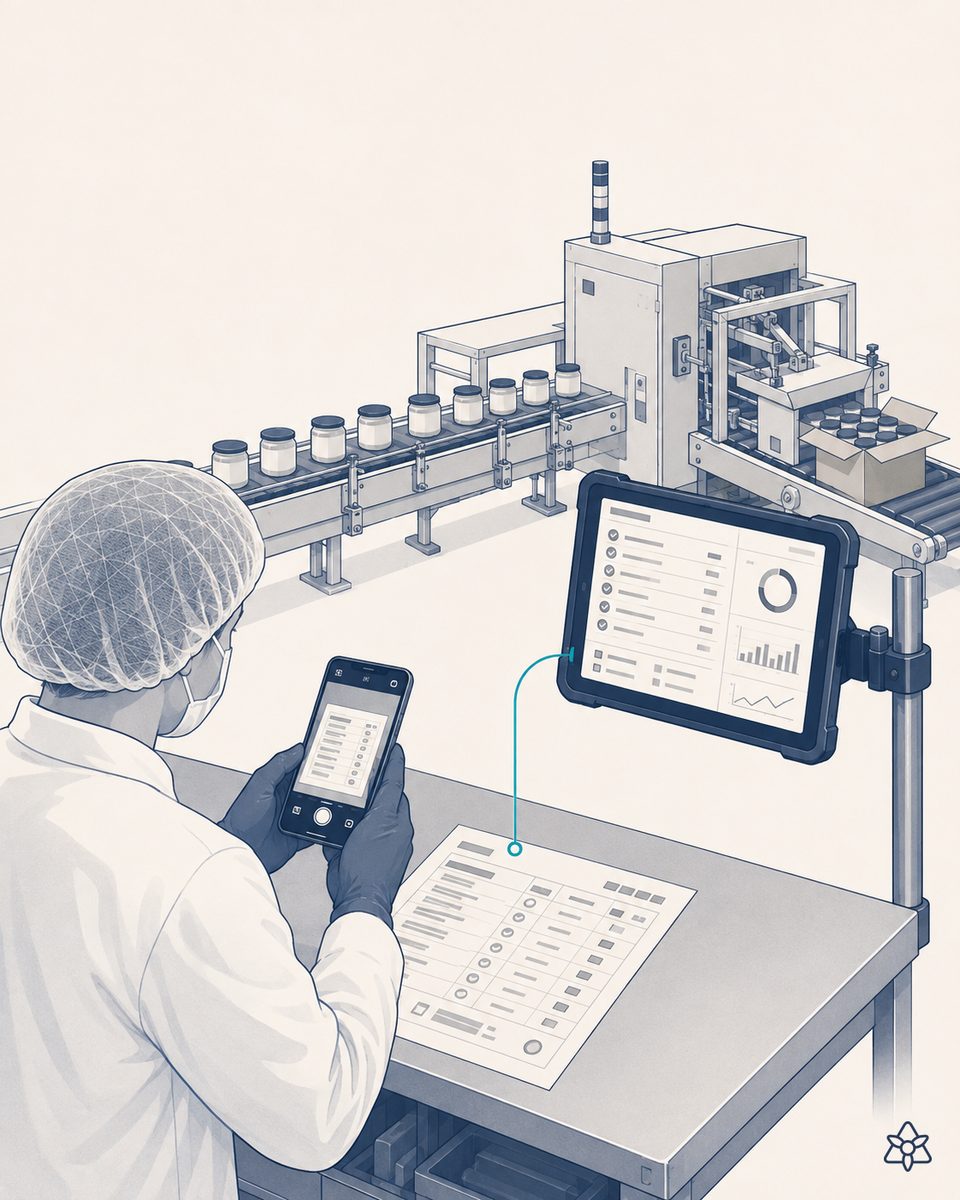
Weight loss is not decided at the end of curing — it is decided hour by hour.
The margin on cured Iberian lomo lives on fine numbers: a high price per kilo, expensive raw material and a weight loss that decides how much sellable product comes out of every batch. And the classic problem is always the same:
- The cellar's curve is not each piece's curve — the fan leaves one zone drier, one rack sits nearer the door and another at the back, and weight loss comes out uneven within the same batch.
- The recipe changes and nobody cross-references it with the cellar — a new marinade, paprika from a different lot, a casing caliber that arrived different from the supplier. Data in the ERP/MES/spreadsheet that never reaches the master sausage maker in time.
- Weight loss shows up when the casing comes off — and by then there is nothing left to do. The batch is taken as it comes: weight above normal on some pieces, weight below acceptable on others.
The master sausage maker knows this — he has spent decades weighing pieces by hand to tell how the curing is going. But he cannot be in six cellars at once, nor cross-reference weight loss with the recipe and the curve by eye. Every percentage point of anomalous weight loss is expensive lomo going out as thin air, and the Iberian trade does not forgive that air.
iLEAN is not trying to speed up curing — it is trying to cure to the exact point.
The problem with curing stuffed Iberian lomo is not speed: it is precision that does not scale. iLEAN acts as the putty between the batch recipe, the cellar SCADA and the master sausage maker's knowledge, without asking you to change the drying room or the ERP.
Edge measures the curve and the weight. Connect captures the recipe wherever it lives. The agent cross-references it with the expected curve and calls the master when something does not add up. The person signs — the drying room does not change parameters on its own.
The iLEAN pieces applied to cured Iberian lomo:
- Edge — pH, water activity, temperature and humidity sensors per cellar and per critical point, plus weighing by piece or by rack depending on how deep the deployment goes. It captures the real curve continuously. It works without a network: if the plant loses WiFi, Edge keeps measuring and recording, because critical curing cannot depend on connectivity.
- Connect — captures the recipe whether it comes from a modern ERP, from a vertical MES or from the marinating supervisor's spreadsheet. And it captures what arrives from outside (an email from the casing supplier warning of a caliber change, a call from the cutting room) at second zero.
- Agent — cross-references the real curve with the expected curve for the recipe, the placement of the pieces in the cellar and the weight loss of previous batches. If one zone dries faster than it reasonably should, or if weight loss runs away, it proposes three things: check the fan, move the rack to the back, adjust the cellar humidity. The master sausage maker decides; the agent supports.
Manual curing vs. governed curing with iLEAN
| Aspect | Manual weighing + the master's notebook | With iLEAN Edge + Connect + Agent |
|---|---|---|
| Curve per cellar | One sensor per cellar, if there is one at all | Several points per cellar, continuously |
| Weighing per piece | Manual sampling, periodic | By piece or rack, recorded per batch |
| Microclimate detection | When odd weight loss appears at unstuffing | There and then, by zone of the cellar |
| Cross-reference recipe ↔ curve | In someone's head, batch by batch | Automatic, with the history of similar batches |
| Batch file | Rebuilt by hand | Per-batch dossier with curves, weights and signatures |
| Operation without a network | n/a | Edge keeps measuring with its own light |
Impact estimate for your plant — to be validated with your numbers.
The block below is an estimate to be validated with the specific data of your plant. We put it forward so the committee has an order of magnitude; we refine it during the diagnostic.
- Mid-sized plant with 4-8 curing cellars for Iberian lomo, several recipes (classic marinade, spicy, premium), variable cular casing caliber.
- Edge pilot in one cellar (pH/water activity/humidity sensors + weighing + integration with the batch recipe from the ERP/MES). First value expected within a few weeks.
- Indicative payback between 4 and 9 months, depending on the cost per kilo of anomalous weight loss and how often batches have fallen outside the corridor over the past few years.
- Expected floor for improvement: a reduction of ≥ 30% in the spread of weight loss within a batch caused by cellar microclimates.
- The hard lever: expensive Iberian lomo, without losing a kilo to thin air.
And the master sausage maker's reasonable doubt
“What if the AI proposes an adjustment that throws the whole cellar off balance?” — hallucination is a problem of free generation, not of anchored tasks. Cross-referencing the real curve with the expected curve, the recipe and the placement in the cellar is an anchored task. In anchored tasks, the best models brought error below 1.5% [1]. And even so, what is critical is never decided alone: iLEAN proposes, the master signs. The three safety rings exist precisely for this.
[1] OpenAI paper “Why Language Models Hallucinate”, 2025 — on the reliability of AI in anchored tasks.
What people ask about cured Iberian lomo, curing and weight loss with AI
What is weight loss in cured Iberian lomo, and why does it hit the margin so hard?
Weight loss in cured Iberian lomo is the weight the piece sheds during marinating, stuffing into cular casing and slow curing — water that leaves through evaporation and through protein denaturation. The normal range is around a third of the initial weight, but it varies a great deal by recipe, casing caliber, cellar and humidity curve. Every percentage point of weight loss above what is strictly necessary is kilos of expensive Iberian lomo going out as thin air — and the Iberian margin does not forgive that air.
How does iLEAN govern the curing of stuffed lomo by cellar and by batch?
iLEAN Edge installs pH, water activity, temperature and humidity sensors in every curing cellar, and weighs by piece or by rack depending on how deep the deployment goes. The agents cross-reference the real curve with the batch recipe (marinade, salt, paprika, garlic) and the expected curve for that reference. If weight loss runs above what is reasonable or water activity accelerates too fast, the system puts it to the master sausage maker through his usual channel. The person validates; the cellar does not change parameters on its own.
What causes uneven weight loss piece by piece in stuffed lomo?
Three causes that rarely show up alone: uneven placement in the cellar (pieces near the fan dry faster), irregular casing caliber (a thinner casing lets more water escape) and microclimates inside the same cellar (high zones vs. low zones). Edge measures at several points per cellar and the agents work out whether the problem is the recipe, the placement or the equipment — and propose where to look first.
Can iLEAN help make Iberian lomo caliber more uniform at the stuffing stage?
Yes. Edge with vision over the stuffing line reads the casing diameter and the pre-curing weight per piece, and the agents cross-reference that data with the later weight loss per cellar. With hundreds of batches on record, the system learns which combinations of caliber and recipe give the most predictable weight loss — and proposes sorting mismatched pieces into different cellars to avoid microclimates within the same batch. Human decision, system data.
What is the order of magnitude of the weight-loss saving with iLEAN on stuffed lomo?
On cured Iberian lomo, one percentage point of weight loss avoided translates straight into kilos of high-value product. The estimate to be validated for a mid-sized plant: an Edge pilot in one cellar, first value within a few weeks, a reduction floor of ≥ 30% on batches with anomalous weight loss and an indicative payback of several months. We settle the exact figure with your plant's data — not with ours.
More cases in food
- PDO Los Pedroches bellota 100% — the premium category is defended pig by pig, not batch by batch.How iLEAN Tracer builds bellota 100% traceability pig by pig for PDO Los Pedroches: holm-oak grove,…
- Mite detection in ham drying rooms with AI — sweep the chamber before release to market.iLEAN Vision detects ham mites (Tyrophagus, Acarus) in the drying room before release to market, round…
- Iberian breed purity verification 100/75/50 — the vet's eye, extended to every animal.iLEAN Vision reads hoof, coat and morphology at the slaughterhouse and supports Iberian breed purity…
- Montanera weighing — the number that decides whether an animal qualifies as acorn-fed, tied to the ear tag at second zero.iLEAN Connect captures Iberian pig montanera entry/exit weighing, calculates acorn weight gain and ties…
- Iberian salchichón lactic fermentation with AI — the pH curve is decided in the first few hours.How iLEAN Edge governs pH, water activity and temperature during the lactic fermentation of cured…
- RIBER traceability for Iberian ham — tying the dehesa to the seal, without the batch close costing a week of spreadsheets.iLEAN Tracer ties the RIBER/ITSA record piece by piece, from the dehesa to the seal on the cured ham,…
Tell us your case and in 48h we'll send you the estimated ROI of this AI project for your cured Iberian lomo.
We work on your plant's real data, not ours. Diagnostic with no commitment.
Request estimated ROI in 48h See food industry