Iberian breed purity verification 100/75/50 — the vet's eye, extended to every animal.
Iberian purity is decided by pedigree and checked at the slaughterhouse against morphology: coat, hair, hoof, profile, ham conformation. iLEAN Vision reads those traits on the carcass with AI vision, cross-references them with the herdbook and the ear tag, and leaves a reasoned proposal for the vet to sign. The AI does not replace the vet — it acts as a safety net on every animal.
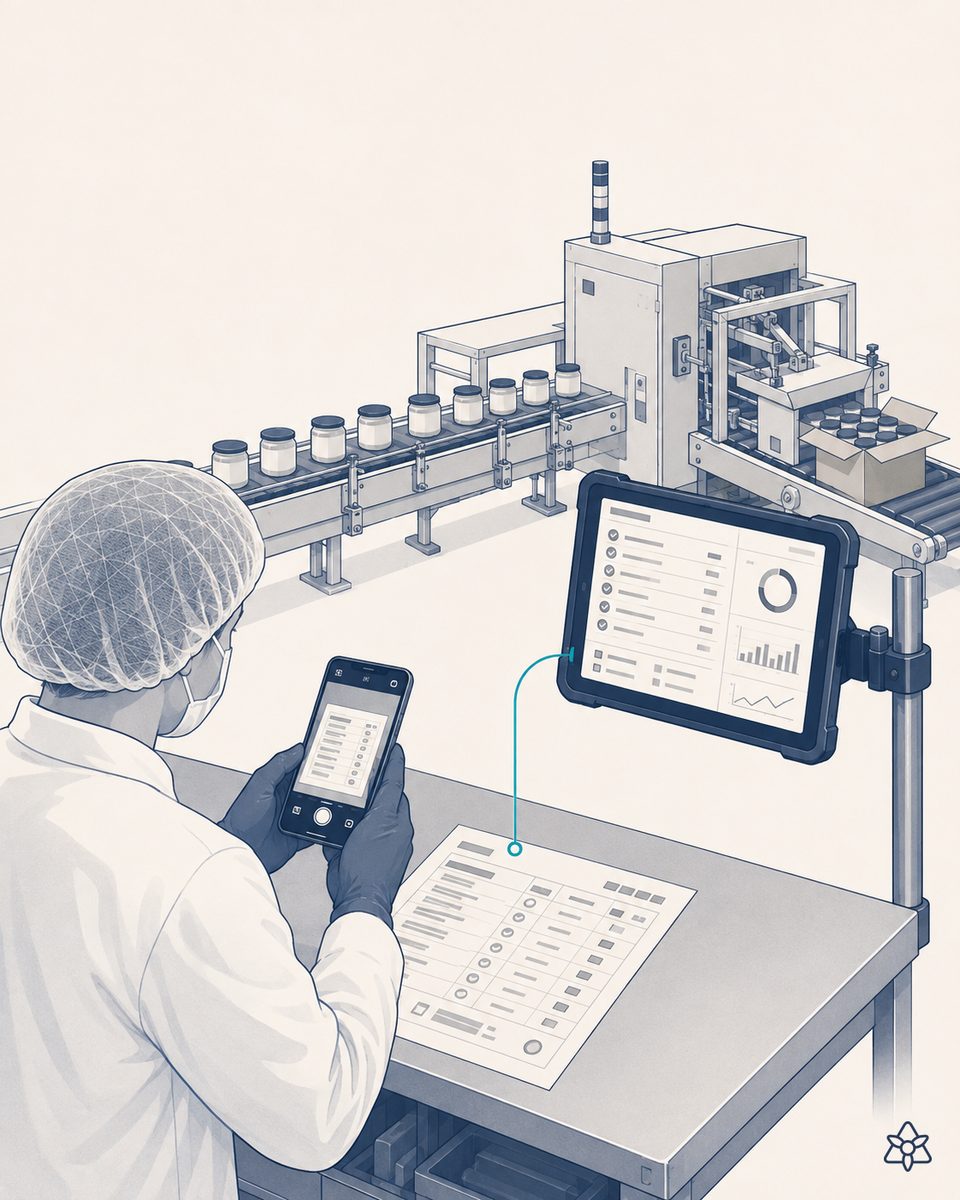
The inspecting vet gets a proper look at one animal in ten. Vision looks at all ten.
Breed purity verification at the slaughterhouse is the last chance to reconcile what the herdbook says with what the animal shows, before the designation mark goes onto the carcass. The inspecting vet has the judgment and the experience, but not the time:
- The line rate — the slaughterhouse cadence does not allow a thorough look at the coat, hoof and profile of every animal. Inspection is done on a sample basis.
- The pedigree lives elsewhere — on the farm, on paper, in another system. The inspecting vet does not have it on screen as the carcass goes by.
- The knowledge takes a career to build — a veteran vet sees what a junior does not. The day they retire, it goes with them.
When the designation leaving the slaughterhouse does not match the animal's real purity, the error survives all the way to the seal on the cured ham two years later — and by then it is a nonconformity from the certification body or, worse, a recall. 99% of the time the vet gets it right. It is that 1% that weighs.
iLEAN does not replace the vet — it gives them a second look at every animal.
The problem with purity verification is not a lack of information: it is that the information (the animal's morphological traits, the herdbook, the ear tag, the farmer's logbook) lives on islands, and the line rate does not allow cross-referencing it on every animal. iLEAN acts as the putty that stitches that information together on the line, without asking you to change the slaughterhouse MES or the herdbook.
Vision reads the carcass on the line. Connect cross-references the pedigree and the ear tag. The agent proposes a purity and the reasons for it. The vet signs — never the other way round.
The iLEAN pieces applied to breed purity verification 100/75/50:
- iLEAN Vision (Edge + CNN) — an AI vision terminal on the carcass line. It reads coat, hoof, head profile and ham conformation on every animal, not on a sample. It runs locally: it does not depend on the network to record and propose.
- Connect — cross-references the visual data with the Iberian breed herdbook, with RIBER, with the animal's ear tag and with the farm record. It also captures the veteran vet's judgment when they dictate on a borderline case, and leaves it as in-house data for the ones that follow.
- Agent — proposes a purity (100/75/50) with a confidence level and the justifying traits. If there is a discrepancy between the pedigree and the morphology, it flags it. The carcass is only marked once the inspecting vet signs.
Sample-based verification vs. verification assisted with iLEAN Vision
| Aspect | Traditional verification | With iLEAN Vision (Edge + CNN + agent) |
|---|---|---|
| Coverage per carcass | Sampling (human capacity) | 100% of the animals |
| Cross-check with the pedigree | Separate, in another system | In the proposal, on the inspector's screen |
| Justifying traits | Mental judgment, no trace | Photo and extracted traits, anchored to the ear tag |
| The veteran's knowledge | In their head | Captured as model criteria |
| Discrepancy detection | A later audit or a complaint | On the line, before the carcass is marked |
| File for the certifier (ENAC) | Manual rebuild | Dossier per carcass with image and signature |
Impact estimate for your plant — to be validated with your numbers.
The block below is an estimate to be validated with the specific data of your slaughterhouse. We put it forward so the committee has an order of magnitude; we refine it during the diagnostic.
- Iberian slaughterhouse with two carcass lines, multiple designations (100/75/50), purity verification done today on a sample basis by the inspecting vet.
- Vision pilot on one line (terminal + camera over the carcass + integration with the MES and the herdbook). First value expected within a few weeks: 100% coverage with a reasoned proposal per carcass.
- Indicative payback between 4 and 9 months, depending on how often designation nonconformities come in from the certification body and on the cost of the inspecting-vet hours spent today rebuilding the file.
- Expected reduction in discrepancies between designation and morphology ≥ 30%; the rest translates into fewer recalls downstream and a better position with the Ministry of Agriculture.
And the inspecting vet's reasonable doubt
“What if the AI proposes the wrong purity and a junior signs it without thinking?” — hallucination is a problem of free generation, not of anchored tasks. In tasks where the AI merely reads traits and checks them against the pedigree, the best models brought error below 1.5% [1]. And even so, what is critical is never decided alone: the agent proposes with visible reasons and the vet signs. The system requires the inspector to see the coat, the hoof and the conformation behind the proposal — not to accept it blindly. The three safety rings exist precisely for this.
[1] OpenAI paper “Why Language Models Hallucinate”, 2025 — on the reliability of AI in anchored tasks.
What people ask about Iberian breed purity verification
What do 100, 75 and 50 purity mean in the Iberian sector under Royal Decree 4/2014?
Breed purity measures what percentage of a pig's genetics comes from the pure Iberian breed. 100% Iberian: both sire and dam of pure Iberian breed. 75% Iberian: pure Iberian dam, 50% crossbred sire (typically Duroc). 50% Iberian: a 50% cross with Duroc. The designation is decided by pedigree (the Iberian breed herdbook) and verified at the slaughterhouse against morphological criteria: coat, hair, head profile, hoof, ham conformation. Purity determines the color of the seal (black = 100% acorn-fed, red = crossbred acorn-fed).
Which morphological traits does iLEAN Vision read for the verification?
On the carcass on the line, or on the live animal in the yard, iLEAN Vision reads the morphological traits the vet looks at by eye: coat and hair (color, intensity, distribution), hoof (color and shape — the dark hoof is one of the markers), head profile, ham conformation. The CNN returns a purity proposal with a confidence level and the traits that justify it. The vet signs or corrects it. The AI does not replace the pedigree — it supports it with systematic observation and leaves the visual trace tied to the ear tag.
Why does verification at the slaughterhouse matter if the pedigree is already handled on the farm?
Because the pedigree is managed on the farm, on paper and in systems different from the slaughterhouse. Verification at the slaughterhouse is the chance to reconcile what the pedigree says with what the animal shows, before the carcass is labeled. If there is a discrepancy (the pedigree says 100%, the morphology says crossbred), the agent flags it and the decision is signed by the inspecting vet. That cross-check prevents wrong designations that survive all the way to the seal on the cured ham two years later.
Can AI replace the vet in purity verification?
No, and that is not the goal. iLEAN Vision assists; the vet signs. Purity verification involves professional judgment and the legal responsibility of the inspecting vet — the AI neither takes that on nor offers to. What it does do: extend the vet's eye to every animal (not only to the sample there is time to examine properly), leave the visual trace of the justifying trait anchored to the ear tag, and capture the veteran vet's knowledge as a permanent capability of the system. Assist and simplify, not replace.
How long does it take to start a Vision pilot on a slaughterhouse line?
The method is iLEAN's usual one — a few days of immersion with the slaughterhouse team, a first capability running within a few weeks (reading coat + hoof + cross-check with the ear tag and the pedigree), a complete pilot line on one of the carcass lines, and expansion to the rest carried out by the customer with their own trained people. The initial investment covers an Edge terminal + an in-line camera + integration with the slaughterhouse MES and the herdbook. Indicative payback in the range of a few months once you value the reduction in designation nonconformities and the inspecting-vet hours saved.
More cases in food
- PDO Jabugo cellar curing with AI — governing the curve without replacing the master.iLEAN Edge governs the temperature and humidity curve in a PDO Jabugo cellar, by vintage and hall —…
- PDO Los Pedroches bellota 100% — the premium category is defended pig by pig, not batch by batch.How iLEAN Tracer builds bellota 100% traceability pig by pig for PDO Los Pedroches: holm-oak grove,…
- Mite detection in ham drying rooms with AI — sweep the chamber before release to market.iLEAN Vision detects ham mites (Tyrophagus, Acarus) in the drying room before release to market, round…
- Cured Iberian lomo, curing and weight loss with AI — every extra point of weight loss is expensive lomo going out as thin air.How iLEAN Edge governs pH, water activity and weight loss in cured Iberian lomo by cellar, batch and…
- Montanera weighing — the number that decides whether an animal qualifies as acorn-fed, tied to the ear tag at second zero.iLEAN Connect captures Iberian pig montanera entry/exit weighing, calculates acorn weight gain and ties…
- Iberian salchichón lactic fermentation with AI — the pH curve is decided in the first few hours.How iLEAN Edge governs pH, water activity and temperature during the lactic fermentation of cured…
Tell us your case and in 48h we'll send you the estimated ROI of this AI project for your Iberian purity verification.
We work on your slaughterhouse's real data, not ours. Diagnostic with no commitment.
Request estimated ROI in 48h See Iberian