PDO Los Pedroches bellota 100% — the premium category is defended pig by pig, not batch by batch.
PDO Los Pedroches in its bellota 100% category requires you to prove that every single animal ate nothing but acorns and grass, in the right holm-oak grove, during the montanera, with the characteristic weight curve. Today that chain is assembled by hand when the Regulatory Council arrives. iLEAN Tracer (Connect + Agents + Edge) captures every link at source, assesses every pig against the specification continuously and keeps the per-animal dossier permanently ready. The person signs.
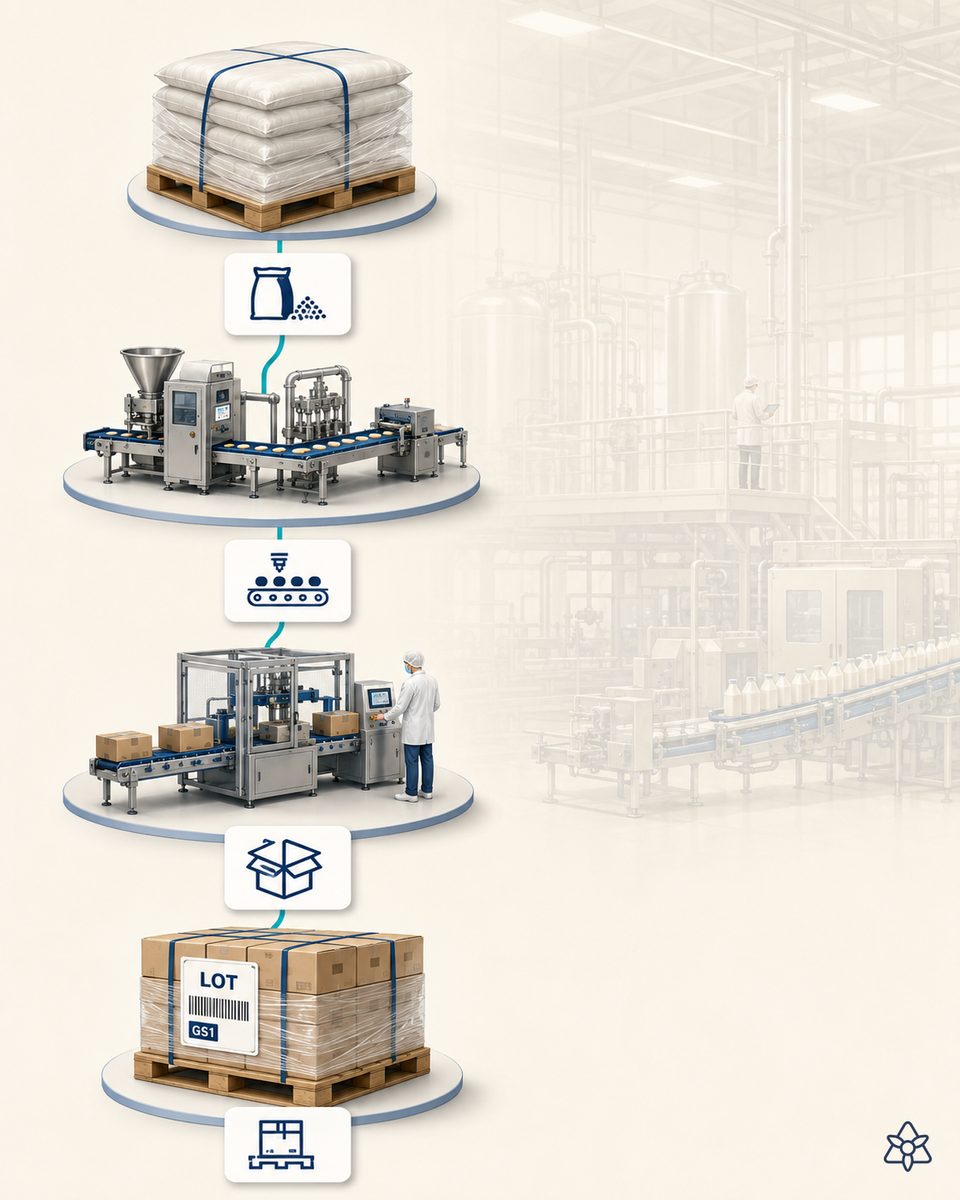
Bellota 100% is proven pig by pig — and the chain lives in fragments across four systems.
The premium Iberian category is not signed off per aggregated batch: it is signed off per animal. PDO Los Pedroches demands to know, without ambiguity, for every pig:
- The grove of origin inside the PDO area — the assigned estate, the census during the montanera.
- The stocking density — animals per hectare of holm-oak grove, within the specification.
- The montanera weight curve — an acorn-fed pig puts on a characteristic profile, different from a cebo pig. Weigh-in and weigh-out.
- The chip linked to the animal at slaughter and at sealing.
Every piece of data lives on its own island: the census in the Council's database and on the stockman's tally sheets, the scale with its 1990s display, the drying room SCADA, the ERP that holds the seal. When somebody has to prove that animal X met bellota 100%, the chain gets assembled by hand. And that is exactly where the expensive mistake slips in: a piece sealed as bellota 100% when the animal only qualified as cebo de campo. The Regulatory Council finds it on the next visit, and the plant loses trust — a far higher cost than the premium on that one piece.
iLEAN Tracer does not change your scale or your SCADA — it seals the crack between them and the PDO specification.
The bellota 100% traceability problem is not a lack of information: every link generates data. The problem is that the data lives in islands and only gets cross-referenced by hand, too late. iLEAN Tracer acts as the putty that fills the gaps, without asking you to change the scale, the chip or the SCADA.
Connect captures every link at source. Edge reads the chip and the seal. The agents assess every pig against the PDO specification continuously. The person signs — never the other way round.
The iLEAN pieces applied to PDO Los Pedroches bellota 100%:
- Connect — captures the grove census, the stocking density (animals per hectare), the chip reading from the stockman, the weigh-in/weigh-out from the scale (even if it is an old display, via a photo of the panel), the curve from the drying room SCADA and the seal from the ERP. It also captures what comes from outside: an email from the Regulatory Council with a change to the specification, a message from the stockman about the real density on an estate.
- Edge — a terminal with vision and RFID reading at the farm scale, at slaughter and at the sealing station. It reads the animal's chip and links weight, photo and PDO reference. With no network, it keeps reading — the farm has no WiFi, and it should not need any.
- Agents — compare every pig against the PDO Los Pedroches bellota 100% specification. Weight curve, stocking density, grove of origin. If an animal does not qualify, the piece leaves the bellota flow for cebo de campo or cebo, with the dossier adjusted. If the whole chain adds up, the bellota 100% per-animal dossier is signed and ready for the Regulatory Council.
Traceability rebuilt per batch vs. bellota 100% evidence per animal
| Aspect | Classic PDO compliance | With iLEAN Tracer |
|---|---|---|
| Unit of evidence | Aggregated batch, with interpolation | Individual animal, chip + curve |
| Verifying bellota 100% | On paper, at the end of the cycle | Weight curve vs. specification, continuously |
| Stocking density per estate | Declared, never cross-checked against the census | Cross-checked against the census at second zero |
| Misgraded piece | The Council finds it — brand damage | The agent raises it before sealing |
| Quality team hours per audit | Weeks | Hours |
| Operating with no network on the farm | n/a | Edge keeps reading the chip |
Impact estimate for your plant — to be validated with your numbers.
The block below is an estimate to be validated with the specific data of your plant. We put it forward so the committee has an order of magnitude; we refine it during the diagnostic.
- A PDO Los Pedroches plant with its own or contracted holm-oak groves, a drying room and a cellar, x bellota 100% head/year, with a substantial premium over cebo.
- Tracer pilot with Connect on the farm (chip + scale + census) and in the plant (SCADA + ERP) + Edge at slaughter and at sealing + agents that compare every pig against the specification. First value within a few weeks.
- Expected reduction in quality-team hours per audit above 30% against the baseline. Plus a lower risk of a misgraded piece (something that is cebo over-graded as bellota) — the key lever over the medium term.
- Indicative payback between 4 and 9 months, depending on bellota 100% volume per year and the time currently spent on compliance.
- Extra lever: the system leaves the chain ready for FDA / GACC / premium retailer with no manual rework — the dossier is the same base data, recontextualized.
And the CAIO's reasonable doubt
“What if the AI invents a weight curve that is not there?” — hallucination is a problem of free generation, not of anchored tasks. Here the AI only recontextualizes real data (the scale reading, the animal's chip, the measured weight curve) into the format of the PDO specification. In tasks anchored to the source, the best models brought error below 1.5% [1]. And even so, what is critical is never decided alone: the agent prepares the case, the quality team signs. The three safety rings exist precisely for this.
[1] OpenAI paper “Why Language Models Hallucinate”, 2025 — on the reliability of AI in anchored tasks.
What people ask about PDO Los Pedroches bellota 100% with AI
What does PDO Los Pedroches require regarding the bellota 100% regime and the geography of the holm-oak grove?
PDO Los Pedroches protects hams, shoulders and cured sausages from Iberian pigs raised on the holm-oak and cork-oak dehesa of the Los Pedroches Valley (northern Córdoba), cured inside the PDO area. Its premium category requires bellota 100%: animals that during the montanera eat exclusively acorns and grass, in groves inside the protected area, at the stocking density set out in the specification. Every pig has to be linkable to its specific grove and to the characteristic weight curve of the montanera. The chain is documented per animal, not per batch.
How do you prove that a pig met bellota 100% and was not topped up with feed?
By cross-referencing four sources that today are almost never in the same place: (1) the grove census (head of livestock assigned to an estate inside the PDO area); (2) the weighing curve (an acorn-fed pig puts on a characteristic weight profile, different from a cebo pig); (3) the stocking density of the estate (animals per hectare of grove); (4) the chip linked to the animal at slaughter. iLEAN Tracer captures all four at source and cross-references them against the PDO specification, animal by animal. If a pig's weight does not match the curve expected for bellota, or if the stocking density exceeds the specification, the agent raises the flag before sealing.
What happens when a piece does not reach bellota 100% and drops to cebo de campo?
Today that piece can end up sealed as bellota 100% if the documentation is assembled out of sync and nobody cross-references the weight curve with the grove census. That is the scenario the Regulatory Council goes after, and where the PDO's credibility is most at stake. With iLEAN Tracer the logic changes: every pig is assessed against the specification continuously. If it does not meet bellota 100%, the piece leaves the bellota flow and goes to the category it does meet (cebo de campo, cebo), with the evidence dossier adjusted. The plant does not lose the piece — it loses the premium of the higher category, which is the correct outcome.
How do RFID chips, existing scales and the drying room SCADA fit in?
iLEAN does not force you to change the chip, the scale or the SCADA. Connect captures the data wherever it lives: the farm scale with its 1990s display, the chip read by the stockman's RFID reader, the curve from the drying room SCADA, the ERP that holds the seal. If the scale is display-only, Connect reads it by photographing the panel (the gradation from the iLEAN playbook: manual, intermediate, integrated). The system adapts to the plant — not the other way round. It works with no network in the plant: Edge keeps reading even if the WiFi drops.
How much does it cost and when do you see the first saving?
The typical pilot covers Connect (grove census + scale + chip + SCADA + ERP) + a couple of Edge devices (chip and seal) + agents that cross-reference the PDO Los Pedroches specification. First value shows up within a few weeks: a pilot batch comes out with an automatic bellota 100% file per animal. Indicative payback between 4 and 9 months, depending on PDO volume per year and the bellota 100% premium over cebo. The hard lever: one piece correctly graded in its real category (with nothing that is cebo over-graded as bellota) protects the PDO in the long run and avoids the worst cost of all — losing the Council's trust. Estimate to be validated with your numbers.
More cases in food
- PDO Dehesa de Extremadura — bellota-cebo traceability per piece, not per aggregated batch.How iLEAN Tracer builds bellota-cebo traceability and an auditable per-piece dossier for PDO Dehesa de…
- PDO Guijuelo — audit day arrives with the dossier already done, not with the plant queuing up to build it.How iLEAN Tracer (Connect + Agents + Edge) builds continuous PDO Guijuelo auditing: bellota, salting,…
- PDO Jabugo cellar curing with AI — governing the curve without replacing the master.iLEAN Edge governs the temperature and humidity curve in a PDO Jabugo cellar, by vintage and hall —…
- Mite detection in ham drying rooms with AI — sweep the chamber before release to market.iLEAN Vision detects ham mites (Tyrophagus, Acarus) in the drying room before release to market, round…
- Iberian breed purity verification 100/75/50 — the vet's eye, extended to every animal.iLEAN Vision reads hoof, coat and morphology at the slaughterhouse and supports Iberian breed purity…
- Cured Iberian lomo, curing and weight loss with AI — every extra point of weight loss is expensive lomo going out as thin air.How iLEAN Edge governs pH, water activity and weight loss in cured Iberian lomo by cellar, batch and…
Tell us your case and in 48h we'll send you the estimated ROI of this AI project for your PDO Los Pedroches compliance.
We work on your plant's real data, not ours. Diagnostic with no commitment.
Request estimated ROI in 48h See Iberian