Near misses with AI — the warning the plant gives itself, captured before the hit.
The near miss is the warning the plant gives itself — and the one that gets documented worst. iLEAN Edge sees the near miss with computer vision, Connect captures it by voice from the operator's headset and the agent classifies it against the ISO 45001 taxonomy before the next shift repeats it. A person signs the corrective action.
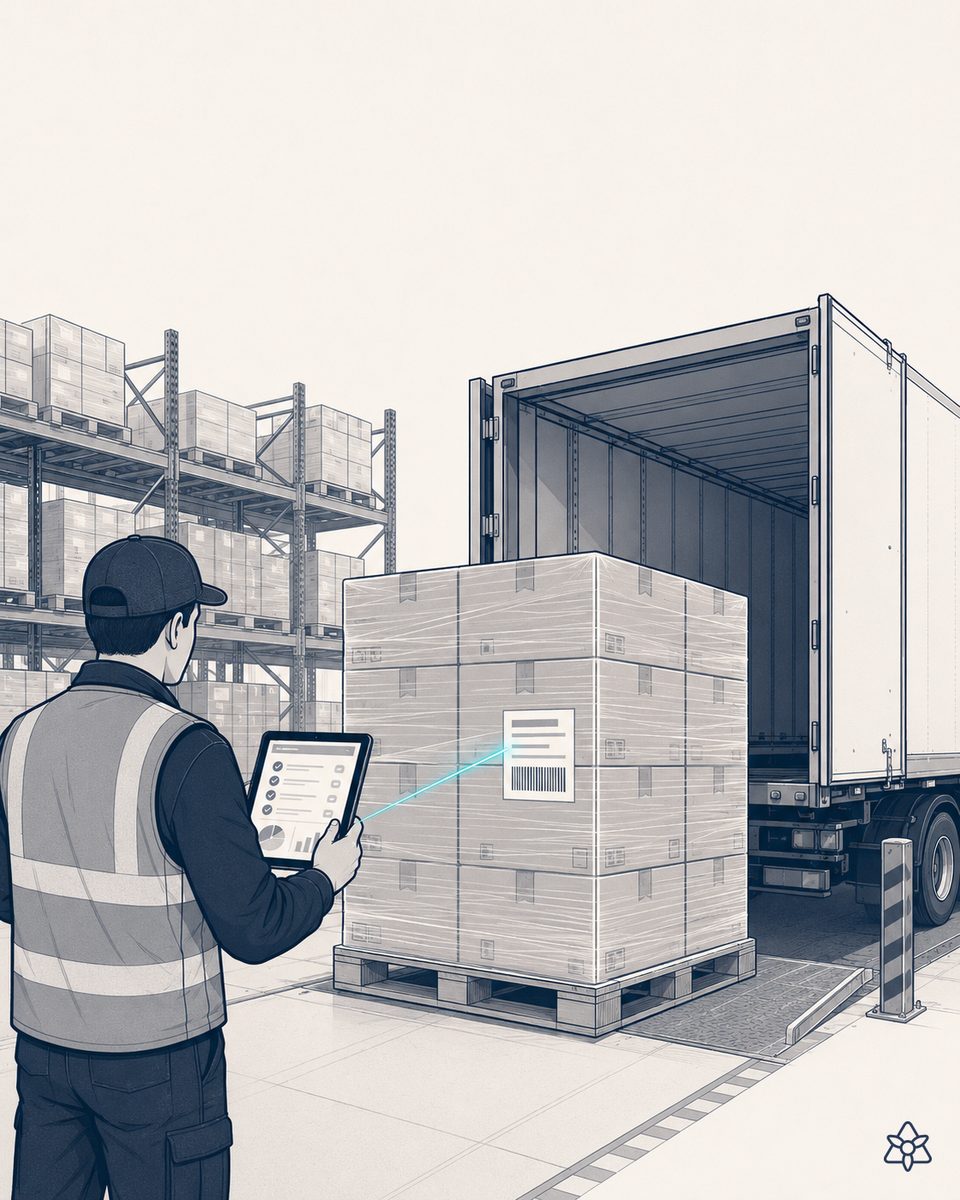
The near miss nobody reported is next quarter's accident.
Heinrich's pyramid has been in every safety manual for decades: for every serious injury there are dozens of minor injuries and hundreds of near misses. What the manual does not say is that in most plants near misses are neither captured nor counted:
- Reporting costs time. Filling in a form after the shift, on a screen you can only reach from the office, never fits into the operator's routine.
- Fear that the report will backfire. "If I say I almost caught my hand, won't they open a file on me?" Result: silence.
- The evidence is lost. Three hours after the event, nobody remembers which forklift went past, at what time, or whether the light curtain was bypassed.
The safety manager knows it — and still the only data available is the accident that did happen. The classical system (form + suggestion box + monthly meeting) captures maybe 5% of the real near misses. That invisible 95% is precisely the pyramid warning about the next hit.
iLEAN drops the cost of reporting to zero — and brings the cost of silence into the open.
The classical OHS management system fails because it loads everything onto the operator and the line supervisor. iLEAN does not add a fourth form: it acts as the filler that seals the gap between what happens on the line and what reaches the safety committee. It captures the event when it happens, through the most natural channel available.
Edge sees the forklift that passed too close. Connect hears the operator say "the guard has opened again". The agent classifies and proposes. The person signs the corrective action.
The three iLEAN pieces applied to the near miss:
- Edge — a terminal with computer vision (CNN) over critical zones: forklift aisles, panels with residual energy, presses, robots. It classifies events as near misses (minimum distance breached, light-curtain bypass, entry into a zone with live equipment) and records the sequence. It works with no network: if the plant loses WiFi, it keeps capturing on cabinet power.
- Connect — the operator carries a phone or a full-duplex headset on the line. They report by voice at second zero: "lockout step 4, the padlock has moved". Voice transcribed, audio stored, photo optional. It also captures what arrives from outside: the forklift supplier's notice, the shift leader's message, the insurer's email.
- Agent — cross-checks the event against the ISO 45001 / OSHA taxonomy, classifies it by hazard type, potential severity and likelihood of recurrence, and proposes a prioritized corrective action. It assembles the live audit dossier without anyone filling in a spreadsheet after the fact. The committee validates and signs.
Manual near miss capture vs. captured with iLEAN
| Aspect | Form + box + monthly meeting | With iLEAN Edge + Connect + Agent |
|---|---|---|
| Moment of capture | Hours later, if the operator remembers | At second zero — voice, photo, video of the sequence |
| Actual reporting rate | ~5% of real near misses (plant estimate) | Jumps an order of magnitude as the cost of reporting falls |
| Evidence | The operator's memory, a handwritten note | Audio + Edge imagery + the full time window |
| ISO 45001 classification | The safety manager, on Friday | The agent proposes, the manager validates |
| Corrective action | Reaches the next committee, two weeks later | Automatic prioritized proposal, signed within hours |
| Audit dossier | Rebuilt by hand before the visit | Live, exportable in one click, with traceable evidence |
Impact estimate for your plant — to be validated with your numbers.
The block below is an estimate to be validated with the actual data of your plant. We put it forward so the committee has an order of magnitude; we refine it during the diagnostic.
- Plant with 100–250 operators, 3–5 critical zones (forklifts, presses, panels with residual energy), monthly OHS committee.
- Edge pilot in one critical zone + Connect across the shift team. First value expected in a few weeks: reporting rate up by at least an order of magnitude and a live dossier ready for audit.
- Indicative payback between 4 and 9 months, depending on historical incident frequency and the average cost of sick leave, penalty or line stop.
- The hard lever is a single serious accident avoided: days of sick leave, compensation, sanction proceedings, line stoppage, reputational damage. One event pays for the whole system.
And the safety manager's fair objection
"Isn't this about watching the operator?" — no. The Edge cameras look at the critical zone, not at faces: what they see is the forklift trajectory and the state of the guard, not who is driving. The system reports "near miss in aisle 3 at 14:32", not "so-and-so made a mistake". This is process verification, not people: fight the problem, not the person — and hallucination is a problem of free-form generation, not of anchored tasks such as classifying an event against a taxonomy: on anchored tasks the best models brought the error rate below 1.5% [1].
[1] OpenAI paper "Why Language Models Hallucinate", 2025 — on the reliability of AI in anchored tasks.
What people ask about near miss capture with AI
What is a near miss and why is it so under-reported?
A near miss is the event that stopped short of an injury, material damage or a line stop — but that under slightly different conditions would have caused one. It is the warning the plant gives itself. It goes unreported because it means filling in a form after the shift, because the operator fears it will be «held against them», and because the classical system does not capture the event when it happens, but whenever someone finds a spare minute. Heinrich's pyramid is clear: for every serious accident there are dozens of near misses first. Whoever learns from the near miss does not need to learn from the accident.
How does iLEAN detect a near miss on the line?
iLEAN Edge is a terminal with computer vision (CNN) over the critical zone — a forklift passing too close to an operator, a light-curtain bypass, a hand entering the actuator zone with the equipment still energized. Edge classifies the event as a near miss, records the sequence and raises an alert instantly. It works with no network: if the plant loses WiFi, it keeps capturing. The operator can also report by voice from the Connect headset: «lockout step 4, the padlock has moved» — and it is logged with audio, photo and timestamp.
How does iLEAN keep the near miss from being used against the operator?
The system is designed to fight the problem, not the person. The report reaches the OHS management system as data that is anonymous at its root (what happened, where, when, under which conditions), not as «who messed up». The safety manager sees the pattern — five near misses at the same aisle corner in two weeks — before any name. And the corrective action is signed off with the safety committee. That breaks the defensive silence and multiplies the number of reports.
What classification is applied to the near miss?
The agent cross-checks the event against the internal taxonomy (ISO 45001, OSHA 300, or whichever the plant uses), tags it by hazard type (entrapment, fall, impact, residual energy), potential severity and likelihood of recurrence. It drafts a prioritized corrective action — the manager validates it or edits it. The result: a live dossier ready for audit, not a spreadsheet someone fills in on Friday.
How long does it take to set up a near miss capture pilot?
First value arrives in a few weeks: one critical zone with Edge and the Connect mobile terminals handed out to the team. We ask for your plant's data and send back the estimated ROI within 48h — because the real hard cost is the accident that does happen six months from now if nobody captured the 50 near misses before it. A single serious injury avoided pays for the whole system.
More cases in lean manufacturing
- MSA with AI — the study that ages in a drawer comes back to life.iLEAN assists MSA (R&R, bias, linearity, stability): Connect captures the real measurement and Agents…
- Muda, mura and muri detection with AI — the 3M before they cost money, not after.The 3M (waste, variability, overload) stay invisible until they explode. iLEAN detects them continuously…
- Incident capture — the one that dies in a chat message is the one that happens again.iLEAN turns voice, photo, email and chat into a categorized incident and a prioritized action in MES,…
- Real-time OEE: availability × performance × qualityiLEAN measures OEE in real time: availability × performance × quality, by line, shift, product. The king…
- On-the-job training (OJT) with AI — the veteran teaches once, the plant learns forever.iLEAN turns the veteran's teaching into permanent capability: Connect captures the OJT session, Edge…
- One piece flow in electronics with AI — the single-piece flow your SMT line never managed to sustain.How iLEAN sustains one piece flow in high-mix SMT/PCB plants: Edge catches micro-stops, agents resync…
Tell us about your case and within 48h we'll send you the estimated ROI of this AI project for your plant.
We work on your plant's real data, not ours. Diagnostic with no commitment.
Request 48h ROI estimate See all Lean methods