Hot-rolled bar for oil & gas pipe with AI — the tear shows on the bar, not in the well.
The hot-rolled bar that feeds a seamless pipe plant carries cracks, laps, tears and adhered scale that only become critical at the finished pipe's hydrostatic test — when the part has already paid for the furnace, the piercing and the mandrel rolling. iLEAN Vision reads the bar at the rolling mill's exit and sets it aside before the cut. The person signs off.
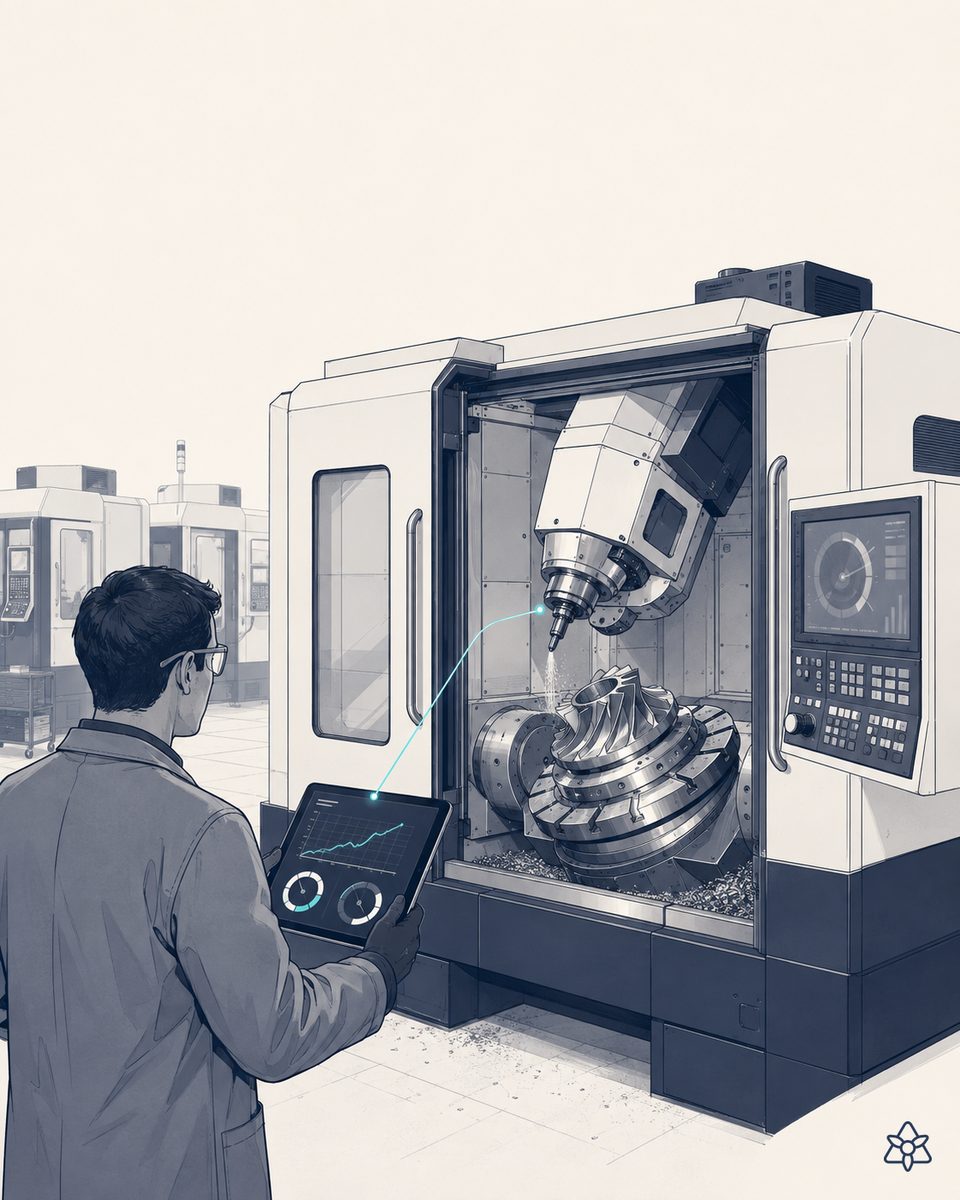
The defect that weighs the most is the one detected at the hydrostatic test.
The bar entering a rotary piercing mill for seamless pipe has already paid for the reheating furnace and the rolling mill by the time it reaches the saw. Any longitudinal crack, any billet lap dragged along by the mill, any bite tear — all of that becomes critical much later, at the finished pipe's hydrostatic test, when the part has already added piercing, mandrel rolling and sizing.
- The cost multiplies with every downstream process. A crack set aside on the bar is one metre of steel; the same crack discovered at the hydrostatic test is the whole pipe, the furnace and the labour.
- Human inspection cannot resolve a half-millimetre defect on a bar at 900 °C advancing along the cooling bed.
- The end customer is demanding. An oil & gas pipe that fails in the well costs orders of magnitude above the scrap; responsibility for the lot is traceable.
The sector is used to very hard quality standards — the order of 25 PPM in automotive [1] is a good comparable reference point. The classic system works 99% of the time. The 1% that falls at the hydrostatic test is the one whose cost is remembered.
iLEAN Vision seals the crack between the rolling mill and the piercing mill — it adds no system, it fills the gaps.
Surface control of the rolled bar is not missing because nobody knows how to do it: it is missing because until now it was expensive to install over every old mill, and because the rolling mill's data and the piercing mill's spoke different languages. iLEAN acts as the filler that closes that gap without asking you to change the mill or the MES.
Edge sees the bar while hot, before the cut. Connect reads the heat certificate and the rolling mill's parameters. The agent cross-checks defect, heat and production order — if the section is critical, it sets it aside. The person signs off.
The three iLEAN pieces applied to rolled-bar inspection for oil & gas pipe:
- Edge — a terminal with machine vision (CNN) over the cooling bed or upstream of the saw. Cameras filtered for red-hot steel, reinforced lighting and a neural network trained for cracks, laps, tears and scale. It triggers the refractory marker or the ejector in milliseconds. It works with no network: as long as the cabinet has power, the cycle continues.
- Connect — captures the heat certificate, the mill's parameters and the production order whether they come from a modern PLC, from the mill's old local computer or from the shift leader's spreadsheet. The information arrives at second zero, with no forwarding.
- Agent — cross-checks the detected defect, the bar's certificate and the destination (API 5CT/5L grade, intermediate sizing or standard pipe). If the defect is critical for that destination, it sets the section aside and alerts the quality manager. The person validates and signs; the saw never restarts on its own.
Sampling + hydrostatic inspection vs. bar inspection with iLEAN Vision
| Aspect | Sampling + control at the hydrostatic test | With iLEAN Vision + Connect + Agent |
|---|---|---|
| Detection point | Finished pipe, after piercing and mandrel rolling | Bar at the mill's exit, before the saw |
| Cost of the discovered scrap | Complete pipe + furnace cycle + piercing | Bar section (an order of magnitude below) |
| Coverage | Statistical sampling + the inspector's eye | 100% of the bar leaving the mill |
| Defect → heat traceability | Manual reconstruction | Automatic cross-check with the heat certificate |
| Operation with no network | n/a | Edge keeps operating on cabinet power |
| File for API/customer | Weeks of reconstruction | Dossier per bar with the defect's photo |
Impact estimate for your plant — to be validated with your numbers.
The block below is an estimate to be validated with the specific figures of your plant. We set it out so the committee has an order of magnitude; we refine it during the diagnostic.
- Plant with rolling mill + rotary piercing mill + mandrel/sizing line + hydrostatic test.
- Edge pilot over the cooling bed upstream of the saw (thermal cameras + lighting + actuator + integration with the heat certificate). First expected value within a few weeks.
- Reduction in scrap discovered at the hydrostatic test: ≥ 30% as a defensible floor, by moving the detection point towards the bar.
- Indicative payback between 4 and 9 months, depending on the documented frequency of hydrostatic rejections and the average cost of the finished pipe in your mix.
- The hard lever is the cost accumulated at the end of the process: a part set aside on the bar costs orders of magnitude less than the same part set aside at the hydrostatic test.
And the quality manager's reasonable doubt
"What if the AI marks as a defect something that is not, and sets aside a good bar?" — hallucination is a problem of free generation, not of anchored tasks. In image classification against a learned pattern (crack yes/no, lap yes/no), the best models brought the error below 1.5% [2]. And even so, what is critical is never decided alone: iLEAN sets aside the section and the person signs off. The three safety rings are there for exactly this.
[1] Automotive quality standard in the order of 25 PPM (Symestic).
[2] OpenAI paper "Why Language Models Hallucinate", 2025 — on the reliability of AI in anchored tasks.
What people ask about rolled-bar inspection for oil & gas pipe
What typical defects appear in hot-rolled bar for oil & gas pipe?
In the bar that feeds the rotary piercing mill for seamless pipe, the typical ones are: longitudinal and transverse cracks from rolling stresses, laps from the original billet, surface tears from mill bite, adhered scale in patches and crust overlaps. Almost all become critical at the finished pipe's hydrostatic test — where scrapping a part costs far more than detecting it on the bar.
Why inspect on the bar rather than wait for the finished pipe?
Rotary piercing is one of the processes that adds the most cost per kilo: once the bar enters the piercing mill, the part has already paid for the furnace, piercing, mandrel rolling and sizing before reaching the hydrostatic test. A defect detected on the bar is one metre of steel scrap; the same defect discovered after the hydrostatic test is the whole pipe's scrap plus the full furnace cycle. iLEAN Vision reads the bar at the rolling mill's exit, before the cutting saw, and marks or sets aside the compromised sections.
How does iLEAN Vision read a bar while it is hot?
iLEAN Edge combines cameras adapted to the thermal spectrum (filtering the red of steel above 800 °C is not expensive with the right filters) with a neural network trained for the typical hot-rolled bar defects: cracks, laps, tears, scale. The detection incorporates the bar's temperature and speed as context. When a critical defect appears, it triggers a refractory-paint marker or the ejector on the cooling bed. The operator sees the defect's image on screen and decides whether the whole bar is set aside or only the affected section.
Does it work with old mills that have no integration with the rolling line?
Yes. That is exactly the situation where iLEAN contributes the most. Connect captures the rolling mill's parameters whether they come from a modern PLC, from an old isolated local computer, or from the shift leader's head as they note them in a spreadsheet at every batch change. And Edge works with no network: as long as the cabinet has power, the inspection continues, even if the mill and the ERP do not talk. Full integration does not require scrapping the old machine.
What payback is reasonable to expect in a seamless pipe plant?
In a plant piercing bar for oil & gas pipe, the cost of a failure at the hydrostatic test is very high: the part has already paid for the furnace, the piercing and the mandrel rolling. The order of magnitude of an Edge pilot on the rolling mill covers heat-adapted cameras, reinforced lighting, terminals and the integration with the saw. The reasonable payback to present to the committee sits between several months and a year, and the hard lever is the cost of a single part set aside on the bar versus discovering it at the hydrostatic test. Send us your plant's data and we will send back the estimated ROI within 48h.
More cases in ilean vision
- Float glass for automotive with AI — the inclusion shows on the table, not in the furnace.iLEAN Vision detects inclusions, bubbles and scratches in float glass before tempering for automotive…
- Galvanized sheet for white goods with AI — the defect shows on the coil, not on the washing machine.iLEAN Vision reads the galvanized coil before cutting and holds the part when scratches, pores or stains…
- High-throughput GS1-128 in meat with AI — over 200 cases per minute without the belt stopping to read.iLEAN Vision reads GS1-128 labels at over 200 cases per minute in the dispatch area of a meat cutting…
- Injecting aluminum over the wrong die, or over a cavity outside the thermal window — and finding out at ejection.iLEAN Vision confirms the correct die and its visual thermal state before injecting aluminum in…
- A person inside the laser cell — and the perimeter scanner arrives just in time.iLEAN Vision detects human presence inside a robotic laser welding cell and stops the equipment. An…
- Leaflet verification in pharma cartons with AI — a carton without a leaflet is not an incident, it is a GMP deviation.iLEAN Vision detects a pharma carton without its leaflet before sealing to avoid GMP incidents on the…
Tell us your case and within 48h we will send you the estimated ROI of this AI project for your seamless pipe plant.
We work on your plant's real data, not on ours. Diagnostic with no commitment.
Request estimated ROI in 48h See iLEAN Vision