Leaflet verification in pharma cartons with AI — a carton without a leaflet is not an incident, it is a GMP deviation.
In pharma cartoning, a leaflet-insertion failure passes the head unnoticed by the operator and reaches sealing. iLEAN Vision sees it before sealing: the CNN detects a carton without a leaflet, with a badly folded leaflet or a double insertion, ejects the NOK unit and compiles the unit's dossier for the Qualified Person. The operator signs the correction — the line never restarts on its own.
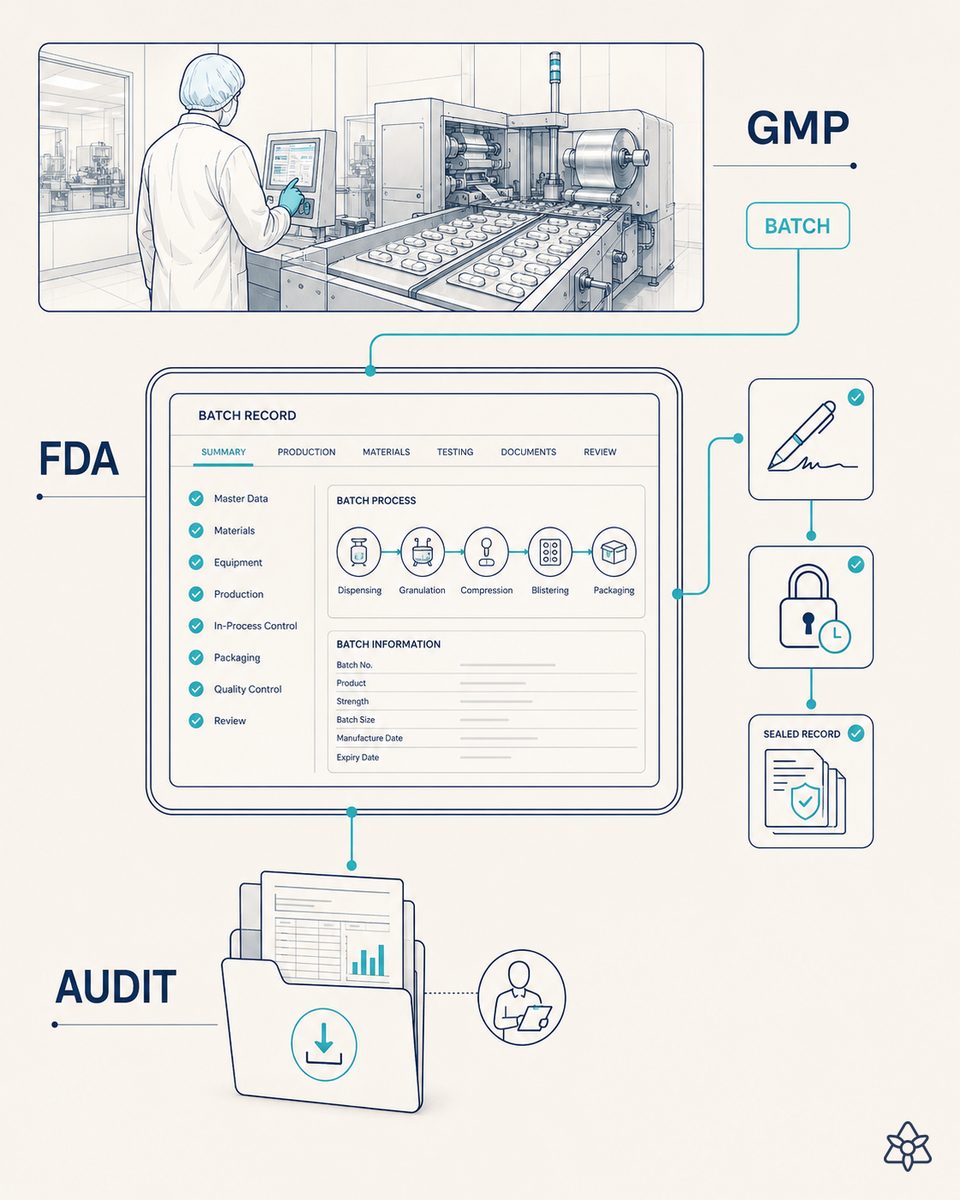
Three failure modes of the leaflet head that no classic sensor can see.
The leaflet-insertion head on a horizontal pharma cartoner is a reliable piece of equipment, but not infallible. When the SKU changes or the leaflet lot arrives with heterogeneous folding, the three classic failure modes are:
- Absent leaflet — the head grabbed at nothing. The head's presence sensor may have seen something (a fold's finger, a shadow) and passed the cycle as good.
- Badly folded leaflet — the leaflet sticks out of the carton through the closing flap. The subsequent sealing drags it, leaves half a flap outside, or cuts it.
- Double insertion — the head fed two leaflets stuck together by static. The checkweigher may not detect it if both leaflets belong to the same SKU. The carton closes, the lot moves on.
The Qualified Person knows this. They cover it with IPC sampling (in-process control) and the batch record. But IPC sampling is a still photo: if the head starts failing at 15:42 between two IPCs, the difference between detecting in time and finding out afterwards is hundreds or thousands of cartons. And a single carton without a leaflet reaching a pharmacy is a GMP deviation that drags the whole lot with it.
iLEAN does not add a fourth system — it verifies continuously what IPC can only see by sampling.
The leaflet problem in pharma is not a lack of procedure: it is that the information arrives late, at the IPC or in the batch record. iLEAN acts as the filler that closes the gap between the leaflet head and the sealing, without asking you to change the cartoner or the GxP system.
Edge sees every carton before sealing. Connect cross-checks with the pharma MES and the lot's recipe. The agent ejects, records and compiles the dossier for the Qualified Person. The operator signs off — the line never restarts on its own.
The three iLEAN pieces applied to leaflet verification in pharma cartoning:
- Edge — a terminal with an industrial camera and a CNN trained on real samples of your product. It detects absence, defective folding and double leaflet insertion in milliseconds, before sealing. It returns OK/NOK to the ejector by dry contact. Validatable as the line's inspection equipment (URS/DQ/IQ/OQ/PQ). It works with no network: if the plant loses its WiFi, Edge keeps verifying and ejecting.
- Connect — captures the active SKU and the lot's recipe from the pharma MES, and also what arrives from outside (the leaflet supplier's alert about a lot with heterogeneous folding, the quality manager's instruction about a leaflet version change). It brings it to the agent at second zero, without anyone forwarding anything.
- Agent — cross-checks the carton's image with the leaflet version expected for the active SKU. It compiles the dossier per rejected unit and the lot summary for the Qualified Person. If it detects a sustained pattern (five rejects in five minutes = a misadjusted head or leaflet static), it alerts the shift leader with a photo and the sequence. The operator signs the restart; the line never restarts on its own.
IPC + batch record vs. iLEAN Vision continuously.
| Aspect | Sampling IPC + batch record | With iLEAN Vision (Edge + Connect + Agent) |
|---|---|---|
| Absent leaflet | Detected at the next IPC | Detected and ejected in line |
| Badly folded leaflet | Sometimes undetected | Detected by the carton's silhouette |
| Double leaflet | Detected only if the checkweigher notices | Detected by visual analysis before sealing |
| Reaction | Later investigation, lot hold | Ejection before sealing in ms |
| SKU / leaflet version change | Manual change procedure + IPC | Cross-checked with the pharma MES; alert if it does not match |
| Dossier for the Qualified Person | Reconstructed by hand, post-lot | Evidence pack assembled in line |
| No network | n/a | Edge keeps verifying and ejecting locally |
Impact estimate for your plant — to be validated with your numbers.
The block below is an estimate to be validated with the specific figures of your plant. We set it out so the committee has an order of magnitude; we refine it during the diagnostic.
- Pharma plant with one or several horizontal cartoners, throughput between 200 and 400 cartons/min, multi-SKU with frequent leaflet version changes.
- Edge pilot on one line (industrial camera over the leaflet head's outfeed belt + ejector + integration with the pharma MES). Validation of the terminal as inspection equipment. First expected value within a few weeks.
- Expected reduction in cartons without a leaflet or with a defective one of ≥ 30% over the baseline, depending on the head's condition and the leaflet supplier's variability.
- Indicative payback between 4 and 9 months, depending on the frequency of GMP deviations documented in recent years and the average cost of a lot hold.
- The hard lever is a single avoided GMP deviation: lot hold, non-conformity report, possible market recall, a conversation with the medicines agency. A single one pays for it with plenty to spare.
And the validation manager's reasonable doubt
"What if the AI gets it wrong and lets a carton without a leaflet through?" — hallucination is a problem of free generation, not of anchored tasks. In tasks where the AI extracts a data point from an image and compares it with a reference (seeing the carton's content and comparing it with what is expected for the SKU), the best models brought the error below 1.5% [1]. And even so, what is critical is never decided alone: iLEAN ejects the doubtful carton and the operator signs the restart. The three safety rings are there for exactly this — aligned with the human-oversight logic of the European AI Act for high-risk AI.
[1] OpenAI paper "Why Language Models Hallucinate", 2025 — on the reliability of AI in anchored tasks.
What people ask about leaflet verification in pharma cartons with AI
What do GMP regulations require regarding the pharma carton's leaflet?
Directive 2001/83/EC (amended by 2004/27/EC) and GMP Annexes 1/13/15 require every carton of a human-use medicine to contain the appropriate leaflet, in the language of the country of sale, before being marketed. The lot's traceability must be able to reconstruct, in case of an incident, which cartons of the lot carried which leaflet print run and which had in-line incidents. A sealed carton without a leaflet that reaches a pharmacy is not a minor incident: it is a GMP deviation, a non-conformity report and, depending on the medicine, a market recall of the whole lot.
How does iLEAN Vision detect a carton without a leaflet before sealing?
iLEAN Vision installs an Edge terminal with an industrial camera over the cartoning line, just after the leaflet-insertion head and before the carton closes. The CNN is trained on real samples of your product to recognise: a carton with the leaflet correctly folded inside, a carton without a leaflet, a carton with a badly folded leaflet (sticking out through the flap), a carton with two leaflets (double feed at the head). The result is returned to the ejector by dry contact in milliseconds — the NOK carton leaves the flow before sealing, not after. The operator signs the rejection and it is recorded in the lot's dossier for the Qualified Person (QP).
Does it work at typical pharma throughput (250-400 cartons/min)?
Yes. The typical throughput of a horizontal pharma cartoner is between 250 and 400 cartons per minute — in the order of six cartons per second. iLEAN Vision runs the CNN on the Edge terminal on the line itself, with local millisecond latency and a dry-contact decision to the ejector. It introduces no delay into the flow: the camera looks, the CNN decides, the ejector acts, and the cartoner keeps its pace. The integration with the serialisation / aggregation system is via signed file drop between rings: nothing enters the GxP network that has not been validated and signed.
What dossier does iLEAN Vision generate per lot for the Qualified Person (QP)?
The agent compiles, per lot, a dossier ready for the QP: a photo of every carton rejected by the camera, the rejection reason (leaflet absent, badly folded, double), the position on the belt, the carton's serial number (where serialisation exists), the reference to the active leaflet lot and the signature of the operator who validated the correction. The QP does not have to reconstruct the lot by hand for the batch record review: the system hands them the evidence pack already assembled. The lot's file is not after-the-fact work — it is a by-product of the line running.
How does it integrate with the cartoner and the GxP system without breaking validation?
iLEAN Vision does not get into the cartoner's control loop — it lives alongside it. It reads the carton on the leaflet head's outfeed belt and returns OK/NOK by dry contact or OPC-UA to the line's PLC. The integration with the GxP system (pharma MES, serialiser) is via signed file drop between security rings: the data crosses to the validated system, without opening a door into the critical OT network. The Edge terminal is validated once, like any other inspection equipment on the line, with its URS, DQ, IQ, OQ and PQ. It works with no network: if the plant loses its WiFi, Edge keeps verifying and ejecting the NOK cartons from the main flow.
More cases in ilean vision
- Hot-rolled bar for oil & gas pipe with AI — the tear shows on the bar, not in the well.iLEAN Vision detects cracks, laps and tears in hot-rolled bar destined for seamless oil and gas pipe —…
- Injecting aluminum over the wrong die, or over a cavity outside the thermal window — and finding out at ejection.iLEAN Vision confirms the correct die and its visual thermal state before injecting aluminum in…
- A person inside the laser cell — and the perimeter scanner arrives just in time.iLEAN Vision detects human presence inside a robotic laser welding cell and stops the equipment. An…
- Pallet lot counting — the error that travels to the truck comes back as a return and a claim.iLEAN Vision counts and identifies the lots on every outbound pallet and validates them against the…
- Manual malt bag loading at the brewery — the back injury gives no warning, it arrives in week four.iLEAN Vision detects badly executed malt bag lifts at the brewery silo and assists the operator at…
- Defects on melamine board — the scratch you see after the cut is a good part thrown away.iLEAN Vision detects scratches, pores and stains on melamine board before cutting and packing in a…
Tell us your case and within 48h we will send you the estimated ROI of this AI project for your pharma cartoning line.
We work on your plant's real data, not on ours. Diagnostic with no commitment.
Request estimated ROI in 48h See iLEAN Vision