The drying-house batch groups thousands of pieces that share no history — and one problem puts them all on hold.
A cured ham spends one to three years moving between cellars, aisles and air currents that change every shift. iLEAN Tracer assigns an ID to each piece from salting to labeling and rebuilds its complete biography — farm, salt, cellar, probe test, weight loss. If something shows up, you separate the pieces with the same history, not the whole drying house. The person signs.
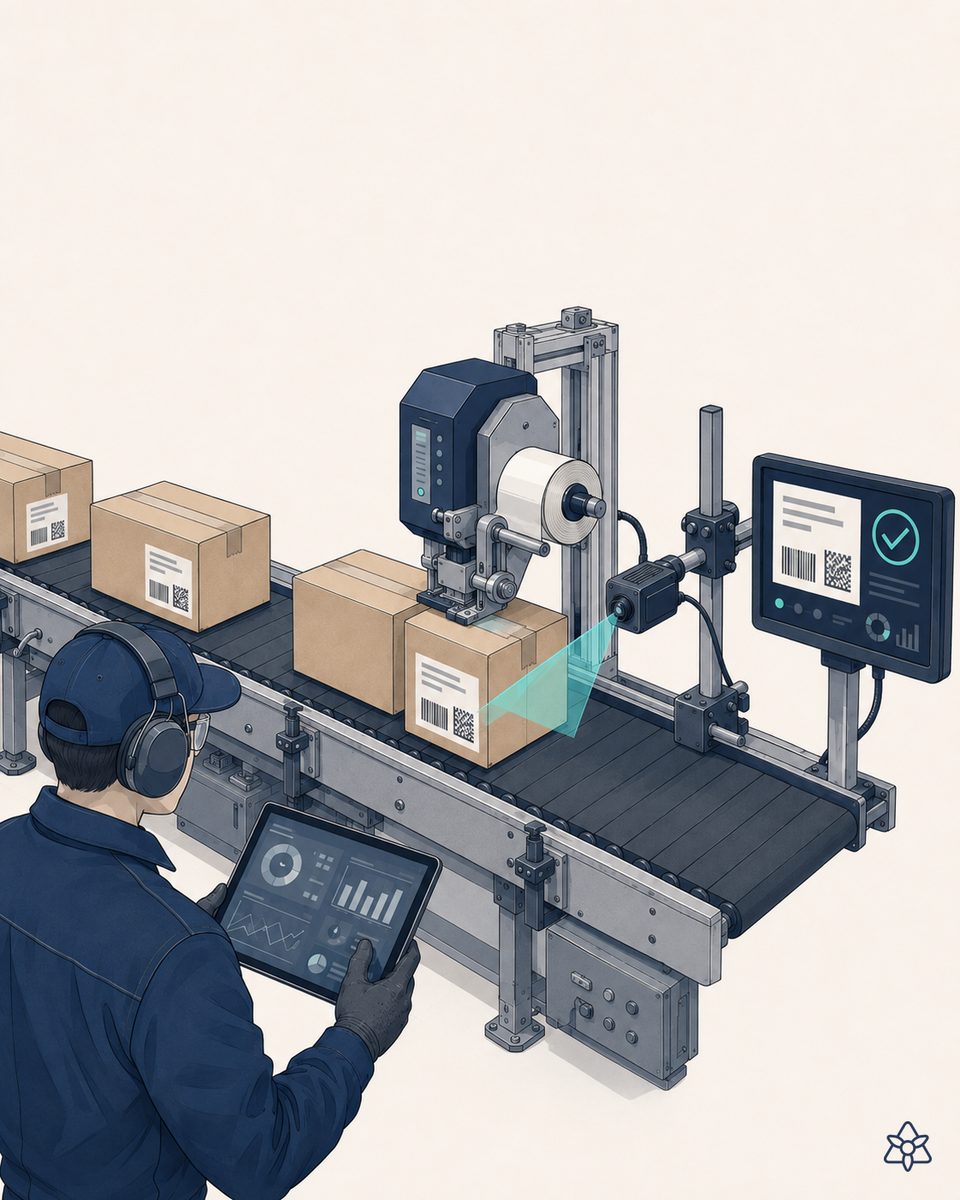
A ham is made over months but decided in seconds.
The classic drying house traces by drying-house batch: the cohort that entered that week, that month, that season. But that cohort mixes and splits dozens of times during curing: different aisles, different cellars, different air currents, transfers the master decides based on how the pieces are evolving. For any given piece, the batch says very little about what that piece lived through.
- Reactive: a problem appears — a probe test with an off flavor, a customer complaint, a sanitary alert in a cohort. The defensive option is to put the drying-house batch on hold. For 3,000 pieces, that means freezing significant market value while confirmatory analyses are run. If everything comes back clean, you have absorbed the financial cost.
- Proactive: the premium B2B customer (gourmet, fine dining, export to Southeast Asia) pays for the exact provenance — which farm, which breed, which cellar, when it was transferred, how many months of curing. Without piece-by-piece traceability, that premium collapses to the generic price.
- Audit: Regulatory Council, IFS, BRC, an Asian importer with its own protocols. The per-batch dossier passes on paper — the per-piece dossier opens channels.
The classic system (the master's notebook + the cellar spreadsheet + the ERP) works most of the time. The problem is the exception — and the exception costs thousands of pieces on hold or a premium lost.
iLEAN Tracer is the filler between the salting room, the cellar and the labeling room.
The drying house already has almost all the data — the problem is that each data point lives on an island: the ERP with the carcass of origin, the master's notebook with the transfers, the IoT sensor with the cellar curve, the spreadsheet with the probe test. iLEAN Tracer does not ask you to change anything. It sits on top and joins what already exists around each piece's ID.
Edge marks the piece at salting. Connect captures notebook, probe and probe test wherever they live. The agent assembles the biography per piece. The person signs — never the other way round.
The iLEAN pieces applied to piece-by-piece traceability in cured products:
- Edge in the salting room — a vision-equipped terminal that sees each freshly entered piece and triggers the physical marking (numbered seal, resistant tag, laser marking on the hoof as the case requires) synchronized with the ID assigned in the system. Without a network, the Edge keeps reading and marking — it syncs later.
- Connect in the cellar — the temperature/humidity probe of each cellar, the master ham curer's transfers, the washings, the brushings, the manual probe test (dictated by voice or photographed from the notebook) enter the system at second zero. Nothing is lost along the way, or for living in a notebook.
- File agent — cross-references the piece's ID with the carcass of origin, the salt batch, the curve of every cellar it passed through, the master's interventions and the sanitary results. When the question arrives — from the importer, from the Regulatory Council, from the B2B customer — the per-piece dossier is already built. If an incident emerges, the agent proposes the exact list of pieces with the same history, and the person validates and signs.
Drying-house batch vs. piece-by-piece traceability with iLEAN Tracer
| Aspect | Drying-house batch traceability | With iLEAN Tracer, piece by piece |
|---|---|---|
| Traceable unit | Entry cohort (thousands of pieces) | Each piece, ID from salting |
| Curing history | Cellar average, not individual | Cellar, transfers, probe test and weight loss per piece |
| Incident on one piece | Put the drying-house batch on hold as a precaution | Separate the pieces with that exact history |
| Dossier for Regulatory Council / IFS | Rebuilt by hand from several sources | Automatic per-piece file, ready to go |
| Premium B2B / export margin | Hard to justify — generic label | Farm, salt, cellars and weight loss — in full detail |
| Operation without network in the cellar | n/a | Edge keeps reading and recording locally |
Impact estimate for your plant — to be validated with your numbers.
The block below is an estimate to be validated with the specific data of your plant. We put it forward so the committee has an order of magnitude; we refine it during the diagnostic.
- Mid-sized drying house, 2-3 cellars, tens of thousands of pieces curing at once. Marking in the salting room + an Edge reader in the probe-test and transfer zone as a pilot.
- First value expected within a few weeks: a per-piece dossier working for the marked cohort, demonstrable to an audit and to a demanding importer.
- Indicative payback between 4 and 9 months, depending on the average historical cost of holds triggered by analyses and on the weight of the premium B2B/export channel in your mix.
- Hard levers: pieces not put on hold unnecessarily ≥ 30% of past cases; premium B2B margin ≥ 30% over pieces that today sell as generic; hours saved rebuilding the file by hand.
And the drying-house director's reasonable doubt
“What if the AI puts the wrong piece in a file?” — hallucination is a problem of free generation, not of anchored tasks. In tasks where the AI merely recontextualizes a piece of data (reading the piece's ID and cross-referencing it with its cellar biography), the best models brought error below 1.5% [1]. And even so, what is critical is never decided alone: the agent proposes, the person signs. The three safety rings exist precisely for this.
[1] OpenAI paper “Why Language Models Hallucinate”, 2025 — on the reliability of AI in anchored tasks.
What people ask about piece-by-piece traceability in cured ham
Why isn't the drying-house batch enough to trace cured ham?
A drying house groups thousands of pieces that enter in different weeks, hang in different aisles, receive different air currents and move between cellars at different times. If one piece ends up with a problem (off flavor, mites, weight loss out of range, a customer complaint), tracing the drying-house batch does not let you separate the pieces with the same actual history. The classic consequence: putting thousands of pieces on hold because of one — a high financial cost and a blocked channel while analyses are run.
How does iLEAN Tracer assign an ID to each ham from salting?
At the moment of salting, iLEAN Tracer applies a physical mark the slaughterhouse/drying house accepts (numbered seal, salt- and humidity-resistant tag, laser marking on the hoof). That ID is linked in the system to the carcass of origin (breed, farm, sanitary batch) and, from then on, every operation — entry into the cellar, transfers, brushing, coating, washing, probe test — is recorded against the piece's ID, not against the batch. The piece carries its biography with it.
What does piece-by-piece traceability reconstruct in cured products?
The complete file: farm and slaughter, entry weight, salt batch, days in salt, temperature/humidity profile of every cellar, transfers between aisles, the master ham curer's interventions, probe test result, final weight and calculated weight loss. For the Regulatory Council (Ibérico, PDO Teruel, Guijuelo) it is the origin dossier in full detail. For the premium B2B customer, it is the exact provenance that commands a premium. For the drying house, it is the difference between putting 3,000 pieces on hold and separating the 12 that share a history.
Does it work in an old drying house with intermittent coverage?
Yes. The ID is read at every operation locally on an Edge device over the handling zone (probe test, transfer, washing) — if coverage drops, the device keeps reading and recording. When the network comes back, it syncs. Old cellars do not have quality WiFi, and what is critical cannot depend on that. The master ham curer's manual probe test is digitized by voice or by a photo of the notebook, via iLEAN Connect.
How much does piece-by-piece traceability cost in a cured-ham drying house?
An iLEAN Tracer pilot in a drying house covers the marking equipment in the salting room, the Edge reader in the probe-test and transfer zones, integration with your ERP/MES and the annual license. A reasonable payback is in the order of several months — the hard lever is not putting thousands of pieces on hold because of one. We ask for your plant's data and send you the estimated ROI in 48h, with your numbers, not ours.
More cases in ilean tracer
- Broiler chicken — Welfair welfare is earned every day, and the audit collapses if the data isn't there.iLEAN Tracer documents the Welfair welfare of every broiler chicken batch with multi-farm metrics —…
- A PDO wheel is not one link in a batch — it is a unique asset with its own history.iLEAN Tracer assigns a code to every PDO cheese wheel on the rind itself and rebuilds its sanitary and…
- A cosmetic cream batch is a tree — and hand-drawn trees break at the first complaint.iLEAN Tracer builds the full genealogy of a cosmetic cream batch: master mixes, pH adjustments, bulk and…
- Cut-flower reefer: the auction price is decided in the cracks of the cold chain.iLEAN Tracer holds the cold chain of a cut-flower reefer from farm to auction, with projected vase life…
- Dairy cow — the collar knows, the meter knows, the ERP knows — and nobody knows it together.iLEAN Tracer records individual yield per milking for every dairy cow with GPS collar, heat and…
- FSMA in the United States, MERCOSUR in Brazil, EUDR in the EU — three regulations, one single packaging line.iLEAN Tracer switches the regulatory dossier by destination (FSMA US, MERCOSUR, EUDR EU) per exported…
Tell us your case and in 48h we'll send you the estimated ROI of iLEAN Tracer for your cured-product drying house.
We work on your plant's real data, not ours. Diagnostic with no commitment.
Request estimated ROI in 48h See Tracer