A PDO wheel is not one link in a batch — it is a unique asset with its own history.
Pasteurizer-batch traceability groups hundreds of wheels that share neither cave, nor brushing, nor ripening. iLEAN Tracer assigns a code to every wheel on the rind itself and rebuilds its sanitary and ripening history wheel by wheel. If something shows up in the market, you separate the wheel that failed — you do not put the whole batch on hold. The person signs off.
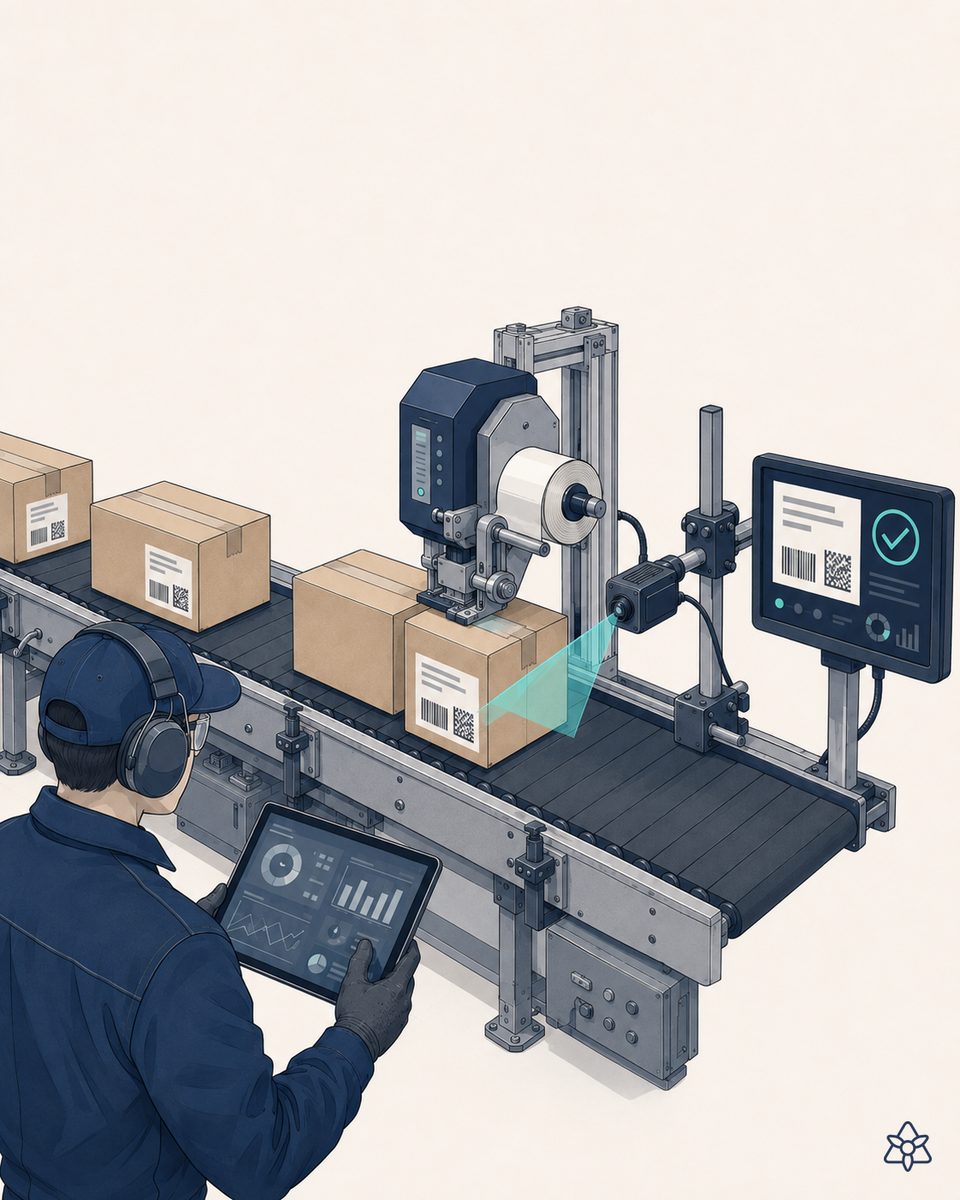
The batch does not tell what each wheel lived through in the cave.
A PDO cheese is made in hours but earned over months. Two wheels born from the same vat of curd end up on different shelves, with different humidity, with different cheesemakers, with brushings out of sync. When one wheel causes a problem in the market — an out-of-range analysis at a demanding retailer, a complaint from a gourmet customer, an internal alert — the classic system offers two bad options:
- Put the entire pasteurizer batch on hold as a precaution. For a vat of 200 wheels, that means freezing significant market value while the counter-analyses are run. If everything comes back clean, you have absorbed the financial cost and blocked a sales channel for nothing.
- Work out by hand which wheel was which. The vat of origin is in the ERP, yes, but the position in the cave, the turnings and the individual brushing live in spreadsheets, in a notebook and in the cheesemaker's head. Reconstructing the itinerary takes days — the supermarket wanted an answer by tomorrow.
And the problem is not only reactive. It is also proactive: the premium B2B customer pays for the exact provenance of their wheel — which herd, which vat, which cave, which week — not for a generic PDO label. Without wheel-by-wheel traceability, the brand premium evaporates.
iLEAN Tracer is the filler that binds the vat to the cave to the rind.
The problem is not a lack of information: it is information split into islands — ERP with the vat, spreadsheet with the position in the cave, the cheesemaker's notebook with the turnings, a humidity sensor with no context. iLEAN Tracer does not ask you to change your ERP, your MES, or the way you make cheese. It sits on top and seals the cracks.
Edge marks the wheel at moulding. Connect captures every cave operation wherever the data lives (spreadsheet, notebook, IoT). The agent cross-references recipe + cave + sanitary results and assembles the file. The person signs off — never the other way round.
The iLEAN pieces applied to wheel-by-wheel traceability:
- Edge in the moulding room — a vision-equipped terminal that sees each freshly moulded wheel and triggers the marking on the rind (casein seal, laser accepted by the Regulatory Council, or food-grade printing) synchronised with the assigned code. No network available is not a problem: the Edge keeps reading and marking with its own light.
- Connect in the ripening cave — the moulding recipe, the humidity/temperature probe, the cheesemaker's turning notebook and the result of every intermediate analysis enter the system through whichever channel you already use (a photo of the notebook, an IoT reading, voice dictation, a spreadsheet forgotten in a shared folder). At second zero, nothing is lost.
- File agent — cross-references the vat of origin, the cave itinerary, the cheesemaker's interventions and the sanitary analyses against the wheel's code. When the question arrives — from the B2B customer, from the Regulatory Council, from the retailer — the per-wheel dossier is already built. If an incident appears, the agent proposes the exact list of wheels with the same history; the person validates and signs off.
Pasteurizer-batch traceability vs. wheel-by-wheel traceability
| Aspect | Pasteurizer-batch traceability | With iLEAN Tracer, wheel by wheel |
|---|---|---|
| Traceable unit | Vat of curd (dozens or hundreds of wheels) | Each PDO wheel, code on the rind itself |
| Ripening history | Cave average, not individual | Position, turnings, brushing and humidity per wheel |
| Out-of-range analysis on one wheel | Put the whole batch on hold as a precaution | Separate the wheel with that exact history |
| Dossier for the Regulatory Council | Rebuilt by hand from several sources | Automatic per-wheel file, ready to go |
| Premium B2B margin | Hard to justify — generic label | Exact provenance — vat, cave, moulding date |
| Operation without network in the cave | n/a | Edge keeps reading and recording locally |
Impact estimate for your plant — to be validated with your numbers.
The block below is an estimate to be validated with the specific data of your plant. We put it forward so the committee has an order of magnitude; we refine it during the diagnostic.
- Mid-sized PDO dairy, 2-3 ripening caves, marking in the moulding room + Edge reader in one cave zone as a pilot.
- First value expected within a few weeks: a per-wheel dossier working for the marked cohort, demonstrable to the Regulatory Council and to the premium retailer.
- Indicative payback between 4 and 9 months, depending on the average historical cost of holds triggered by lab analyses and on the weight of the premium B2B channel in your mix.
- Hard levers: wheels not put on hold unnecessarily ≥ 30% of past cases; premium B2B margin ≥ 30% over channels that today buy as generic; hours saved rebuilding the audit file by hand.
And the quality manager's reasonable doubt
«What if the AI gets it wrong and puts the wrong wheel in the file?» — hallucination is a problem of free generation, not of anchored tasks. In tasks where the AI merely recontextualises a piece of data (reading the code on the rind and cross-referencing it with the cave itinerary), the best models brought error below 1.5% [1]. And even so, what is critical is never decided alone: the agent proposes, the person signs off. The three safety rings exist precisely for this.
[1] OpenAI paper «Why Language Models Hallucinate», 2025 — on the reliability of AI in anchored tasks.
What people ask about wheel-by-wheel traceability in PDO cheese
Why is pasteurizer-batch traceability not enough for PDO cheese?
A PDO cheese is a unique asset — it spends months (sometimes years) in the ripening cave, and its maturation depends on the exact position on the shelf, on turning, on brushing and on the humidity at every moment. If one wheel causes a problem in the market, the pasteurizer batch groups dozens or hundreds of wheels that do not share that history. Tracing the vat does not let you reconstruct what happened to that specific wheel: separating the one that failed from the ones that did not takes time, and meanwhile a whole batch is put on hold as a precaution.
How does iLEAN Tracer mark each PDO wheel without damaging the protected rind?
The code is applied to the rind using the technique the Regulatory Council accepts — a casein seal, low-energy laser marking or food-grade printing on the designated area of the wheel — and is linked in iLEAN Tracer to the exact moment of moulding. From then on, every operation (turning, salting, brushing, transfer between caves) is recorded against that code, not against the batch. The wheel carries its own history.
What does wheel-by-wheel traceability reconstruct?
The complete file: the recipe of the vat of origin, the exact moulding time, the position in the cave, temperature and humidity for every shift, the cheesemaker's interventions, brushings, intermediate analyses and sanitary results. For the Regulatory Council it is the origin dossier in full detail. For the B2B customer (gourmet retail, fine dining) it is the provenance that commands a premium. For the plant, it is the difference between putting 200 wheels on hold and separating exactly the right one.
Does it work in a dairy with natural caves and intermittent connectivity?
Yes. Critical capture (reading the code at every operation) happens locally on an Edge device over the cave or the handling station — if connectivity drops, the device keeps reading and recording. When the network comes back, it syncs with the central system. What is critical cannot depend on there being WiFi inside a stone cave.
How much does wheel-by-wheel traceability cost in a PDO dairy?
An iLEAN Tracer pilot in a PDO dairy covers the marking equipment in the moulding room, the Edge reader in one or two cave zones, integration with your ERP/MES and the annual licence. A reasonable payback is in the order of several months — the hard lever is not holding 200 wheels because of one. We ask for your plant's data and send you the estimated ROI in 48h, with your numbers, not ours.
More cases in ilean tracer
- The ISCC mass balance is not reconciled at month end: it is reconciled tanker by tanker.iLEAN Tracer captures every tanker load and unload with its delivery note and keeps the ISCC mass…
- Unit-of-use blister in hospital dispensing — a bedside medication error is not an incident, it is a preventable adverse event.iLEAN Tracer secures the unit-of-use blister in hospital dispensing with bedside patient-medication…
- Broiler chicken — Welfair welfare is earned every day, and the audit collapses if the data isn't there.iLEAN Tracer documents the Welfair welfare of every broiler chicken batch with multi-farm metrics —…
- A cosmetic cream batch is a tree — and hand-drawn trees break at the first complaint.iLEAN Tracer builds the full genealogy of a cosmetic cream batch: master mixes, pH adjustments, bulk and…
- The drying-house batch groups thousands of pieces that share no history — and one problem puts them all on hold.iLEAN Tracer assigns an ID to every cured ham from salting to labeling and rebuilds its full history…
- Cut-flower reefer: the auction price is decided in the cracks of the cold chain.iLEAN Tracer holds the cold chain of a cut-flower reefer from farm to auction, with projected vase life…
Tell us your case and in 48h we'll send you the estimated ROI of iLEAN Tracer for your PDO dairy.
We work on your plant's real data, not ours. Diagnostic with no commitment.
Request estimated ROI in 48h See Tracer