Hot stamping press — the die does not break on a cold blank, because someone looked at the hydraulic pressure in time.
In hot stamping, a blank that arrives cold breaks dies that cost more than an entire machining line. The physical signature of the problem sits in the hydraulic circuit pressure of the press, cross-checked against furnace temperature. iLEAN Edge reads both within the cycle and warns the die shop lead before the next stroke. The person signs — the die does not break on a cold blank.
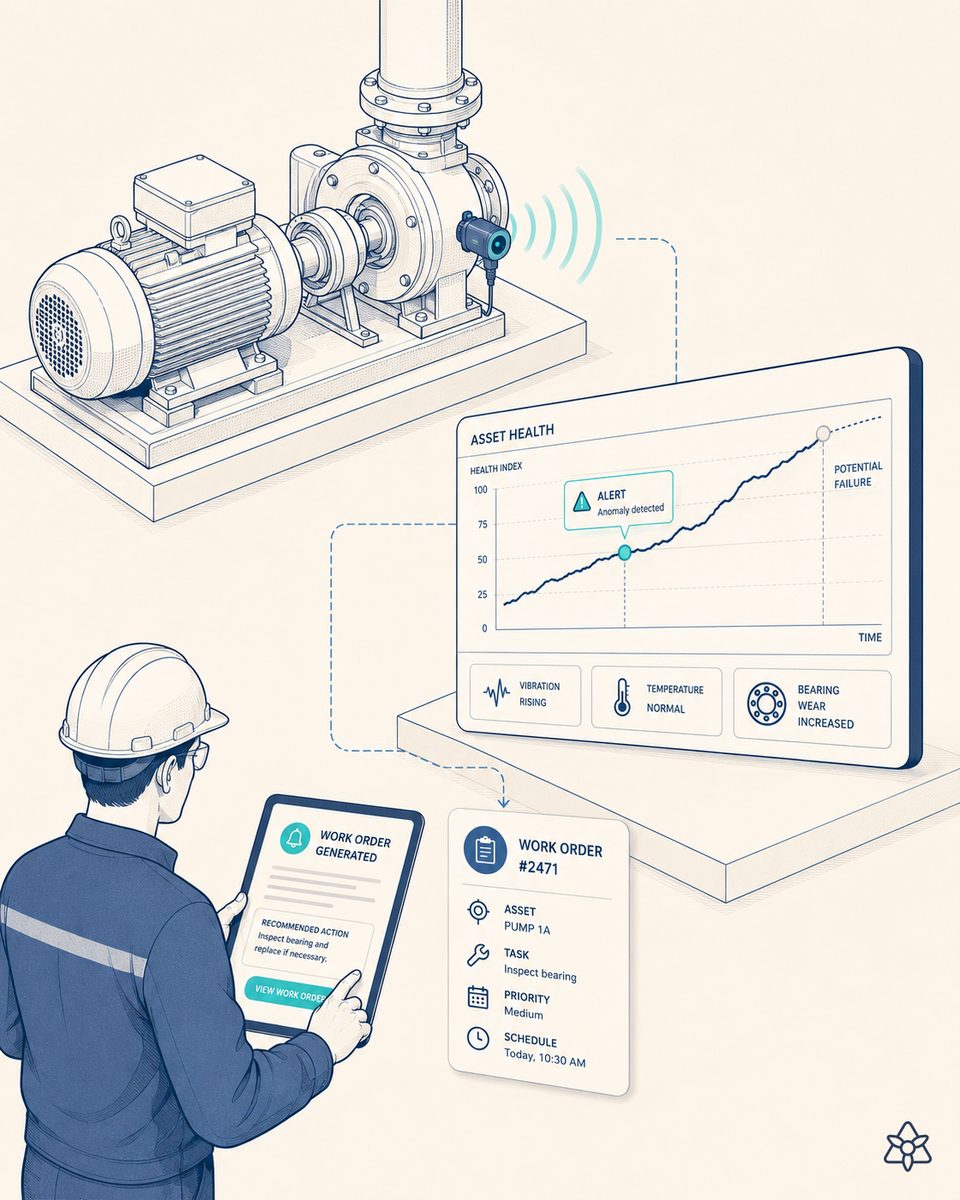
The blank arrives cold, pressure rises, the die breaks — and everyone was looking at their own screen.
In hot stamping the window is narrow and very unforgiving: the boron-steel blank leaves the furnace above 900 ºC, travels to the die and must be struck before it cools below the austenitisation range. If anything along the way stretches out — a micro-stoppage downstream, a delay in transfer, a furnace zone lagging behind — the blank enters cold. The material does not flow. The hydraulic cylinder pushes against a blank that no longer wants to deform. Pressure rises, and the die picks up the bill:
- The hydraulic pressure curve of the cycle starts coming out steeper and with a higher peak — but the PLC only trips when it crosses the absolute maximum, and by then the die has already run several cold strokes.
- Furnace temperature and the entry pyrometer live in another system, on another panel, watched by another person.
- The real transfer time (when the gripper picks and places) is never cross-checked against the pressure of the stroke anywhere.
The classic setup (PLC + alarm + the die shop lead's eye) works 99% of the time. That 1% is the die breakage — direct cost of the die, line stoppage, a replacement against the clock, and an OEM customer who has to be told why the B-pillar for their next batch is late. It is not a lack of skill; it is information living in islands at the critical moment.
iLEAN Edge does not add another screen — it seals the gap between the press, the furnace and the real stroke rate.
The piece that solves the pain is iLEAN Edge: a physical terminal on the shop floor, next to the press cabinet, that watches hydraulic pressure the way a veteran die shop lead would if they could keep an eye on the actuator curve, the furnace thermocouple and the transfer stopwatch all at once.
Edge sees the hydraulic pressure curve of the cycle. Connect reads furnace temperature, the die plan and the recipe wherever they live. The agent cross-checks furnace + transfer + pressure and proposes to the die shop lead that the next blank be held. The person signs — the die does not break on a cold blank.
The three iLEAN pieces applied to hydraulic pressure on the hot stamping press:
- Edge — terminal at the cabinet, reading pressure in the main hydraulic circuit of the actuator (analogue transducer) and, depending on the press, cushion pressure, closing time and slide speed. The CNN learns the normal shape of the pressure curve per part and per die — not an absolute maximum, but a cycle signature. It catches the steep rise before the ceiling. It works without a network: if connectivity with the MES drops, Edge keeps watching the curve and warning the local panel. What is critical cannot depend on the WiFi.
- Connect — captures furnace temperature by zone and the die-entry pyrometer from the SCADA, the die plan from the MES, and the OEM customer recipe wherever it comes from (including the quality spreadsheet with austenitisation ranges per part). It also captures the steel supplier's email about the change of coil supplier, and the shift lead's note on the reason for the 14:20 micro-stoppage downstream.
- Agent — cross-checks the deviating pressure signature against real furnace temperature, transfer time and die history. When it sees the full picture (furnace lagging + slower transfer + steeper pressure curve), it proposes to the die shop lead: hold the next blank, drop the stroke rate by 4, or switch to a more forgiving part while the furnace restabilises. The lead signs. It does not stop the press on its own — except at the autonomy level the leadership team configures.
Hot stamping press with PLC and alarm vs. press with iLEAN Edge on hydraulic pressure
| Aspect | PLC + maximum alarm | With iLEAN Edge on pressure + furnace + transfer |
|---|---|---|
| Signal that triggers the reaction | Absolute pressure maximum, the same for every part | Learned pressure curve signature per part and per die |
| Cross-check with furnace temperature | Separate screen, separate person | Cross-checked within the same cycle, on the shop floor |
| Cross-check with real transfer time | Not measured in detail | Edge correlates it with the pressure of the stroke |
| Moment of the warning | Once there has already been a cold stroke | Before the next stroke |
| Operation without a network | Alarm yes, context no | Edge keeps watching the curve on the cabinet light |
| Dossier for the OEM audit | Reconstructed by hand | Per cycle, with pressure curve, furnace and human signature |
Impact estimate for your plant — to be validated with your numbers.
The block below is an estimate to be validated with the specific data of your plant. We put it forward so the committee has an order of magnitude; we refine it during the diagnostic.
- Automotive Tier 1 with a hot stamping line (B-pillar, frame reinforcements, structural bumpers), roller hearth furnace + hydraulic press + robotised transfer, one or two documented die breakages per year.
- Edge pilot on the press (pressure transducer + integration with the PLC, the furnace SCADA and the MES). First expected value within a few weeks: detection of the deviating pressure signature before the absolute ceiling, in combination with real furnace temperature.
- Indicative payback between 4 and 9 months, depending on the frequency of documented incidents and the average cost of a die breakage + line stoppage + replacement.
- Expected reduction of cold-stroke events that compromise the die of ≥ 30% in the first year, depending on the maturity of furnace control. The hard lever is a single die breakage avoided — it pays for the pilot with room to spare.
And the die shop manager's reasonable doubt
«What if the AI detects a deviation that isn't there and makes me stop the press when it is running fine?» — the proposal does not execute itself. iLEAN works on an anchored task: it reads the pressure curve the transducer already produces and compares it with the learned signature of the die. On anchored tasks, the best models brought error below 1.5% [1]. And even so, the die shop lead sees the curve, sees the proposal, and signs. The press does not stop on its own — except where the leadership team configures it. And the three safety rings are there so the critical OT network stays isolated.
[1] OpenAI paper «Why Language Models Hallucinate», 2025 — on the reliability of AI in anchored tasks.
What people ask about hydraulic pressure in hot stamping
Why does the die break on a cold blank in hot stamping?
Because hot stamping requires striking the boron-steel blank above its austenitisation temperature (≈900 ºC) and inside a narrow window — outside it, the blank cools on its way to the die, the material behaves as if it were cold, and the hydraulic pressure of the cylinder spikes against a part that no longer wants to flow. The die does not break because it is a bad die; it breaks because the blank arrived cold and nobody looked at the combination of furnace temperature + transfer time + hydraulic pressure at the same time. The signature is very recognisable — and very much ignored.
What exactly does iLEAN Edge read in the press hydraulic circuit?
Pressure in the main hydraulic circuit of the press (analogue transducer on the actuator) and, depending on the press, cushion pressure, closing time and slide speed. Edge cross-checks that signal within the same cycle against the upstream furnace temperature (exit and austenitisation zone) and, where it exists, against the pyrometer reading of the blank at the die entry. The signature of a cold blank reaching the die is a pressure curve that rises more steeply and peaks higher than normal — Edge sees it in the cycle and warns before the next stroke.
Why Edge and not the press PLC alarms?
Because the PLC alarm fires when pressure crosses an absolute maximum — and by then the die has already worked out of window, stroke after stroke, before anything tripped. iLEAN Edge learns the normal pressure signature per part and per die, and cross-checks it against furnace and pyrometer in real time. It detects the deviation in cycle shape before the absolute ceiling. And it does so on the shop floor: if connectivity with MES/SCADA drops, Edge keeps watching and warning locally. What is critical cannot depend on the WiFi.
Does the AI stop the press on its own if it sees a cold stroke?
No. iLEAN proposes — the person signs. Edge detects the deviating cycle, the agent cross-checks furnace temperature and transfer time (did a blank sit waiting 8 extra seconds because of a micro-stoppage downstream?), and proposes to the die shop lead: hold the next blank, drop the stroke rate by 4 until the furnace restabilises, or inspect the bolster. The lead validates and signs. In hot stamping with a risk of die damage, that is the default safety ring; the leadership team decides how far autonomy goes.
How much does the pilot cost and when does it pay for itself?
The order of magnitude of an Edge pilot on a hot stamping press is close to that of any Edge pilot in an automotive plant: terminal + pressure transducer + integration with the press PLC and with the furnace SCADA, plus an annual licence. The reasonable payback to present to the committee is several months — the hard lever is a single die breakage avoided (cost of the die, replacement and setup, line stoppage, possible impact on the OEM customer). Send us your press data and we will send you the estimated ROI within 48h.
More cases in ilean edge
- If the cryogenic pump fails, the cold chain breaks — and the shipping window goes down with it.iLEAN Edge reads cryogenic LNG pump vibration to predict bearing failure without breaking the cold…
- The CIP dosing pump is cavitating and nobody hears it — until the next batch comes out with detergent residue.iLEAN Edge reads the CIP dosing pump vibration in a cheese plant and anticipates cavitation before it…
- PE/PP extruder motor current with AI — anticipate the jam without stopping the line.iLEAN Edge analyses the PE/PP extruder motor current and anticipates screw jamming without stopping the…
- Iberian ham curing chamber humidity — the right rind, or a Reserva batch off target.iLEAN Edge tracks the Iberian ham curing chamber's humidity to keep the rind right and weight loss…
- Inline pH in acid neutralization reactors — the set-point is not chased from the control room, it is held in the reactor.iLEAN Edge reads inline pH in the acid neutralization reactor and prevents overshoot — zero excess…
- KTL degrease bath conductivity — one out-of-band reading, one batch of paint lost in e-coat.iLEAN Edge tracks the KTL alkaline degrease bath conductivity online in automotive and warns before…
Tell us about your case and within 48h we will send you the estimated ROI of this AI project for your hot stamping press.
We work on the real data of your plant, not on ours. Diagnostic with no commitment.
Request estimated ROI within 48h See iLEAN Edge