LAL/rFC endotoxin testing with AI — faster parenteral release, a firmer dossier.
The BET (Bacterial Endotoxin Test) decides whether a parenteral ships or stays in quarantine, yet the kinetic reader data still travels through spreadsheets before it reaches the LIMS, and an OOS takes hours or days to investigate while you rebuild the context. iLEAN captures the reading at second zero, matches sample and method (LAL or rFC) and assembles the dossier. The validated method is untouched; the person still signs.
The LAL method is validated. The data flow is not.
The chemistry of the BET assay is extraordinarily well defined. You have USP <85>, Ph. Eur. 2.6.14, JP 4.01, kinetic readers from well-known brands (BioTek, Lonza, Charles River), certified reagents and a trained analyst who knows exactly what she is doing. But the flow around the method is where the lost seconds and the regulatory doubts pile up.
Three points of friction come up again and again in parenteral and WFI plants:
- Sample identity: which well is which WFI, which API batch, which prefilled syringe — noted by hand on a plate map that the analyst inherits and, at shift change, passes into the next person's head.
- Kinetic reader output: the raw data goes into the manufacturer's software, gets exported to Excel and is pasted into the LIMS at the end of the shift. By the time the QC lead sees the result, hours have gone by since the reader knew it.
- OOS (Out Of Specification): it turns up every so often — mandatory investigation. Rebuilding the context (which WFI, which sample validation, what trend that machine had over the preceding days) takes hours or days of gathering spreadsheets, plate maps and emails. Meanwhile the product sits in quarantine.
The classic method works 99% of the time. The 1% is the OOS that triggers an investigation and pushes release back a week — and in parenterals that is serious working capital sitting in quarantine.
iLEAN does not go into the chemistry — it captures the data and assembles the dossier.
The lab knows how to run the assay. What costs time is the transport of the information: from the reader to the LIMS, from the plate map to traceability, from the WFI lead's email to the analyst. iLEAN acts as the putty that seals those cracks, without asking you to change the method, the reader or the LIMS. The validated method stays untouchable.
Edge identifies the sample on the plate. Connect captures the kinetic reader at second zero. The agent cross-checks with WFI, batch, validation and trend, and assembles the dossier. The analyst signs — hours or days ahead.
The three iLEAN pieces applied to LAL/rFC BET:
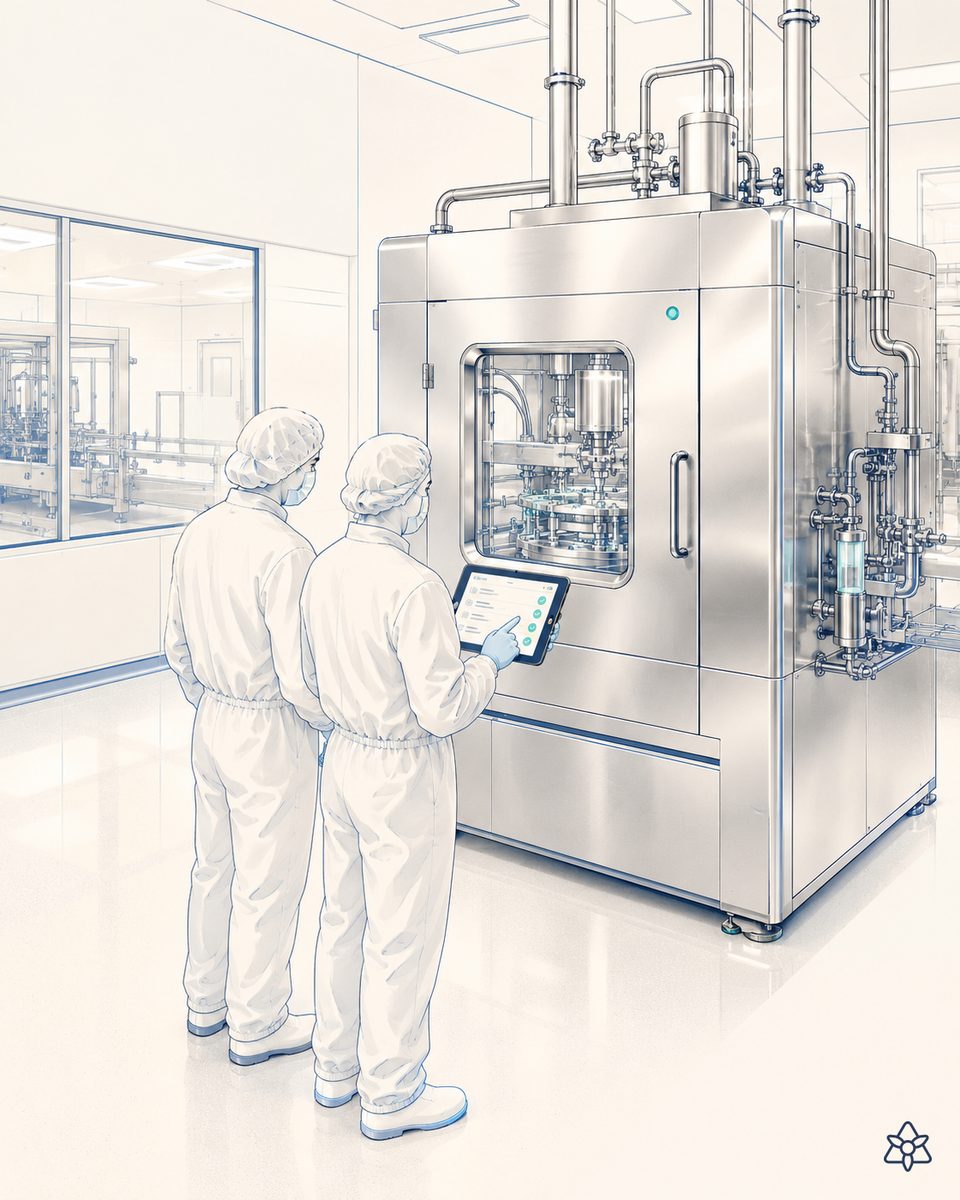
- Edge — a vision terminal over the 96-well plate and/or over the reader panel. It identifies the plate map by code + visual reading, files the image as evidence, and ties every well to a sample identity (which WFI, which batch, which dilution) on the spot. It works with no network.
- Connect — captures the kinetic reader (BioTek, Lonza Kinetic-QCL, Endosafe nexgen-PTS) at second zero, the LIMS, the water purification system (Veolia, Stilmas) that gives context to the WFI, and the QC lead's emails. What used to land in Excel now lands structured in Central, with nobody forwarding anything.
- Agent — cross-checks reading + sample identity + sample validation (PPC, hit rate) + historical trend. If a series of WFI samples from one room starts to drift, it warns while you can still act. When an OOS appears, the agent has already rebuilt the context: which WFI, which validation, which readers, which reagent — the investigation starts with the dossier already built.
Classic BET vs. BET assisted by iLEAN
| Aspect | Classic BET + Excel + LIMS | With iLEAN Edge + Connect + Agent |
|---|---|---|
| Sample identity on the plate | Paper plate map; handed down between shifts | Well ↔ sample tied by vision, filed as evidence |
| Kinetic reader capture | Export to Excel, pasted into the LIMS at the end of the shift | Captured at second zero, published to the LIMS as structured data |
| Trend toward OOS | Visible at the weekly or monthly review | Detected live; person in charge warned before the OOS |
| OOS investigation | Rebuild the context by hand; days | Dossier already assembled; the investigation starts with everything |
| LAL → rFC transition | Parallel spreadsheets per method | Both methods captured with the same traceability |
| Validated method | Intact | Intact — iLEAN does not go into the chemistry |
Impact estimate for your plant — to be validated with your numbers.
The block below is an estimate to be validated with the specific data of your laboratory. We put it forward so the committee has an order of magnitude; we refine it during the diagnostic.
- Pharma QC lab with 1-3 kinetic readers (BioTek, Lonza, Endosafe), 200-1,500 BET tests/month, a LAL mix with an rFC transition under way, commercial LIMS.
- Connect pilot on the reader + Edge over the plate + trend and OOS agent. First value expected within a few weeks.
- Reduction of OOS investigation time in the order of ≥30% (a conservative estimate) — you go from rebuilding the context to verifying a dossier that is already assembled.
- Indicative payback between 4 and 9 months, with two levers: parenteral release days gained (working capital freed sooner) and QC hours saved on every OOS.
- The LAL → rFC transition rides on top with no extra effort: both methods end up traced in the same file.
And the compliance lead's reasonable doubt
“What if the AI touches a regulated data point and the audit challenges it?” — hallucination is a problem of free generation, not of anchored tasks. Capturing a kinetic reader output and tying it to a sample identity is an anchored task par excellence. In tasks of that kind, the best models brought error below 1.5% [1]. And even so, the analyst reviews and signs, the validated method is untouched, and the reader data is preserved in its original format as backup. The three safety rings exist precisely for this.
[1] OpenAI paper “Why Language Models Hallucinate”, 2025 — on the reliability of AI in anchored tasks.
What people ask about LAL/rFC and endotoxins with AI
What is the endotoxin test (BET) and which LAL/rFC methods exist?
The Bacterial Endotoxin Test (BET) is the mandatory assay for parenterals, invasive medical devices, water for injection and critical raw materials: if a pyrogenic endotoxin exceeds the limit, the product is not released. The methods are set out in USP <85>, Ph. Eur. 2.6.14 and JP 4.01: gel-clot (qualitative), turbidimetric and chromogenic (kinetic, quantitative). The rFC (recombinant Factor C) method has been accepted in Ph. Eur. since 2021 and is steadily removing the dependence on horseshoe crab. iLEAN has no opinion on which one you use — it captures the data from whatever reader you have.
Where does the BET workflow break today in a parenteral plant?
In three places: (1) sample identity — which WFI, which API batch, which finished syringe sits in each well of the plate — is written down by hand and gets lost at analyst handover; (2) the kinetic reader output (BioTek, Lonza Kinetic-QCL, Charles River Endosafe), which produces raw data that travels through Excel before it reaches the LIMS; (3) the OOS, when one appears, triggers an investigation in which recovering the context (which WFI, which timings, which sample validation) costs hours or days.
How does iLEAN assist the LAL assay without touching the validation?
iLEAN does not go into the chemistry and does not change the validated method. Connect captures the kinetic reader data at second zero (not in an export at the end of the shift), matches the plate with sample identity (which well is which WFI, which batch, which dilution) and publishes to the LIMS with a photo of the reader as evidence. If the agent detects a trend toward OOS in correlated tests, it warns the person in charge before the result sets — the OOS is still the OOS, but it no longer comes as a surprise. And when it does come, the dossier is already assembled.
Does it cover the LAL → rFC (recombinant Factor C) transition?
Yes. Precisely because iLEAN sits outside the method and captures the reader data, it makes no difference whether the plant runs classic LAL or rFC. Connect ingests both output formats and publishes them with the same traceability. That helps during the comparative validation phase between methods (the plant has to demonstrate equivalence to move product to rFC) because the evidence from both assays ends up cross-checked in the same file — with no parallel spreadsheets.
How much does AI-assisted BET cost in a pharma QC lab?
The pilot is sized per reader / per product line. A Connect integration with the kinetic reader, visual identification of the plate by Edge, and a trend and OOS agent — that is the standard piece. A reasonable payback to take to the committee is a few months; the hard levers are the parenteral release days gained (working capital) and the shortened OOS investigation (from days to hours). Ask us for the estimated ROI with your data: we send it in 48h.
More cases in pharma
- GMP validation with continuous AI evidence — IQ/OQ/PQ alive, with no sprints before every audit.iLEAN keeps IQ/OQ/PQ alive and GMP validation always audit-ready, with no sprints before every…
- Visual inspection of injectables with AI — the eye must not blink, and by the end of the shift it blinks.iLEAN Vision inspects 100% of injectables at industrial cadence, without the false rejects that come…
- Pharma QC glassware control with AI — lose the lineage of the vial and you lose the batch.How iLEAN traces pharma QC vials, volumetric flasks and pipettes — calibration, integrity and…
- Pharma lyophilization with AI predictive control — a 48-hour cycle, and a deviation takes 5 minutes to destroy the batch.iLEAN tracks the freeze-drying cycle in real time and predicts equipment failures. Every batch keeps its…
- mAb/ATMP bioreactor control — anticipate drift minute by minute and hold per-patient traceability.iLEAN monitors pH, DO, glucose and critical bioreactor metrics, plus per-patient traceability for ATMP.
- MDI inhaler control with AI — one gram of propellant out of range is one delivered dose out of range.How iLEAN cross-checks propellant fill, valve crimping and leak testing to secure the right MDI inhaler…
Tell us your case and in 48h we'll send you the estimated ROI of this AI project for your endotoxin QC lab.
We work on your laboratory's real data, not ours. Diagnostic with no commitment.
Request estimated ROI in 48h See pharma