Galenic formulation with AI — from bench to plant without losing the conversation along the way.
The master document of the formula reaches the plant. What does not reach it is the living conversation — the note in the margin of the lab notebook, the email from the excipient supplier, the nuance from scale-up. iLEAN Connect listens to every channel and an agent cross-checks the official document against the conversation, proposes what to update in the dossier and prepares the transfer file. The person signs.
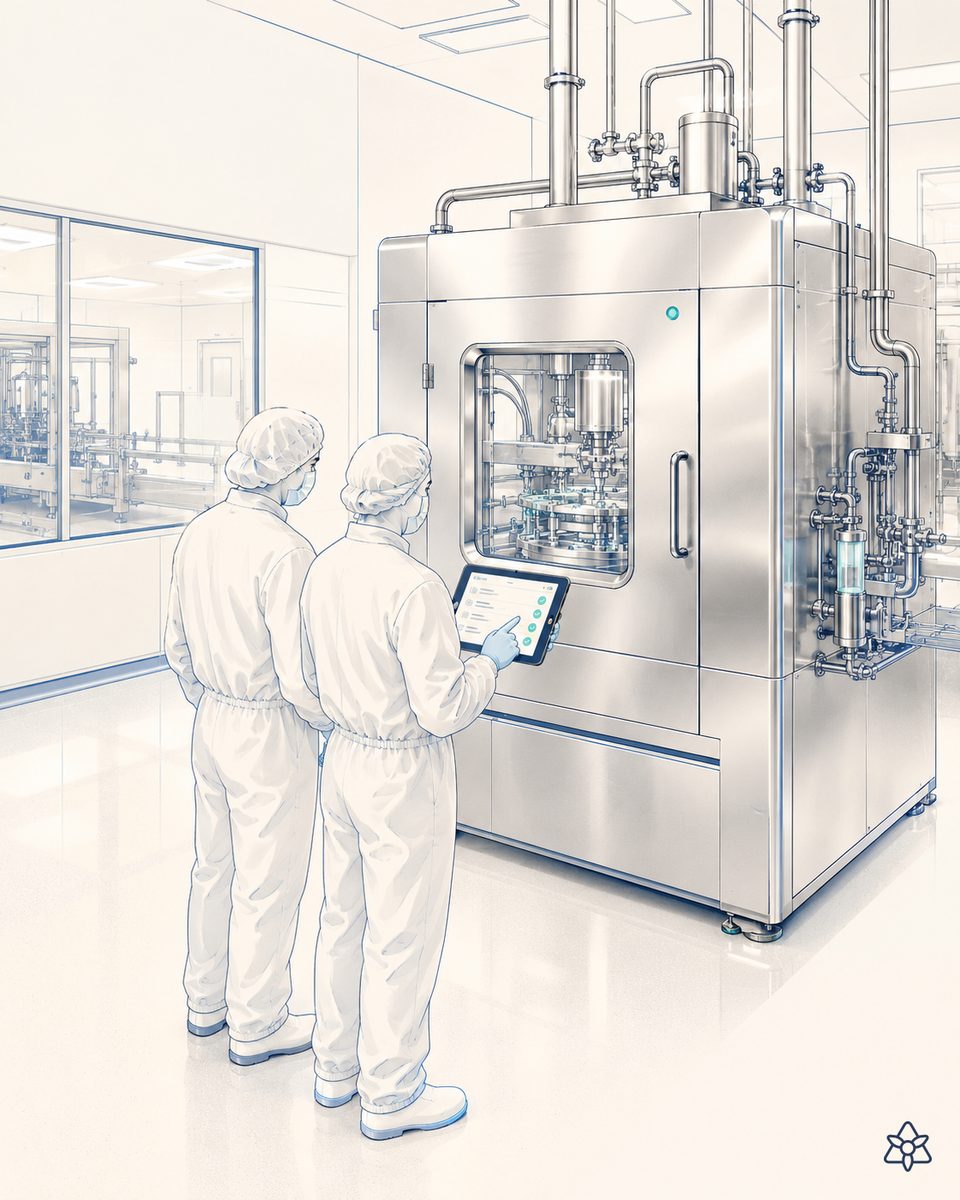
The document reaches the plant. The conversation stays in R&D.
Transferring a galenic formula from the R&D lab to the plant works 95% of the time. The remaining 5% are the learning batches — the ones that cost two weeks, a quality committee and an uncomfortable conversation with the technical director.
The master document arrives, that part does not fail. What does not arrive is the living conversation around the document: the margin note in the lab notebook about how the blend behaved on a humid day in September, the email from the excipient supplier warning of a particle size change, the WhatsApp from the scale-up lead explaining why he raised tablet press speed by one point on the last pilot batch, the version of the spreadsheet with the final parameters that stayed in the personal Drive of the person who went on leave.
The three data sets you would need to cross-check for the transfer to go right the first time live on three islands:
- The official document — master formula, manufacturing instructions, regulatory dossier. In the PLM or eDMS.
- The living conversation — emails, WhatsApps, margin notes, intermediate spreadsheets, photos of a whiteboard. In personal accounts, on phones, in paper notebooks.
- What happened in the plant on the first batch — documented deviations, operator comments, real SCADA parameters. In the batch record and in the shift lead's head.
Three islands, none of them talking to the others. The expensive learning batch lives in the joint between the three — and nobody was there coordinating in time.
iLEAN does not replace the PLM — it listens to everything the PLM never receives.
Coordinating galenic formulation is not a problem of missing documents. The modern plant already has a PLM, an eDMS and signed batch records. The problem is that the living conversation — the one that decides whether the first batch comes out right — never enters any system; it lives in emails and WhatsApps and paper notebooks. iLEAN is the putty that seals that crack.
Connect listens to email, WhatsApp, calls, photos of notebooks, forgotten spreadsheets — everything that surrounds the official document. The agent cross-checks it and prepares the transfer file. The person signs — never the other way round.
The two iLEAN pieces that coordinate galenic formulation:
- Connect — inward listening (the formulator's notes, photos of the notebook, the scale-up lead's voice through their earpiece or tablet) and outward listening (the supplier's email about an excipient change, the WhatsApp from the tablet manufacturer with the result of the first pilot batch). And it digitizes: photograph a lab notebook and it extracts the data; read the panel of an old tablet press and it records the parameters. Bidirectional: it also drafts replies going out through the same channel, but the person signs.
- Agents on the Central platform — one per key user: an agent for the formulator (cross-checks notes against literature and previous design), one for the scale-up lead (cross-checks against the real pilot parameters), one for regulatory affairs (cross-checks against the eCTD and proposes what to update in module 3), one for the plant manager (cross-checks against the MES and batch records). The agents are boring and concrete: they take away the dumb work and leave the judgment work to the person.
Classic transfer vs. transfer coordinated with iLEAN
| Aspect | PLM + emails + notebook | With iLEAN Connect + Agents |
|---|---|---|
| Capture of the living conversation | In personal emails and WhatsApps | Connect captures everything at second zero |
| Margin notes in the notebook | Lost when people move on | Photo + extraction → permanent record |
| Supplier email | Lands in an inbox, not on the plant floor | Connect propagates it to whoever decides |
| Updating eCTD module 3 | Manual RA work, weeks | The agent proposes what to update, RA signs |
| Learning batch in the plant | 1-3 batches to tune parameters | Arrival with a complete, living file |
| Transfer audit | Rebuild from 5 sources | Automatic dossier with every source |
Impact estimate for your plant — to be validated with your numbers.
The block below is an estimate to be validated with the specific data of your organization. We put it forward so the committee has an order of magnitude; we refine it during the diagnostic.
- Galenic R&D department with 3-5 active transfers to an internal plant or a CMO, RA with a backlog of variations, scale-up with incidents documented over the past few years.
- Connect + Agents pilot for one specific transfer (the next formula to scale up). First value expected within a few weeks: reduction of the time needed to prepare the transfer file by ≥ 30%.
- Indicative payback between 4 and 9 months, dominated by weeks of RA work saved and learning batches avoided.
- The hard lever: a single transfer done right the first time. The first batch comes out in spec, the dossier reaches the agency with fewer versions, RA gets to breathe.
And the CAIO's reasonable doubt
“What if the agent cites a wrong figure from the notebook in the dossier?” — hallucination is a problem of free generation, not of anchored tasks. In tasks where the model merely recontextualizes (reading a note from the notebook and proposing its impact on module 3), the best models brought error below 1.5% [1]. And even so, what is critical is never decided alone: the agent proposes, regulatory affairs signs with their own credential. The three safety rings exist precisely for this.
[1] OpenAI paper “Why Language Models Hallucinate”, 2025 — on the reliability of AI in anchored tasks. [2] Fundación BBVA / Ivie — productivity from digitalization, 2000-2021.
What people ask about AI in galenic formulation
What gets lost when a galenic formula is transferred from R&D to the plant?
What gets lost is not the master document — that one arrives. What gets lost is the living conversation: the note the formulator scribbled in the margin of the lab notebook about how the granulate behaved on a day of high ambient humidity, the WhatsApp from the scale-up lead explaining why he raised tablet press speed by one point, the version of the spreadsheet with the final parameters that stayed in the personal account of the person who went on leave. That information is what stops the first plant batch from being an expensive learning batch.
Why does a PLM or an eDMS not solve this on its own?
PLM and eDMS manage signed documents. They do their part well — they are repositories of official truth. What they do not capture is the living cross-functional information: the email from the excipient supplier about a particle size change, the technical director's note at the foot of a report, the nuance from the R&D operator that never made it into the master document because it was assumed obvious. iLEAN does not replace the PLM: it puts a brain on top that listens to every channel and cross-checks them against the official document.
How does AI fit with the regulatory dossier (CTD / eCTD / ICH M4)?
The iLEAN agent works like a regulatory affairs assistant: when a formula changes, it cross-checks the version history, the deviations documented in the plant, the stability data and module 3 of the eCTD, and proposes which sections need updating and what regulatory impact it may carry (minor or major CMC variation). The RA lead signs the final assessment with their own credential — the system proposes, it does not decide. This is exactly the “boring and concrete” agent that saves the department weeks of work.
How does iLEAN protect the confidentiality of a formula that is the business?
iLEAN's three safety rings guarantee that the formula never leaves the critical OT network (ring 1). Inference over the document happens in ring 3 (power), validation in ring 2 (verification), and only what is signed and cryptographically packaged enters ring 1. An on-premise model is optional for customers who require it. Compatible with the principles of IEC 62443 and the European AI Act — meaningful human oversight by design, not as a patch.
What is the typical ROI of coordinating galenic formulation with AI?
A Connect + Agents pilot for the transfer of a new formulation (or the rescue of an existing one with recurring deviations in the plant) means a moderate up-front investment and a reasonable annual license. Payback moves in a range of several months, dominated by the savings of weeks of regulatory affairs and scale-up work and by the reduction of unnecessary learning batches. The hard lever: a single transfer done right the first time pays for the pilot. Ask us for the ROI with your numbers — we send it in 48h.
More cases in pharma
- Pharmaceutical dispensing with AI — one badly signed weighing costs the whole batch.How iLEAN cross-checks weighings, raw material and work order in the dispensing booth: Edge reads the…
- EBR with AI — the batch ships in hours because QA only sees what departs from what was approved.iLEAN generates the electronic batch record with review by exception. QA only looks at what is anomalous.
- Pharma FMD/DSCSA serialization with AI — one badly aggregated serial is a pallet held at the border.iLEAN covers serialization, aggregation and reporting to the EU Hub and DSCSA on a single platform,…
- GMP biotech with AI environmental monitoring — particles, microbiology and bioreactor on a single platform.iLEAN covers particles, microbiology and bioreactor in a GMP biotech cleanroom, with no broken…
- GMP validation with continuous AI evidence — IQ/OQ/PQ alive, with no sprints before every audit.iLEAN keeps IQ/OQ/PQ alive and GMP validation always audit-ready, with no sprints before every…
- Visual inspection of injectables with AI — the eye must not blink, and by the end of the shift it blinks.iLEAN Vision inspects 100% of injectables at industrial cadence, without the false rejects that come…
Tell us your case and in 48h we'll send you the estimated ROI of this AI project for your galenic department.
We work on your organization's real data, not ours. Diagnostic with no commitment.
Request estimated ROI in 48h See pharma