Multilanguage chemical product SDS with AI — updating stops being a manual sprint.
Keeping safety data sheets current in N languages and N jurisdictions is endless manual work: a broad catalog, CLP ATPs every few months, markets with their own GHS transposition. iLEAN generates the SDS per product, translates it into each market's language and propagates REACH/CLP changes to every affected version. The regulatory affairs manager signs.
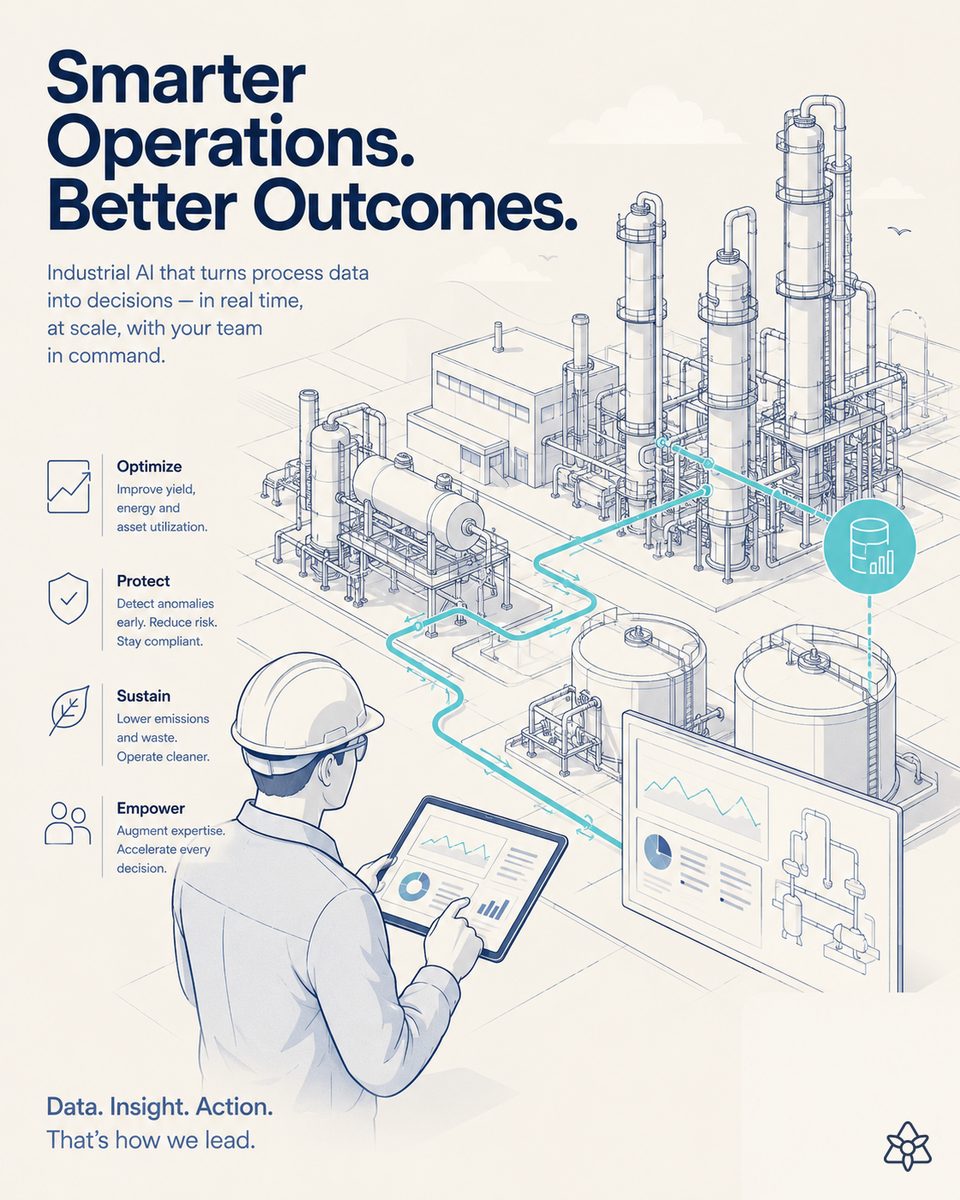
Every CLP ATP is a manual sprint for the regulatory team.
A chemical company with a broad catalog accumulates hundreds of products, and each product has SDSs in the languages and formats of the markets it sells to. A single Adaptation to Technical Progress of the CLP — which happens several times a year — can invalidate the classification of dozens of substances and force paragraph rewrites across every affected SDS. The regulatory affairs manager goes into sprint mode: an Excel sheet of which product contains which substance, walking through the SDSs one by one, drafting the affected sections, retranslating, validating, distributing.
The problem is not the regulatory team's competence. It is structural: formulation data lives in the LIMS or the ERP, the hazard database lives with an external service provider, the SDS catalog lives in another folder, and the traceability of which version went to which customer lives in emails. The outdated SDS that shows up at an inspection is not bad faith — it is a chain of disconnected sources that the human eye cannot walk at the speed the regulator demands.
iLEAN does not replace your SDS provider — it puts the agent that keeps everything coherent on top.
The problem is not generating one SDS — it is keeping N SDSs coherent with the formulation and with N regulations. iLEAN acts as the putty between the LIMS, the ERP, the hazard database and the regulatory catalog, without asking you to abandon what you already use.
Writer generates the draft in the market's language. Tracer listens for every CLP ATP. The regulatory person signs — never the other way around.
The two iLEAN pieces applied to multilanguage SDS management:
- Writer — composes the SDS in the standard format (the 16 sections of REACH Annex II) from the formulation, the applicable H/P statements and the rules of the target jurisdiction. It supports the main national GHS frameworks: EU CLP, US OSHA HazCom, UK GB-CLP, Japan JIS Z 7252/7253, Mexico NOM-018-STPS-2015. One formulation → N valid SDSs per market.
- Tracer — listens to ECHA, OSHA and their equivalents; when a substance changes classification, it identifies every affected SDS in the catalog, proposes the new wording of the sections that change and keeps the traceability: what changed, in which version, which customer received which version and when. The regulatory affairs manager reviews, signs and authorizes distribution.
- Zero free-form hallucination: Writer does not "invent" H/P statements — it reads them from the hazard map and recontextualizes them into the target format and language. It is an anchored task, exactly where today's AI is most reliable.
Manual SDSs vs. living SDSs with iLEAN Writer + Tracer
| Aspect | SDSs managed by hand + external service | With iLEAN Writer + Tracer |
|---|---|---|
| Initial SDS generation | Per product, outsourced to a provider | Automatic draft from the formulation |
| CLP / REACH change | Manual sprint once the ATP is spotted | Identification and propagated draft in hours |
| Translations | Outsourced, long lead times | Draft directly in the target language |
| Active version per customer | The regulatory team's email folder | Signed traceability in the system |
| Outdated SDS at inspection | Recurring risk | Alert before it ships |
| Recurring cost per CLP ATP | Provider invoice per rewritten SDS | Marginal cost close to zero |
Impact estimate for your plant — to be validated with your numbers.
The block below is an estimate to be validated with the specific data of your catalog and your markets. We put it forward so the committee has an order of magnitude; we refine it during the diagnostic.
- Chemical company with a 100-500 product catalog, exporting to several EU countries + some market outside the EU (US, UK, Mexico), in-house regulatory team + external SDS provider.
- Writer + Tracer pilot focused on the product family hit hardest by the last CLP ATP. First value expected within a few weeks: updated drafts of the affected SDSs and a propagation map of the change.
- Indicative payback between 4 and 9 months, depending on your current SDS volume, the frequency of ATPs that affect you and the external provider's cost per rewritten SDS.
- Expected reduction of the manual SDS maintenance effort above 30% (conservative estimate) — the regulatory team goes from drafting to reviewing and signing.
And the regulatory affairs manager's reasonable doubt
"What if the AI slips a wrong H statement into section 2 of an SDS?" — hallucination is a problem of free generation, not of anchored tasks. Generating SDSs is exactly what AI does well: reading a formulation, cross-referencing it with a structured hazard database and composing the document in the standard format. In anchored tasks, the best models brought error below 1.5% [1]. And the human signature is mandatory: Writer proposes, the regulatory affairs manager signs. No SDS is distributed without that signature.
[1] OpenAI paper "Why Language Models Hallucinate", 2025 — on the reliability of AI in anchored tasks.
What people ask about multilanguage SDS with AI
How are per-product SDSs generated from the formulation?
iLEAN Writer starts from the product's component list (from the recipe or the LIMS), cross-references each component against the hazard database and the H/P statements under the applicable regulation (CLP in the EU, OSHA HazCom in the US, national equivalents) and composes the 16 sections of the SDS in the standard format. The output is a draft in the target language, ready for review by the regulatory affairs manager. The person signs — no SDS is published on its own.
What happens with the EU CLP regulation?
iLEAN Tracer listens to ECHA publications (harmonized CLH classifications, CLP ATPs, amendments to Regulation 1907/2006 REACH) and when a substance you use changes classification, the agent identifies every affected SDS, proposes the new wording of the sections that change (hazards, labeling, PPE, first aid) and alerts the regulatory affairs manager. Updating stops being a manual sprint outsourced to a service provider.
And for GHS in the US, the UK, Japan or Mexico?
GHS is the common framework, but the national implementation varies: OSHA HazCom 2012 in the US (with the GHS rev.7 update), GB-CLP in the post-Brexit UK, JIS Z 7252/7253 in Japan, NOM-018-STPS-2015 in Mexico. iLEAN maintains a rules map per jurisdiction and issues the SDS valid for each market from the same product dataset. One formulation, N SDSs per market, a single source of truth.
How is the active version managed per customer and per country?
Every SDS carries a version, a date and a jurisdiction. iLEAN keeps the traceability of which version was sent to which customer and when, and when an update lands it proposes distributing the new version through the channels you already use (email to the customer's regulatory contact, distributor portal). The system flags the outdated SDS before the auditor finds it — not after.
How much does the regulatory effort go down?
The conservative estimate — to be validated with the data of your catalog and your markets — is a reduction in the manual effort of maintaining SDSs of over 30% versus the human equivalent dedicated today, with first value in a few weeks. The hard lever combines regulatory hours freed up (the team goes from drafting to reviewing), a lower update cost per CLP ATP and, above all, a lower risk of an outdated SDS at inspection time. We send you the estimated ROI in 48h.
More cases in petrochemical
- Industrial paint manufacturing with AI — when delta-E is decided by a spectrophotometer reading that comes too late.How iLEAN cross-references dispersion, color, viscosity and pigment traceability to hold the formula…
- ISO 14001/50001 in a chemical plant with AI — evidence you live day to day, not something you rebuild the night before the auditor arrives.iLEAN keeps environmental and energy KPIs live for ISO 14001/50001, with audit evidence ready at any…
- LNG plant control with AI — without touching the cryogenic SCADA, without losing the human signature.How iLEAN joins Connect, Agents and the three rings to see boil-off, liquefaction ratio and LNG quality…
- Multiproduct campaign changeover with AI — a badly executed changeover is not a delay, it is cross-contamination.iLEAN coordinates campaign changeover on a multiproduct reactor: verified cleaning plus the next recipe…
- NPK fertilizer control with AI — an off-grade bag is not an incident, it is a fine and a lost customer.How iLEAN cross-checks N-P-K dosing, particle size and moisture in line with the customer spec to avoid…
- PET, PE and PVC extrusion with AI — the drift that reaches the customer when there are already 8 hours of bad reel.How iLEAN cross-references screw response, masterbatch batch, moisture drift and gel/band vision to hold…
Tell us your case and in 48h we'll send you the estimated ROI of AI-driven SDS management for your catalog.
We work on your plant's real data, not ours. Diagnostic with no commitment.
Request estimated ROI in 48h See petrochemical