Detergent formulation with AI — the batch that separates in the warehouse never showed its face in the reactor.
A stable detergent is the intersection of real surfactant and enzyme variability, the reactor profile (order, energy, temperature) and packing conditions. iLEAN joins all three with in-line vision and anticipates separation, enzyme loss or viscosity drift before packing. The person signs — no batch releases itself.
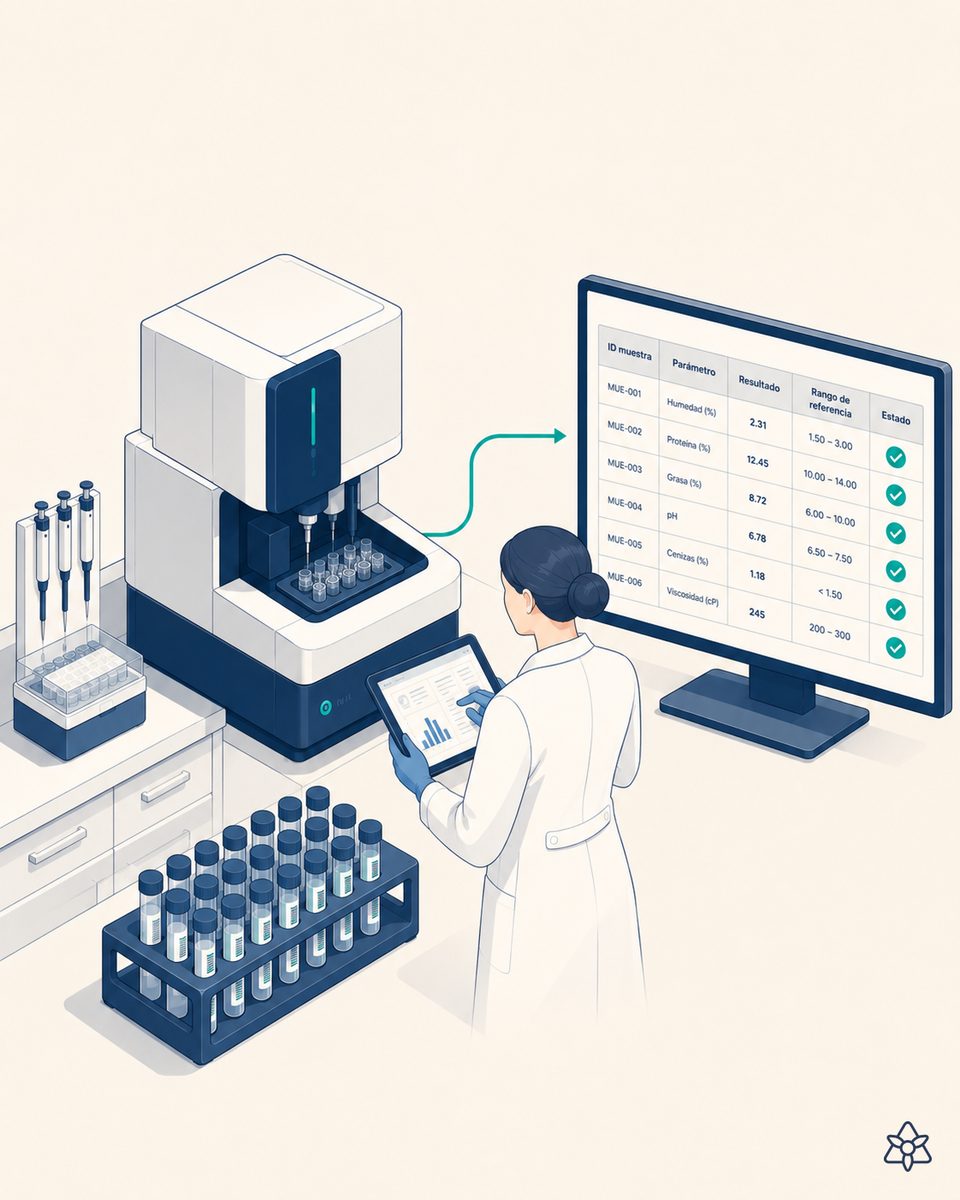
The batch the lab approves is not always the batch that survives six weeks on the shelf.
Liquid or powder detergent formulation lives in the balance between what development says should work and what the plant and the supply chain actually do with that formula. Three realities, three different owners:
- The real variability of raw material — the batch of LAS, ethoxylates, enzymes or nonionic surfactants is not always the one used in development. The supplier certificate arrives by email or as a PDF, and the veteran formulator adjusts by eye.
- The real reactor profile — addition order, agitation energy, jacket temperature, enzyme addition window. It lives in the reactor's SCADA when there is one, and on an operating sheet when there is not.
- Packing and storage conditions — ambient temperature, time from batch to filling, humidity. Whether a batch separates at six weeks usually comes down to something that happened (or did not happen) in those three hours.
The formulation manager knows this, but cannot be in all three places at once. The reactor operator has the recipe and the SCADA screen. And the batches that separate on the shelf show up as a customer complaint, not as a plant event. The classic system works 96% of the time. That 4% is the batches that get reformulated, reworked or returned — and each one pays for the quarterly committee meeting.
iLEAN does not reformulate your detergent — it seals the cracks between lab, reactor and packing.
The problem with detergent stability is not a lack of instrumentation: it is information living in islands (batch certificate, frozen recipe, real reactor profile, packing conditions, separation history) that never arrives cross-referenced at the critical moment. iLEAN acts as the putty that fills the gaps, without asking you to change your ERP, MES, reactors or lab.
Edge watches the dissolution and the packing. Connect captures the batch certificate and the recipe wherever they live. The agent cross-references the three realities and proposes the adjustment before packing. The person signs — no batch releases itself.
The three iLEAN pieces applied to detergent formulation:
- Edge — a terminal with vision (CNN) and analog inputs on the reactor and the packing line. It detects abnormal foam, early separation, out-of-band turbidity, continuous viscosity, provisional color and appearance drift. It reads the real jacket temperature, the pressure gauges and the dosing scales. If the pattern is clear, it holds the batch before packing. It works without a network.
- Connect — captures the certificate of every surfactant and enzyme whether it arrives by EDI or as a PDF in the technical manager's inbox, the batch recipe in the MES or the formulator's Excel, and the supplier's historical variability. Whatever arrives from outside (a retailer changing its standard, new regulation, a new enzyme batch with a different declared activity) enters at second zero.
- Agent — cross-references the batch certificate, the recipe, the real reactor profile and the Edge reading. It recognizes the pattern ("with this LAS batch and this jacket temperature, the enzyme SKU tends to separate at 6 weeks if warehouse ambient temperature exceeds X°C") and proposes the adjustment before packing. It builds the per-batch dossier for the ISO 9001/14001 auditor and for the retailer. The person validates and signs.
Formulation steered by complaints vs. cross-referenced with iLEAN
| Aspect | SCADA + lab + formulator's eye | With iLEAN Edge + Connect + Agent |
|---|---|---|
| Surfactant variability | Certificate by email, stays in purchasing | Cross-referenced with the formula and the reactor profile |
| Enzyme addition | Recipe + clock + operator's eye | Real window verified against the jacket curve |
| Separation detection | Customer complaint at 6 weeks | Anticipated from historical patterns before packing |
| Veteran formulator's knowledge | Lives in their head | Captured as a persistent agent pattern |
| Operation without a network | n/a | Edge keeps reading and holding |
| Per-batch dossier | Rebuilt by hand when a complaint arrives | Automatic traceability with appearance photo and certificate |
Impact estimate for your plant — to be validated with your numbers.
The block below is an estimate to be validated with the real data of your plant. We put it forward so the committee has an order of magnitude; we refine it during the diagnostic.
- Liquid or powder detergent plant, multi-SKU, multi-customer (consumer + professional + retail), with recurring complaints for separation or out-of-spec viscosity.
- Edge pilot on one reactor + packing, Connect for the batch certificate and the recipe, agent cross-referencing them. First value expected within a few weeks.
- Indicative payback between 4 and 9 months, depending on the share of reformulated/reworked batches, the average cost of rework and the volume of customer complaints.
- The hard lever is threefold: reformulation reduced ≥30%, fewer returned lots and better use of surfactants and enzymes.
Why this is the moment for a chemical plant
Between 2000 and 2021, the least digitized sectors barely improved productivity; the most digitized raised it by up to 40% [1]. Consumer chemicals is one of the sectors where that gap is opening fastest — because unit margin is tight and the difference between operating blind and cross-referencing sources shows in every batch. iLEAN closes that gap without asking you to change the plant: it leverages what you already have.
[1] Source: BBVA Foundation / Ivie — productivity by sector digitization level, 2000–2021.
What people ask about AI in detergent formulation
Why does a detergent that is well formulated in the lab fail in the plant?
Because the industrial reactor is not the lab beaker. Variables that get ignored during development (the real variability of the surfactant batch, jacket temperature, addition order, agitation energy, ambient humidity at packing) are what decide whether the batch is stable at three months or separates on the shelf. iLEAN cross-references those sources at second zero and proposes the adjustment before packing, not after the complaint.
What can iLEAN Edge detect on a detergent formulation line?
Edge carries vision (CNN) and analog inputs on the reactor and the packing area: appearance during dissolution, abnormal foam, early separation, turbidity, continuous product viscosity, jacket temperature, pressure gauges on the dosing line. And when a classic pattern shows up (incipient separation, color drifting, viscosity out of band) it alerts and logs the event so the agent can cross-reference it with the formula phase.
How do you anticipate product separation in the warehouse?
By cross-referencing the batch and certificate of each surfactant, the real recipe profile (order, energy, time), in-line viscosity and appearance, and the history of which batch combinations ended up separating weeks later. The agent recognizes "with this LAS batch and this jacket temperature, the product tends to separate at 6 weeks in humid climates" and proposes the adjustment before packing. The person validates and signs.
What about enzyme detergents, where temperature kills the batch if you overshoot?
That is exactly the pattern where Edge + agent shine. The enzyme dies if the jacket rises above a certain threshold for too long, and the data lives in the reactor's SCADA but nobody cross-references it with the addition recipe. iLEAN sees the real temperature curve, cross-references it with the exact moment the enzyme is added and alerts before the damage becomes irreversible. The batch is saved on the line, not reformulated after the fact.
What is the expected ROI in a liquid or powder detergent plant?
Estimate to be validated: an Edge pilot on one formulation reactor + packing line, first value within a few weeks through early detection of separation or of enzyme activity loss. Indicative payback between 4 and 9 months on reduced rework, fewer separation complaints and better use of surfactants and enzymes (the expensive raw materials). We ask for your real data and send you the estimated ROI in 48h.
More cases in petrochemical
- Cracking control (FCC / steam cracker) with AI — severity, feedstock and margin on the same screen.How iLEAN cross-checks severity, feedstock, catalyst and margins in an FCC / steam cracker to anticipate…
- Crop protection control with AI — a mislabeled drum is not an incident, it is a recall and a penalty.How iLEAN cross-checks active ingredient dosing, GHS labeling and EFSA/MAPA registration in a crop…
- Barrel and derivative traceability with AI — from incoming crude to the customer's diesel, with no gaps in the genealogy.iLEAN links incoming crude, refining unit and finished product by batch and by tank. Complete genealogy.
- Energy optimization with an AI digital twin — a badly tuned plant burns steam and electricity every single shift.iLEAN runs a digital twin of your chemical plant and proposes optimal setpoints every shift to cut…
- Epoxy resin control with AI — a batch out of spec is not an incident, it is a customer lost.How iLEAN cross-references bisphenol-A/epichlorohydrin stoichiometry, the exotherm curve and in-line…
- Float glass with AI — catching the bath drift half an hour before the ribbon falls from prime to B.How iLEAN cross-references ribbon vision, tin bath and annealing lehr to anticipate float glass…
Tell us your case and in 48h we'll send you the estimated ROI of this AI project for your detergent plant.
We work on your plant's real data, not ours. Diagnostic with no commitment.
Request estimated ROI in 48h See chemical/petrochemical