EASA / FAA Part 21 with AI — the evidence, alive. The pre-audit sprint, gone.
Part 21 + POA demand continuous evidence of aerospace production — the applicable TC/STC, procedures at their current revision, the inspector's signature, traceability part by part. iLEAN keeps that evidence alive day by day, generates the dossier as you go and leaves the compliance signature where it belongs: with the certified person. The pre-audit sprint stops being a month; it becomes a morning of review.
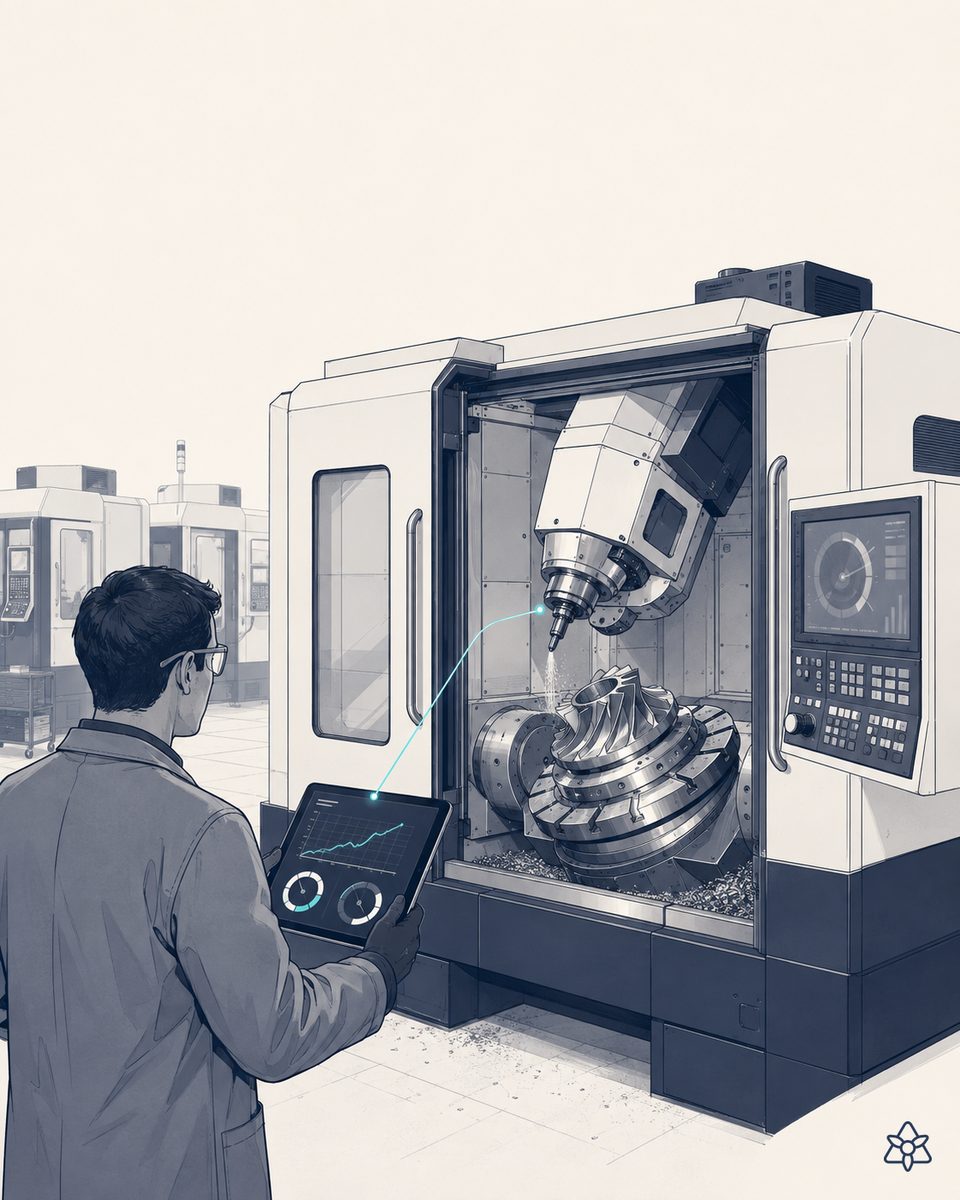
The evidence exists — it just cannot be rebuilt in one morning.
Any POA or PC organization knows what is coming when an EASA or FAA audit is announced: three to six weeks of sprint in which half the quality department spends its days rebuilding traceability. Hunting for the signed inspection report of part 247. Checking that the procedure applied was revision 12 (not 11). Cross-referencing STC effectivity against the actual manufacturing date. Printing compliance matrices. Filling folders. All of it to prove what the organization already knew: that the part was built correctly under the applicable TC/STC, by a certified person, following an approved procedure.
The problem is not compliance — the plant complies. The problem is that the evidence lives on islands: the TC/STC in the certification area, the procedure in the document system, the signed report in a folder on the shop floor, the equipment calibration in another system, the inspector's training in HR. And between all those islands there is a team of people rebuilding the bridge every time an auditor shows up.
The cost is not only the sprint. The real cost is that the quality team does not do quality — it does filing. And the day an STC revision changes mid-production, it gets discovered late, because nobody has a live view of which work-in-progress parts are affected.
iLEAN does not replace the quality system — it seals the cracks between the islands that fill the pre-audit sprint.
Your approved quality system (SAP QM, IFS, vertical aerospace quality systems) does its job well. The document system does its job well. HR does its job well. What was never solved was keeping the bridge alive between all of them, in real time and part by part. iLEAN acts as the putty that seals that crack — without asking you to change your approved quality system, without adding one more system to the POA manual.
Tracer links every part to the applicable TC/STC, to the procedure, to the inspector. Writer keeps the compliance matrix alive. Agent alerts you when a revision changes while parts are in progress. The POA manager's signature stays where it belongs.
The three iLEAN pieces applied to Part 21:
- iLEAN Tracer — every part produced is linked to the TC/STC applicable at the moment of manufacture, to the procedure revision used, to the certified inspector who signed and to the calibration status of the measuring equipment used. That link is not rebuilt afterwards: it is built while the part is made, once, properly.
- iLEAN Writer + Connect — the agent keeps the compliance matrix (MOC) alive with real evidence pointing at every requirement. When a change comes in (an STC revision, a procedure update, an inspector's training expiring), Connect captures it at second zero — whether it comes from the document system, from an EASA email, or from a PDF signed by the airworthiness manager.
- iLEAN Agent — the brain that spots before the audit what the auditor would find: a part built with a procedure that is no longer the current revision, an inspector's training that expired two months ago, a calibration past its due date. It does not fix things on its own — it escalates to the POA manager, proposes the correction and leaves the signature with the person. And it generates the per-part / per-batch / per-aircraft dossier ready for audit, day by day.
Part 21 with a pre-audit sprint vs. Part 21 with live iLEAN evidence
| Aspect | Part 21 with a classic system | With iLEAN Tracer + Writer + Agent |
|---|---|---|
| Part ↔ TC/STC link | Manual reconstruction before the audit | Linked at manufacture, queried instantly |
| Procedure at current revision | Trust placed in the document system | Automatic verification, part by part |
| Certified, in-date inspector | HR emails a warning when it expires | The agent blocks release if it has expired |
| Measuring equipment calibration | Label on the device + Excel | Cross-checked against every measurement |
| Compliance matrix (MOC) | A PDF updated once a year | A live matrix with real evidence pointing at it |
| EASA / FAA pre-audit sprint | 3-6 weeks of reconstruction | One morning of review, dossier already built |
Impact estimate for your plant — to be validated with your numbers.
The block below is an estimate to be validated with the specific data of your organization. We put it forward so the committee has an order of magnitude; we refine it during the diagnostic.
- Aerospace OEM or Tier-1 with an EASA POA Subpart G or an FAA PC, tens to hundreds of critical parts per month, an annual EASA / FAA audit, and a quality team dedicated to evidence.
- Tracer pilot on the Pareto line (the part family that concentrates most of the regulated volume) + Writer keeping the MOC matrix alive. First value expected within a few weeks: the system rebuilds historical traceability and starts live evidence without stopping production.
- Indicative payback between 4 and 9 months, depending on the quality hours recovered and the length of the next pre-audit sprint avoided.
- Pre-audit preparation time down ≥50% and MOC maintenance effort down ≥30%. The hard lever is getting the quality team back to doing quality, not filing.
And the POA / airworthiness manager's reasonable doubt
“What if the agent rebuilds the evidence wrong and an auditor finds it?” — hallucination is a problem of free generation, not of anchored tasks. Linking a part to its procedure, its inspector and its TC/STC is an anchored task: the best models brought error below 1.5% [1]. And even so, the system does not sign compliance on its own: it proposes the dossier, maintains the matrix, alerts before the audit. The Part 21 signature stays where it belongs — with the airworthiness manager. The three safety rings exist precisely for this: under civil aviation regulation, critical signatures are given by a certified person, not by an AI.
[1] OpenAI paper “Why Language Models Hallucinate”, 2025 — on the reliability of AI in anchored tasks.
What people ask about Part 21 compliance with AI
What does Part 21 require?
Part 21 (EASA and FAA, equivalent) governs the certification of aeronautical products and production under organization approval. What it demands from the plant is continuous evidence: every part built must be traceable to an approved type certificate (TC) or supplemental type certificate (STC), to the approved production organization (POA / PC) that produced it, to the inspector who released it and to the procedures at their current revision. Having the procedures is not enough: you have to prove they were applied on that specific part.
What about EASA POA?
POA (Production Organisation Approval, EASA Part 21 Subpart G) is the approval that lets a manufacturer produce aircraft or aerospace components in conformity with a type certificate. To keep it, the organization must continuously demonstrate that its quality system, its configuration control, its subcontractors, its internal audits and its production traceability comply with the approved POA manual. iLEAN keeps the evidence alive — not as a pre-audit sprint, but day by day, on the real operation.
How is TC/STC traced?
Every part produced under Part 21 must be linked to the applicable TC (Type Certificate) or STC (Supplemental Type Certificate) — and to its revision. iLEAN Tracer links the part serial number to the effectivity of the TC/STC at the moment of manufacture, to the ECN/ECO applied and to the procedure revisions used. If an STC changes revision, the system flags which work-in-progress parts still follow the old one and which have to be adapted — and alerts the quality manager before the part is released.
Does it integrate with the MOC (Manual of Compliance)?
Yes. The MOC (or Manual of Compliance / Compliance Matrix) is the master document that maps every regulatory requirement to the evidence that demonstrates it inside the organization. iLEAN Writer keeps that matrix alive: every cell points to real evidence (inspection record, signed report, equipment calibration, operator training), not to a PDF sitting in a shared folder. When a requirement changes or expires, the system flags it before the next audit.
Does it make audits faster?
Yes — and, more importantly, less painful. In aerospace, the pre-audit weeks are sprints where half the quality department rebuilds traceability aircraft by aircraft. iLEAN generates the dossier per part and per batch day by day, ready for EASA or FAA, signed by the responsible person. Conservative estimate to be validated on site: pre-audit preparation time down ≥50%, first value in a few weeks, and a quality team that goes back to doing quality instead of filing. We send you the ROI with your organization's data in 48h.
More cases in other sectors
- Mix and water-cement ratio control at the batching plant — aggregate moisture should not decide your strength class.iLEAN Brain adjusts the mix and the water-cement ratio at a precast batching plant from aggregate…
- Defense radar with AI — a T/R module out of spec is not an incident, it is a delayed program.How iLEAN inspects T/R modules, calibration and ITAR/EAR traceability in defense radar manufacturing…
- Drone manufacturing with AI — the prototype flew; unit 300 of the series is another story.From prototype to series production without losing control: Edge vision on electronics and assembly,…
- Electrical equipment — a test that is not recorded does not exist for the notified body.Documented iLEAN cases in electrical equipment: EN 61439 testing, CPR cable traceability, windings and…
- Dynamic balancing of an async motor rotor — the workshop pays for the trial and error, and the veteran's intuition retires with him.How iLEAN Edge assists on the dynamic balancing machine for async motor rotors: it proposes…
- Busbar-to-cell weld inspection in BESS battery packs with AI — a bad module is not an incident, it is a thermal risk.How iLEAN Edge inspects busbar-to-cell welds in stationary BESS battery packs and holds the module…
Tell us your case and in 48h we'll send you the estimated ROI of this AI project for your POA organization.
We work on your plant's real data, not ours. Diagnostic with no commitment.
Request estimated ROI in 48h See other sectors