Aeronautical configuration with AI — Mod Status and effectivity per aircraft, without aircraft 247 living in a spreadsheet.
Every aircraft has its own unique Mod Status — which ECN is applied, which ECO is missing, which Service Bulletin has a deadline. iLEAN manages configuration cradle-to-grave per aircraft or per batch, cross-references effectivity with the real fleet population and keeps the dossier ready for EASA Part 21. The configuration lead's signature stays exactly where it belongs.
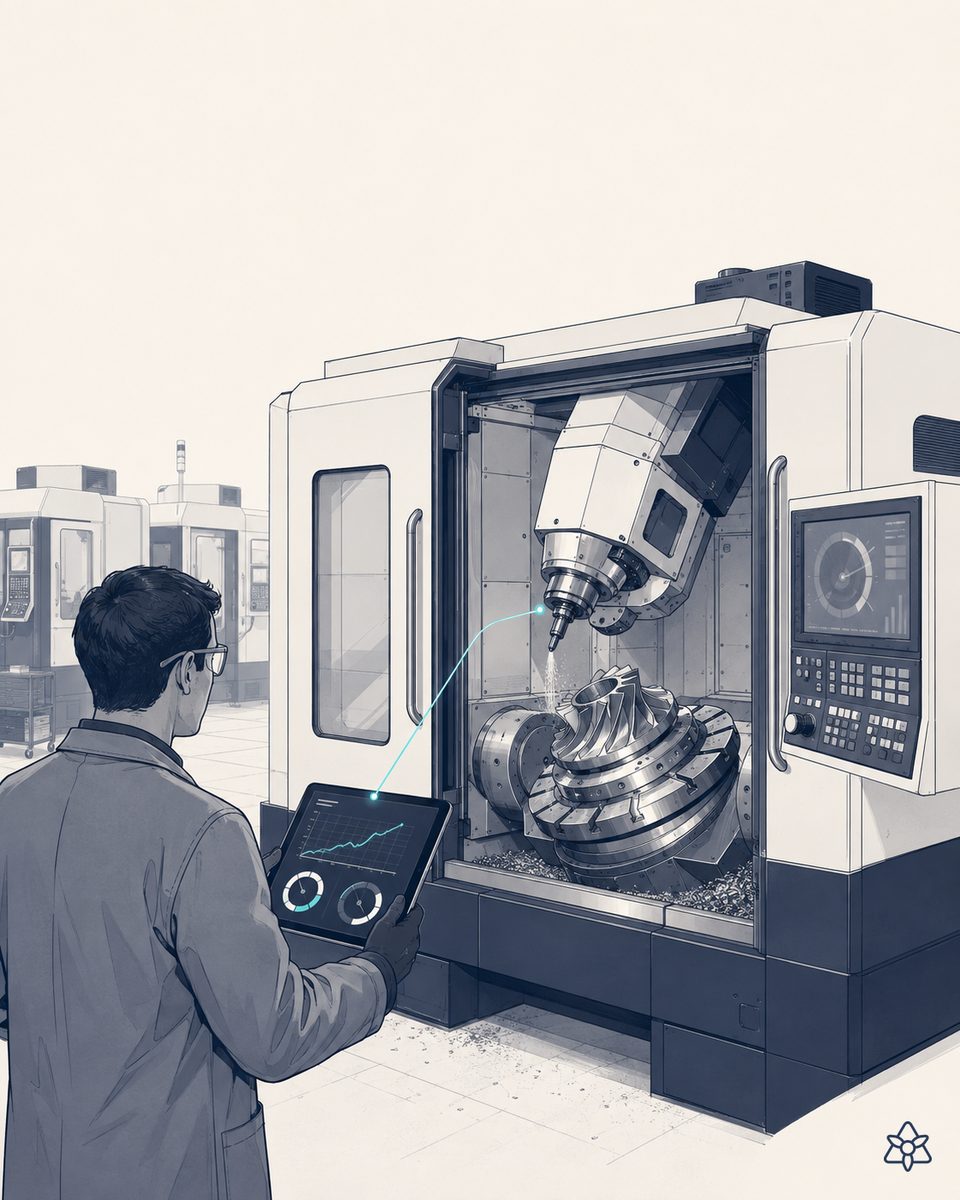
Two aircraft of the same model. Different configuration. And the lead, with three spreadsheets and a PDF.
In aero, configuration is the most living document a company has. An ECN leaves engineering with its effectivity — “applicable from MSN 247 onwards, mandatory retrofit for MSN 100-246 before 800 flight hours” — and from there the chain gets complicated: the PLM holds the approved ECN, the plant has its retrofit program, the end customer has their fleet, the maintenance customer asks for the baseline to release the aircraft to service, and coordinating all of it falls to a configuration lead with several spreadsheets and a lot of coffee.
The classic system does not fail because people are careless — it fails because the tools designed for this (PLM, MES, Excel) never quite learned to talk to each other. The PLM manages engineering, the plant manages what was actually installed, and between the two there are dead zones: an ECN that was applied but never closed in the PLM, a pending retrofit whose deadline lives only in the lead's head, an aircraft baseline that no longer reflects what was delivered to the customer.
The outcome is rarely a safety incident — aero culture protects against that. The outcome is effort: half a department dedicated to rebuilding Mod Status per aircraft every time an audit, a delivery or a customer question comes up.
iLEAN does not replace the PLM — it seals the crack between what the PLM publishes and what the plant applies.
The PLM (Teamcenter, ENOVIA, Windchill, Aras…) does its job well: it manages change engineering. The plant does its job well: it applies the change. What was never solved was keeping the mirror between the two. iLEAN acts as the putty that covers that crack — without asking you to migrate off your PLM, without asking the plant to change its tools, without imposing yet another system.
Tracer maintains effectivity per aircraft. Connect reads the ECN wherever it lives — API, signed PDF, email. Writer drafts the configuration dossier. The lead signs — the system never closes an ECN on its own.
The three iLEAN pieces applied to aero configuration:
- iLEAN Tracer — the living configuration mirror per aircraft and per batch. Every serial has its real Mod Status, its list of applied ECNs, its pending retrofits and their deadlines. When a new ECN comes in, Tracer cross-references it with the affected aircraft population and flags who needs it, in what order and by when.
- iLEAN Connect — captures the ECN/ECO from the PLM (Teamcenter, ENOVIA, Windchill) via API when one exists, and from the signed PDF when it does not. It also captures what arrives from outside: an end-customer change in a technical note, an alert from the kit supplier, an EASA communication with an effectivity. Everything enters at second zero, with no forwarding.
- iLEAN Writer + Agent — the agent drafts the per-aircraft configuration dossier, ready for delivery or for a Part 21 auditor, and prepares the retrofit plans with the documentation the plant needs. It does not sign — it proposes; the configuration lead validates and signs. If an effectivity does not fit the population (a retrofit impossible to complete on time, a kit out of stock), it raises the alert before the deadline, not after.
Configuration by spreadsheet vs. living configuration with iLEAN
| Aspect | Configuration via PLM + master Excel | With iLEAN Tracer + Writer + Agent |
|---|---|---|
| Mod Status per aircraft | Rebuilt manually whenever it is requested | Living mirror, instant lookup by serial |
| Applying ECNs/ECOs | The lead cross-references effectivity with the fleet by hand | The agent proposes a plan, the person signs |
| Retrofit with a deadline | The alarm lives in the lead's head | The agent warns before the deadline, with a plan ready |
| PLM integration | Export to Excel every week | API or capture from the signed PDF, at second zero |
| Part 21 configuration dossier | Weeks of rebuilding ahead of an audit | Generated by the agent, signed by the lead |
| Change of kit supplier / customer | An email lost in an inbox, discovered too late | Captured by Connect at second zero |
Impact estimate for your plant — to be validated with your numbers.
The block below is an estimate to be validated with the specific data of your office. We put it forward so the committee has an order of magnitude; we refine it during the diagnostic.
- Aero OEM or Tier-1 with a fleet / batch of several dozen delivered aircraft, a PLM (Teamcenter, ENOVIA, Windchill or Aras), a master configuration Excel the lead maintains by hand, an annual EASA or FAA audit.
- Tracer pilot on 5-10 aircraft of one type + Connect integration with the PLM. First value expected within a few weeks: the agent rebuilds the Mod Status the lead was carrying in their head and makes it available to anyone authorized.
- Indicative payback between 4 and 9 months, depending on the hours per month spent today rebuilding configuration and preparing audit dossiers.
- A reduction of the effort of maintaining Mod Status of ≥30% and a reduction of the time to prepare the Part 21 configuration dossier of ≥50%. The hard lever is the configuration lead's hours recovered to anticipate deadlines instead of chasing them.
And the configuration lead's reasonable doubt
“What if the agent invents an effectivity or applies an ECN where it does not belong?” — hallucination is a problem of free generation, not of anchored tasks. Reading an ECN, extracting its effectivity and cross-referencing it against an aircraft population is an anchored task: the best models brought error below 1.5% [1]. And even so, the system never closes an ECN on its own: it proposes, it alerts, it prepares the dossier. The configuration lead's signature stays exactly where it belongs. The three safety rings exist precisely for this: in aero, critical operations are signed by a certified person.
[1] OpenAI paper “Why Language Models Hallucinate”, 2025 — on the reliability of AI in anchored tasks.
What people ask about aeronautical configuration with AI
What is Mod Status?
Mod Status (Modification Status) is the actual configuration state of a specific aircraft: which approved modifications (Service Bulletins, ECNs, ECOs, kits) are installed and which are not, against the baseline configuration approved by the type certificate. Two aircraft of the same model almost never have exactly the same configuration — and the maintenance documentation, the spare parts ordered and the release to service all depend on knowing it exactly. Keeping it in Excel is where the expensive mistakes appear.
How are ECNs/ECOs applied?
An ECN (Engineering Change Notice) or ECO (Engineering Change Order) arrives from engineering with its effectivity defined — which aircraft, which serial number, which production batch, from which date. iLEAN reads the ECN from the PLM (Teamcenter, ENOVIA, Windchill or whatever the system is) or from the signed PDF, extracts the effectivity, cross-references it with the affected aircraft population and proposes the plan for applying it to configuration. The aero configuration lead is the one who signs — the system never closes an ECN on its own.
What about effectivity per aircraft?
Every change has an effectivity: “applicable from MSN 247 onwards, and mandatory retrofit for MSN 100-246 before 800 flight hours”. Tracking that per aircraft, per serial number and per batch is exactly the use case where an agent shines: it cross-references the list of pending changes with the real state of each tail, flags the retrofits approaching their deadline and prepares the application documentation. The configuration lead validates and signs.
Does it integrate with PLM (Teamcenter, ENOVIA, Windchill)?
Yes. iLEAN Connect plugs into the PLM through its API when one exists, reads the flow of approved ECNs/ECOs and maintains the configuration mirror per aircraft without asking you to migrate. When there is no API (an old PLM, integrations that cost more than they were worth), it captures from the ECN export or from the signed document. We do not force you to throw away the PLM: iLEAN is the putty that fills the crack between what the PLM publishes and what the plant actually applies.
What reduction in configuration effort can be expected?
In aero configuration offices, most of the time goes into rebuilding the state per aircraft (what is installed, what is missing, which deadlines are tight) by cross-referencing PLM, Excel and emails. Conservative estimate, to be validated on site: a reduction of the effort of maintaining Mod Status of ≥30%, automatic generation of the per-aircraft configuration dossier for an EASA Part 21 audit, and first value within a few weeks. We ask for your configuration office's data and send you the estimated ROI in 48h.
More cases in other sectors
- Aerospace heat treatment with AI — quality cannot be verified afterwards: you have to prove the curve was THE curve.How iLEAN captures the real furnace curve without touching it, links load ↔ curve ↔ part and prepares…
- Aircraft propeller control with AI — a live dossier per serial number, not a folder thrown together at the last minute.How iLEAN combines Edge vision, balancing machine readings and agents to certify every aircraft…
- Aero turbine manufacturing with AI — the FAI is not rebuilt; it is generated while you build.How iLEAN combines vision, heat-number OCR and evidence-pack agents to build aero turbine parts to…
- An aerospace claim years down the line demands knowing which heat lot was used — and only whoever kept the link from day one can answer that.iLEAN traces every aerospace part back to its original heat lot, with the mill cert and the RMA linked…
- Aero paint & coating with AI — the bath drifts in silence and you find out 200 parts later.iLEAN controls bath, thickness and NADCAP chemical processing in aerospace coatings — AI vision + Edge +…
- An aerospace part without NADCAP traceability is undeliverable productiLEAN generates the CofC automatically and keeps the NADCAP process record alive for every aerospace…
Tell us your case and in 48h we'll send you the estimated ROI of this AI project for your aero configuration office.
We work on your plant's real data, not ours. Diagnostic with no commitment.
Request estimated ROI in 48h See other industries