Reading legacy curing-room control panels
Application example · Impact to validate
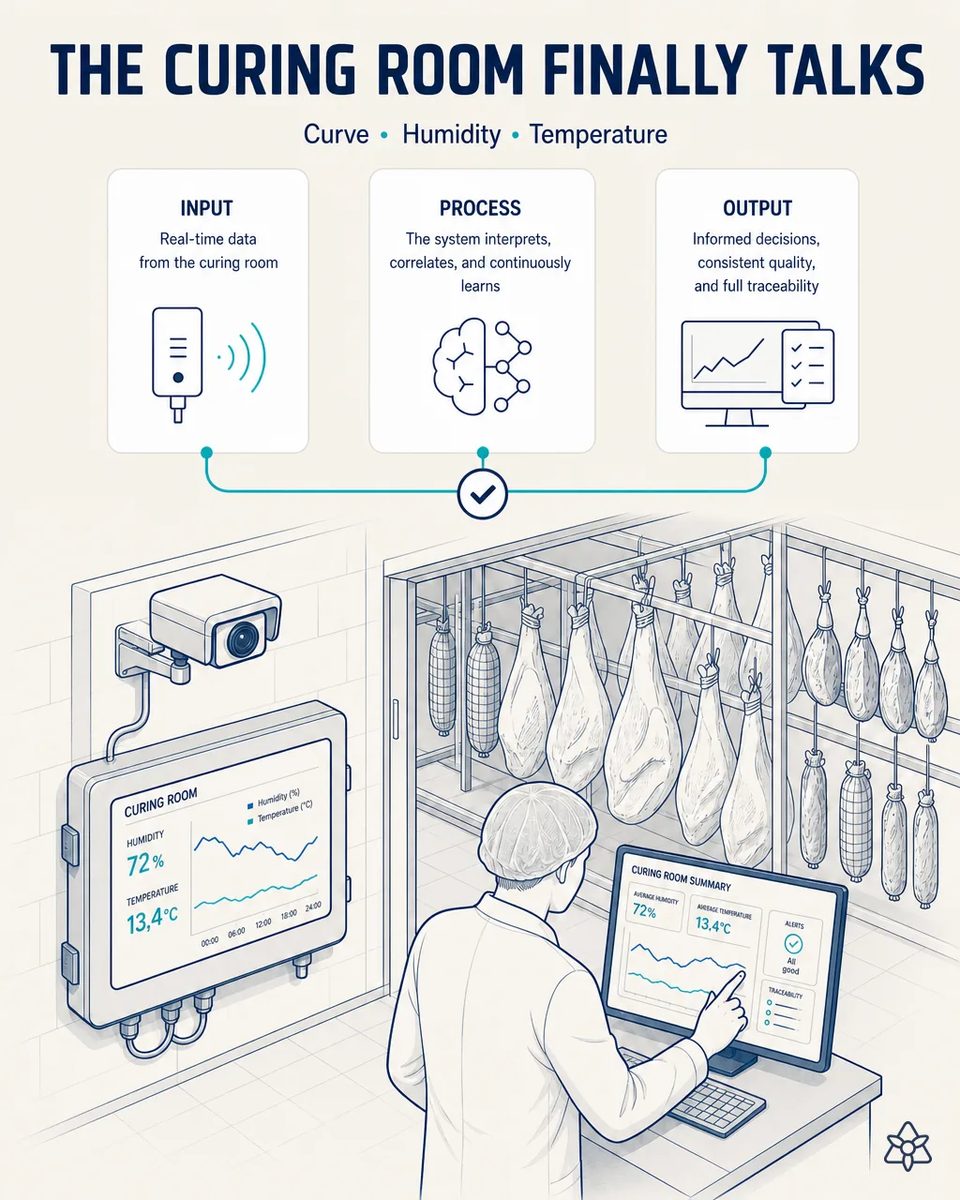
The room where ham and cured loin mature runs on a 10-20 year old, offline controller showing the humidity/temperature curve on a proprietary screen. Replacing it means weeks of downtime and pieces at risk. With iLEAN Connect, one external camera pointed at the panel digitizes the curing curve in central memory, piece by piece.
Preserve curing-room panel readings with their batch context
The curing room is the asset that determines final cure quality. Its panel shows everything the quality lead would need to correlate curve ↔ losses ↔ complaints, but that data dies every time the screen changes phase.
- An isolated temperature means little without the room, process phase and active load. For cured ham and dry-cured loin, the useful record connects the visible controller sequence to product arrivals, departures and location changes. The scope should identify which variables are actually displayed and which would require another measurement source before designing the camera installation.
Preparing this use case at the plant
Connect photo mode on the panel. Fixed industrial camera + OCR with a grounded LLM that interprets every frame, structures the time curve per curing chamber, and cross-references it with the batch in progress.
Test recognition with glare, condensation, menu changes and different lighting conditions. Every sample carries a timestamp, room identifier and reading-quality status. If humidity disappears from the display, record that gap instead of manufacturing a continuous curve. Physical control remains with the existing equipment; any proposal to change setpoints requires a separate integration and validation scope.
Operational change to validate
| Stage | Starting point | Proposed workflow |
|---|---|---|
| Reading legacy curing-room control panels | The curing room is the asset that determines final cure quality. Its panel shows everything the quality lead would need to correlate curve ↔ losses ↔ complaints, but that data dies every time the screen changes phase. | Connect photo mode on the panel. Fixed industrial camera + OCR with a grounded LLM that interprets every frame, structures the time curve per curing chamber, and cross-references it with the batch in progress. |
Example target, subject to plant validation: zero curve-to-loss correlation → root-cause analysis per batch and chamber in minutes. Controller replacement indefinitely deferrable.
Measure results before scaling
The block below is an estimate to be validated against your plant's actual data. We put it forward so the committee has an order of magnitude; we refine it during the assessment.
Estimated payback of 5-10 months, avoided controller-replacement CAPEX, and reduced losses from over-drying or out-of-range humidity. Estimate to be validated.
Questions about reading legacy curing-room control panels
Does the camera measure moisture inside the meat?
It reads what the panel displays; it does not measure the product interior. Relationships between room conditions, weight loss and finished quality require batch records and available quality measurements. Before attributing losses to excessive drying, the analysis should account for recipe, load, processing time and the specific measurements used by the plant.
How is this different from automating a curing room?
The purpose is to recover information from an isolated controller and make it searchable. Compare extracted values against the panel and assess time coverage during the pilot. Controller replacement still depends on equipment condition, maintainability and process requirements, even when a camera provides a practical way to recover its displayed information.
Talk to us about digitizing your curing room without touching the current controller.
We work on your plant's real data, not ours. Assessment with no commitment.
Request estimated ROI within 48h ‹ See all cases of cured meat processing See food industry