Rapid microbiology with AI — release batches sooner without touching the reference method.
The bottleneck in microbiological QC is no longer just the 5-14 day incubation: it is manual plate reading, environmental monitoring that arrives late and the weak link between RMM and LIMS. iLEAN reads the plate by vision, captures the RMM and the EM data, and lets the microbiologist sign the count instead of counting from scratch. The person still signs — only with days of lead time.
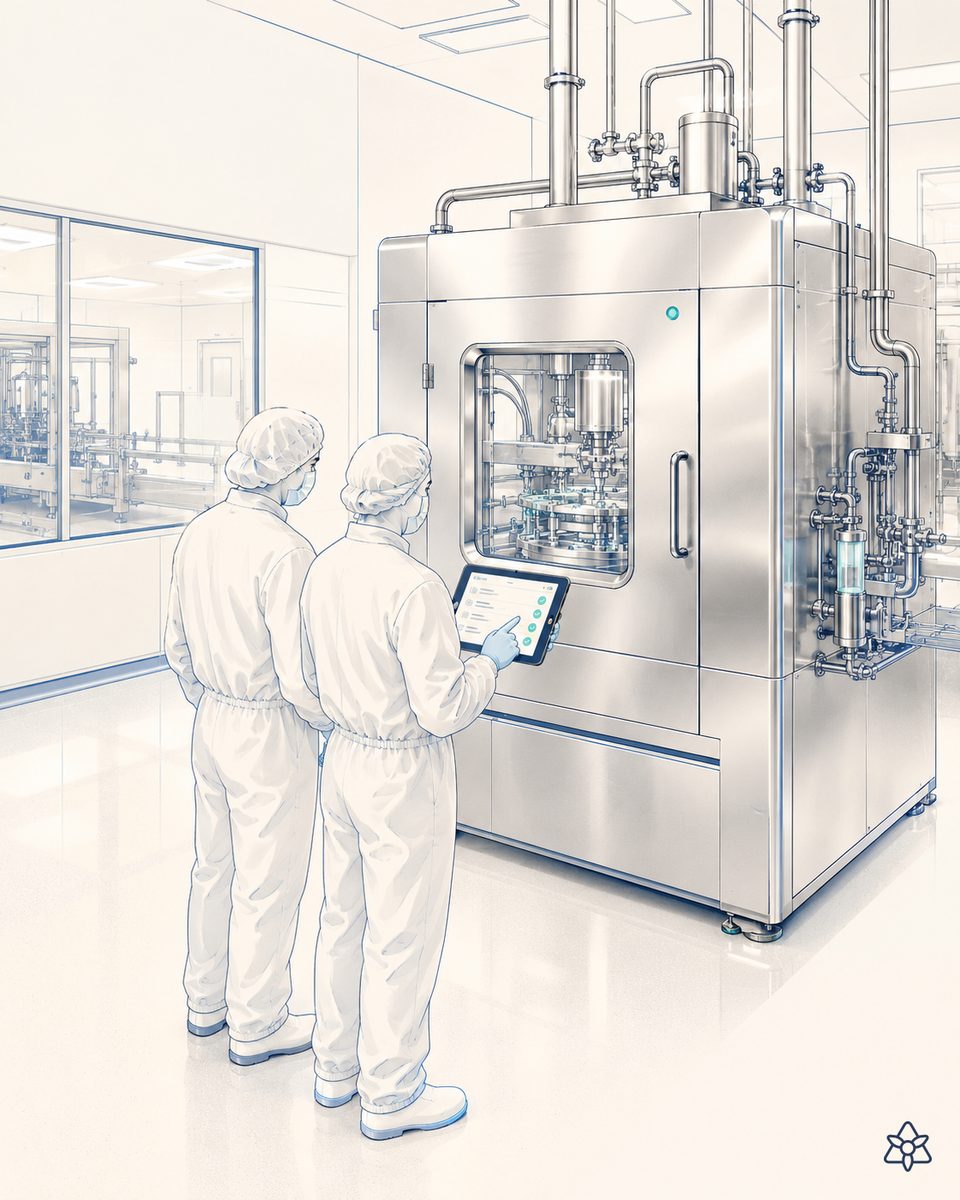
Days of incubation + hours of manual reading + a spreadsheet for EM.
Pharmaceutical microbiology lives with a well-known structural problem: the compendial method needs 5 to 14 days of incubation, and that blocks batch release, working capital and quarantine space. Rapid methods (PCR, ATP bioluminescence, flow cytometry) bring it down to hours — but they rarely fit the lab's rhythm, because the result comes out of an instrument, travels to a spreadsheet, goes back into the LIMS and ends up in a trend that is reviewed weekly.
And on top of incubation there is the other layer: the reading. A senior microbiologist spends a huge share of the working day counting colonies under a magnifier and typing numbers by hand — work that is done well, but with the inevitable variability between analysts and with no photo of the plate archived as evidence. Environmental monitoring adds another layer: hundreds of plates per shift, viable particles, the BMS, Met One readers — all of it cross-checked against the batch produced in that window, almost always by hand and almost always late. When a trend approaches the alert limit in a Grade A zone, the manager finds out at the weekly review, not while there is still time to act.
iLEAN does not replace the lab — it seals the cracks between incubator, RMM, LIMS and EM.
The lab knows how to do its job. What is hard is not the method, it is the flow of data: the plate that gets counted, the ATP reading, the particle counter that samples, the BMS that logs a pressure differential. Each one in its own silo. iLEAN acts as the putty that fills those gaps, without asking you to change the LIMS, the RMM or the reference method. Assist and simplify.
Edge reads the plate or the RMM reader. Connect ties LIMS, BMS and EM together. The agent cross-checks against the batch in progress and raises the alert while there is still time to act. The microbiologist still signs — with days of lead time and with visual evidence archived.
The three iLEAN pieces applied to rapid microbiology and environmental monitoring:
- Edge — a CNN camera over the incubator or over the RMM reader. It counts colonies, identifies growth patterns, saves the image as evidence for the dossier and publishes the count to the LIMS. The microbiologist reviews and signs — she does not start from scratch. It works with no network.
- Connect — captures the LIMS (LabWare, LabVantage or whichever you run), RMM readers (Celsis, Growth Direct, BacT/ALERT), viable and non-viable particle counters, and the cleanroom BMS. It also captures what arrives from outside: a procedure change from the compliance lead, an alert from a culture medium supplier. All of it at second zero, with no manual forwarding.
- Agent — cross-checks EM against the batch in progress, the rapid method against the reference method, and the trend against alert and action limits. If a critical zone drifts, it does not send an email at 10 p.m.: it alerts the manager, proposes actions (check HVAC, stop the line, widen sampling) and prepares the dossier for QA. The person decides.
Classic microbiological QC vs. QC assisted with iLEAN
| Aspect | Classic QC + non-integrated RMM | With iLEAN Edge + Connect + Agent |
|---|---|---|
| Plate reading | Manual count under a magnifier, typed into the LIMS by hand | Edge counts by vision and publishes to the LIMS; the microbiologist signs |
| Visual evidence | A photo now and then; depends on the analyst | An image of every plate archived automatically for the dossier |
| RMM (PCR/ATP/flow) | Result goes to a spreadsheet, back to the LIMS the next day | Captured at second zero, cross-checked live with batch and EM |
| Environmental monitoring | Weekly trend review | Alert when a critical zone drifts, in real time |
| Time to an operational decision | Days — sometimes weeks for EM | Hours for EM, assisted counting in minutes |
| Reference method | Untouched | Untouched — iLEAN assists, it does not replace the compendial method |
Impact estimate for your plant — to be validated with your numbers.
The block below is an estimate to be validated with the specific data of your lab. We put it forward so the committee has an order of magnitude; we refine it during the diagnostic.
- Pharma QC with 4-8 incubators, a mix of compendial culture + one RMM method in production (ATP or Growth Direct), a commercial LIMS, Grade A/B/C EM.
- Edge pilot on one incubator or on the RMM reader + integration with the LIMS and the BMS + an EM trend agent. First value expected within a few weeks.
- Reduction in manual reading queue time of the order of ≥30% (a conservative estimate; in high-volume plants it goes higher).
- Indicative payback between 4 and 9 months, with two levers: release days gained (working capital freed earlier) and EM deviations detected earlier (batch saved).
- The reference method is left untouched. The AI assists; the dossier assembles itself.
And the QC manager's reasonable doubt
"What if the AI miscounts the colonies and signs off a hidden OOS?" — hallucination is a problem of free generation, not of anchored tasks. Counting colonies on an image is an anchored task par excellence. In tasks of that kind, the best models brought error below 1.5% [1]. And even so, the reading does not decide: the microbiologist reviews, signs and keeps her reference method. The three safety rings exist precisely for this.
[1] OpenAI paper "Why Language Models Hallucinate", 2025 — on the reliability of AI in anchored tasks.
What people ask about rapid microbiology with AI
What are rapid microbiological methods (RMM) and what does the regulation say?
Rapid Microbiological Methods (RMM) are techniques that replace or complement classic plate culture (5-14 days) with readings in hours: PCR/qPCR, ATP bioluminescence, flow cytometry, vibrational spectroscopy. USP <1223>, Ph. Eur. 5.1.6 and FDA PAT allow their use provided they are validated against the reference method (sensitivity, specificity, robustness). In practice, serious plants use RMM for fast release plus the classic method as regulatory backup.
Why is plate reading still the bottleneck even when rapid methods are introduced?
Because reading is still largely manual: a microbiologist counts colonies visually and types the figure into the LIMS. That introduces inter-analyst variability (I count 17 CFU, you count 19), queue time at sample peaks and weak traceability (a photo of the plate is rarely kept). iLEAN Edge solves the visual part: a camera over the incubator or the RMM reader reads the plate, counts it with machine vision, saves the image as evidence and publishes the result to the LIMS — and the microbiologist signs the count instead of doing it from scratch.
How is environmental monitoring (EM) connected to batch release?
EM (Grade A/B/C/D under Annex 1) generates hundreds of plates and viable particle readings per shift, which are traditionally processed offline and cross-checked by hand against the batch produced in that window. iLEAN Connect captures plates, particle readers, Met One counters and the BMS, and the agent cross-checks them in real time with the batch in progress. If a trend approaches an alert limit in a critical zone, the manager sees it while there is still time to act — not three weeks later in the trend review.
Does iLEAN replace the classic compendial method?
No. Replacing the reference method is a regulatory decision only the customer can make (with validation and dialogue with the authority). iLEAN assists and simplifies: it reads the plate by vision, captures the RMM result, cross-checks it against EM and the batch, and assembles the dossier. The lab keeps its reference method for official release; the operational decisions (do I stop the line? do I pull the batch of product in flow?) are taken earlier thanks to the fast signal. Assist and simplify, not replace.
How much does AI-assisted microbiology cost in a pharma QC lab?
The pilot is sized per incubator room / per method: one Edge camera over a key incubator or over the RMM, integration with the LIMS and the BMS, and a trend agent. A reasonable payback to put in front of the committee is a few months, with two levers: batch release time (days released earlier = working capital) and deviations avoided (an EM OOS caught in time can save the batch or prevent a recall). Ask us for the estimated ROI with your data: we send it in 48h.
More cases in pharma
- Prefilled syringe inspection with AI — every unit leaves with its own file, not just its batch number.iLEAN Edge inspects particles, dose, plunger integrity and serialization on prefilled syringe lines; the…
- Protein purification with AI — chromatography curve drift shows up before the peak, not after the batch.iLEAN cross-checks the real chromatography curve, pressure and conductivity with the good-batch…
- Radiopharmacy with AI — short half-life, no margin to rebuild the batch afterwards.How iLEAN cross-checks radiotracer synthesis, patient dose, short half-life and traceability to release…
- Spray drying with AI — process drift shows up half an hour early, not after the batch.iLEAN cross-checks temperatures, flow rates, residual moisture and the recipe to anticipate spray drying…
- AI suppository manufacturing control — one degree less in the mass is a run of weights out of spec.How iLEAN cross-checks mass temperature, cavity dosing and strip sealing to guarantee the right…
- Syrup filling control with AI — one milliliter out of range is not an incident, it is an OOS deviation.How iLEAN cross-checks volumetric dosing, viscosity and bottle closure to secure correct pharmaceutical…
Tell us your case and within 48h we'll send you the estimated ROI of this AI project for your microbiological QC.
We work on your lab's real data, not ours. Diagnostic with no commitment.
Request estimated ROI in 48h See pharma