ATMP vein-to-vein custody chain — a lost CAR-T is not an incident, it is a patient without treatment.
A lost autologous CAR-T means a patient without treatment. iLEAN holds the vein-to-vein custody chain with no identity error: a unique patient-product identifier carried through every milestone, from apheresis to infusion, with a living dossier for EMA and FDA. The person signs — a shipment never moves forward on a broken trace.
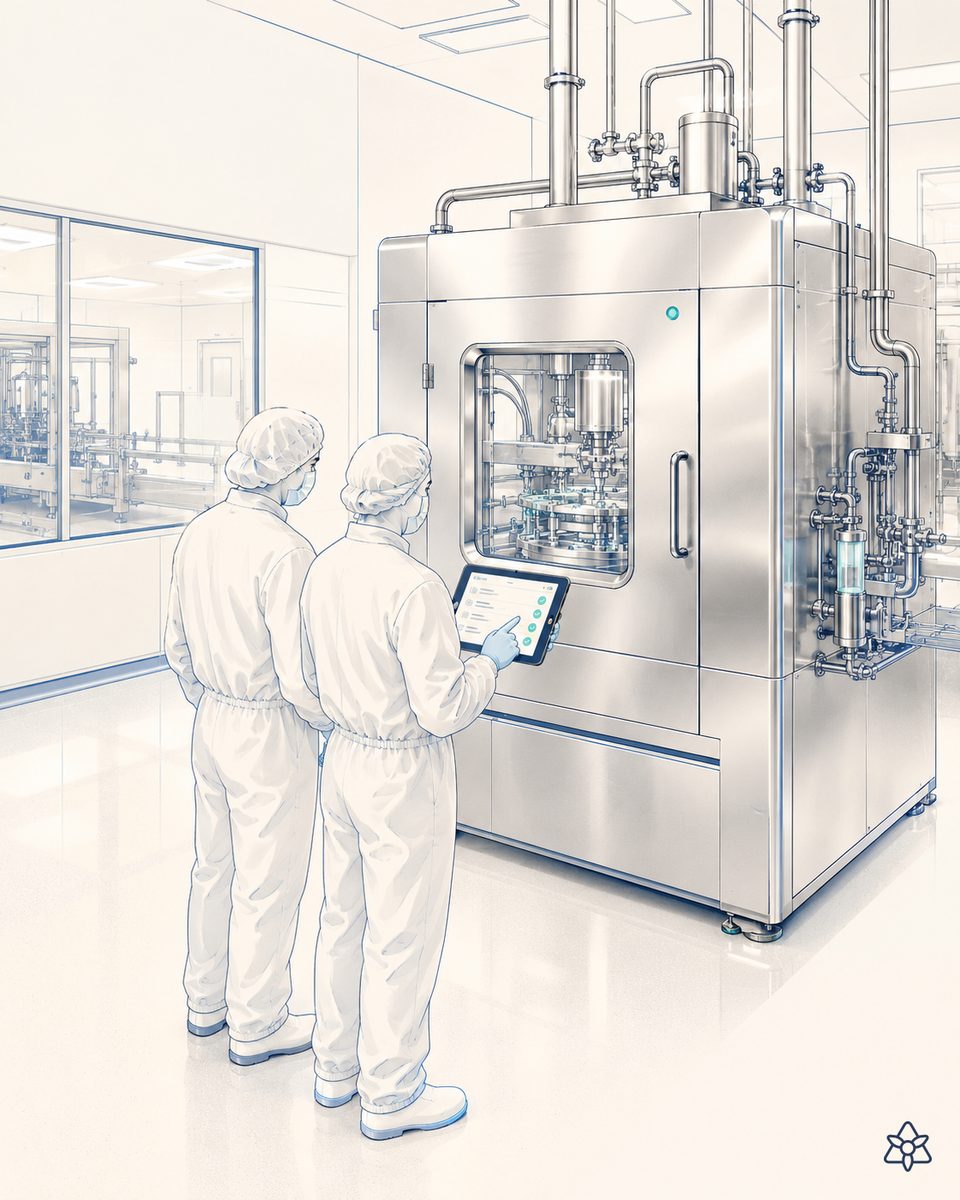
One missing reading and the product stops being “this patient”.
The autologous ATMP is the extreme case of pharma traceability: the medicine is the patient. If the custody chain breaks between apheresis and infusion, there is no substitute batch and no recall that helps — there is a sick person waiting for a treatment that can no longer be delivered. And a broken chain is almost never down to bad faith; it comes from these causes:
- Hand-offs between systems that do not talk to each other — the origin hospital's HIS, the manufacturer's LIMS, the cryogenic courier's system and the destination hospital's HIS, each with its own naming conventions. The patient-product identity gets rebuilt by email, by spreadsheet or over the phone.
- Documentation that arrives late — the qualified person signs with whatever they have; if the shipper's datalogger is downloaded at destination and the curve is broken, it is already too late.
- Outside events that nobody integrates at second zero — a flight delay, a change in hospital scheduling, an incident at the courier. They arrive by WhatsApp, by email, by phone call, and people find out when there is no margin left.
The operator, the qualified person and the hospital coordinator all know this. They do not fail out of carelessness — they fail because this information was never joined up, and on the day their systems were designed there was no affordable way to join it.
iLEAN does not replace the LIMS, the HIS or the courier — it seals the cracks between the three.
The vein-to-vein challenge is not a lack of technology in each link: every one of them has its own. The problem is the putty between them, the dead zones where the patient-product identity loses its signature as the data passes from one system to the next. That is where iLEAN comes in, without asking you to change your LIMS or the partner hospital's HIS.
Tracer keeps the patient-product ID alive at every milestone. Connect captures outside events at second zero. The agents consolidate the dossier and warn before — not after — something stops adding up.
The three iLEAN pieces applied to the ATMP custody chain:
- Tracer (Edge + traceability agents) — a terminal with vision and label reading at every critical milestone: apheresis, receipt at manufacturing, cryogenic shipping, receipt at the hospital, infusion. Every reading cross-references the patient-product ID and, if it is missing or does not match, holds the shipment right then — not in the audit afterwards.
- Connect — captures the data from the shippers' dataloggers (temperature, opening events, GPS), the specialist courier's communications, the hospital coordinator's email and the hospital HIS events, whether they arrive via modern HL7/FHIR or as a form the nurse fills in by hand in the apheresis room. The information reaches the system at second zero, with nobody forwarding anything or calling a meeting.
- Writer agent — consolidates the vein-to-vein file per patient with every milestone cryptographically signed, ready for inspection by the EMA, the FDA or a national authority. It does not rebuild after the fact — it writes the dossier while the chain moves, and if something drifts it alerts the qualified person through whichever channel they use, before the problem grows.
ATMP custody by email and spreadsheet vs. a live chain with iLEAN
| Aspect | Manual custody + isolated systems | With iLEAN Tracer + Connect + Writer |
|---|---|---|
| Patient-product ID | Rebuilt by email between hospital and manufacturer | Unique, carried through and verified at every milestone |
| Cryogenic datalogger | Downloaded at the end, at destination | Captured in real time, alert before the deviation |
| Communication with the courier | WhatsApp and email forwarded to several people | Connect integrates the channel, events at second zero |
| Dossier for EMA/FDA | Rebuilt at the end, over days or weeks | Living file per patient, signed, exportable |
| Deviation detection | Once it has already failed — and the patient is waiting | The agent alerts the qualified person as soon as it drifts |
| Integration with the hospital HIS | “Let the hospital change” (it is not going to happen) | iLEAN adapts to the hospital's HIS, not the other way round |
Impact estimate for your plant — to be validated with your numbers.
The block below is an estimate to be validated with the specific data of your program. We put it forward so the committee has an order of magnitude; we refine it during the diagnostic.
- Autologous CAR-T program with 2-5 partner hospitals, a specialist cryogenic courier and centralized manufacturing.
- Tracer + Connect pilot at one partner hospital plus the shipping leg (reading at every milestone, real-time datalogger, minimal integration with the LIMS and the HIS). First value expected within a few weeks.
- Indicative payback between 4 and 9 months, depending on patient volume and the cost of lost hand-offs (batches quarantined for broken traceability, flights missed because documentation ran late, infusions rescheduled).
- A ≥30% reduction in hand-off dead time and elimination of the risk of losing patient-product identity in a documented hand-off — the hard lever is zero patients whose treatment is lost to a broken trace.
And the qualified person's reasonable doubt
“What if the AI gets it wrong and signs off a shipment it should not have?” — hallucination is a problem of free generation, not of anchored tasks. In tasks where the AI merely cross-references readings against a unique identifier and packages the evidence, the best models brought error below 1.5% [1]. And even so, in ATMP nothing critical is decided alone: the three safety rings ensure the qualified person's signature remains mandatory — the AI proposes, the person releases. See the architecture.
[1] OpenAI paper “Why Language Models Hallucinate”, 2025 — on the reliability of AI in anchored tasks.
What people ask about the ATMP vein-to-vein custody chain
How is the patient identified in an autologous ATMP?
With a unique patient-product identifier generated at the moment of apheresis and carried through every label, container and record until infusion. iLEAN Tracer cross-references that ID with the manufacturer's batch, the cryogenic shipper, the origin hospital and the destination hospital — if a single reading is missing, the system holds the shipment before it moves to the next phase. The person signs; a product never moves without live traceability.
How does iLEAN secure CAR-T cryogenic logistics?
By capturing the data from the shipper's dataloggers in real time (temperature curve, opening events, GPS) and cross-referencing it with the patient-product ID. If the temperature goes out of range or the shipment strays off route, the agents anticipate the problem and alert the qualified person — the hospital does not find out when it is already too late. Connect also picks up the carrier's email, the hospital coordinator's WhatsApp messages and the specialist courier's milestones, at second zero.
Does it comply with EU ATMP regulation?
Yes. Vein-to-vein traceability is an explicit requirement of Regulation (EC) 1394/2007 on ATMPs, of Directive 2004/23/EC on cells and tissues, and of the applicable EU GMP Annex 1 and Annex 13. iLEAN leaves the custody-chain dossier cryptographically signed and available for inspection — a living file per patient, not a PDF rebuilt after the fact. The three safety rings guarantee that critical data only enters the validated system with a human signature.
How does iLEAN integrate with the hospital's systems?
Without asking the hospital to change anything. Connect captures the data whether it arrives via modern HL7/FHIR, as an export from a legacy HIS, in an email from the coordinator or as a photo of the form the nurse fills in by hand in the apheresis room. The putty between manufacturer, cryogenic courier and hospital is exactly what iLEAN seals, without touching the hospital ERP or the manufacturer's MES.
Does it cut total vein-to-vein time?
Yes, and the hard lever is not the manufacturer's speed (that is bounded by cell culture) but the dead time between phases: the flight missed because a document arrived late, the batch in quarantine waiting for a signature, the hospital coordination handled over the phone. Estimate to be validated with your data: a ≥30% reduction in transit and handoff times, first value within a few weeks. We ask for your ATMP program's data and send you the estimated ROI in 48h.
More cases in pharma
- Aseptic eye drop filling with AI — contamination is not detected in QC, it is prevented at second zero.How iLEAN cross-references cleanroom vision, HVAC/Grade A parameters and Annex 1 for aseptic eye drop…
- Aseptic eye drops control with AI — sterility is not tested at the end: it is built into every minute of the fill.How iLEAN cross-checks environmental monitoring, 0.22 µm sterilizing filtration and Grade A…
- Aseptic packaging with AI vision — a vial with a particle is not an incident, it is a recalled batch.iLEAN Vision inspects every vial leaving the aseptic filler: level, particles, sealing. Without stopping…
- Autoinjector pen control with AI — the patient activates it alone, so the assembly leaves no room for doubt.iLEAN inspects autoinjector pen assembly, activation force and serialization, and builds the FDA/EMA…
- Pharma blister control with AI — the half-empty cavity that comes back as a patient complaint.How iLEAN inspects every blister cavity, seal and serialization inline with Edge and agents — GMP, Annex…
- Pharmaceutical capsule filling with AI — the dose drifts before blistering, not after.iLEAN cross-references dose, capsule integrity and residual powder inline with the MES recipe; the agent…
Tell us about your ATMP program and in 48h we'll send you the estimated ROI of an AI-backed custody chain.
We work on your program's real data, not ours. Diagnostic with no commitment.
Request estimated ROI in 48h See pharma