Drum-to-site cable traceability with AI — the day a switchboard burns on site, you don't want to be digging through spreadsheets.
The cable drum that leaves your plant carries a copper batch, XLPE compound, an actual measured length, passed tests and a destination job site — and each piece of data lives on a different island. iLEAN Tracer ties the five realities into a single screen-printed code, so that when someone asks about that specific drum the answer arrives in minutes, with the dossier signed and complete. The person signs — the system prepares the data.
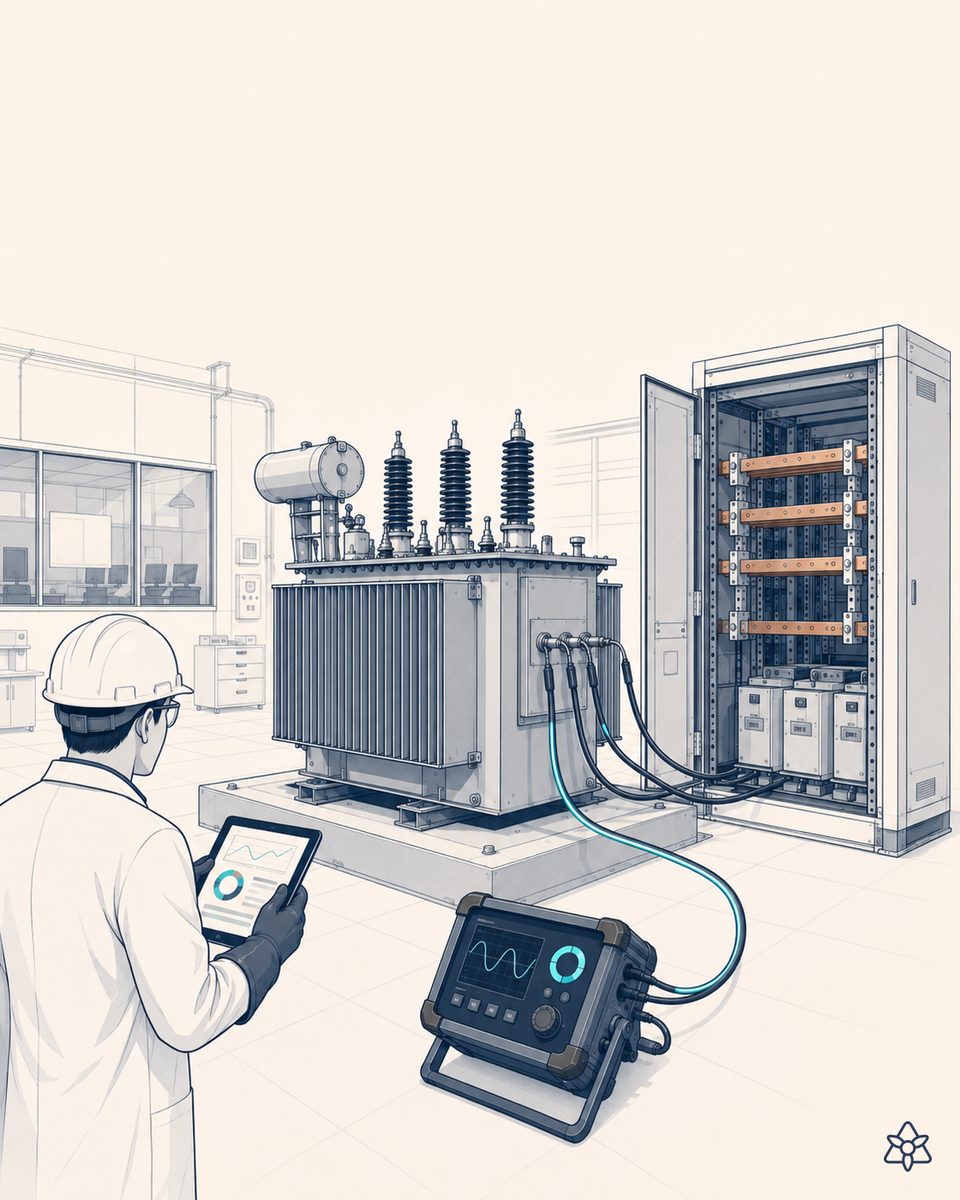
Five realities, five islands, one single drum.
A well-made cable drum is the intersection of five pieces of data that, in most electrical equipment plants, each live in their own place:
- Copper batch — which heat, which supplier, which purity. Usually in the inbound delivery note, in the ERP, or in a folder of PDFs.
- XLPE compound or other insulation — which manufacturer, which lot, which residual moisture. In the lab or on the shift lead's sheet.
- Actual measured length — the one the winder's counter showed at the end, not the theoretical one. In the SCADA or on the operator's tape.
- Electrical tests passed — resistance, dielectric strength, partial discharges. In the lab's system or on signed sheets.
- Destination job site — which customer, which specific site, which switchboard. In the commercial ERP or on the outbound delivery note.
When the end customer calls about a site failure years later, someone on the quality team spends days rebuilding the chain from spreadsheets, delivery notes and memory — and sometimes the data never turns up. When it does, its authority is undermined by the fragility of the medium: “Juan jotted this down on a sheet — who says he didn't get it wrong?” The day a switchboard burns on site, you don't want to have to trust spreadsheets.
iLEAN Tracer does not replace the ERP — it ties the specific drum to its five islands at the moment it leaves the plant.
The drum traceability problem is not a lack of information — everything is somewhere. The problem is that nobody ties the drum's code to its five sources at the moment the drum is physically in front of someone. iLEAN acts as the putty that fills that joint, without asking you to change your ERP, your MES, your lab LIMS or the winding line.
Connect reads copper batch, compound, length, tests and job site wherever they live. An agent assembles the dossier of the specific drum. A light Edge prints the unique code on the side. The person signs — and the end customer only has to scan.
The iLEAN pieces applied to drum-to-site cable traceability:
- Connect — captures the five sources whether they come from a modern ERP, the lab's LIMS, the operator's tape or the site manager's WhatsApp. It does not force you to change systems, only to stop keeping each piece of data locked on its island.
- Tracer agent — assembles the dossier of the specific drum when winding finishes: it joins copper batch + compound + length + lab tests + destination site and signs it cryptographically. The dossier is accessible through the code screen-printed on the side of the drum, via a secure portal.
- Light labeling Edge — prints the unique code on the side of the drum (screen printing, label, plate or RFID, whatever you already use) and reads it back when the drum is delivered or returned. It closes the loop between plant, shipping and job site. Works without a network.
Classic drum traceability vs. drum-to-site with iLEAN Tracer.
| Aspect | Classic traceability | With iLEAN Tracer |
|---|---|---|
| Time to answer a claim | Days or weeks of rebuilding | Seconds, scanning the code |
| Source of the data | Spreadsheets, delivery notes, memory | ERP+MES+LIMS+site, signed, live |
| Copper batch per drum | “It must be batch X from that week” | Exact batch, with its certificate |
| Actual cable length | The nominal one on the delivery note | The one measured by the winder's counter |
| Destination job site | Commercial delivery note, delivery unsigned | Delivery confirmed and recorded at the plant |
| Dossier for the customer or the insurer | Custom-built, weeks | Automatic by code, ready in seconds |
Impact estimate for your plant — to be validated with your numbers.
The block below is an estimate to be validated with the specific data of your plant. We put it forward so the committee has an order of magnitude; we refine it during the diagnostic.
- MV/LV electrical cable factory with two winding lines, standard ERP/MES, in-house lab with LIMS and a current drum code based on screen printing or an adhesive label.
- Tracer pilot on one line: Connect integration with ERP/MES/LIMS + dossier-assembly agent + light labeling and reading Edge. First value expected within a few weeks — the first drum with a complete dossier accessible by code.
- Indicative payback between 4 and 9 months, depending on the volume of documented claims/audits and the average cost of the quality and sales team's time spent rebuilding traceability by hand.
- Expected reduction in claim response time ≥ 30%, with a conservative floor: the hard lever is answering a single large claim with the signed dossier in hand.
And the quality manager's reasonable doubt
“What if the AI assembles a dossier with a wrongly cross-referenced field and we send it to the customer?” — hallucination is a problem of free generation, not of anchored tasks like this one — reading a field from the LIMS and packaging it next to a field from the ERP. In anchored tasks the best models brought error below 1.5%[1]. And even so: the drum's dossier is cryptographically signed with its chain of sources (which data came from where and when), and the IRIS safety rings require the quality manager to sign the dossier before it becomes accessible to the end customer.
[1] OpenAI paper “Why Language Models Hallucinate”, 2025 — on the reliability of AI in anchored tasks.
What people ask about cable drum traceability with AI
What does cable drum traceability have to answer when there is a failure on site?
When a switchboard burns on a job site years after installation, the installer (or their insurer, or the end customer) always asks the same thing: “this specific drum — which copper batch did it carry, which XLPE compound, which tests did it pass, what date did it leave the plant, which site was it delivered to?” Without drum-to-site traceability that answer takes weeks and is pieced together from spreadsheets, delivery notes and memory — with the risk that the data never turns up. With real traceability, the code screen-printed on the side of the drum returns the complete dossier in seconds.
Why isn't the ERP / MES we already have enough to trace the drum?
Because the ERP knows the delivery note and the job site, the MES knows the work order, the lab knows the tests, and the line knows the actual measured length — but each one lives on its own island and the code printed on the drum almost never ties the four together. iLEAN Tracer does not replace your ERP or your MES: it joins them at the level of the specific drum, at the moment the drum leaves the plant. The putty, not a new wall.
What is iLEAN Tracer and how is it different from the vision Edge?
iLEAN Tracer is the iLEAN family dedicated to traceability: it combines Connect (to capture copper batch, compound, tests and destination site from whatever systems hold them), Agents (to assemble the per-drum dossier and sign it) and a light Edge terminal in the drum labeling area that prints the unique code and reads it back when the drum is delivered or returned. The vision Edge inspects the insulation; Tracer ties together the drum's history. They work side by side on the same plant.
Will we have to redo the labeling on all our drums?
No. Tracer adapts to your current code — screen printing, adhesive label, stamped metal plate or RFID. What it adds is the database behind that code, fed from the islands you already have (ERP, MES, lab, site sheet). If your customer asks for GS1, ETIM, eCl@ss, Data Matrix or QR codes, Tracer issues them on top of the existing one. The effort goes into the integration, not into changing the labeling line.
How much does it cost and what do you get back when you set up drum-to-site traceability?
The typical pilot is one drum labeling line + integration with ERP/MES/lab + a per-drum dossier accessible to the site team (protected web page or installer portal). The payback presented to the committee is several months: the hard lever is answering a single large claim with the dossier in hand (it avoids the “we can't find it” the insurer ends up paying for) and cutting the quality team's time spent rebuilding traceability by hand. Ask us for an estimated ROI with your plant's data and we'll send it within 48 hours.
More cases in other sectors
- Electrical equipment — a test that is not recorded does not exist for the notified body.Documented iLEAN cases in electrical equipment: EN 61439 testing, CPR cable traceability, windings and…
- Dynamic balancing of an async motor rotor — the workshop pays for the trial and error, and the veteran's intuition retires with him.How iLEAN Edge assists on the dynamic balancing machine for async motor rotors: it proposes…
- Busbar-to-cell weld inspection in BESS battery packs with AI — a bad module is not an incident, it is a thermal risk.How iLEAN Edge inspects busbar-to-cell welds in stationary BESS battery packs and holds the module…
- Laser marking verification on circuit breakers — one wrongly engraved digit is a different product, and another claim.iLEAN Vision validates the laser marking (In, Icu, curve) of miniature circuit breakers before packing.…
- CPR traceability for electrical cable — a meter without a class does not go on site.iLEAN Tracer links reaction-to-fire class, DoP and batch to every meter of CPR cable made and shipped to…
- MV/LV transformer winding control with AI vision — a defect that gets buried is never recovered.How iLEAN Vision verifies turns, layers and inter-turn insulation while an MV/LV transformer is being…
Tell us your case and in 48h we'll send you the estimated ROI of drum-to-site traceability for your cable plant.
We work on your plant's real data, not ours. Diagnostic with no commitment.
Request estimated ROI in 48h See electrical equipment