Aluminum casting control with AI — porosity is invisible at demolding; finding it at the leak test means paying twice.
A porous HPDC part passes demolding, gets machined, and fails the leak test with all the added value already spent. iLEAN stitches the cycle record to every part's serial with Connect, detects the defect early with Edge vision at demolding and anticipates parameter drift with Agents. The setter decides.
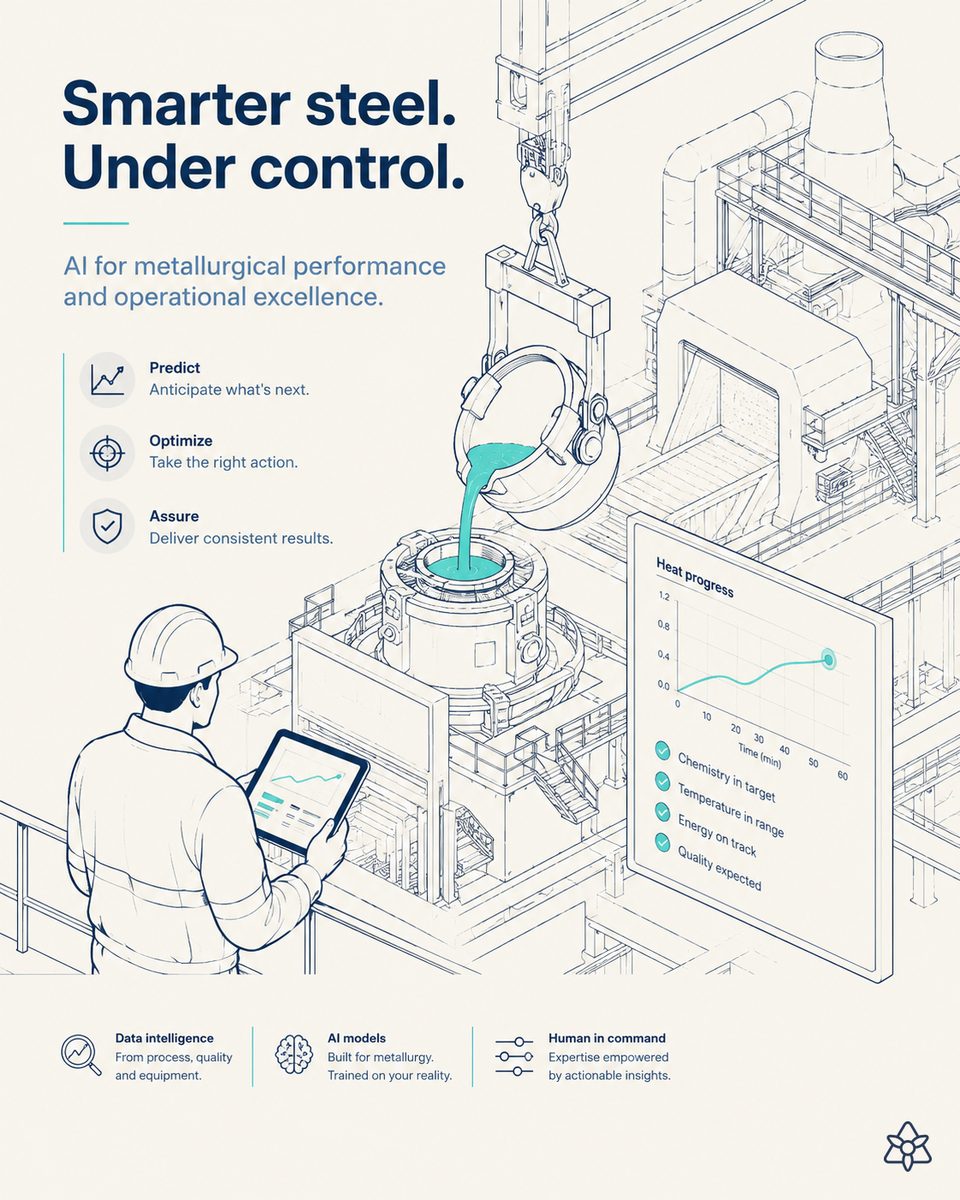
The defect is born at injection — and discovered after machining.
The head of an aluminum foundry tells it the same way in every plant: the part comes out of the mold looking good, passes visual control, goes into machining. And there — or worse, at the leak test — up comes the porosity, the internal shrinkage, the leak. The part was already born defective at injection, but nobody could see it; and by the time the defect surfaces, the plant has given away machining, handling and testing to a dead part.
Three things happen at once in a real HPDC cell and almost nobody looks at them together:
- The defect is not visible while it is still cheap — porosity and internal shrinkage cannot be seen on a freshly demolded part. They are discovered downstream, when machining opens up the porous zone or the leak test gives away the leak, with all the added value already lost.
- The parameters that cause it drift slowly — melt temperature, die temperature, second phase velocity, vacuum level. None of them jumps out of range: they slide cycle by cycle, and by the time somebody notices, the whole batch has come out compromised.
- Cycle data and defect live in separate systems — the cycle record stays in the die casting machine; the defect is written up in the machining quality report, days later. The cause-and-effect link gets lost along the way, and root cause turns into a meeting full of hypotheses.
The result is always the same: scrap is discovered late, the plant pays the cost multiplied, and the veteran setter goes back to correcting the machine by ear and by notebook. The knowledge that prevents the problem lives in his head; the day he retires, it walks out with him.
iLEAN does not replace your die casting machine — it stitches together what today lives apart.
The foundry's problem is not a lack of data: the die casting machine records its cycle and quality writes down its defects. The problem is that the two never meet — the cycle stays in the machine and the defect appears in another system, days later, with no serial to join them. iLEAN acts as the putty that stitches the cycle record, each part's serial, the demolding image and the downstream quality verdict, without asking you to change the machine or the process.
Connect stitches the cycle to every part's serial. Edge sees the surface defect at demolding. Agents correlate defect and parameters and warn about drift before the batch comes out porous. The setter decides.
The three iLEAN pieces applied to casting control:
- Connect — captures the die casting machine's cycle record: through direct integration when the machine exposes the data, or with a camera over the controller panel on older machines, without touching the PLC. Every cycle — melt and die temperatures, phase velocities, intensification pressure, vacuum — is stitched to the serial of the part it produced. It works locally: if the plant loses its network, Connect keeps capturing and recording. What is critical does not depend on WiFi.
- Edge — vision at demolding: it detects the surface defect early (visible shrinkage, cold shuts, drag marks, misruns) on the freshly demolded part, while pulling it out still costs only the aluminum and not the machining. Every image stays linked to the serial and the cycle.
- Agents — correlate the defect confirmed downstream (machining, leak test) with the cycle parameters that produced each part, learn which combinations generate it, and give warning when drift in those parameters points at the defect again — before the whole batch comes out porous. The agent does not act on the machine by itself: it proposes, and the setter decides.
Classic casting control vs. control with iLEAN
| Aspect | HPDC cell with classic control | With iLEAN Connect + Edge + Agents |
|---|---|---|
| Where porosity is discovered | At machining or the leak test, value already spent | Early signal at demolding and through cycle drift |
| Cycle record per part | Stays in the machine, with no serial | Stitched to each part's serial, queryable |
| Drift in melt, die, second phase and vacuum | Noticed once the batch has already come out compromised | Trend warning with room to adjust |
| Root cause of a defect | A meeting full of hypotheses, days later | The exact cycle of the part, in minutes |
| Older machines with no data interface | Outside the system, data lost | Camera on the panel, cycle digitized all the same |
| Capturing the setter's knowledge | It lives in his head | A pattern learned by the agents, repeatable |
Impact estimate for your plant — to be validated with your numbers.
The block below is an estimate to be validated with the specific data of your plant. We put it forward so the committee has an order of magnitude; we refine it during the diagnostic.
- Automotive HPDC cell, parts with leak-tightness requirements or structural parts, a mix of machines with and without a data interface, and scrap discovered after machining documented over recent months.
- Connect pilot on one or two machines + Edge vision at demolding + Agents learning the defect-parameter correlation for 4-6 weeks before they start anticipating. First value expected within a few weeks: simply stitching cycle to serial already turns every downstream defect into a query that takes minutes.
- Expected reduction in scrap discovered after machining of ≥30% in the first months, a defensible floor — estimate to be validated.
- Indicative payback between 5 and 12 months. The hard lever: every porous part pulled out at demolding, and every batch whose drift is corrected in time, is machining, handling and testing you do not give away to a dead part.
- A recurring benefit that does not enter the ROI but carries weight: the defect-parameter pattern learned from your cell stays as a permanent capability of the plant, not of the person who retires.
And the quality manager's reasonable doubt
“What if the AI correlates wrongly and triggers an unnecessary machine adjustment?” — the iLEAN agent does not act on the die casting machine by itself. It proposes; the setter decides; the correction is applied or it is not. Hallucination is a problem of free generation, not of anchored tasks: in tasks where the AI cross-references the cycle record with the quality verdict by serial, the best models brought error below 1.5%[1]. And even so, what is critical goes to the safety rings — the agent lives in the outer ring, proposes inward, and the adjustment on the machine is signed by a person. Never the other way round.
[1] OpenAI paper “Why Language Models Hallucinate”, 2025 — on the reliability of AI in anchored tasks.
What people ask about aluminum casting control with AI
Which cycle parameters does it capture?
The ones that really govern porosity and shrinkage in high pressure die casting: melt temperature in the holding furnace, die temperature by thermal control zone, first and second phase velocity of the plunger, intensification pressure and vacuum level in the cavity. iLEAN Connect takes the cycle record straight from the die casting machine — through integration when the machine exposes the data, or with a camera pointed at the panel on older machines — and stitches it to each part's serial. The value is not in reading each parameter, but in having them all together, part by part, when the defect shows up downstream.
How does it detect porosity if the porosity is internal?
Honestly: internal porosity cannot be seen from the outside, and iLEAN does not claim to see it. What it does is attack the problem from two directions. First, Edge with vision at demolding detects what is visible early — surface shrinkage, cold shuts, drag marks, misruns — which usually accompanies internal porosity and shares its causes. Second, the Agents correlate the defects that machining and the leak test confirm later with the cycle parameters that produced each part, and detect drift in those parameters on new parts. You do not need to see the pore to anticipate it: it is enough to recognize the cycle conditions that generated it the last few times.
Does it work with older die casting machines?
Yes — and it is the most common case in foundries. A die casting cell may have been producing perfectly for twenty years, yet its controller exposes the cycle record through no modern interface. For those machines, iLEAN Connect uses a camera pointed at the controller panel: it reads the values the panel itself displays on every cycle, digitizes them and stitches them to the part's serial, without touching the PLC or voiding warranties. On machines with a bus or a data interface, the integration is direct. In both cases the result is the same: every part comes out with its full cycle on record.
How does it link the defect to the parameters that caused it?
Through the part's serial. Today, in most foundries, the cycle record lives in the die casting machine and the defect lives in the quality report from machining or from the leak test — two systems that do not talk to each other, days apart. iLEAN stitches both ends together: Connect associates each cycle with its serial at the moment of injection, and when the defect appears downstream, the Agent retrieves in minutes the exact cycle that produced that part, compares it with the cycles of good parts of the same reference and flags which parameters had moved. Root cause stops being a two-hour meeting full of hypotheses and becomes a query with data.
How much does it cut scrap?
It depends on your starting point — a foundry with instrumented machines and a veteran setter who already anticipates drift does not have the same headroom as a plant with older machines and shift rotation. As a defensible floor, and always as an estimate to be validated with your data, a ≥30% reduction in scrap discovered after machining is realistic in the first months: every porous part pulled out at demolding, and every batch whose drift is corrected in time, is machining and testing you do not give away to a dead part. Indicative payback runs between 5 and 12 months. We send you the estimated ROI in 48h with the real data from your cell.
More cases in automotive
- AI aftermarket part packaging — the right box costs little; the wrong one costs you a rating on Amazon.How iLEAN cross-references kit vision, label reading and the ERP part number to prevent returns for the…
- Airbag assembly control with AI — a defect is not scrap, it is a recall of the whole series.iLEAN combines Edge vision on airbag assembly, critical tightening torque and batch-to-VIN traceability…
- Alloy wheel quality control with AI — pull the bad part before plating, not after.How iLEAN cross-references Edge vision over alloy wheel casting and machining, porosity X-ray and…
- Aluminum FSW welding with AI — a kissing bond is invisible to the eye and shows up in the destructive test two days later.iLEAN combines FSW torque, force and temperature to detect defects in automotive aluminum instantly.
- Automated IMDS for components — the declaration stops eating the hours of the people who have the fewest to give.iLEAN turns your BOM and material data into a ready IMDS declaration. ELV/REACH covered with no…
- Industrial AI cases in automotive body structural assemblyReal-world AI cases for stamping, forming and welding automotive structural parts: Connect, Edge and…
Tell us your case and in 48h we'll send you the estimated ROI of this AI project for your casting cell.
We work on your plant's real data, not ours. Diagnostic with no commitment.
Request estimated ROI in 48h See automotive