Textile adhesive control with AI — one badly formulated drum means an entire collection rejected.
A sound textile adhesive is where three realities meet — recipe and raw material (latex, PUR, hot melt), viscosity and solids at packing and the garment maker's spec (peel, wash resistance, Oeko-Tex). iLEAN cross-references those three with vision and in-line sensors plus integration with your ERP/MES, and holds the batch before packing when something does not add up. The person signs.
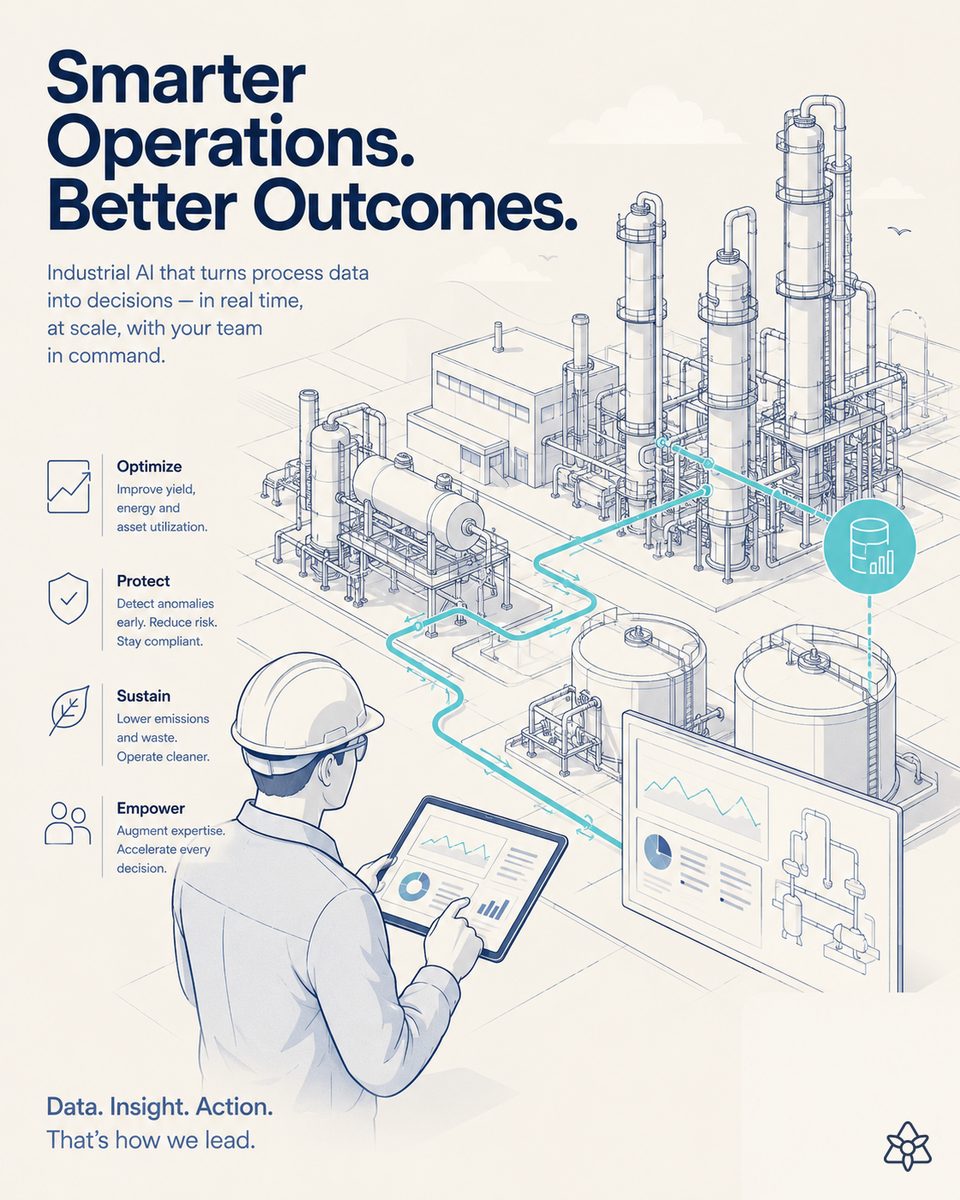
A piece that does not survive the wash does not come back on its own — the whole collection comes back.
The plant manager of a textile adhesive operation lives with a demanding customer: the garment maker who assembles the finished product and the retail brand that puts its name on the label.
- The polymer raw material changes from batch to batch — the SBR latex may arrive with a slightly different solids percentage, the acrylic with a lower molecular weight, the hot-melt PUR with a softening point half a degree lower. The supplier's analysis is in the LIMS or in a PDF that arrived by email, but it is rarely cross-referenced with the recipe in time.
- There is no single garment maker spec — one retailer asks for a minimum peel after 5 industrial washes, another asks for Oeko-Tex with zero heavy metals, another asks for ZDHC MRSL compliance on every batch. The spec sheets live in PDFs, in emails, in the sales manager's head.
- The failure does not appear in the plant — the finished piece moves down the chain and blows up weeks later: the bond gives way at the first wash, the plasticizer migrates into the color and stains the fabric, the drum's VOC exceeds the limit the retailer has just updated. The return arrives when the plant has already run another twenty batches.
The lab measures by sampling and returns the result hours later. By then the drum is packed and, if you are lucky, it goes to a less demanding customer; if you are not, the collection comes back. The problem is not the recipe, it is that the classic system always arrives late — and every return from a repeat garment maker shows up in the full-year accounts.
iLEAN does not change your mixer — it adds the intelligence that was missing on the data you are already generating.
The problem with textile adhesive control is not a lack of information: it is information living on islands — the LIMS knows how the latex came in, the mixer's SCADA knows what is happening right now, the ERP knows which garment maker is waiting for that drum and to which spec, but none of them talks to the next. iLEAN acts as the putty that fills those gaps, without asking you to change the SCADA, the ERP or the packing line.
Edge sees viscosity, solids and VOC in line. Connect reads the LIMS analysis and the garment maker's spec wherever they come from. The agent cross-references them with the expected window and, if something does not add up, holds the drum before the pallet. The person signs — never the other way round.
The three iLEAN pieces applied to textile adhesive control:
- Edge — a terminal with machine vision (CNN) and in-line signal capture: an in-line Brookfield viscometer, a refractometer for solids, a PID/FID sensor for VOC in the booth, a camera over the filling head. If one of the four drifts outside the SKU window, it triggers a light stack and notifies the operator before the drum is closed. It works with no network.
- Connect — captures the raw material analysis whether it comes from a modern LIMS, the lab's spreadsheet or the supplier's PDF. And it also captures what arrives from outside (the retailer's Oeko-Tex PDF, a ZDHC MRSL update, an email from the garment maker with a spec change) at second zero, with nobody having to forward anything.
- Agent — cross-references the batch recipe, the raw material analysis, the mixer's real curve and the garment maker's spec. If there is a deviation, it holds the drum and alerts the quality manager on whichever channel they use. It also generates the conformity dossier — which raw material, which VOC, which projected peel — ready for an Oeko-Tex/ZDHC audit. The person validates and signs; the pallet does not leave on its own.
Manual control vs. cross-referenced control with iLEAN
| Aspect | Manual control + LIMS by sampling | With iLEAN Edge + Connect + Agent |
|---|---|---|
| Detecting a viscosity deviation | When the lab returns the result (hours) | In line, during packing |
| Solids content / VOC | A spot sample every shift | Continuous in-line sensor |
| Oeko-Tex / ZDHC MRSL compliance | Retailer spec in a PDF, reviewed by hand | Automatic cross-check of the batch against the current MRSL |
| Projected peel for the garment maker | Lab prediction after the batch | In-line estimate from viscosity + solids |
| Conformity dossier | Rebuilt by hand | Generated automatically by the agent |
| Operation with no network | n/a | Edge keeps running on panel power alone |
Impact estimate for your plant — to be validated with your numbers.
The block below is an estimate to be validated with the specific data of your plant. We put it forward so the committee has an order of magnitude; we refine it during the diagnostic.
- Mid-sized textile adhesive plant (SBR/acrylic latex, hot-melt PUR, hot melt for nonwovens), 2-3 drum/IBC packing lines with multiple SKUs and multiple retailers.
- Edge pilot on one packing line (in-line viscometer + refractometer + VOC sensor + integration with the batch recipe in the ERP/MES and the garment maker's spec). First value expected within a few weeks.
- Indicative payback between 4 and 9 months, depending on the frequency of garment maker returns and Oeko-Tex/ZDHC non-conformities documented over recent years.
- The hard lever is a single return avoided on a collection: drums collected, reverse haulage, reprocessing, damage to the relationship with the brand. The expected reduction in in-line rejects is ≥ 30% against the current baseline.
And the quality director's reasonable doubt
“What if the AI gets the peel prediction wrong and holds a drum that was fine?” — hallucination is a problem of free generation, not of anchored tasks. In tasks where the AI merely compares a real measurement against a spec window trained on your own batches, the best models brought error below 1.5% [1]. And even so, what is critical is never decided alone: iLEAN holds and the person signs. The three safety rings exist precisely for this.
[1] OpenAI paper “Why Language Models Hallucinate”, 2025 — on the reliability of AI in anchored tasks.
What people ask about textile adhesive control with AI
What makes a textile adhesive fail at the garment maker?
Three things, almost always: viscosity out of range (it soaks too deep into the fabric or does not penetrate at all), peel adhesion below the minimum (the bond gives way in the wash) and plasticizer or color migration (it stains the fabric after curing). iLEAN Edge measures viscosity and solids content in line, Connect cross-references them with the batch analysis and the garment maker's spec, and the Agents anticipate the deviation before the drum leaves for the customer.
Does it work for synthetic latex, PUR and textile hot melt?
Yes. What changes between a synthetic latex (SBR, acrylic), a one-component hot-melt polyurethane and a hot melt for nonwovens is the chemistry and the kinetics of the process — not the pattern of the control. Edge adapts to each product with the model trained for that SKU, reading viscosity and temperature in line. The line hardware stays the same; what changes is the model, not the integration.
How do you control solids content and VOC when packing runs fast?
By combining in-line sensors (a refractometer or densitometer for solids, a FID or PID sensor for VOC in the packing booth) with vision over the line. Edge captures the measurements in real time, the Agents compare them against the window accepted by the garment maker's spec and, if a measurement drifts, they hold the drum before the pallet. Control stops depending on the sample the lab analyzes hours later.
How does it fit REACH and the textile retailer's spec (Oeko-Tex, ZDHC)?
Connect reads the safety data sheets and the retailer's spec whether they come from the customer's PDF, the importer's email or the R&D manager's shared folder. The Agents generate the batch conformity dossier — which raw material, which VOC, which heavy metals — aligned with REACH, Oeko-Tex and the ZDHC MRSL. The quality manager signs; the dossier remains as auditable evidence for the garment maker or the brand.
How much does an AI pilot cost for a textile adhesive plant?
The order of magnitude of an Edge pilot in a textile adhesive plant is in line with any Edge pilot in a chemical plant: an initial investment covering a vision terminal + in-line sensors (viscometer, refractometer, VOC sensor) + integration with the ERP/MES, plus an annual license. A reasonable payback to present to the committee is a few months — the hard lever is one garment maker return avoided or one Oeko-Tex non-conformity less. We ask for your plant's data and send you the estimated ROI in 48h.
More cases in petrochemical
- UV adhesive in flexible lamination — delamination doesn't show up today, it shows up at your customer's plant.iLEAN Edge correlates UV adhesive viscosity, coat weight and UV dose in film-film lamination: stops…
- FCC zeolite catalyst — today's makeup rate is decided with an analysis from three days ago.How iLEAN cross-references E-cat, feed metals and FCC yields to anticipate the fresh-to-equilibrium…
- Steel casting with AI — the porosity you find at machining gets paid for three times.How iLEAN cross-checks melt, mold and shakeout to detect porosity and inclusions in steel castings…
- Leak detection with thermal vision and AI — the leak you can already smell arrived too late.iLEAN combines thermal cameras and AI models to detect leaks before they are visible. Continuous LDAR in…
- Refinery turnaround with AI — scope creep is not bad luck, it is information that reaches the office late.iLEAN plans, executes and cuts scope creep in refinery turnarounds. Measurable ROI on every TA.
- AI wastewater treatment — a discharge breach is seen two hours too late; with iLEAN, two hours early.How iLEAN cross-references LIMS, probes and SCADA to anticipate discharge breaches, prevent sludge…
Tell us your case and in 48h we'll send you the estimated ROI of this AI project for your textile adhesive plant.
We work on your plant's real data, not ours. Diagnostic with no commitment.
Request estimated ROI in 48h See petrochemical